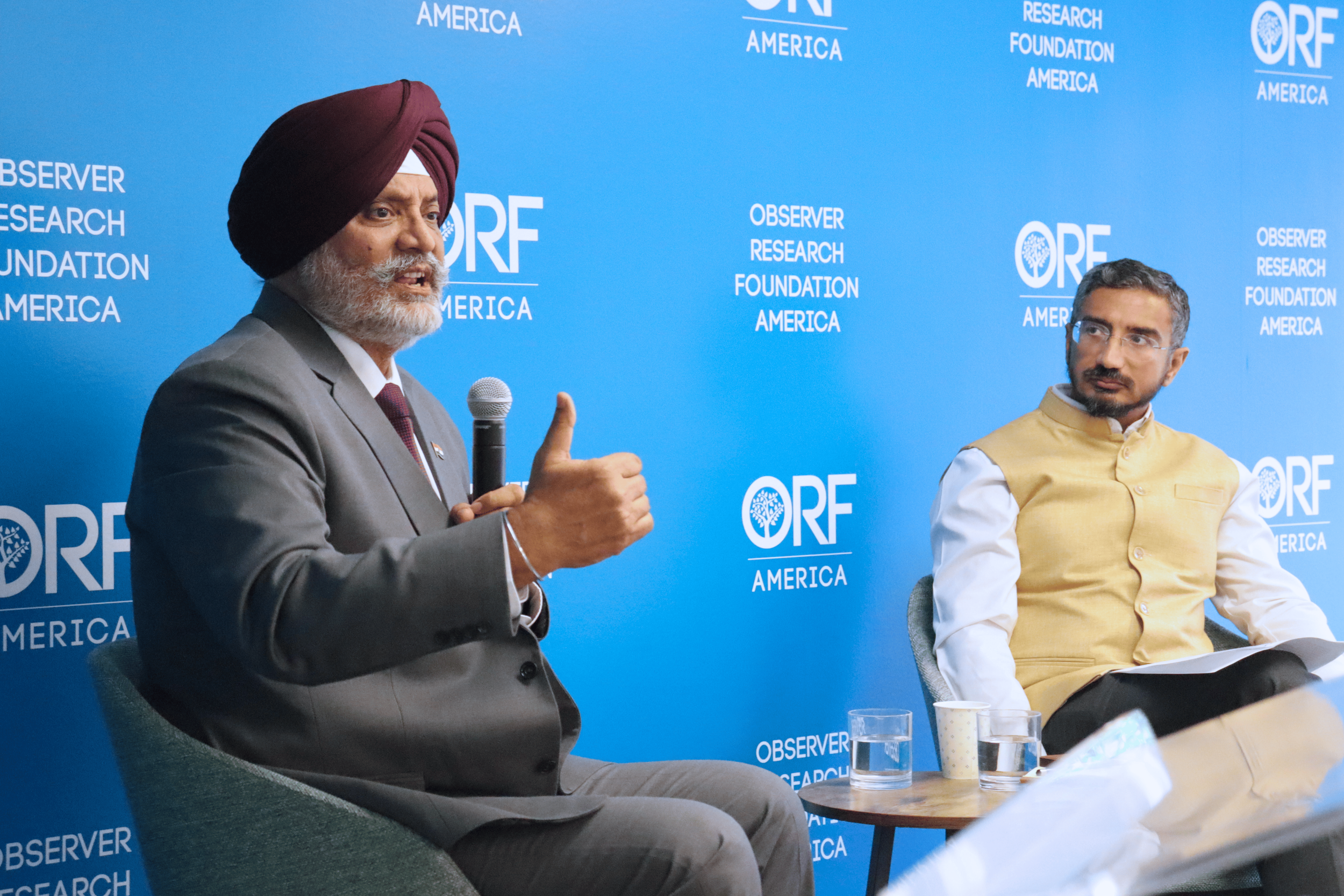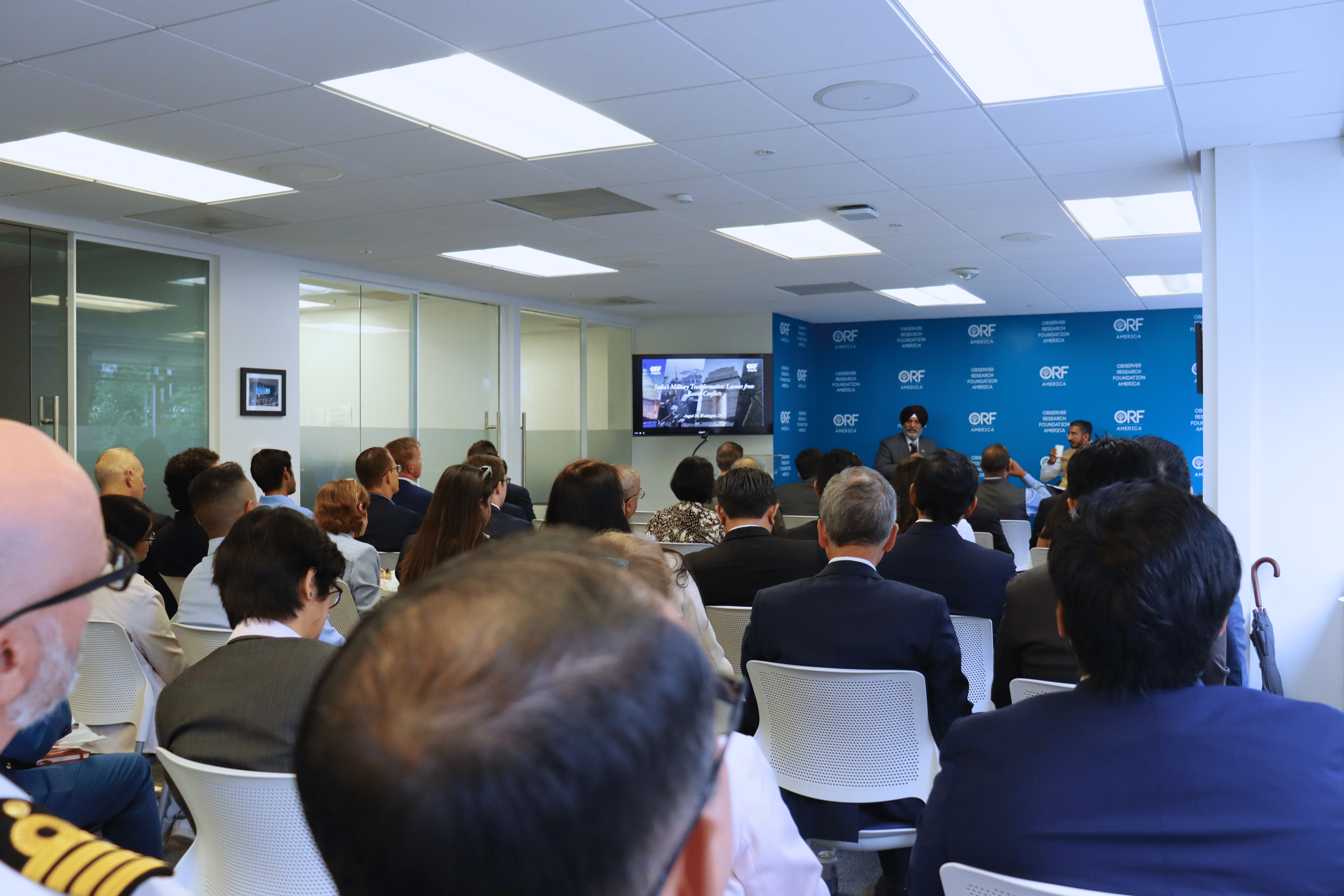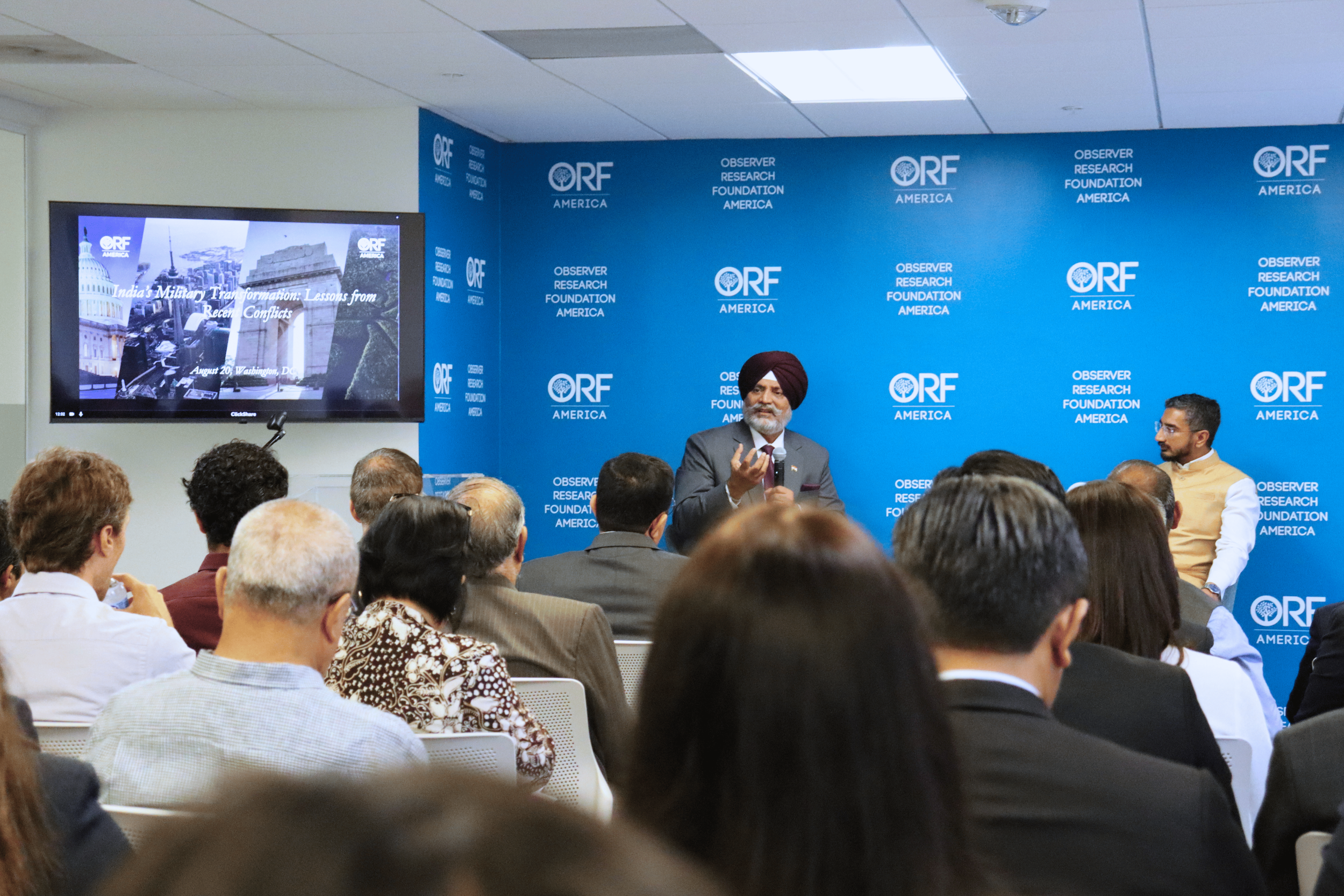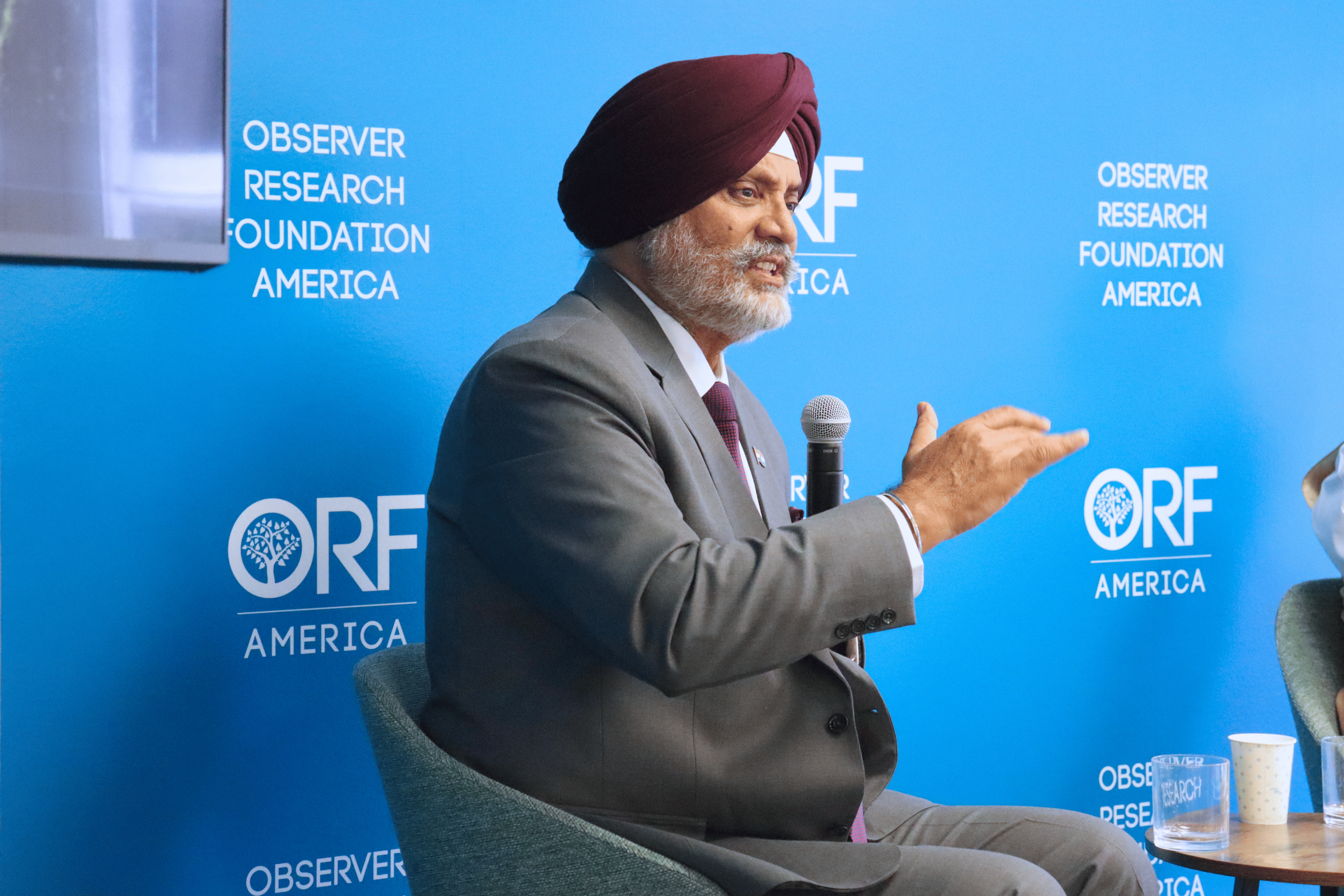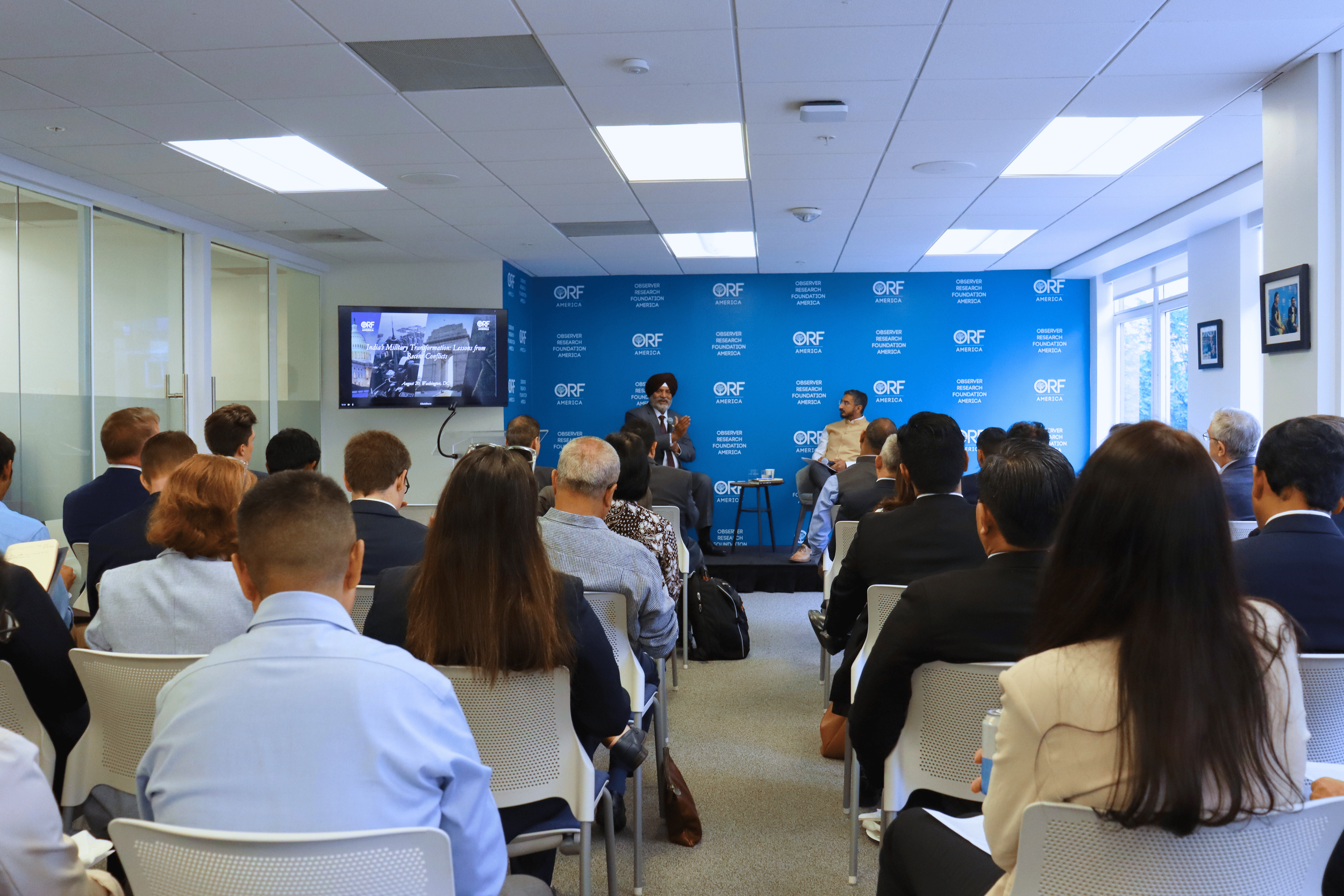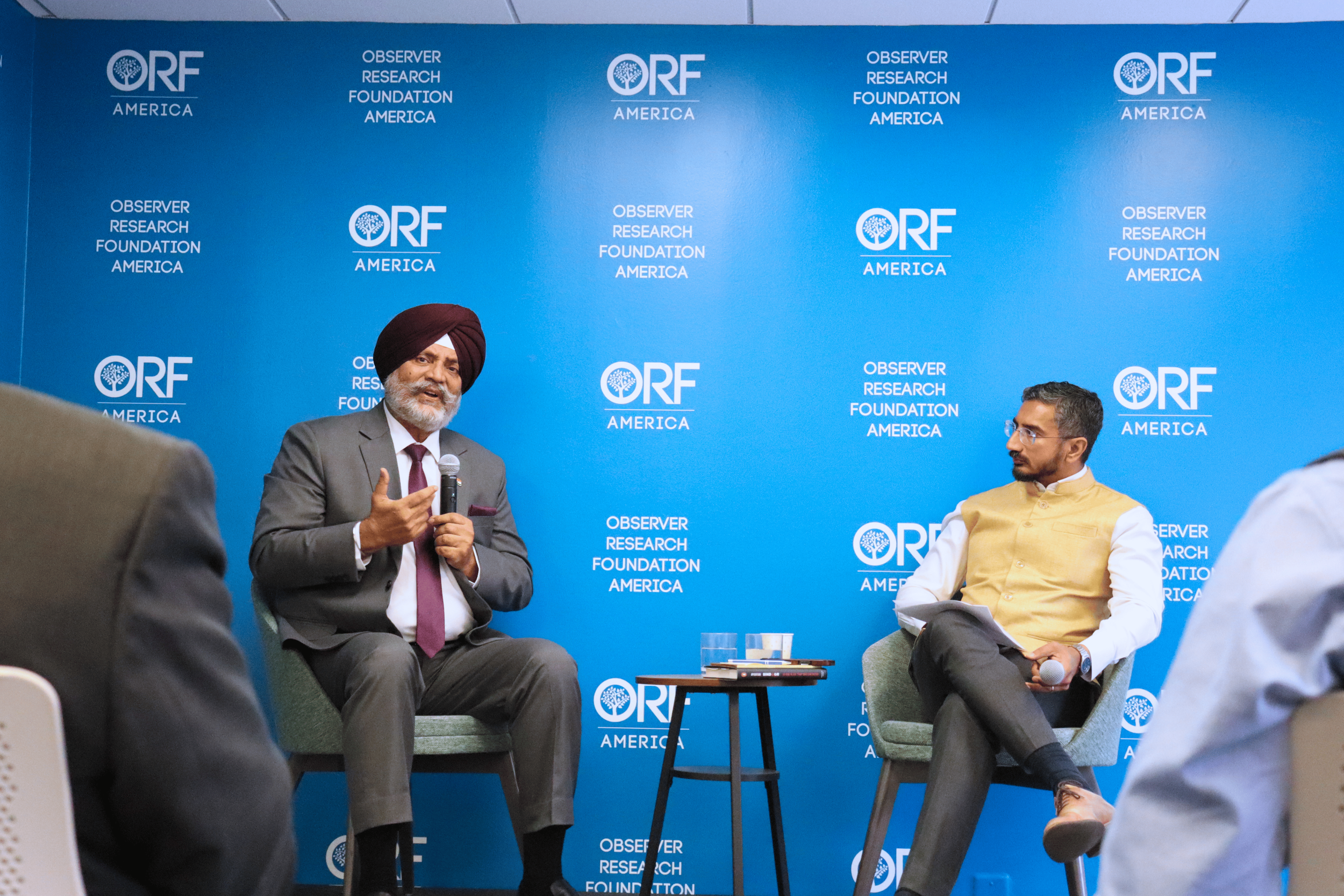
On August 20, ORF America hosted Lieutenant General Kanwal Jeet Singh Dhillon, former head of India’s Defence Intelligence Agency, for a closed-door conversation on “India’s Military Transformation and Lessons from Recent Conflicts.” Drawing on his new book about Operation Sindoor, Lt. Gen. Dhillon offered a practitioner’s assessment of how the strikes were planned and executed. He also distilled lessons learned from India’s previous counter-terrorism operations against Pakistan and outlined future priorities for India’s defense planning.
Some key takeaways included:
Since August 2019, stability was returning to the Kashmir valley — the change in the constitutional status of Jammu and Kashmir brought about greater opportunities for integration with the Indian union. There was an inflow of tourism and investment, which coupled with elections in 2024, saw the valley becoming more stable.
However, the Pahalgam terrorist attack in April 2025 threatened to alter that — unlike in previous terrorist attacks, where military (Uri in 2016) or paramilitary personnel were targeted (Pulwama in 2019), 26 civilians in Pahalgam were killed by a group affiliated to the Lashkar-e-Taiba, a Pakistan-based terrorist organization also responsible for terror attacks in Mumbai in November 2008.
The Indian government responded with Operation Sindoor, conducting precision-strikes on nine terrorist facilities in Pakistan-occupied Kashmir and in Pakistan — the strikes were preceded by thorough sharing of information across the military and intelligence community to ascertain the exact coordinates of the camps to avoid collateral damage.
Pakistan’s response was escalatory — the Indian military detected missiles heading to the capital city of New Delhi, which were neutralized by India’s air defense system. In response, the Indian Airforce struck various bases, hangars, and command and control centers of the Pakistan Airforce to compel them to sue for peace.
Overall, Operation Sindoor has enhanced India’s military readiness — India’s civilian officials have given more flexible rules of engagement to its military commanders to retaliate against Pakistan’s provocations and ceasefire violations.
The Indian military is absorbing lessons from other conflicts in Ukraine and Iran — all services are investing in fielding more unmanned systems including drones and automated air defense systems like the Akashteer. They must also account for weaker adversaries leveraging their asymmetric advantages such as terrain, external support, and low-cost expendable weapons to prolong a conflict. In such protracted conflicts, countries will require greater warfighting stamina and preparedness. They will need to possess a larger stockpile of munitions and harden their military infrastructure.
Speakers
Lieutenant General Kanwal Jeet Singh Dhillon, former head of India's Defence Intelligence Agency
Moderator: Dhruva Jaishankar, Executive Director, ORF America