
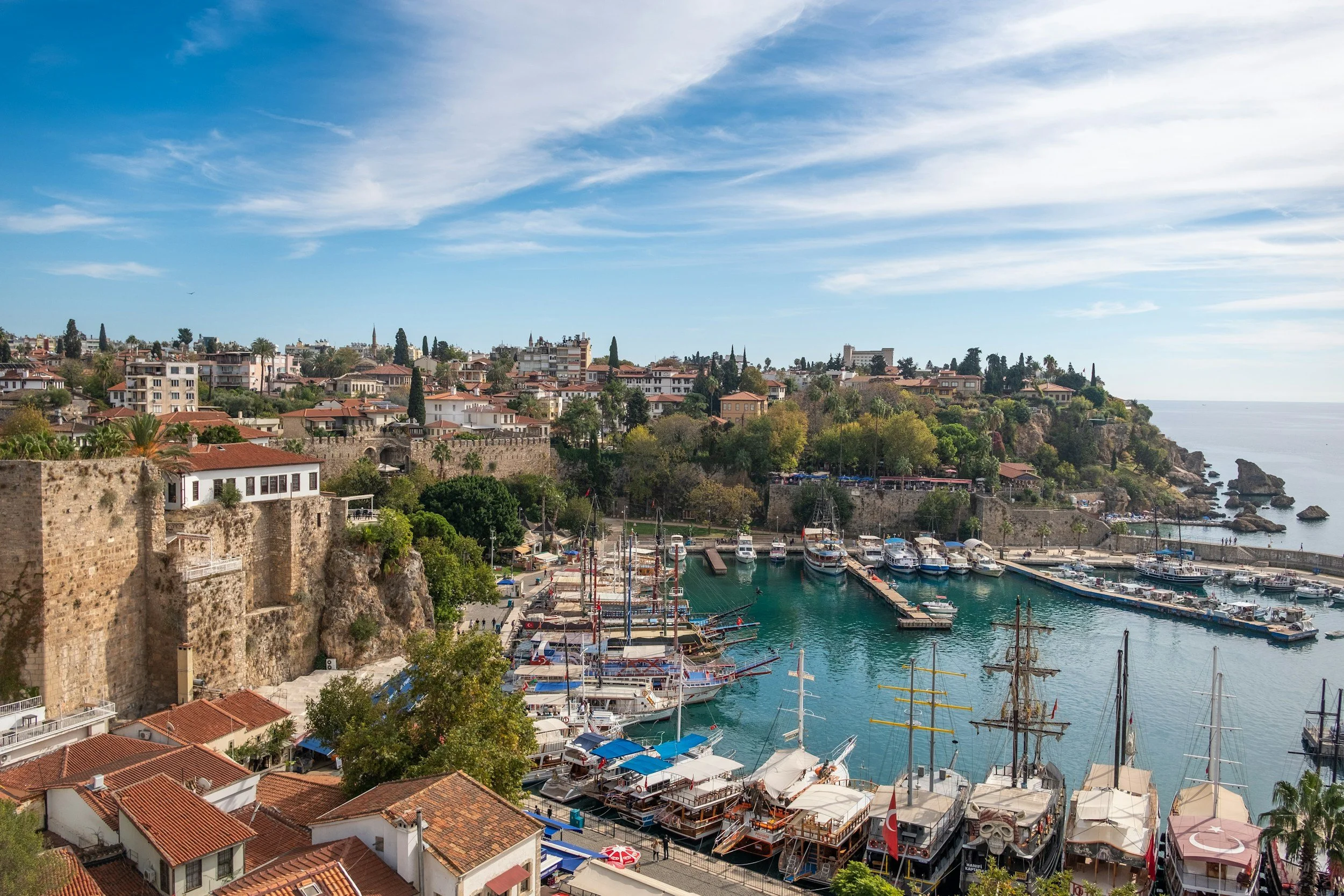
COP31, which kicked off this week in Antalya, arrives at a turning point for the global energy transition. AI is reshaping electricity demand, solar supply chains are being redrawn by geopolitics, and trade rules are being rewritten by carbon border measures.
Across multiple sessions at COP31, our Energy and Climate Program will examine what these shifts mean for emerging economies: how to meet new demand with clean power, how to build manufacturing capacity that is both resilient and affordable, and how to shape trade rules that reward rather than penalize their decarbonization efforts.
All of our sessions will take place in the Blue Zone.
Please ensure your access credentials are in place before registering.

Wednesday, November 11, from 16:45-17:45 | Room: Climate Cooperation Lounge (DO-32), Blue Zone
Artificial intelligence is driving an unprecedented surge in electricity demand, raising urgent questions about who will supply this power, how clean it will be, and who will benefit. For the Global South, the AI boom could either deepen existing divides or become a driver of shared prosperity. This session will examine two linked questions: how to power AI and data centers with clean energy, and how to use AI to accelerate the energy transition.
Speakers
Pedro Rossi, VP Policy, Global Fund for a New Economy, Brazil
Rian Coetzee, Divisional Executive: Industry Planning and Project Development, Industrial Development Corporation, South Africa
Paul Butarbatar, Executive Director, Indonesia Climate & Growth Dialogue, Indonesia
Dipa Singh Bagai, Country Head, NRDC India
Moderator: Piyush Verma, Senior Fellow, ORF America
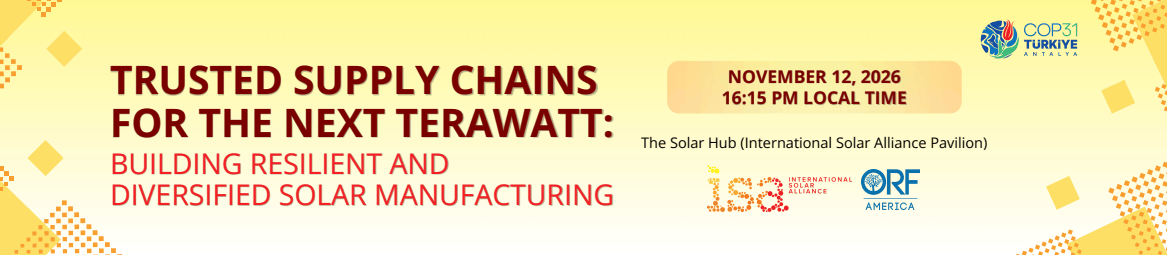
Thursday, November 12, from 16:15–17:15 | Room: The Solar Hub (International Solar Alliance Pavilion)
Global solar deployment is entering its next terawatt at a time of heightened geopolitical and supply-chain risk. Manufacturing remains concentrated across key segments of the photovoltaic value chain. This session will examine how emerging economies can diversify solar manufacturing without giving up affordability or speed of deployment. The discussion will set out a practical agenda for trusted supply chains: where diversification is most feasible, which instruments can crowd in investment, and where emerging economies can cooperate rather than replicate value chains.
Speakers
Ashish Khanna, Director General, International Solar Alliance
Satya Widya Yudha, Member of the National Energy Council, Republic of Indonesia
John Grimes, Chief Executive, Renewable Energy Council Asia Pacific
Moderator: Piyush Verma, Senior Fellow, ORF America
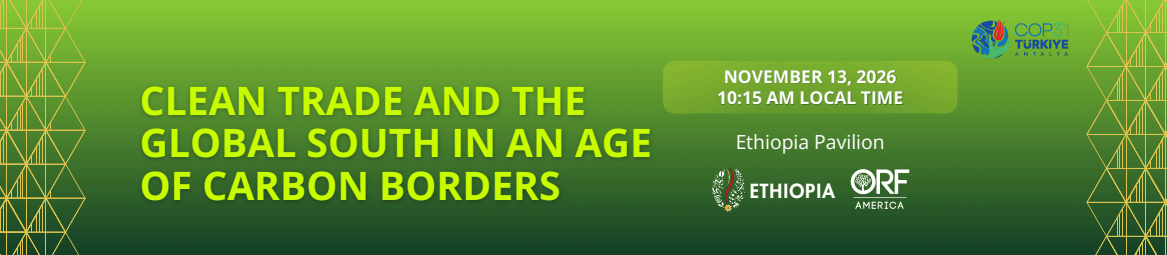
Friday, November 13, from 10:15–11:15 | Room: Ethiopia Pavilion
As the EU’s carbon border adjustment mechanisms (CBAM) enters its definitive phase, many developing countries face compliance costs, limited capacity to measure and verify emissions, and the risk of being locked into the lower end of clean energy value chains. Bringing together perspectives from across the Global South, the session will cover five themes: what carbon border measures mean for exporters, principles for a fair clean trade rulebook, interoperable emissions accounting, technical and financial support, and South–South trade and investment opportunities.
Speakers
Alfonso Medinilla, Head of Climate Action and Green Transition, European Centre for Development Policy Management (ECDPM), Belgium
Nithyanandam Yuvaraj Dinesh Babu, Founder and CEO, UNMAI Carbon Solutions
Julie Rozeberg, Chief Economist, WRI
Moderator: Piyush Verma, Senior Fellow, ORF America