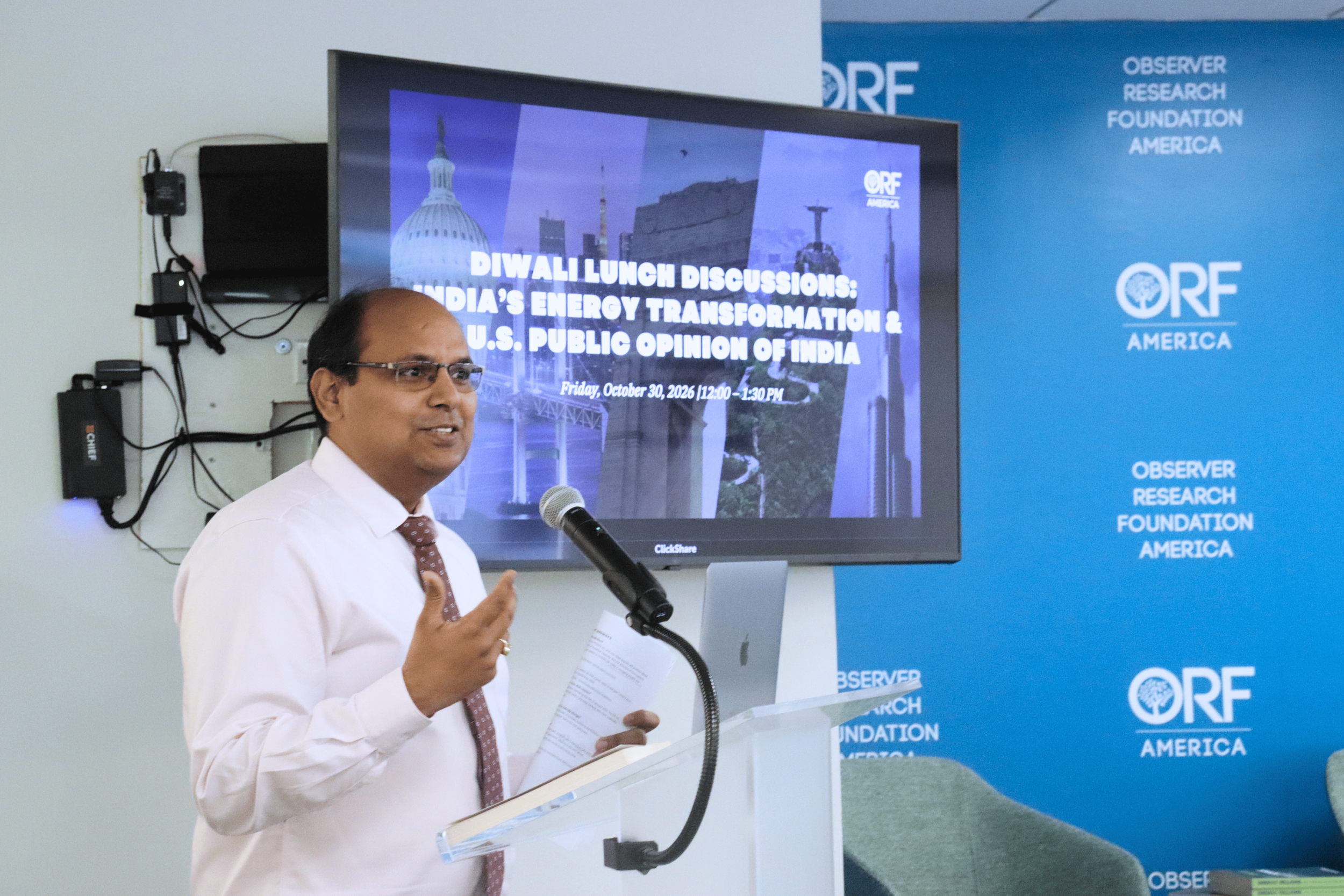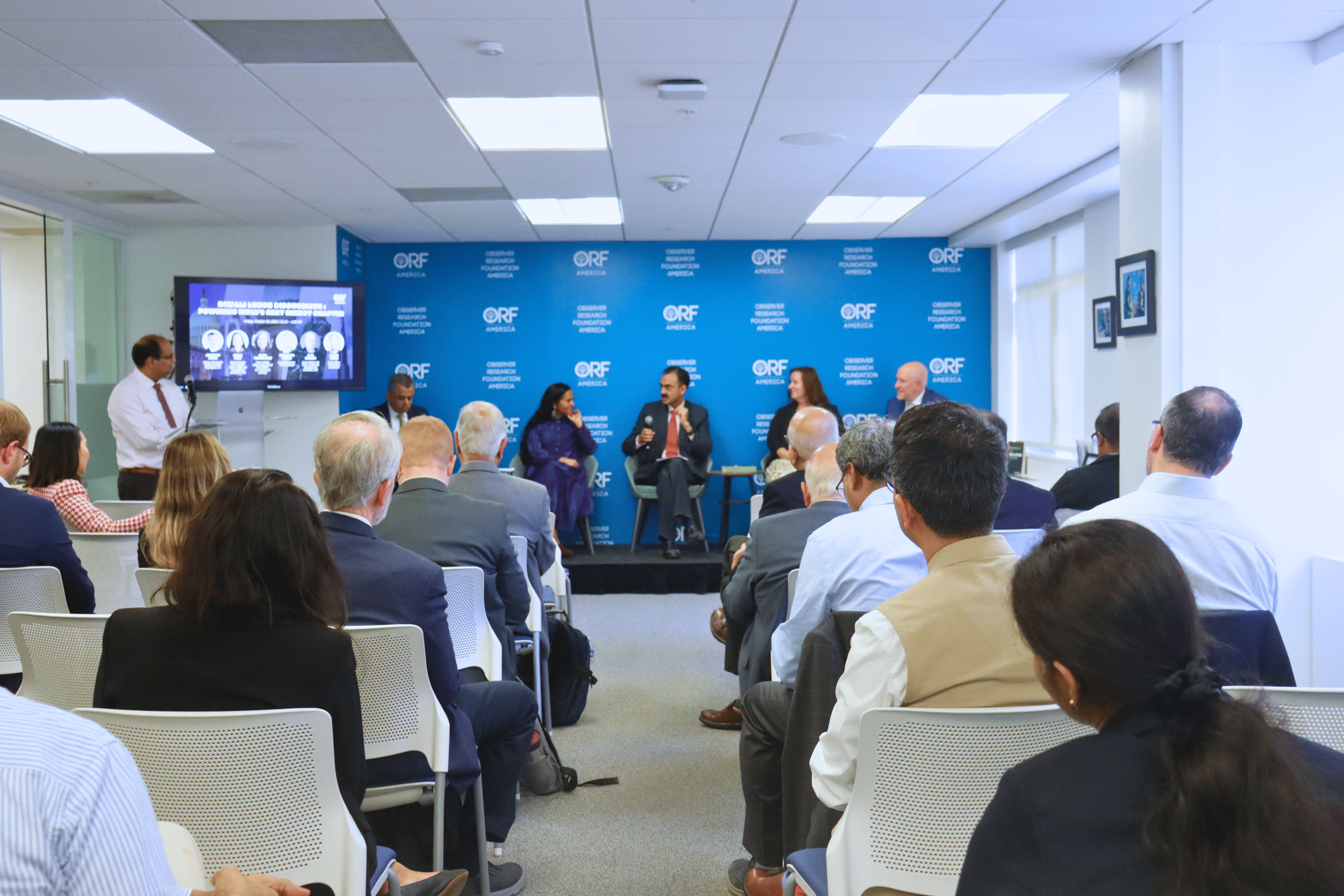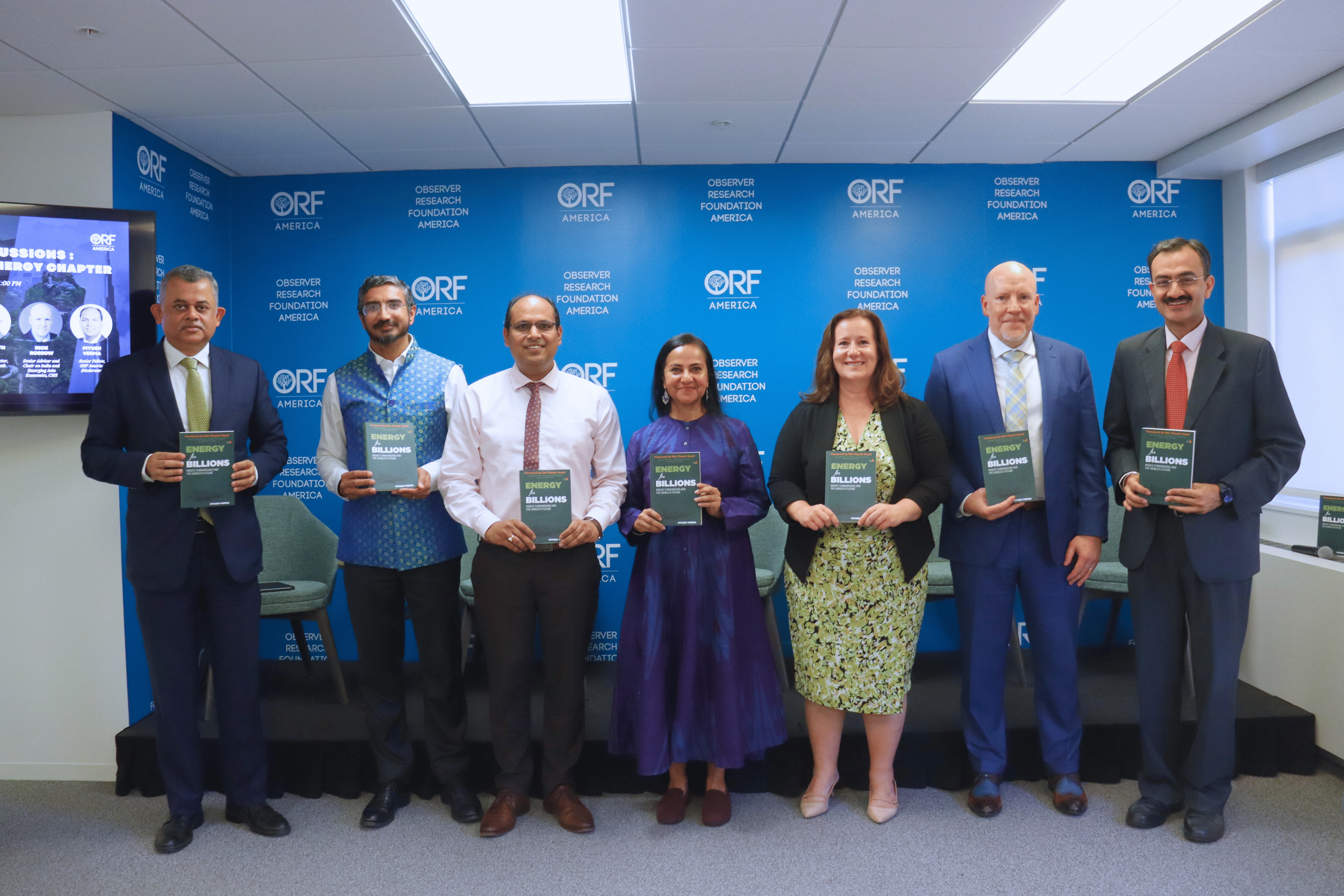
On October 30, ORF America marked Diwali with a discussion on India’s energy transformation and the U.S. launch of Senior Fellow Piyush Verma’s new book, Energy for Billions: India's Turnaround and the World's Future. Over the past decade, India has moved from chronic energy shortages toward near-universal electricity access while emerging as a major global energy player. It now ranks third globally in both total renewable energy and solar installed capacity and has become one of the world’s fastest-growing renewable energy markets. India is also the world’s fourth-largest crude oil refiner and, in 2025, reached its target of 50% non-fossil installed power capacity more than five years ahead of schedule. Yet this progress has also brought a new set of challenges, including electricity distribution and affordability, import dependence, supply-chain resilience, and rapidly rising energy demand from urbanization and industrial growth. How India navigates these challenges will shape not only its economic competitiveness and energy future, but also the next phase of U.S.-India energy cooperation.
Following opening remarks by Dhruva Jaishankar, Dr. Verma reflected on the personal and professional journey that shaped the book: from growing up without electricity in rural eastern Uttar Pradesh to spending nearly two decades working on energy and development across India and internationally. His experience has spanned Tata Steel and India’s Bureau of Energy Efficiency, energy policy work in New Zealand and Ireland, work across Pacific Island countries including Vanuatu and Niue, and senior roles with the United Nations Development Programme, including leading work on energy governance and just energy transitions across more than 170 countries.
Drawing on these experiences, Dr. Verma presented ten key themes from Energy for Billions. These included energy access as the foundation of an equitable transition, India’s nearly fourfold expansion in renewable energy capacity since 2014, the importance of governance and coordination across different levels of government, the links between energy access and women’s economic empowerment, the growing role of domestic manufacturing and green jobs, opportunities for India-led South-South cooperation, and India’s evolving role in global climate and energy diplomacy.
Looking ahead, he introduced his “GREEN” framework — Growing economy, Regional influence, Empowered population, Expanding urbanization, and Nurturing culture — as five forces that will shape India’s next energy chapter. He concluded by examining the choices India will need to make as it works toward energy independence by 2047 and net-zero emissions by 2070.
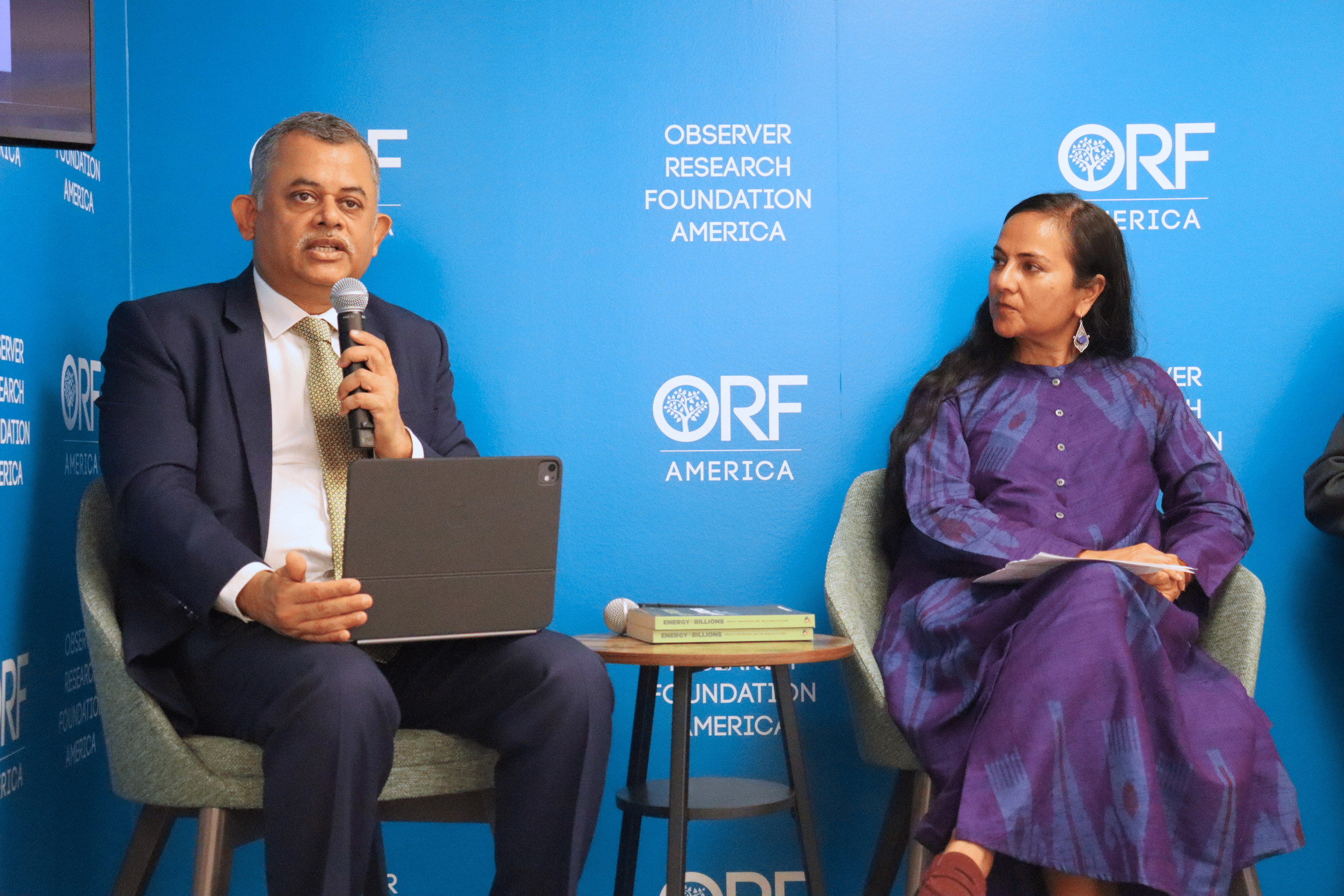
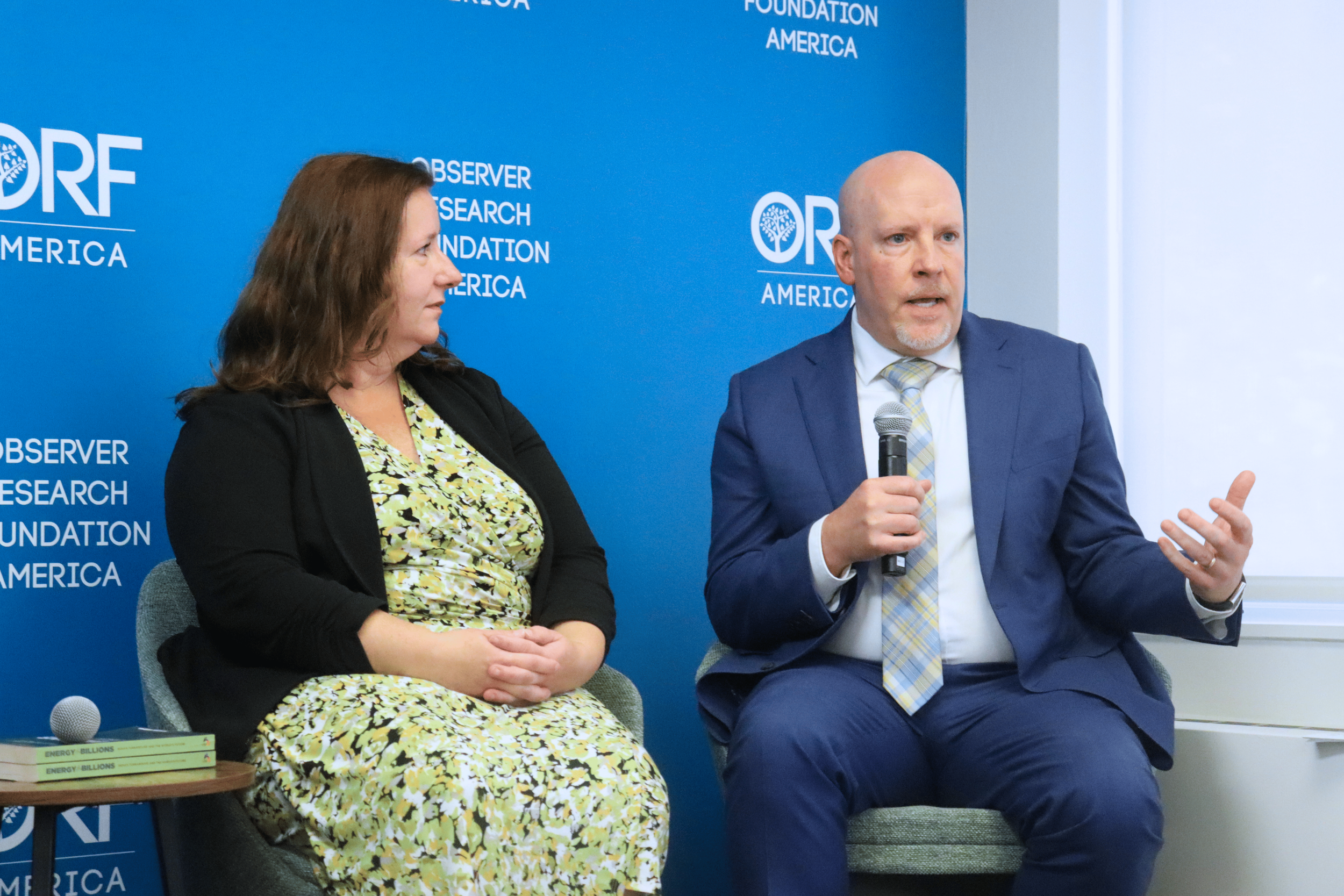
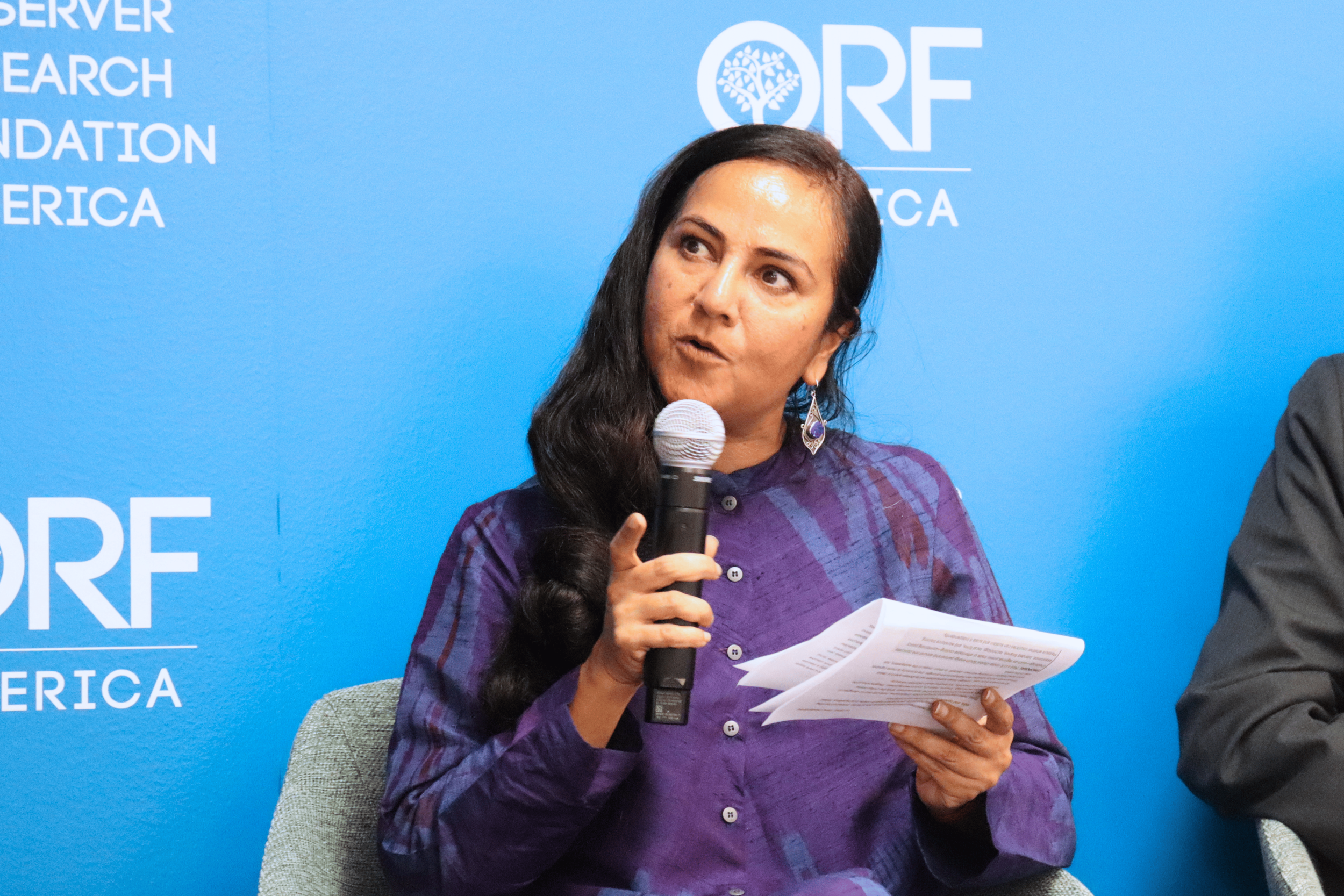
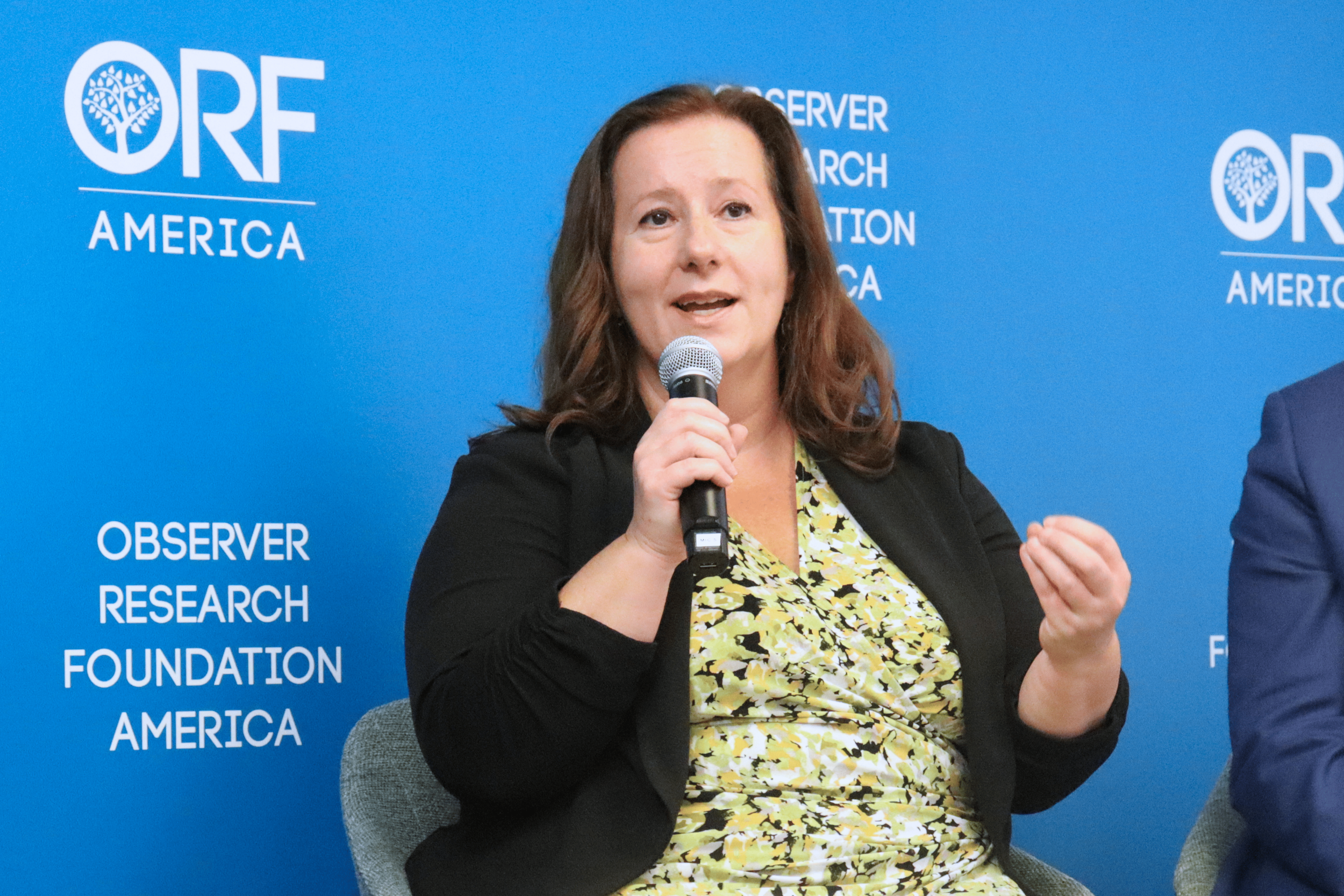
The panel, “India’s Energy Transformation and Powering the Next Chapter”, brought together representatives from the Indian and U.S. governments, the World Bank, and CSIS reflected on the major gains of the past decade and examined the policies and institutions that helped drive India’s energy turnaround. The discussion also addressed the challenges that remain, including the financial and operational performance of state electricity distribution companies, the need to translate energy investment into economic growth and job creation, supply-chain security, and the evolving priorities of U.S.-India energy cooperation. Panelists also considered what India’s experience can offer other developing economies and the reforms needed to ensure that expanded access to clean and reliable energy translates into sustained economic opportunity.
Key takeaways included:
India showed that energy access and decarbonization can advance together. Panelists highlighted how India has simultaneously expanded electricity access, built energy infrastructure, and scaled renewable energy capacity, showing that development and decarbonization can be pursued in parallel. A significant share of the infrastructure India will need in the coming decades has yet to be built, creating an opportunity to integrate cleaner technologies as the economy grows. The sharp decline in global solar costs has also made this balance easier to achieve. India’s experience therefore offers important lessons for other emerging economies seeking to meet rapidly growing energy demand while pursuing long-term climate goals.
India’s energy transformation demonstrates the importance of strong institutions in translating ambitious policies into tangible results. Panelists highlighted how India combined ambitious national goals with focused implementation, enabling the country to expand energy access while scaling renewable energy deployment. Initiatives such as the Pradhan Mantri Ujjwala Yojana (PMUY), launched in 2016 to expand LPG access among underserved households and reduce reliance on traditional cooking fuels, illustrate how targeted policies, effective institutions, and coordination across levels of government can deliver results at scale. As of September 2026, the program had provided more than 105 million LPG connections, significantly expanding access to cleaner cooking fuels across the country. Transparent auctions, bulk procurement, and digital monitoring have also supported implementation across India’s energy sector, while cross-border electricity trade with Bhutan and Nepal illustrates the benefits of deeper regional energy integration. Speakers emphasized that one of India’s most transferable lessons is not any single program, but the institutional capacity to translate policy ambition into implementation at scale.
Affordable energy and finance, deeper electrification, and resilient supply chains will be central to India’s pursuit of energy independence. Panelists emphasized the opportunity to expand electrification across the economy while recognizing that sectors such as steel and brick manufacturing will also require greater efficiency, alternative fuels, and other technological solutions. With electricity accounting for only about 17 percent of India’s final energy consumption, compared with 29 percent in China and 31 percent in Japan, significant scope for further electrification remains. Speakers also highlighted the importance of affordable energy and a lower cost of capital for industrial competitiveness, alongside efforts to reduce dependence on imported fuels, battery cells and components, critical minerals, and specialized materials. Greater domestic manufacturing, technological innovation, and more diversified supply chains will be important to strengthening India’s energy security and long-term economic competitiveness.
The next phase of India’s energy transformation will be about converting energy access into broader economic opportunity and resilience. Panelists emphasized that progress should increasingly be measured not only by electricity connections or installed capacity, but by whether reliable and affordable energy enables businesses to grow, creates opportunities for women and workers, strengthens resilience to extreme heat and other climate risks, and supports India’s expanding digital and industrial economy. Rapid urbanization will make this challenge particularly important, requiring stronger urban planning, infrastructure investment, and greater capacity at the state and local levels. If India can translate energy expansion into inclusive growth and resilience, its experience could offer an important model for other developing economies.
Energy security, innovation, and investment remain central to the U.S.-India energy cooperation. Panelists traced the evolution of the bilateral energy relationship since the launch of the U.S.–India Civil Nuclear Cooperation Initiative in 2005, highlighting opportunities to deepen collaboration in the years ahead. Energy security, affordability, and reliability have long underpinned the partnership, while emerging priorities include grid modernization, energy storage, civil nuclear and geothermal energy, critical minerals, and meeting rapidly growing electricity demand, including from data centers. Speakers emphasized the importance of working together in diversifying fuel supplies, advancing alternative battery technologies, and reducing dependence on highly concentrated supply chains. They also highlighted the need for greater two-way investment, predictable regulatory frameworks, and stronger private-sector collaboration to accelerate technology deployment and commercialization while strengthening industrial competitiveness in both countries.
Speakers:
Opening Remarks: Dhruva Jaishankar, Executive Director, ORF America
Ashutosh Jindal, Minister (Economic), Embassy of India, Washington DC
Anjali Kaur, Senior Associate (Non-Resident), Chair on India and Emerging Asia Economics, CSIS, Former Deputy Assistant. Administrator, Asia Bureau, U.S. Agency for International Development
Elena Thomas Kerr, Senior Advisor (India Lead), Office of Asian Affairs, U.S. Department of Energy
Neelkanth Mishra, Executive Director, The World Bank
Rick Rossow, Senior Adviser and Chair on India and Emerging Asia Economics, CSIS
Moderator: Piyush Verma, Senior Fellow, ORF America