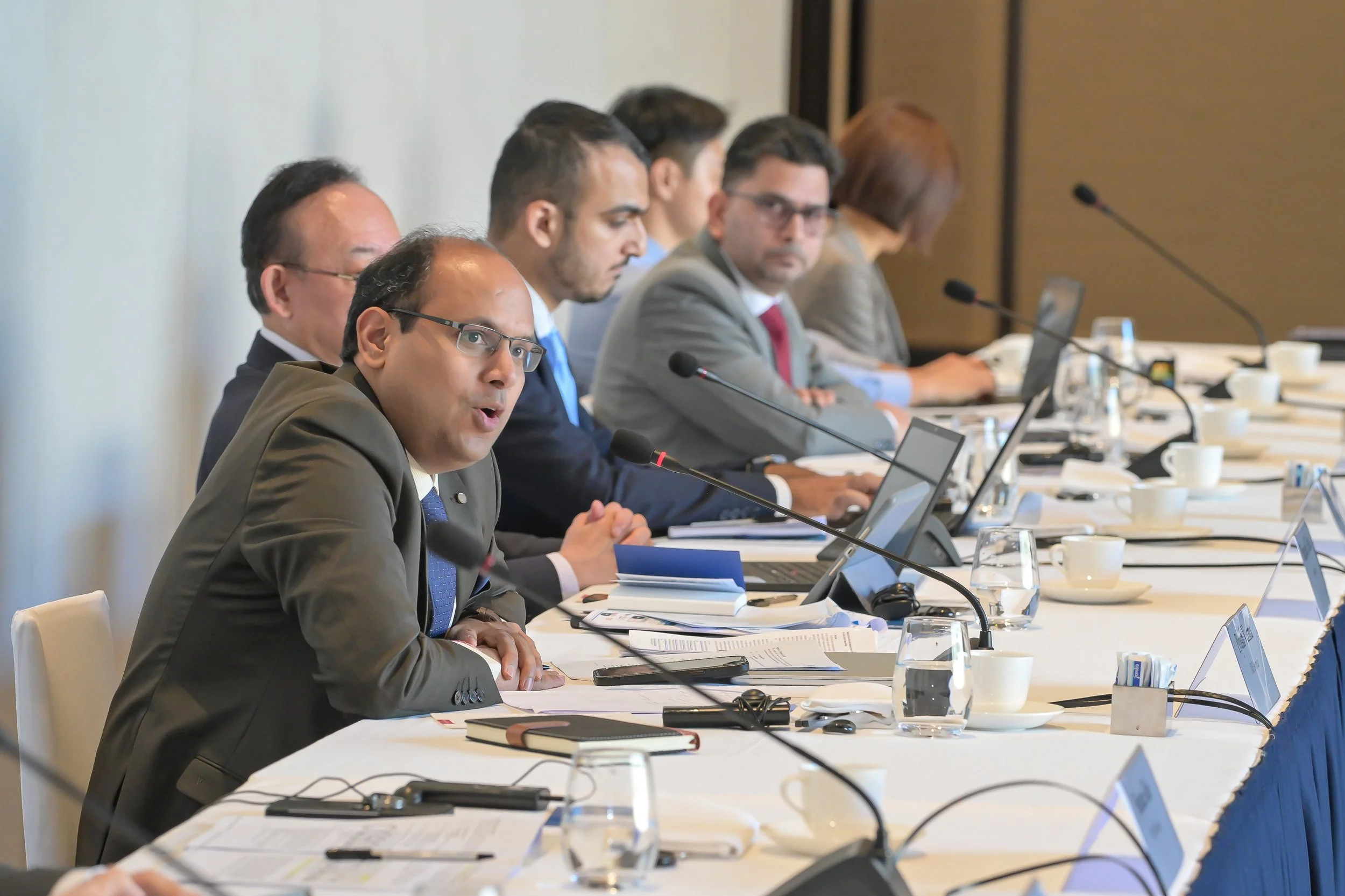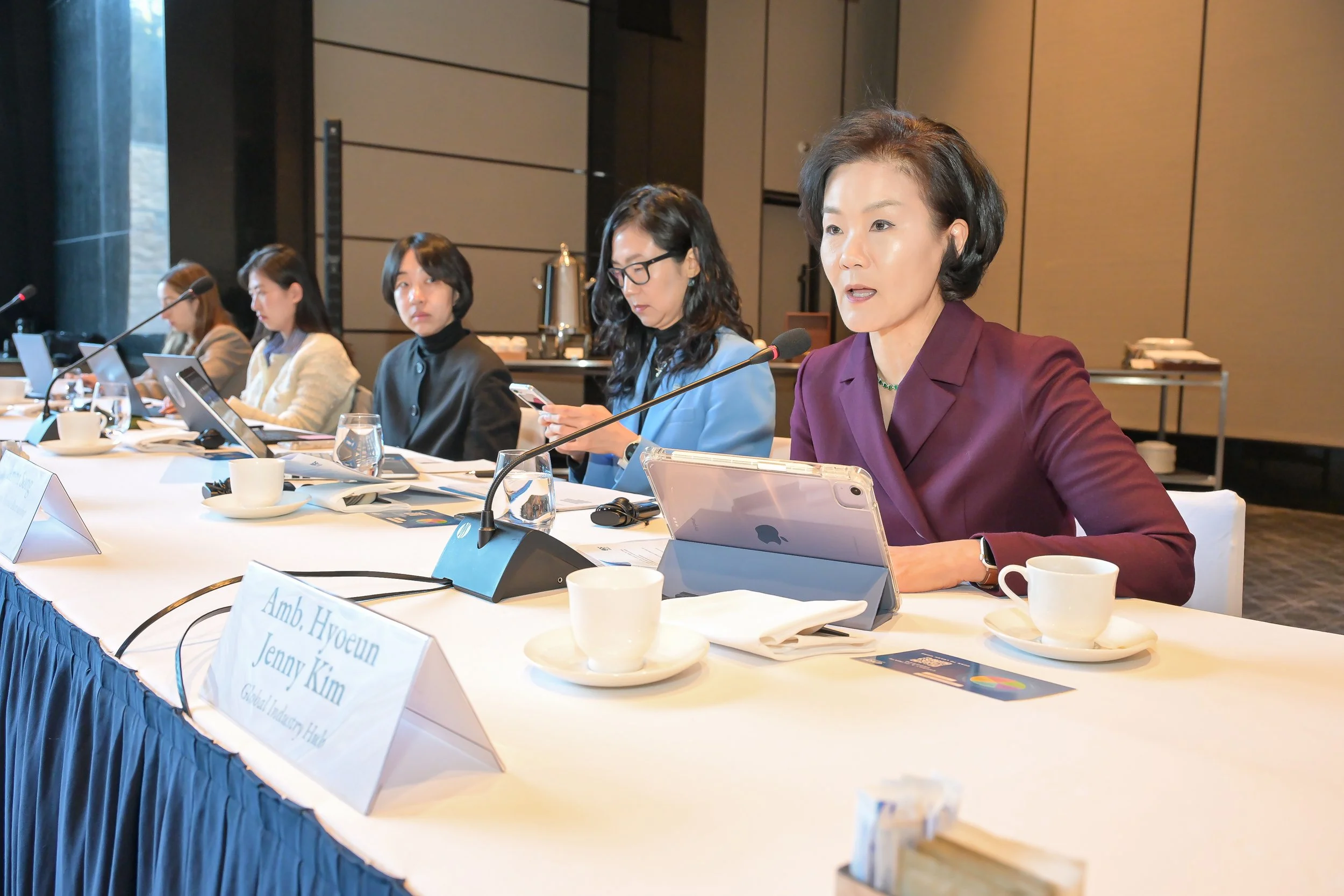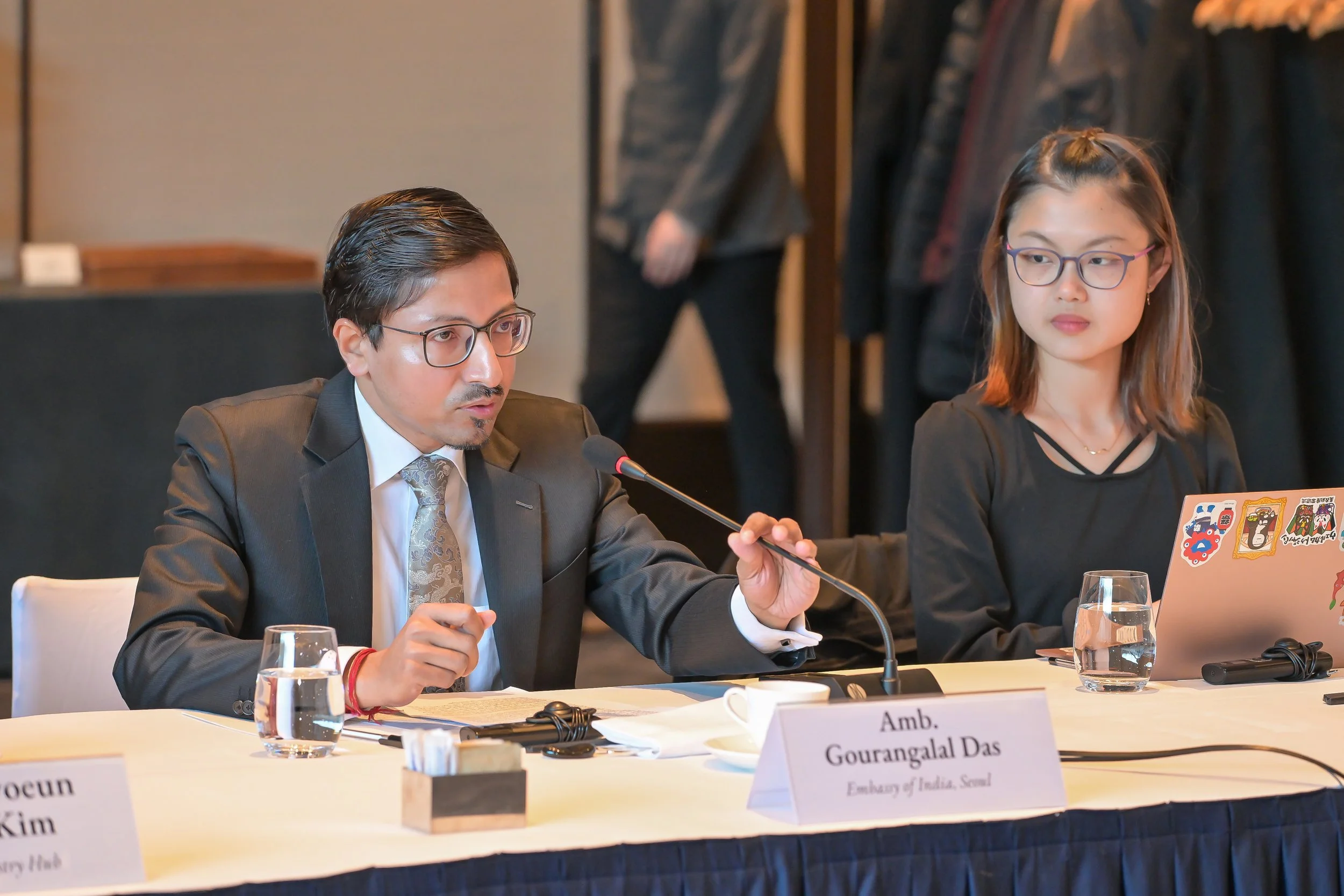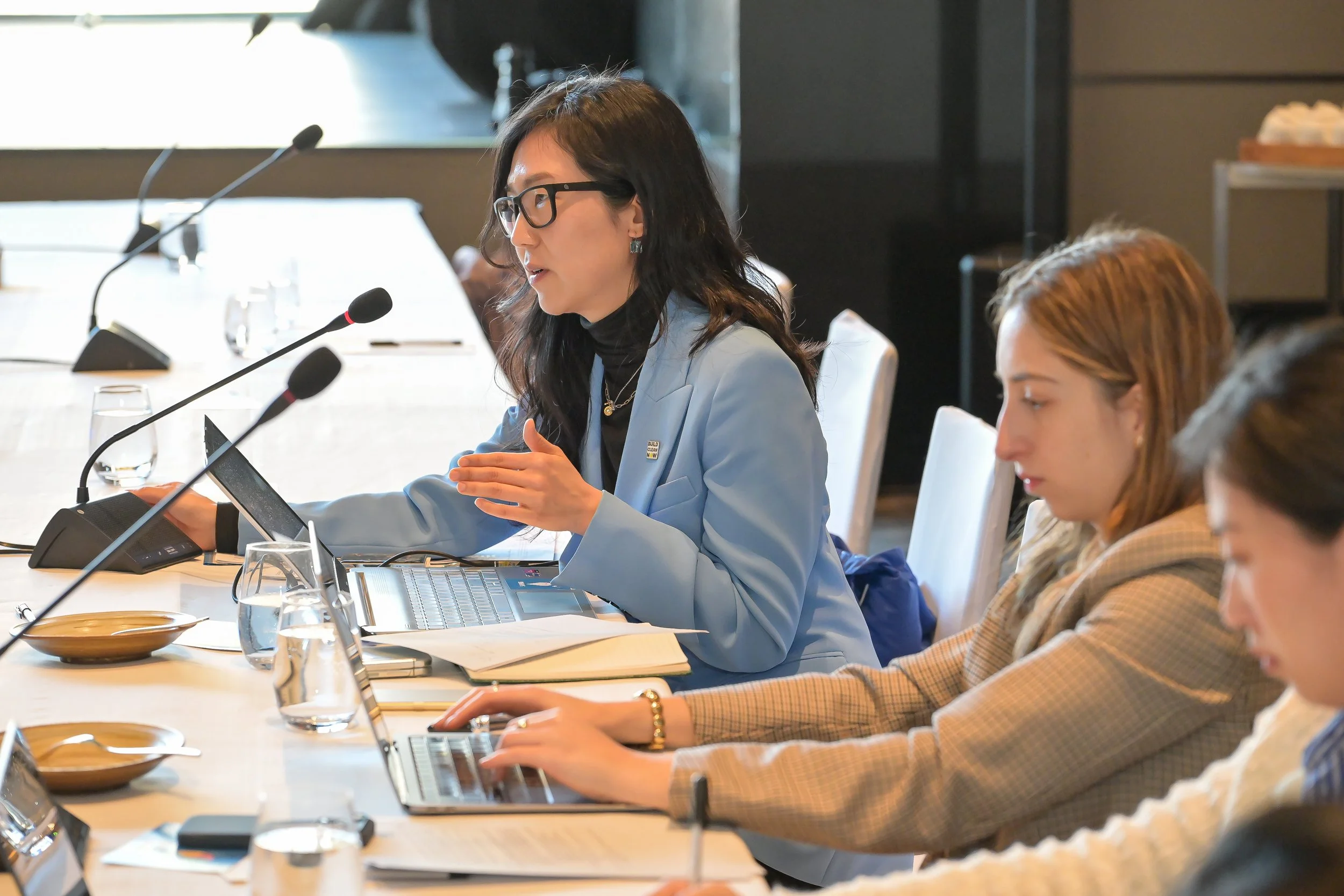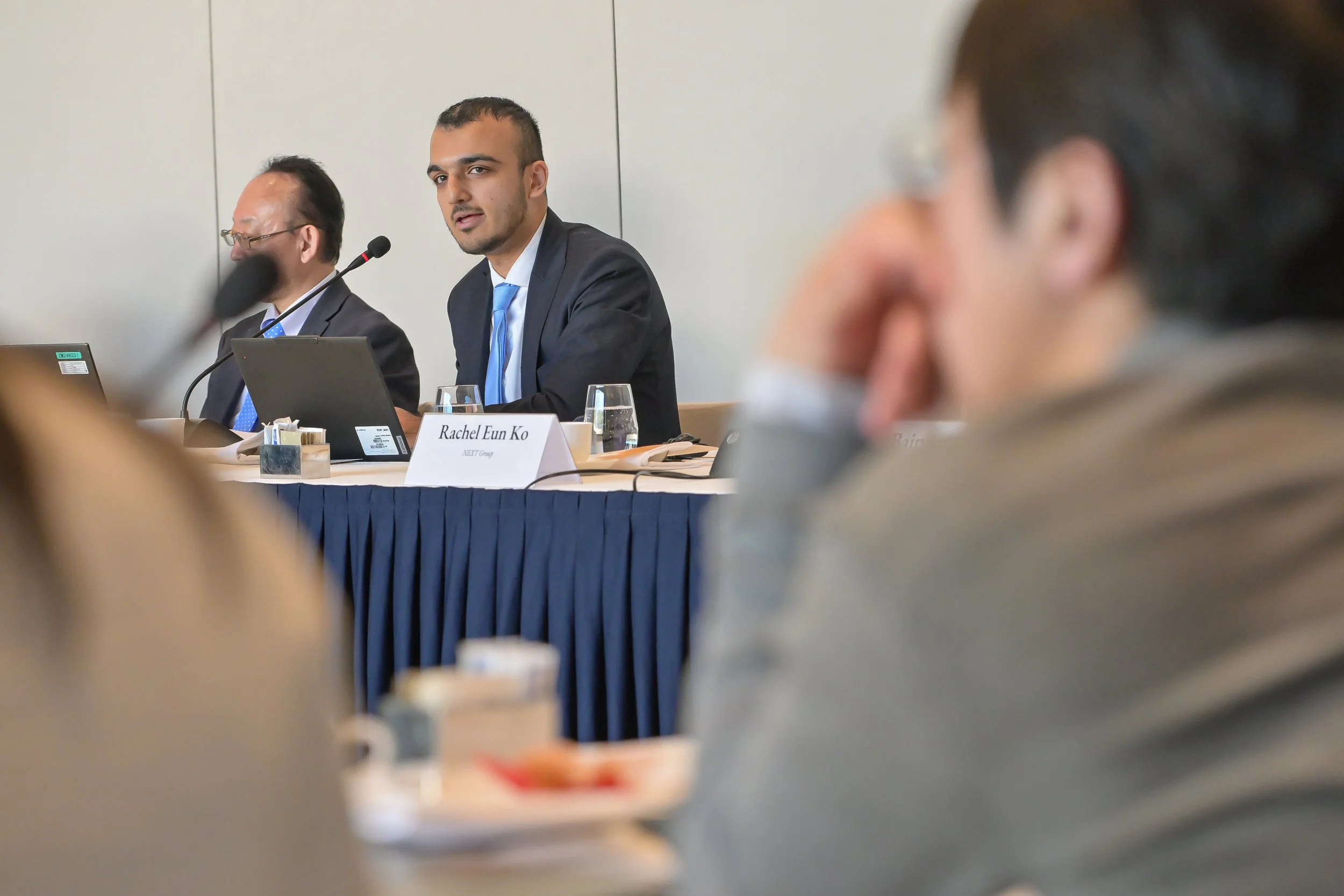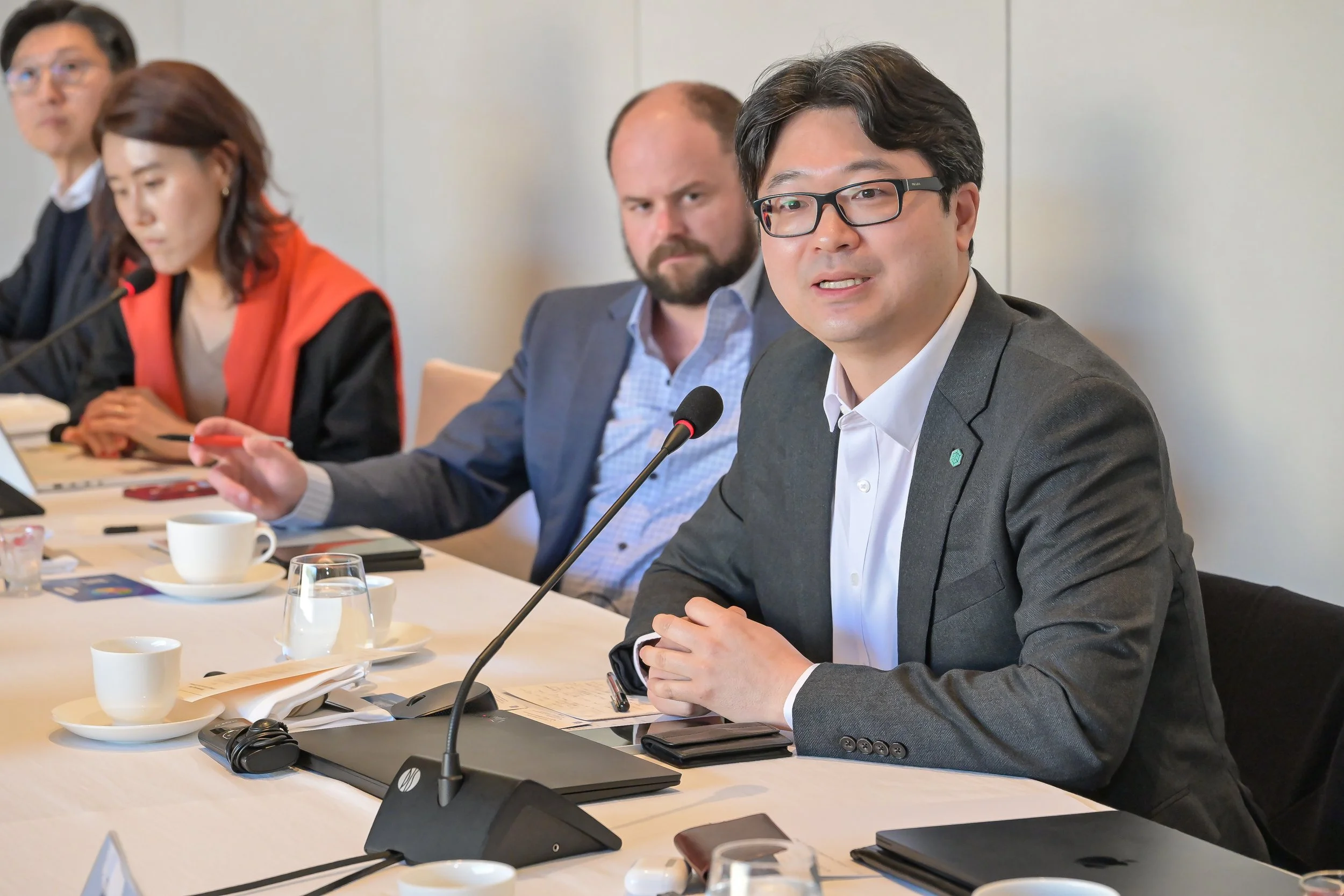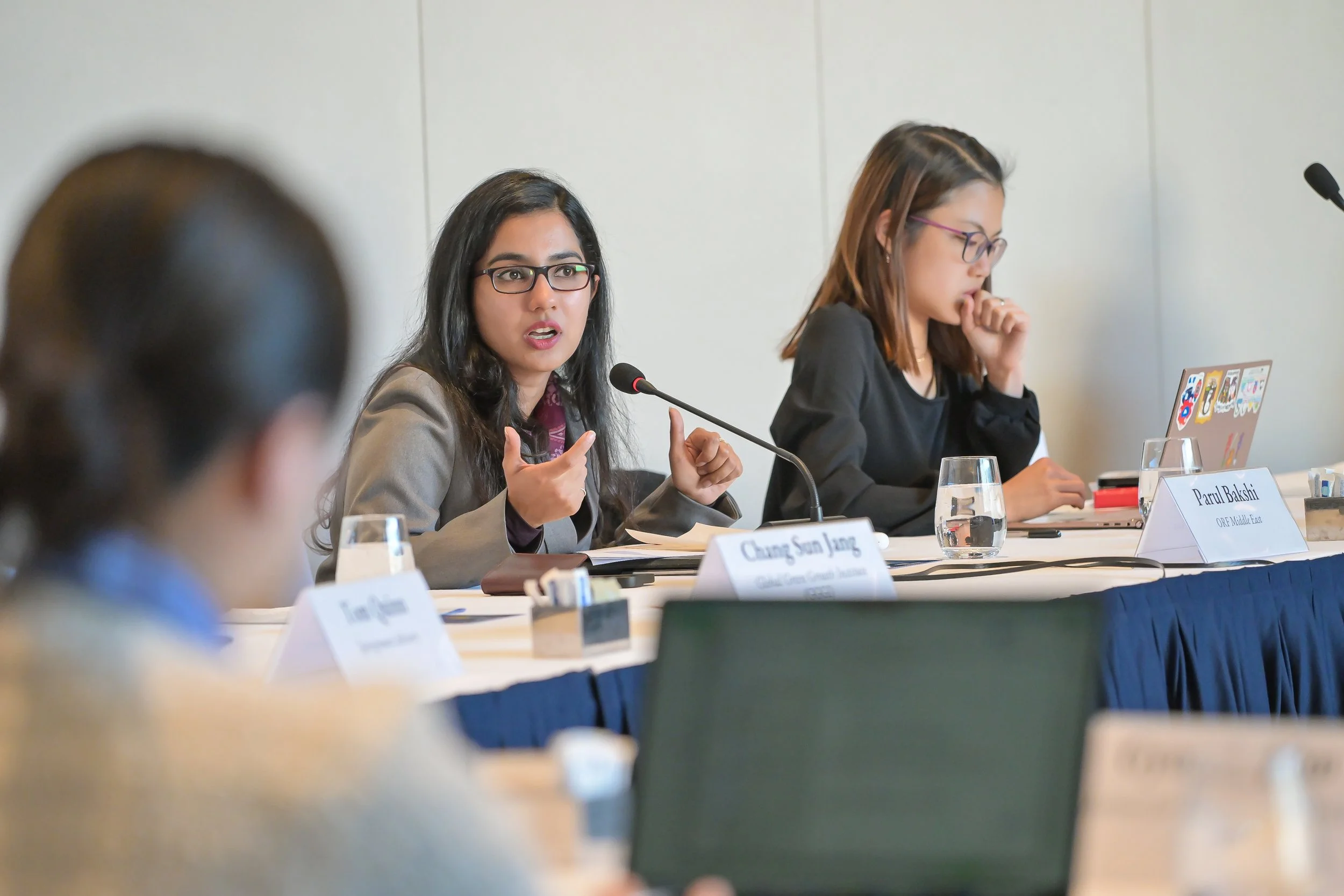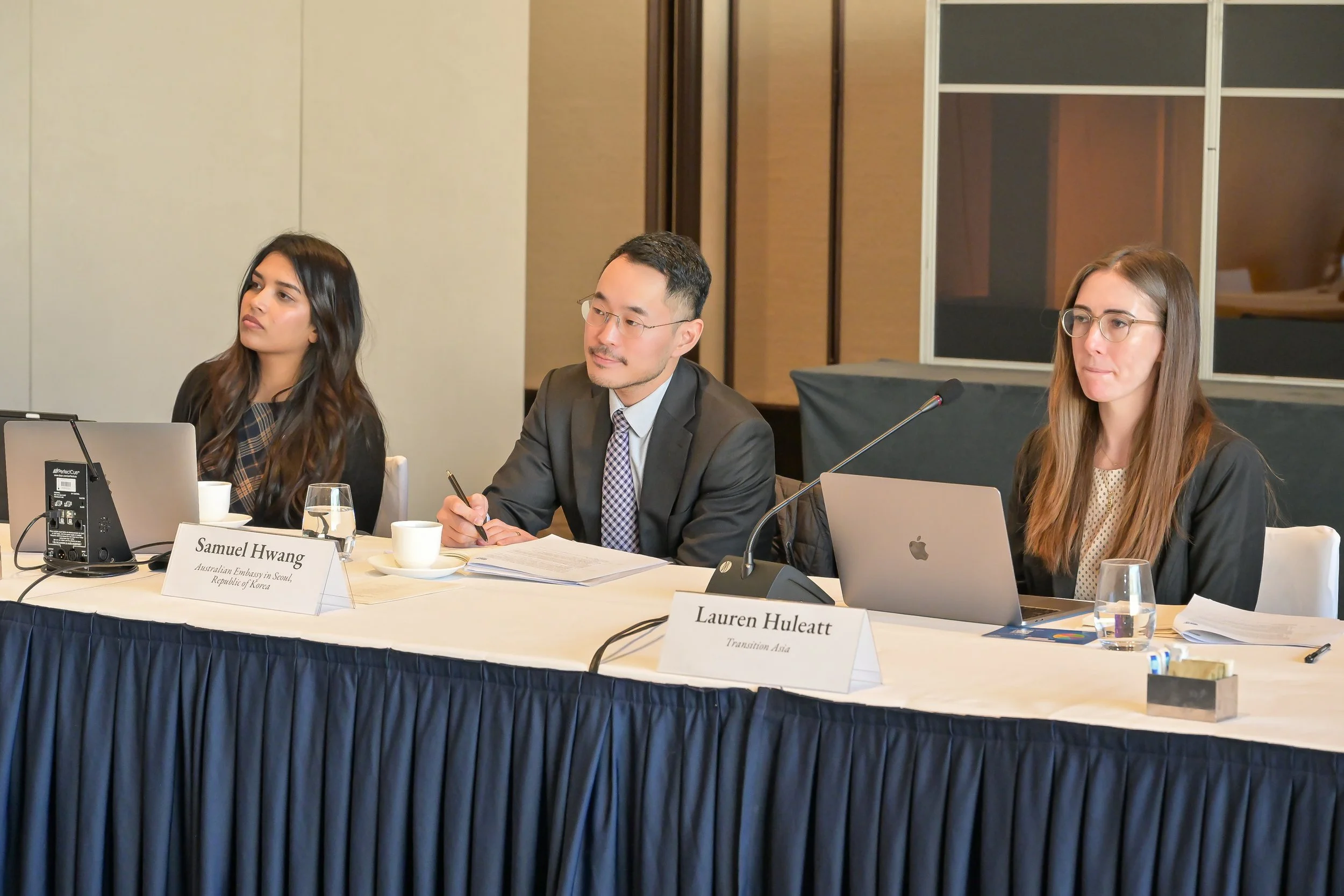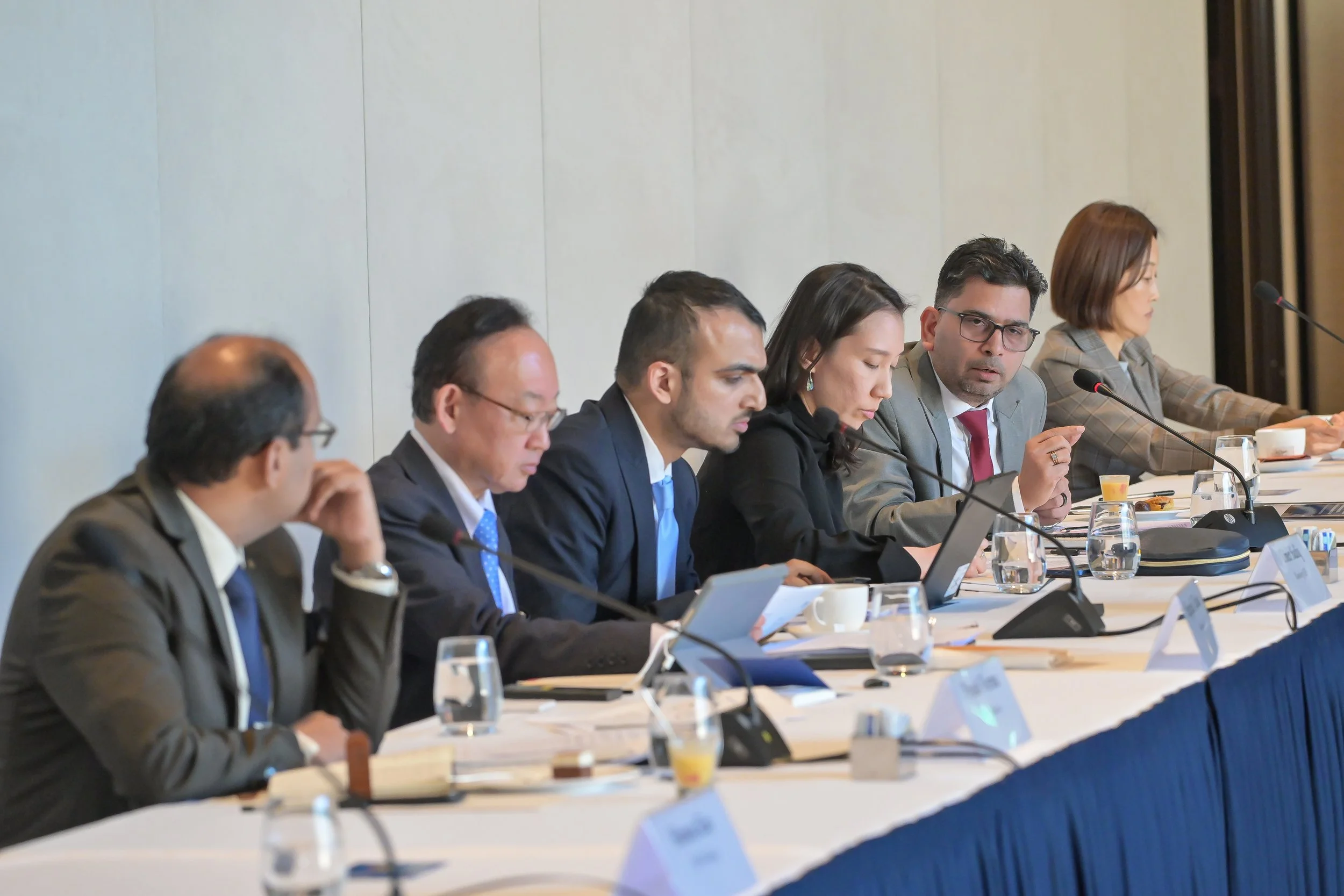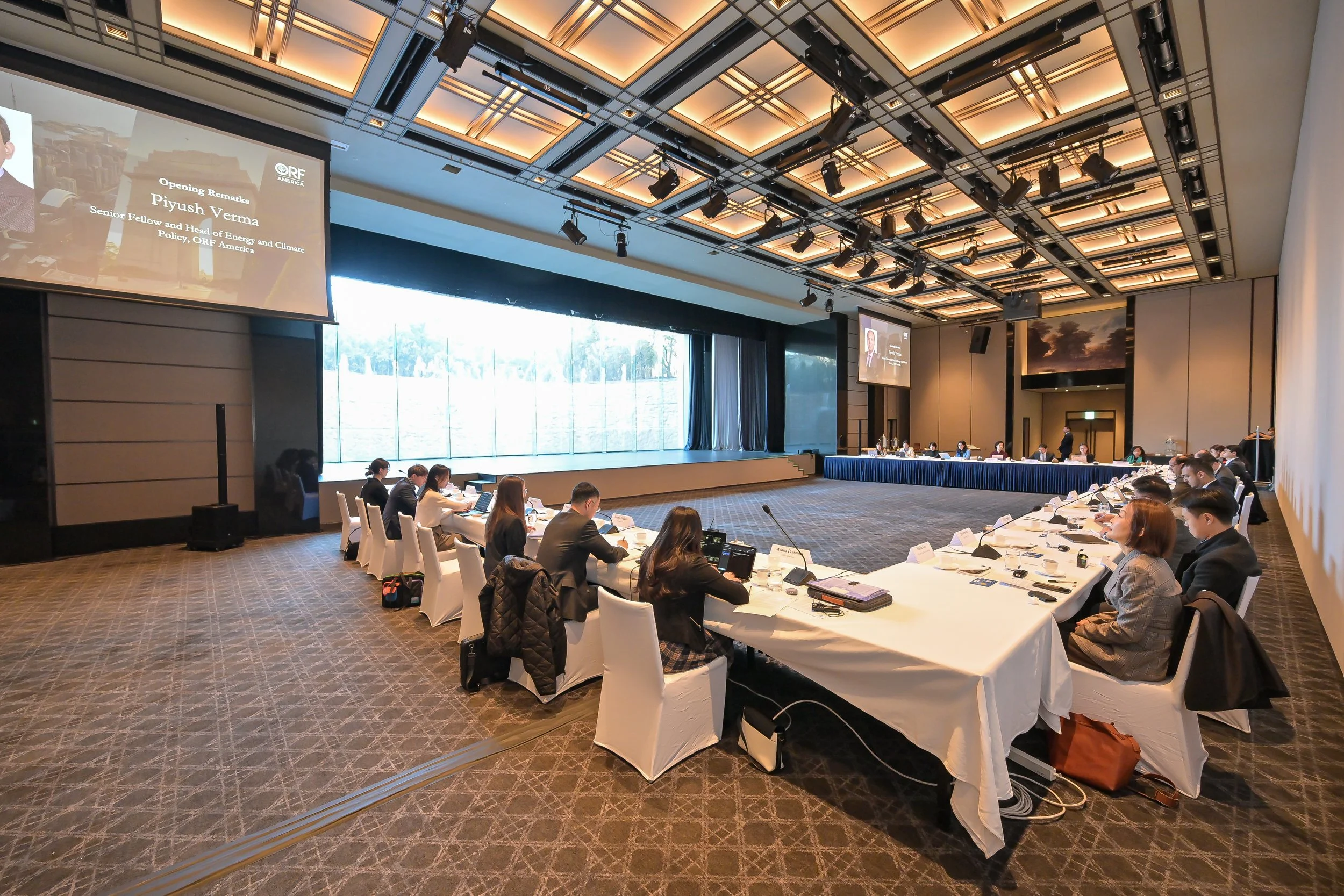
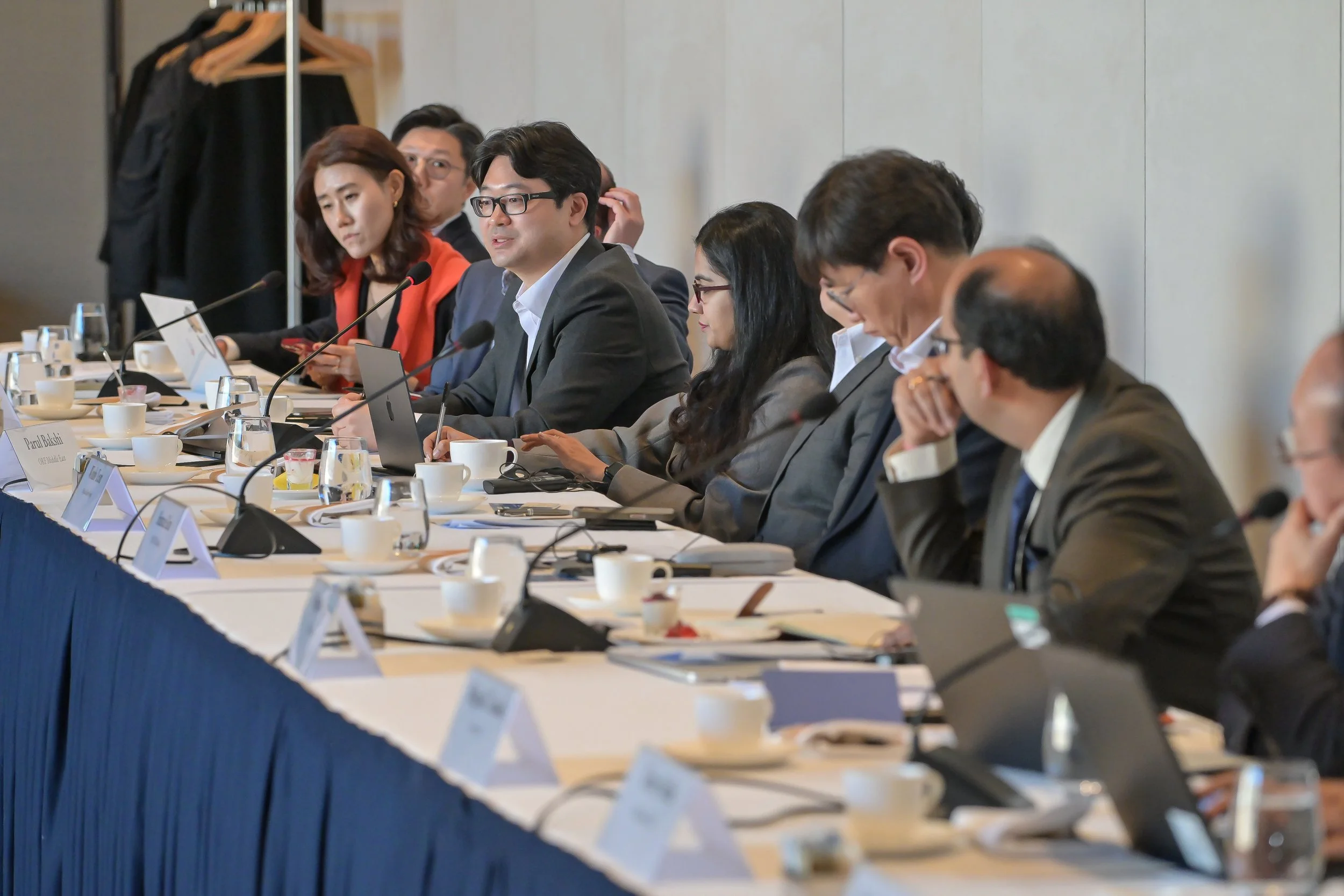
On February 25, ORF America convened policymakers, industry leaders, investors, analysts, and civil society representatives for a roundtable on the future of low-carbon steel in Seoul, Republic of Korea. The small-group convening included participants from 7 countries and 18 organizations, spanning government, heavy industry, finance, multilateral institutions, and research bodies. Discussions focused on the practical barriers and strategic opportunities shaping steel’s transition, ranging from technology readiness and infrastructure constraints to demand creation, trade alignment, standards development, and the role of finance in scaling early-stage projects. Participants examined how industrial policy, energy systems, and global markets must move in coordination to accelerate credible pathways toward lower-emissions steel production.
The day-long event unfolded across four sessions: Market Reality Checks: Policies, Standards, and Shared Bottlenecks; Technology Readiness and Pathways – What Can Scale, and When?; Making Green Steel Bankable: Finance, Risks, and the Green Premium; and From Fragmentation to Coordination: Enabling Infrastructure, Trusted Supply Chains, and Actionable Recommendations. Across these discussions, five central recommendations emerged:
Reframe the Challenge: Decarbonize Ironmaking and Sequence Pathways Strategically
A key insight is that most emissions in steel production come from ironmaking, not the final steelmaking stage. The debate should therefore focus on how to decarbonize iron production first. Rather than treating technologies as competing silver bullets, governments and firms need practical, country-specific transition roadmaps that compare options across cost, emissions reduction potential, scalability, and infrastructure readiness. This allows decision-makers to prioritize the most cost-effective abatement measures, identify where public support is truly needed, and sequence investments rationally over time. Such an approach recognizes geographic realities. Scrap availability, hydrogen infrastructure, carbon storage capacity, and energy costs differ widely across regions. Effective policy must reflect these differences, not impose uniform solutions.Scale Demand Through Green Public Procurement
Participants emphasized that demand must lead supply, but demand must also be coordinated. Expanding green public procurement across infrastructure, transport, and construction can create predictable, bankable markets for lower-emissions steel. However, unilateral national action will not shift global markets at scale. Collective adoption of procurement standards, across governments, provinces, and major buyers, was identified as critical. Governments and leading offtakers must act together, sending credible multi-year signals that reduce risk and unlock investment, much as structured procurement frameworks did for renewable energy and LNG markets.Make Offtakers and Governments Co-Architects of Market Creation
The primary bottleneck is no longer technological — it is commercial. Steel producers face high capital costs and uncertain returns if the green premium is not supported by predictable demand. Without bankable buyers, investment decisions stall. The solution is to work backwards from the buyer. What makes a green steel contract viable — regulatory compliance, brand value, supply security, or decarbonization commitments? These drivers must translate into enforceable, long-term offtake agreements supported by credible certification, transparent emissions accounting, and, where needed, price-stabilization tools such as contracts for difference or price floors. Governments must pair standards with incentives and risk-sharing mechanisms, while major industrial buyers integrate low-emission steel into mainstream procurement strategies. Market creation cannot be assumed — it must be intentionally designed and scaled.Align Stakeholder Signals to Reduce Fragmentation
Fragmentation across standards, infrastructure planning, regulatory systems, and financing frameworks remains a structural barrier. Investors seek policy clarity; producers seek demand certainty; governments seek emissions reductions without unsustainable fiscal exposure. When these signals are misaligned, projects stall. Participants emphasized the need for interoperable monitoring, reporting, and verification systems, credible and harmonized green certification, coordinated procurement standards, and blended finance tools that reduce risk across the value chain. Digital infrastructure and AI can further accelerate alignment by improving transparency, operational optimization, and energy management, thereby strengthening confidence among stakeholders. Reducing administrative and bureaucratic bottlenecks, both domestically and across bilateral partnerships, is equally critical to improving project bankability and moving from intent to execution.Lead with Ambition and Prepare for an Inflection Point
Steel decarbonization is no longer solely a climate issue — it is a question of competitiveness, energy security, and long-term industrial positioning. Elevating it to that level requires political clarity and policy ambition strong enough to justify early and coordinated intervention. At the same time, the transition must be managed deliberately to avoid disorder. Steel remains a nation-building sector, deeply linked to coal-dependent regions and established industrial workforces. Workforce reskilling, labor transition planning, and alignment with just transition principles must be embedded within decarbonization strategies rather than treated as afterthoughts. While green steel was described as inevitable, history shows that industrial transitions can accelerate abruptly once economic and policy tipping points are reached. Proactive coordination and sustained executive-level commitment will determine whether countries emerge as leaders in the next industrial cycle — or struggle as displaced incumbents.
Welcome Remarks and Keynote Speakers:
Piyush Verma, Senior Fellow, ORF America
Amb. Gourangalal Das, Ambassador of India to the Republic of Korea, Embassy of India, Seoul, Republic of Korea
Amb. Hyoeun Jenny Kim, CEO, Global Industry Hub
Participants
Caroline Arkalji, Research Assistant, ORF America
Sanjana Arya, First Secretary (Commerce & Investment), Embassy of India, Seoul, Republic of Korea
Anurag Bajpai, Director and Co-founder, GreenTree Global
Parul Bakshi, Non-Resident Fellow – Climate and Energy, ORF Middle East
Hayli Chiu, Analyst, Stewardship, Asia Investor Group on Climate Change
Eun Ko Rachel, Chief Strategy Officer and Director of the Industrial Decarbonization Program, NEXT Group
Lauren Huleatt, Head of Impact, Transition Asia
Eileen Hur, Technical Officer, Global Green Growth Institute
Samuel Hwang, Counsellor (Industry, Science and Resources), Australian Embassy in Seoul
Juna Hwang, Program Officer, Solutions for Our Climate
Soyi Hyun, Commercial Lead for Korea, BloombergNEF
Chang Sun Jang, Deputy Director, Global Green Growth Institute
Huntae Kim, Vice President, ESG Bureau, POSCO Holdings
Gyoorie Kim, Diplomacy Lead, Solutions for Our Climate
Jacob Kim, Account Manager, BloombergNEF
Jieun Kim, Commercial Division, Embassy of India, Seoul, Republic of Korea
James Kneebone, PhD Researcher, ETH Zürich
Heather Lee, Steel Team Lead, Solutions for Our Climate
Piljin Moon, Carbon Neutral Strategy Team Lead, POSCO Holdings
Medha Prasanna, Program Coordinator, ORF America
Tom Quinn, Managing Director, Springmount Advisory
Umer Sadiq, Associate, BloombergNEF
Anna Song, Korea Engagement Lead, Mission Possible Partnership
Shigeaki Tanaka, Executive Officer, Environmental Planning and Green Transformation, Nippon Steel
Wonho Yeon, Head of Economic Security Group, Hyundai Motors Group
Mielle Yoo, Korea Program Lead, Mission Possible Partnership
Sejong Youn, Director, Plan 1.5