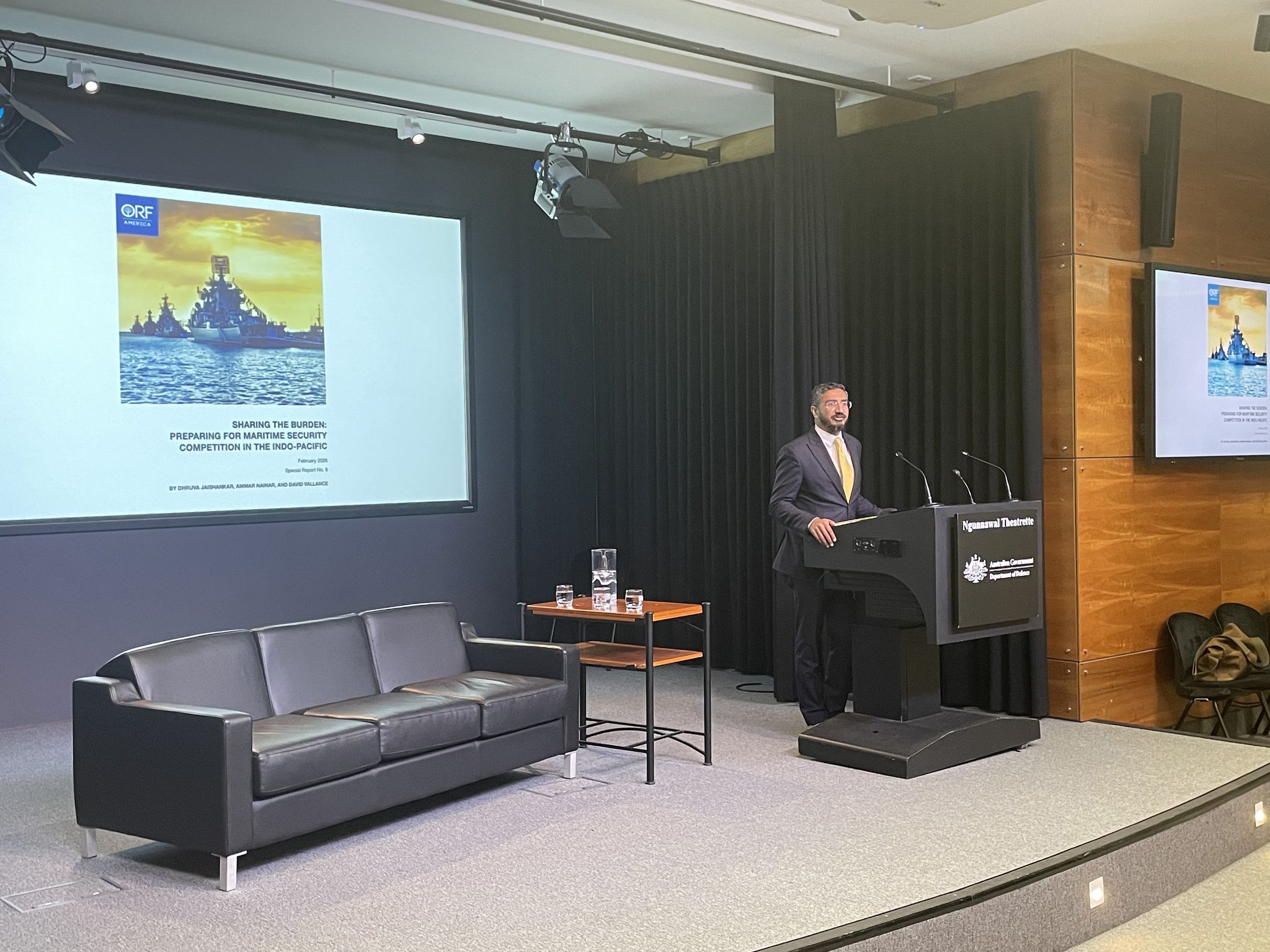
From February 23-26, Dhruva Jaishankar and Ammar Nainar visited Australia to launch their new report on Sharing the Burden: Preparing for Maritime Security Competition in the Indo-Pacific, which assesses the capabilities and posture of 14 maritime powers and describes what burden-sharing could look like in a more contested Indo-Pacific region.
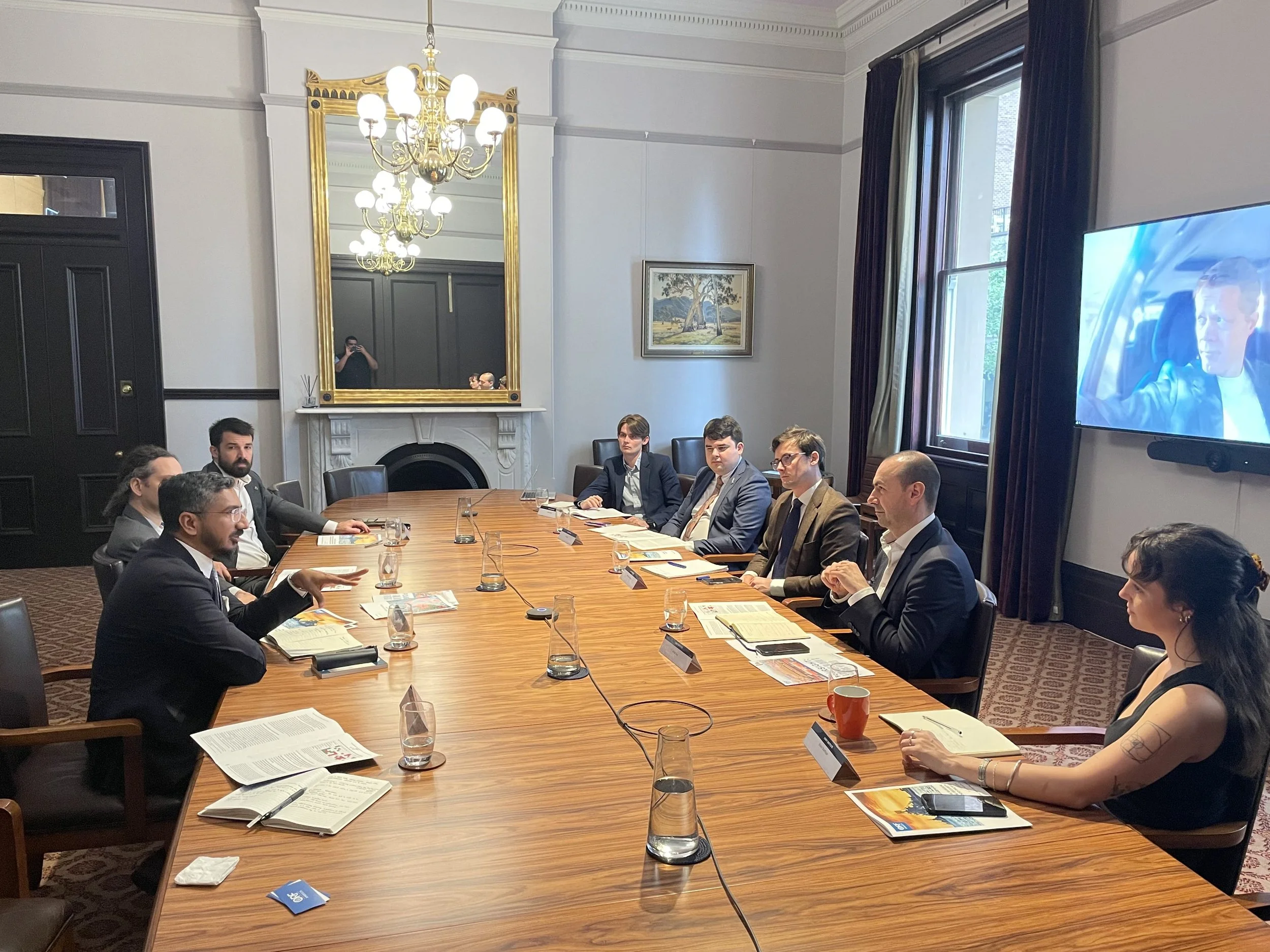
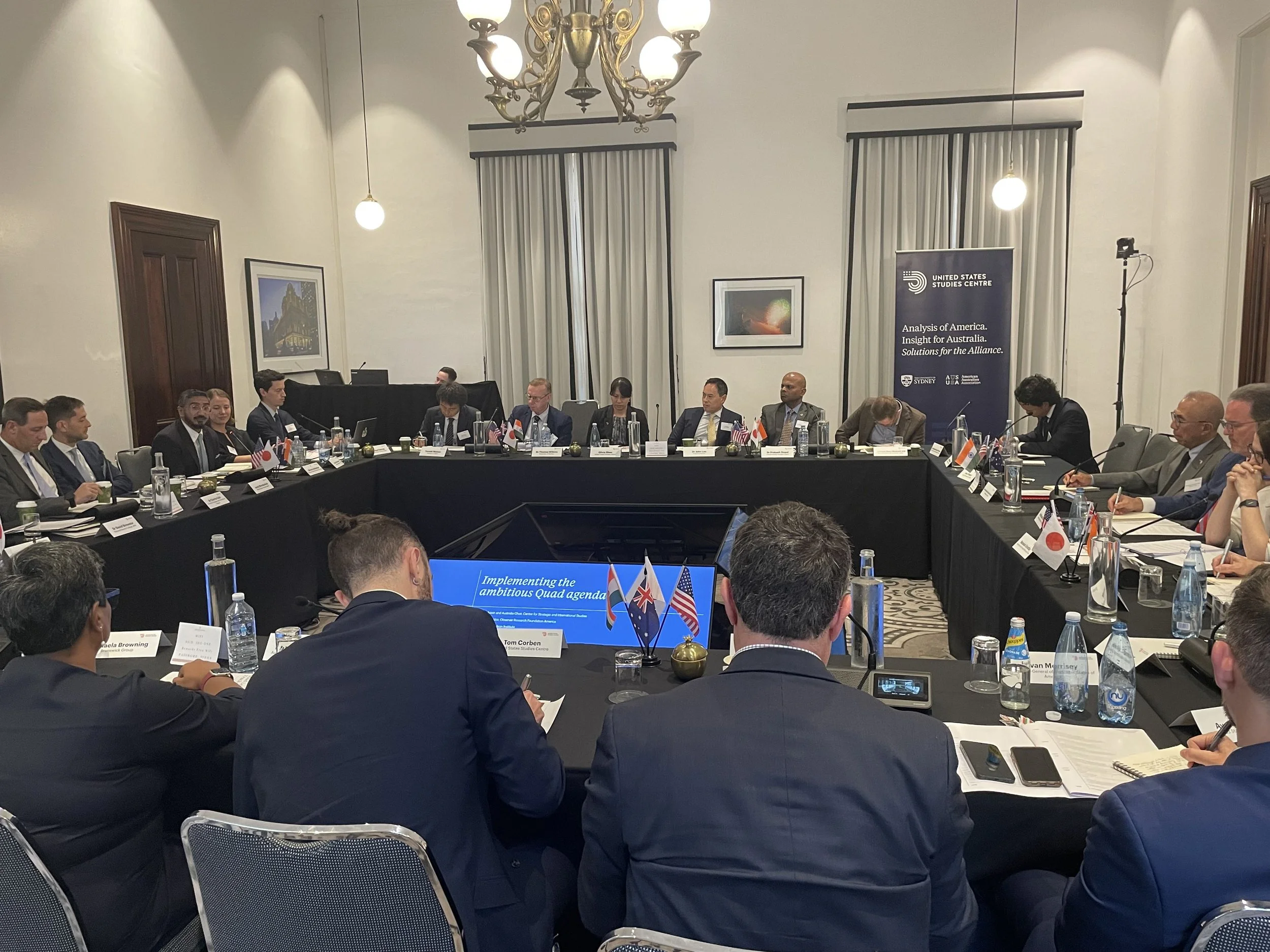
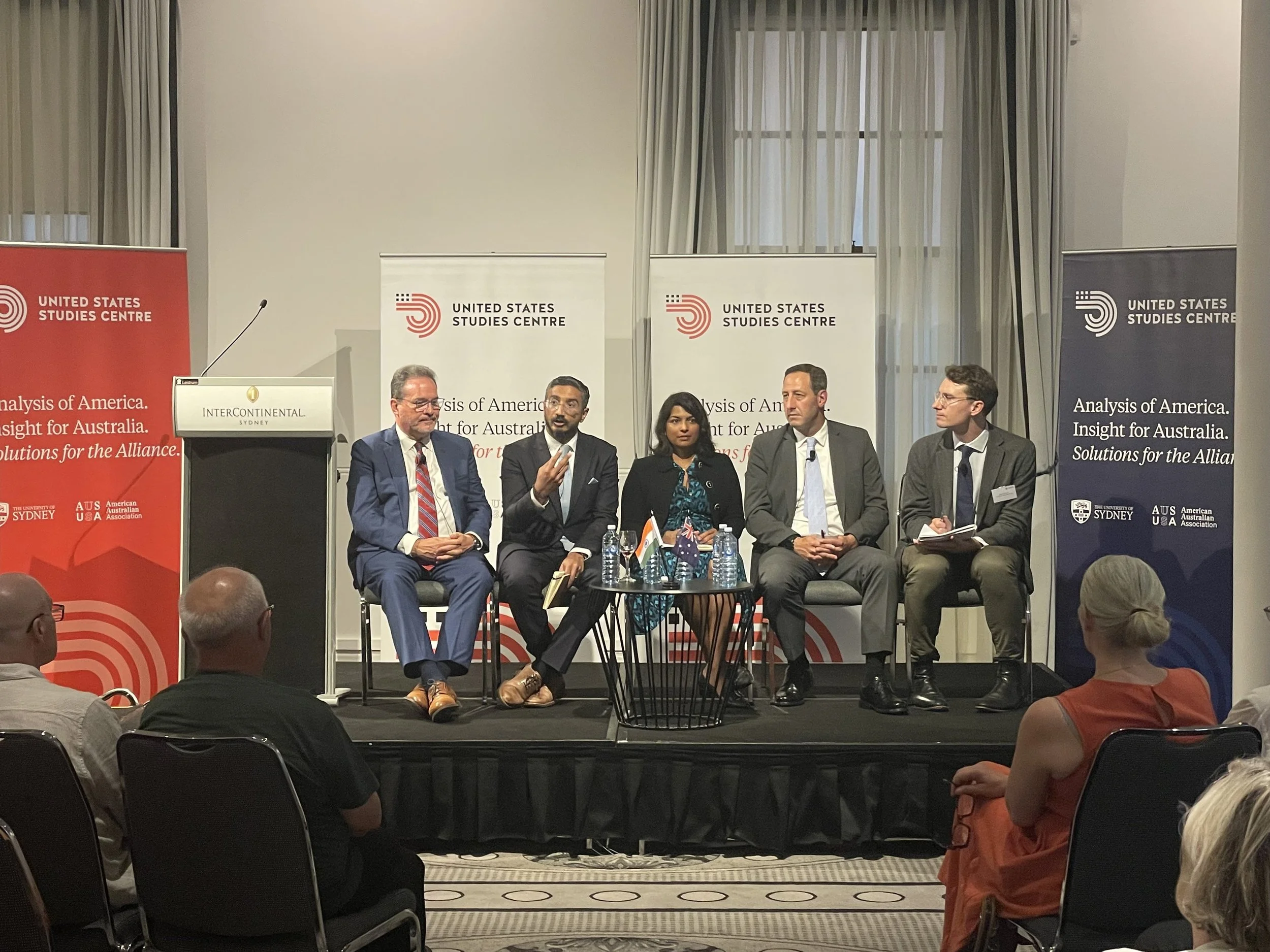
The visit began with a roundtable at the Lowy Institute and a Quad Dialogue at the United States Studies Centre (USSC) in Sydney, where the discussions focused on the Quad’s future and its evolving agenda. Following their engagements in Sydney, they visited Canberra to brief policymakers and analysts at the Department of Defence; Department of Foreign Affairs and Trade; and the Office of National Intelligence.
Key takeaways from the visit included:
The United States would benefit by clarifying the meaning of burden sharing - By burden sharing, should their partners and allies take up more responsibilities for their self-defense; or contribute to regional security; or support the United States in regional contingencies like Taiwan, the South China Sea, the Yellow Sea, or the Indian Ocean? Clarity here can help allies and partners respond more resolutely to U.S. calls for burden sharing as mentioned in its latest National Security and Defense Strategies.
The Quad’s agenda continues to progress at the working level - Despite the lack of leadership engagements, the Quad — comprising of India, Japan, Australia and the United States — has met regularly since January 2025 either through its working groups or the conduct of field trainings and tabletop exercises. The Quad’s agenda has also been streamlined to focus on maritime security, economic security, humanitarian assistance, and emerging technologies. It continues to be useful to its member countries either as a mechanism for regional coordination or as a tool to gain leverage vis-à-vis China.
India and Australia are consolidating their defense and security ties with a greater focus on interoperability, training, and information sharing - Since 2020, newer aspects of cooperation include agreements in submarine rescue and air-to-air refueling, setting up of joint staff talks, participation in each other’s multilateral exercises, cross-posting officer cadets at each other’s training academies, and a roadmap for maritime security cooperation.