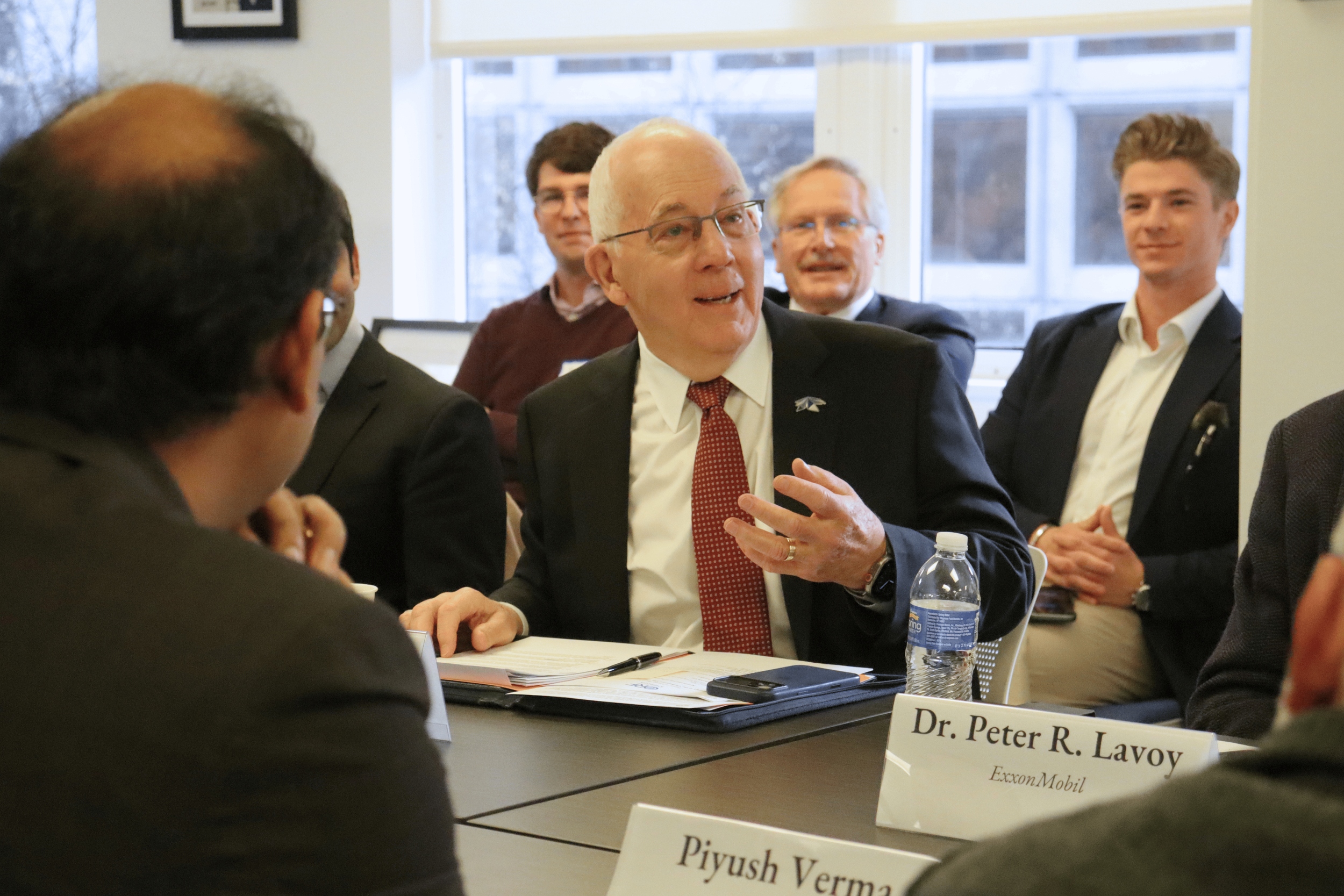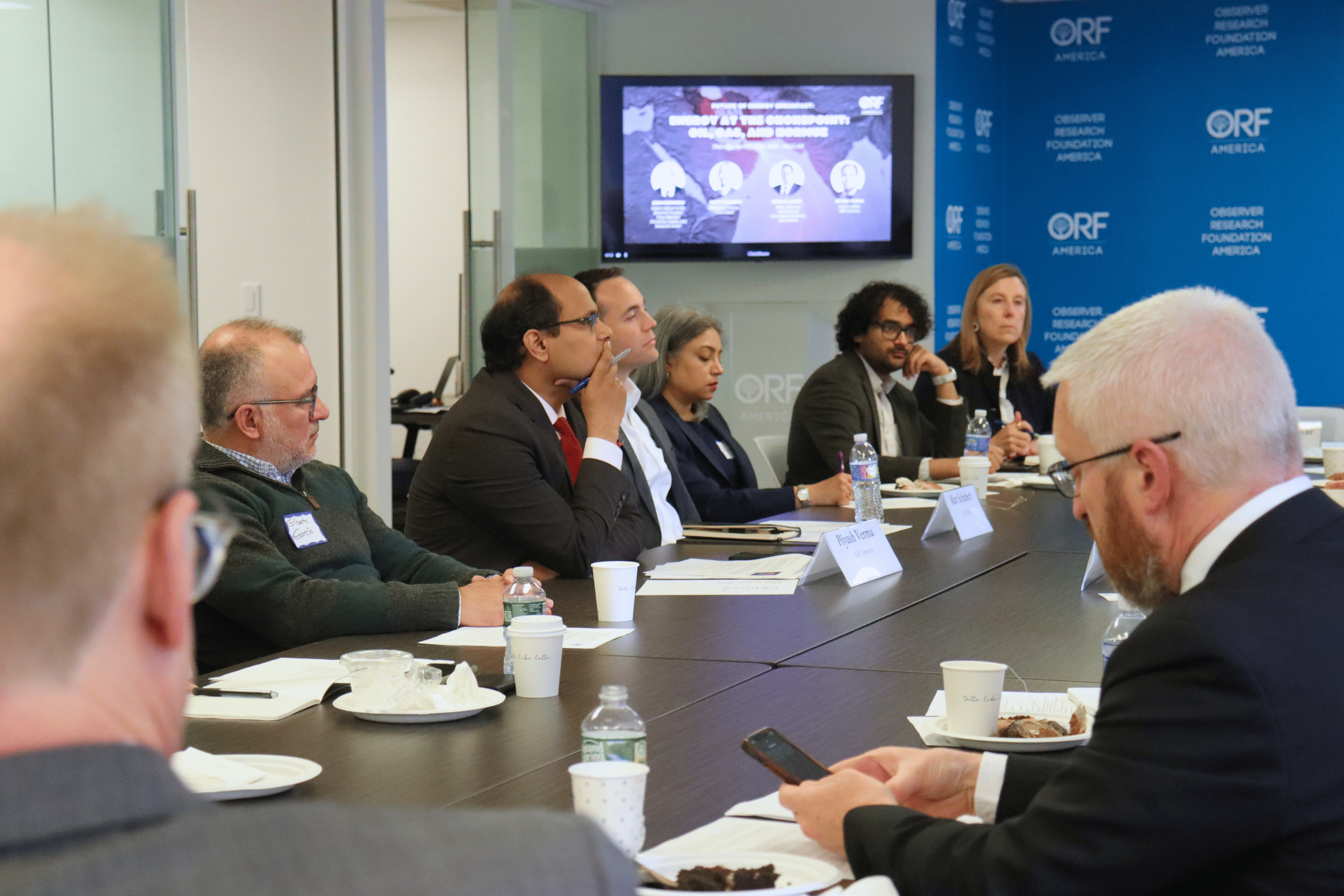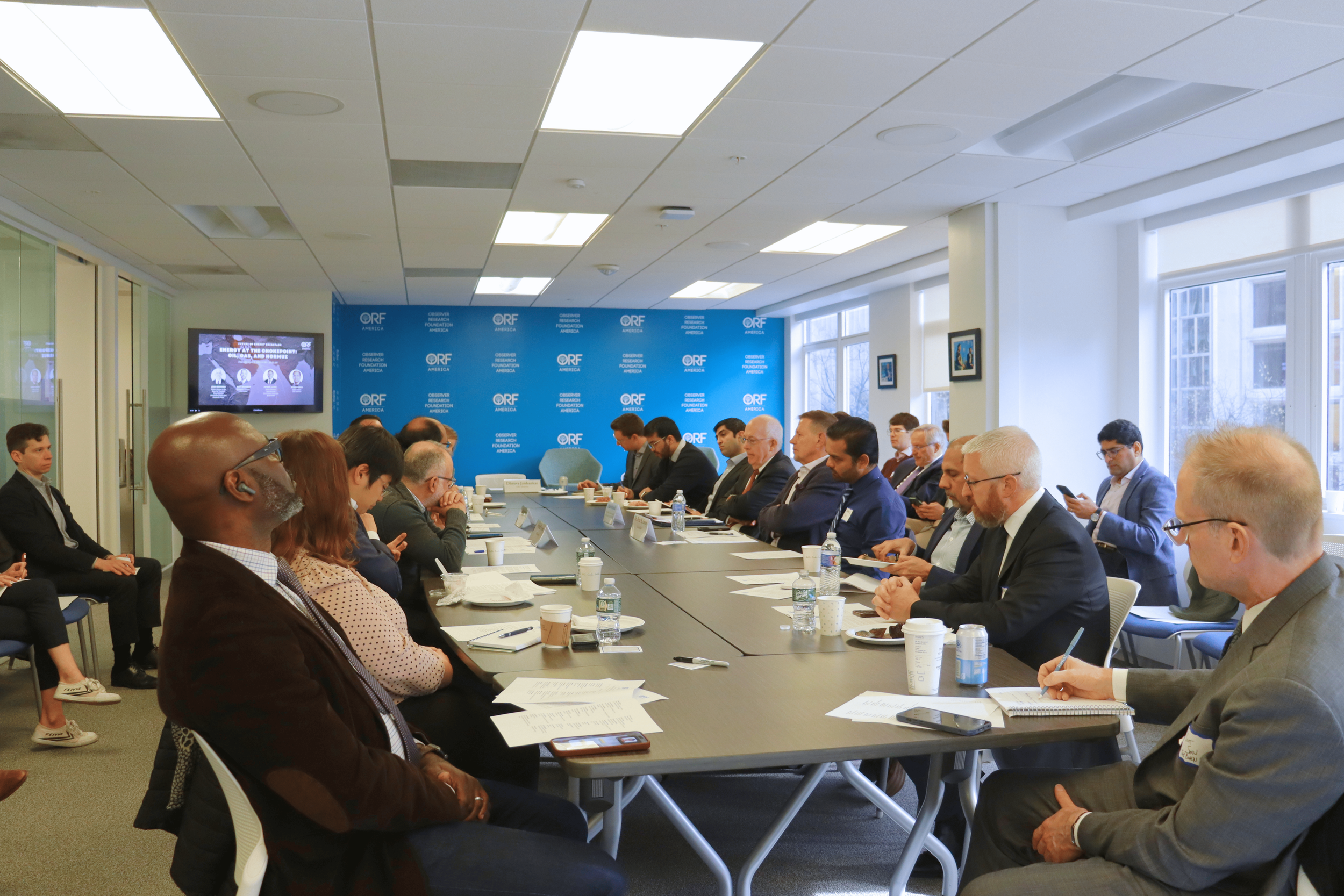
The systemic vulnerabilities underscored by the rising tension in the Middle East are no longer theoretical but widely recognized. This edition of our Future of Energy Breakfasts focused on global oil and gas markets in the context of rising geopolitical tensions in the Middle East, with particular attention to the strategic role of the Strait of Hormuz. As one of the world’s most critical energy corridors, carrying nearly one-fifth of global oil and a similar share of LNG, the Strait of Hormuz is both a lifeline for energy markets and a point of acute vulnerability.
Key takeaways included:
The effective disruption of the Strait of Hormuz has had reverberating effects on global supply chains beyond the oil and gas industries. Participants underscored that the near-total halt of transit through the Strait has removed approximately 20 million barrels per day from global supply, constituting one of the largest energy disruptions in modern history. However, the impact is not confined to crude oil and LNG. Essential commodities such as helium, petrochemical feedstocks such as methanol and ethylene, aluminum, and pharmaceutical precursors are also experiencing supply chain disruptions that are already being felt. As a result, the blockage is reverberating across agriculture, manufacturing, healthcare, and food systems. Even in the event of a reopening, elevated insurance costs, reduced risk tolerance, and damaged infrastructure are expected to delay a return to normal shipping flows, highlighting the fragility of globalized supply chains for these products, an issue the world can no longer ignore.
East Asia’s energy system dependency on exports from the Gulf reveals sharp asymmetries, producing clear winners and highlighting acute vulnerabilities across the region. Participants noted that the disruption of the Strait of Hormuz disproportionately impacts East Asia, where dependence on Gulf energy flows is high. Around 84% of crude oil and 90% of LNG imports into Asia transit through the Strait, exposing the region to severe supply shocks. Within this context, China emerges as comparatively resilient. Years of strategic stockpiling have created substantial buffers, while diversified supply channels, including overland pipelines and continued access to discounted Iranian, Russian, and Venezuelan crude via shadow fleets enable greater resilience. China’s industrial system can also substitute feedstocks for petrochemicals, further cushioning the shock. In contrast, Japan and South Korea face acute structural vulnerabilities. Japan relies on the Middle East for roughly 94% of its oil imports. Japan currently holds 4 million tonnes of LNG reserves which is equivalent to only three weeks of consumption leaving limited room to absorb prolonged disruption. South Korea, with a similarly high dependence on Gulf supplies, is even more exposed due to its large domestic manufacturing base. The shutdowns of petrochemical facilities and risks to semiconductor production, particularly given constraints on inputs such as helium, underscore the cascading industrial impact. Both countries have already been forced to reactivate higher-emission coal capacity to stabilize supply.
Energy security, affordability, and development are increasingly strained, particularly in emerging economies. The crisis is amplifying difficult trade-offs for governments, especially in developing countries. Rising fuel and commodity prices are placing pressure on public finances and subsidy regimes, with knock-on effects on poverty reduction and economic stability. Speakers highlighted how domestic policy choices, rather than global market structure alone, can drive fragmentation in how the crisis is experienced at the national level, even as oil markets remain globally integrated. For instance, Indonesia’s subsidized energy system is cushioning consumers from immediate price shocks but placing increasing strain on government budgets, while Singapore’s market-based pricing model, with no broad energy subsidies, is transmitting global price increases directly to consumers and industry. Countries such as India are forced to balance energy access with fiscal sustainability, while smaller economies face acute shortages in essential fuels such as liquefied petroleum gas. These pressures are even more pronounced in smaller and more vulnerable economies. Participants pointed to rising cooking gas prices in countries like Nepal and broader affordability challenges across South Asia, where energy costs directly affect food security, agricultural inputs, and basic living standards. These pressures are compounding existing inflationary dynamics, making poverty alleviation and middle-class expansion significantly more difficult.
Geopolitical leverage over critical chokepoints like the Strait of Hormuz is reshaping energy security and global trade dynamics. During the recent crisis, the Strait effectively became a tool of strategic coercion, as Iran demonstrated its ability to exert significant pressure on the global economy through controlled disruptions and selective access. Participants highlighted the emergence of new mechanisms, including bilateral safe-passage arrangements for limited volumes of oil tankers, the use of vetted or coordinated transits, and Iran’s push for maritime tolling — with reported fees reaching up to $2 million per vessel in some cases. These developments signal a potential erosion of long-standing norms on freedom of navigation, raising serious implications for international maritime law and naval security. Existing infrastructure, such as Saudi Arabia’s East-West Crude Oil Pipeline, provides a partial alternative to reduce dependency on the Strait. However, such bypass routes remain limited in scope and cannot fully offset the massive volumes of oil and LNG traditionally transported by tankers through Hormuz.
The crisis is driving shifts in energy systems, with mixed implications for the energy transition. Participants highlighted a growing divergence between short-term energy security imperatives and long-term decarbonization goals. On one hand, alongside renewed investment in domestic renewable capacity, the disruption is catalyzing what participants described as a “nuclear renaissance,” particularly in Northeast Asia. On the other hand, coal is experiencing a near-term resurgence as countries prioritize reliability and affordability over emissions targets. Even LNG, previously positioned as a transition fuel, has seen its role undermined by supply insecurity and infrastructure risks, particularly in Qatar.
Looking ahead, the crisis may leave a lasting imprint on how energy systems are designed and governed. Investment in alternative supply routes, domestic production, and storage capacity is likely to accelerate, alongside increased scrutiny of critical chokepoints worldwide. At the same time, the potential normalization of economic coercion, through tolling, disruption, or resource control, raises concerns about precedent and the stability of global trade frameworks. While energy markets themselves remain structurally global, national policies, subsidies, and geopolitical alignments are introducing new layers of complexity. Participants also underscored the need to move beyond reactive responses toward more resilient energy systems, built on diversification, flexibility, and reduced exposure to single points of failure.
Speakers:
Opening Remarks and Moderator: Piyush Verma, Senior Fellow, ORF America
Peter R. Lavoy, Senior Director, International Government Relations, ExxonMobil
Matt Schubert, Managing Director, FGS Global
Adam Sieminski, Senior Advisor to the Board of Trustees, King Abdullah Petroleum Studies and Research Center (KAPSARC)
Closing Remarks: Dhruva Jaishankar, Executive Director, ORF America
Participants
Raul Alfaro-Pelico, Lancaster University
Telmen Altanshagai, NXT Conclave
Caroline Arkalji, ORF America
Travis Brubaker, E3G
Amb. Robert Cekuta, American University
Kyle Disselkoen, Bloomberg NEF
Damian Doyle, Embassy of Australia
Andrew Fishbein, Climeworks
Gilberto Garcia-Vazquez, NZIPL
Akshobh Giridharadas, US-India Strategic Partnership Forum
Anvesh Jain, Georgetown University Law Center
Hamna Khan, U.S. Department of Energy
Parag Nathaney, Exelon
Sarah Otte, Deloitte
Satvik Pendyala, American Enterprise Institute
Medha Prasanna, ORF America
Tejasvi Raghuveer, Energy Aspects
Sarah Salah, ORF America
Mary Sagatelova, Third Way
Sara Schonhardt, E&E News
Abhik Sengupta, Confederation of Indian Industry
Nayan Seth, Independent Consultant
Siddharth Sharma, McLarty Associates
Scott Shaw, The Cohen Group
Sarang Shidore, Quincy Institute
Elena Thomas-Kerr, US Department of Energy
Naoki Tsuji, Japan Bank for International Cooperation
Marshall Williams, NewFront