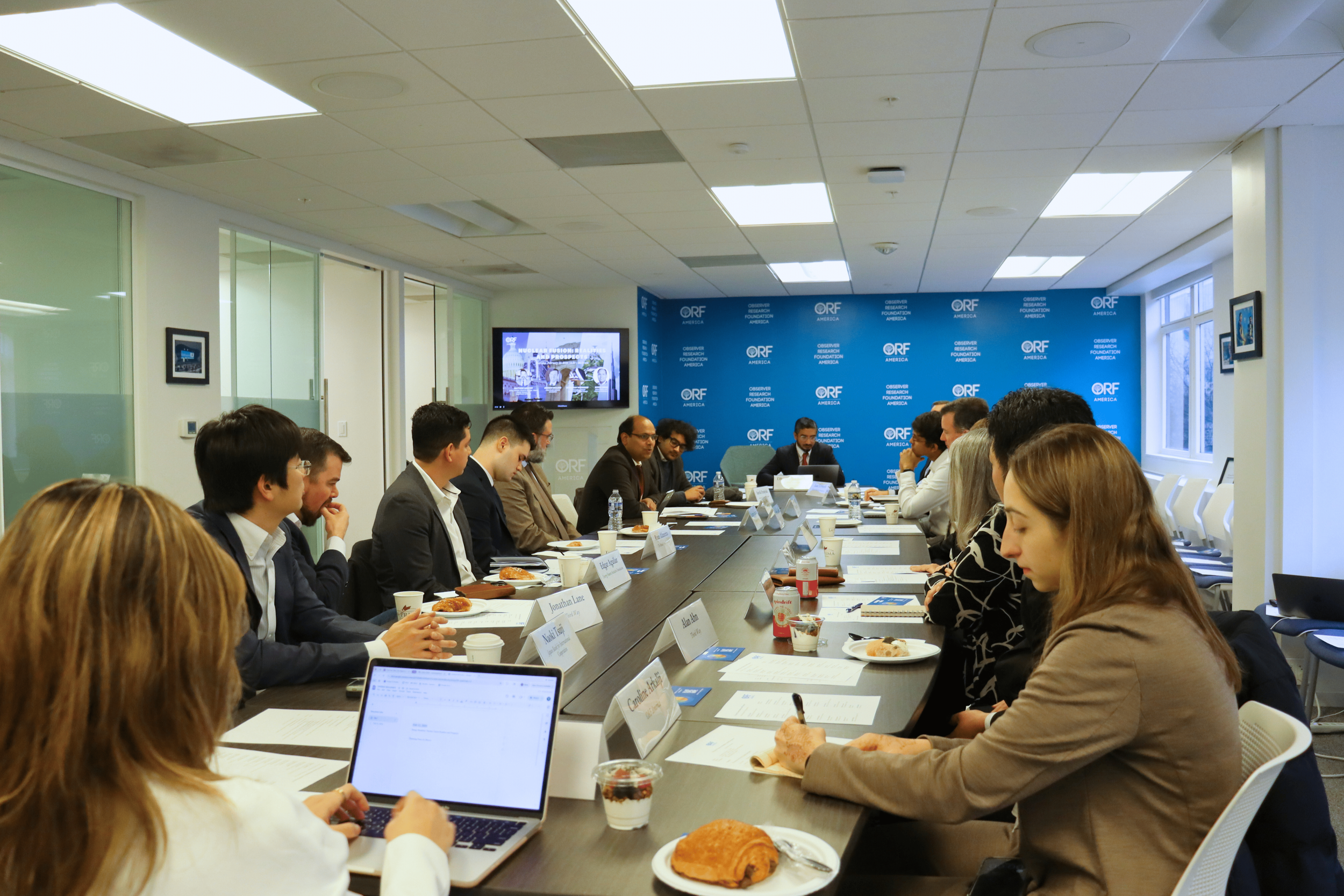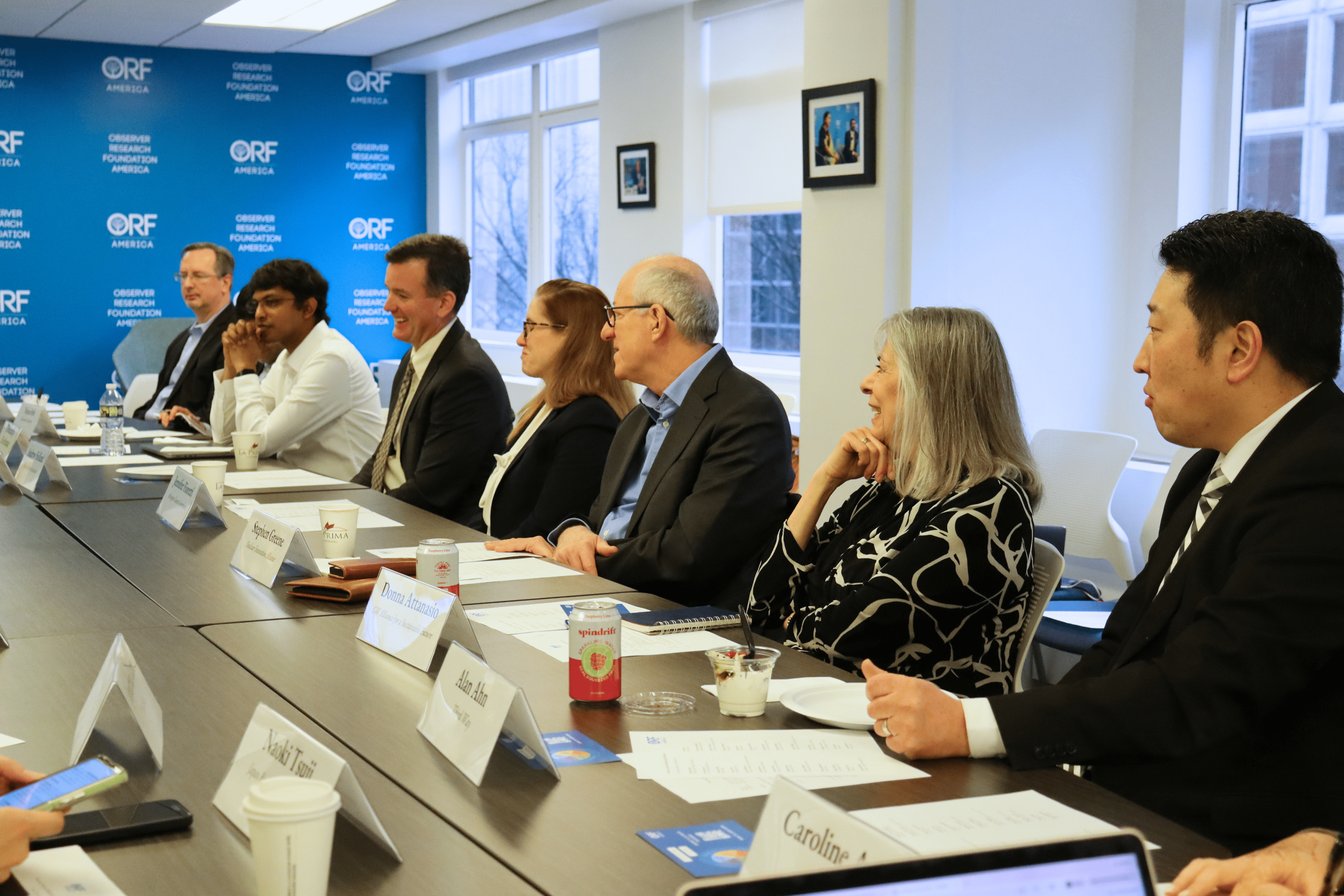
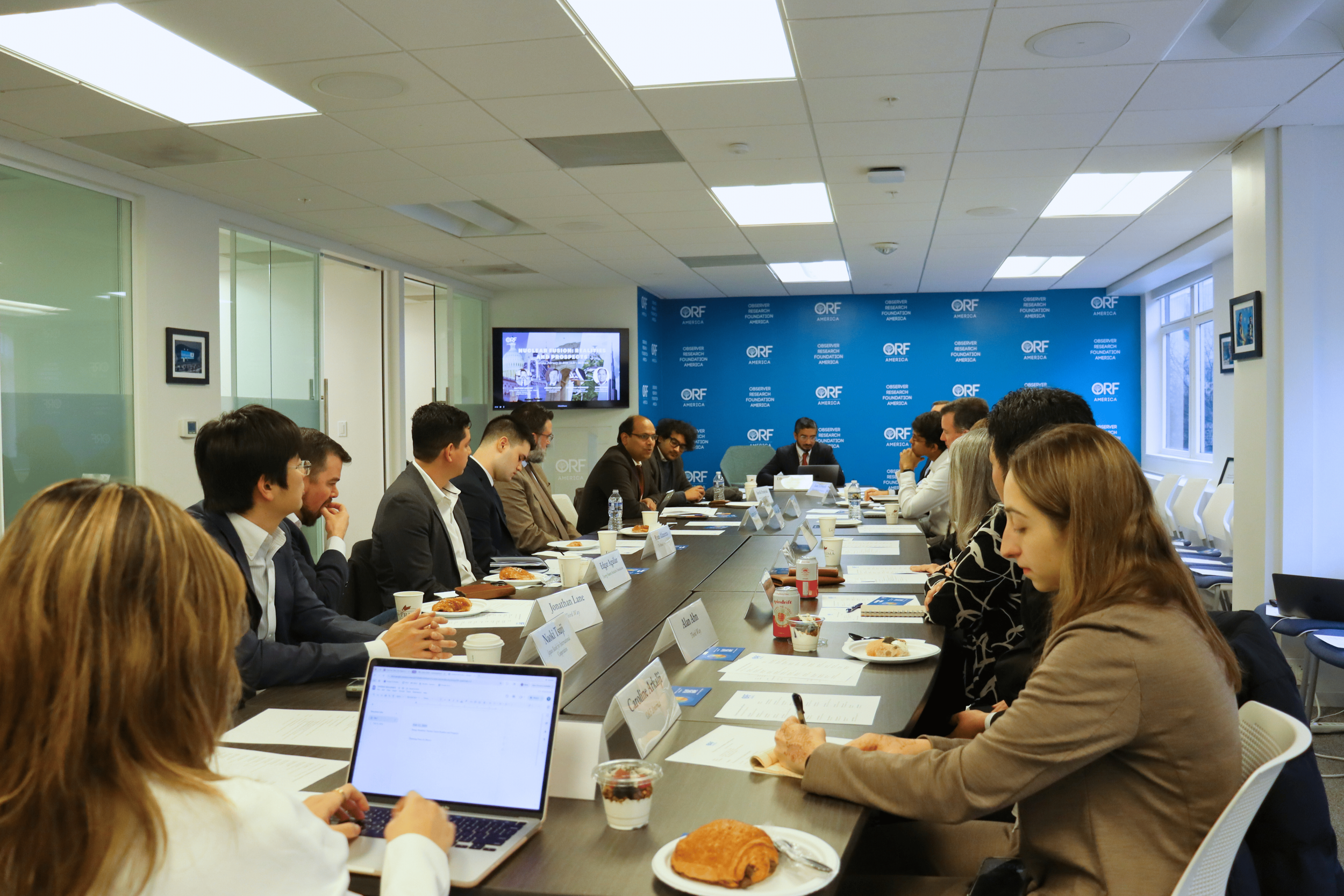
The Future of Energy Breakfasts series brings together senior leaders from government, industry, and technology for candid, closed-door discussions on the forces reshaping the global energy landscape. This edition focused on nuclear fusion, examining its technological readiness, policy, and regulatory environment, and the role of public–private collaboration in advancing fusion from long-term research to early commercialization.
Key takeaways included:
From laboratory science to early pilots and commercialization, fusion is entering a pivotal phase. Participants noted that nuclear fusion has moved beyond purely experimental research and is now navigating the complex transition toward commercial viability. While significant scientific milestones have been achieved, the pathway to grid-connected systems requires clarity around engineering scalability, cost reduction, and operational reliability. Discussion outlined the importance of achieving sustained net energy gain at the systems level, reducing recirculating power requirements, and designing reactors that can operate efficiently in extreme physical environments. Although several companies anticipate proof-of-concept demonstrations within this decade, participants stressed that commercial readiness will ultimately depend as much on systems integration and cost competitiveness as on plasma physics breakthroughs.
Public–private collaboration has become the central driver of progress in fusion development. The public sector has increasingly shifted from basic scientific exploration toward enabling commercialization through milestone-based partnerships and structured funding models. Participants highlighted the growing integration of artificial intelligence and high-performance computing into plasma modeling, control systems, materials research, and reactor design optimization. These technological accelerators are compressing development timelines and improving predictability. At the same time, collaboration between national laboratories, startups, utilities, and regulators is helping to align scientific ambition with market realities. The consensus view was that sustained coordination across institutions will determine whether fusion transitions from demonstration to deployment.
Capital formation is reshaping fusion from a research domain into an emerging industrial sector. Venture capital and private investment have expanded significantly in recent years, supported by industry organizations representing a growing ecosystem of companies and affiliates. Participants observed that investor interest is not solely tied to long-term electricity generation but also to near-term commercial applications emerging from fusion research. High-temperature superconducting magnets, medical isotope production, advanced materials, and power management technologies are emerging as adjacent commercial applications that could provide parallel revenue pathways and strengthen the sector’s financial resilience over time. Nonetheless, participants emphasized that long-term capital confidence will depend on credible timelines, regulatory clarity, risk-sharing, and demonstrable progress toward reducing levelized cost projections.
Supply-chain resilience and geopolitical realities present structural challenges for the fusion ecosystem. Fusion systems rely on highly specialized components, including advanced semiconductors, rare earth materials, superconducting materials, and high-performance alloys. Participants noted that concentration in certain segments of global supply chains introduces vulnerabilities, particularly given current geopolitical tensions. While multinational collaboration continues through large-scale initiatives and research platforms, broader strategic competition complicates deeper technological exchange among major powers. Strengthening domestic manufacturing capabilities, diversifying trusted supply chains, and fostering international partnerships were identified as necessary steps to mitigate long-term risk for nuclear fusion.
Safety frameworks and public transparency will shape the long-term legitimacy of fusion energy. Fusion reactors operate under extreme conditions characterized by high-energy neutrons, intense heat flux, and powerful magnetic fields. Participants underscored the importance of regulatory clarity that both safeguards public welfare and provides certainty for developers. Building public trust will require proactive communication about how materials are managed throughout the lifecycle, and how regulatory oversight evolves alongside technological progress. Transparent governance, rather than reactive reassurance, was viewed as essential to maintaining social license.
Finally, fusion is emerging not only as an energy innovation but as a strategic technology with implications for national competitiveness and long-term energy security. Participants emphasized that the coming decade will be decisive. Continued public–private R&D collaboration, scalable financing mechanisms, resilient supply chains, and international cooperation will determine whether fusion remains a scientific milestone or becomes operational infrastructure. The trajectory of fusion development will reflect not only advances in physics, but also the strength of policy alignment, industrial strategy, and institutional coordination.
Speakers
Welcome Remarks: Dhruva Jaishankar, Executive Director, ORF America
Matthew Lanctot, Acting Director, Research Division - Fusion Energy Sciences,
U.S. Department of EnergyAndrew Holland, CEO, Fusion Industry Association
Dhananjay Ravikumar, Director, Thermofluids Engineering, Type One Energy
Moderator: Piyush Verma, Senior Fellow, ORF America
Participants
Edgar Aguilar, Energy Futures Initiative Foundation
Alan Ahn, Third Way
Ryan Alimento, The Breakthrough Institute
Caroline Arkalji, ORF America
Donna Attanasio, GW Alliance for a Sustainable Future
Isaac Edwards, Fusion Industry Association
Jennifer Fioretti, Arlington County Government
Stephen Greene, Nuclear Innovation Alliance
Jonathan Lane, Third Way
Satvik Pendyala, American Enterprise Institute
Sarah Salah, ORF America
Nayan Seth, Independent Consultant
Naoki Tsuji, Japan Bank for International Cooperation