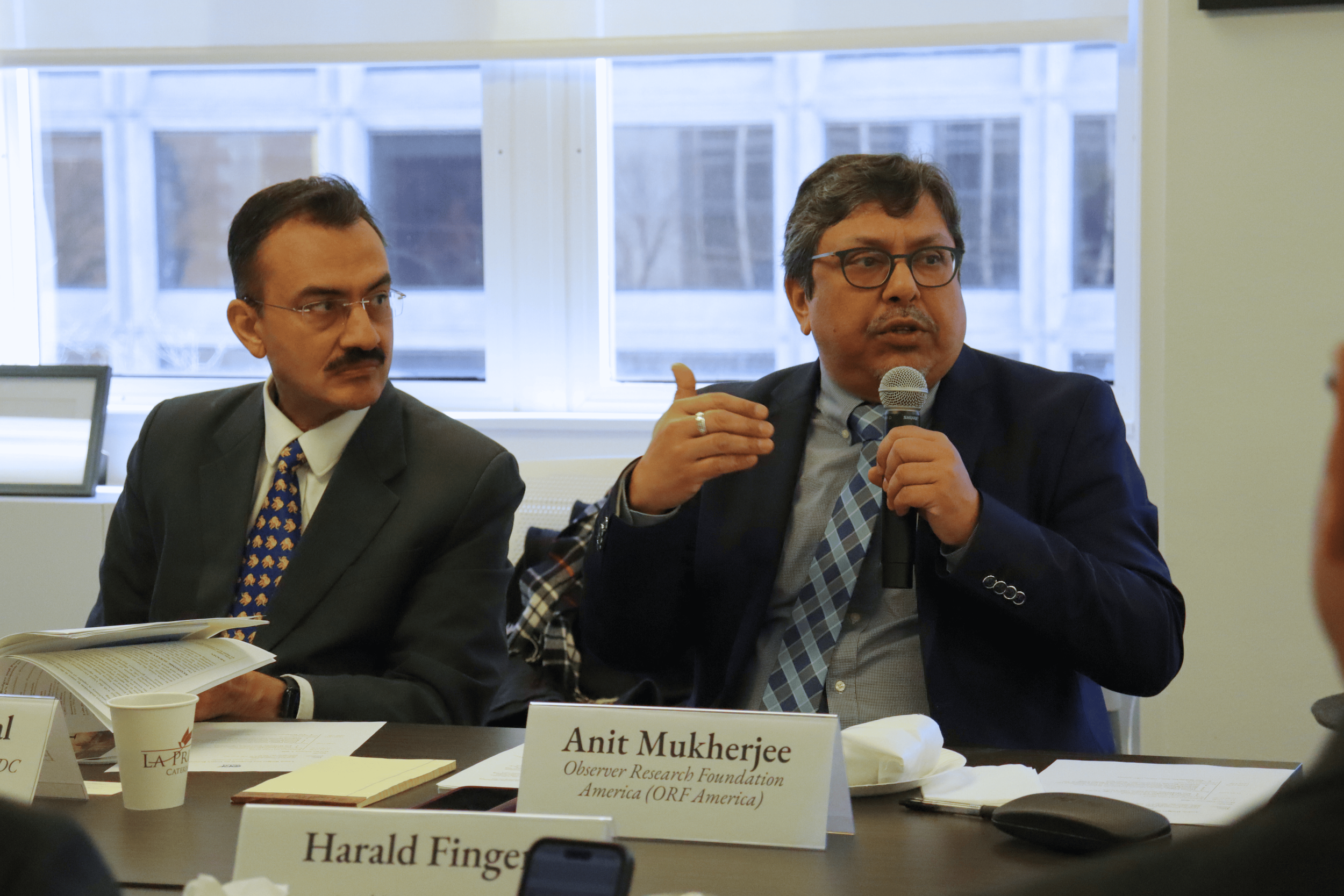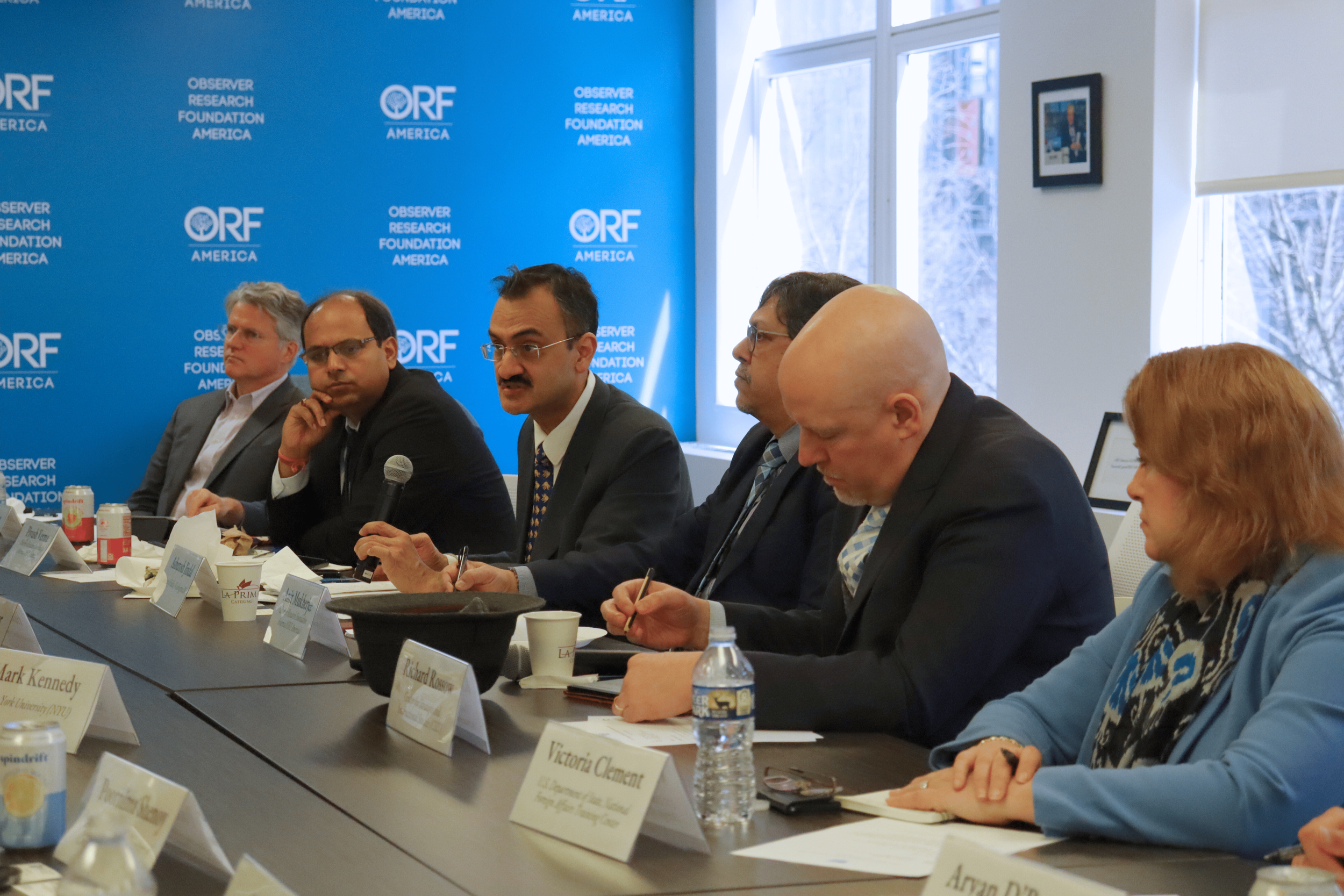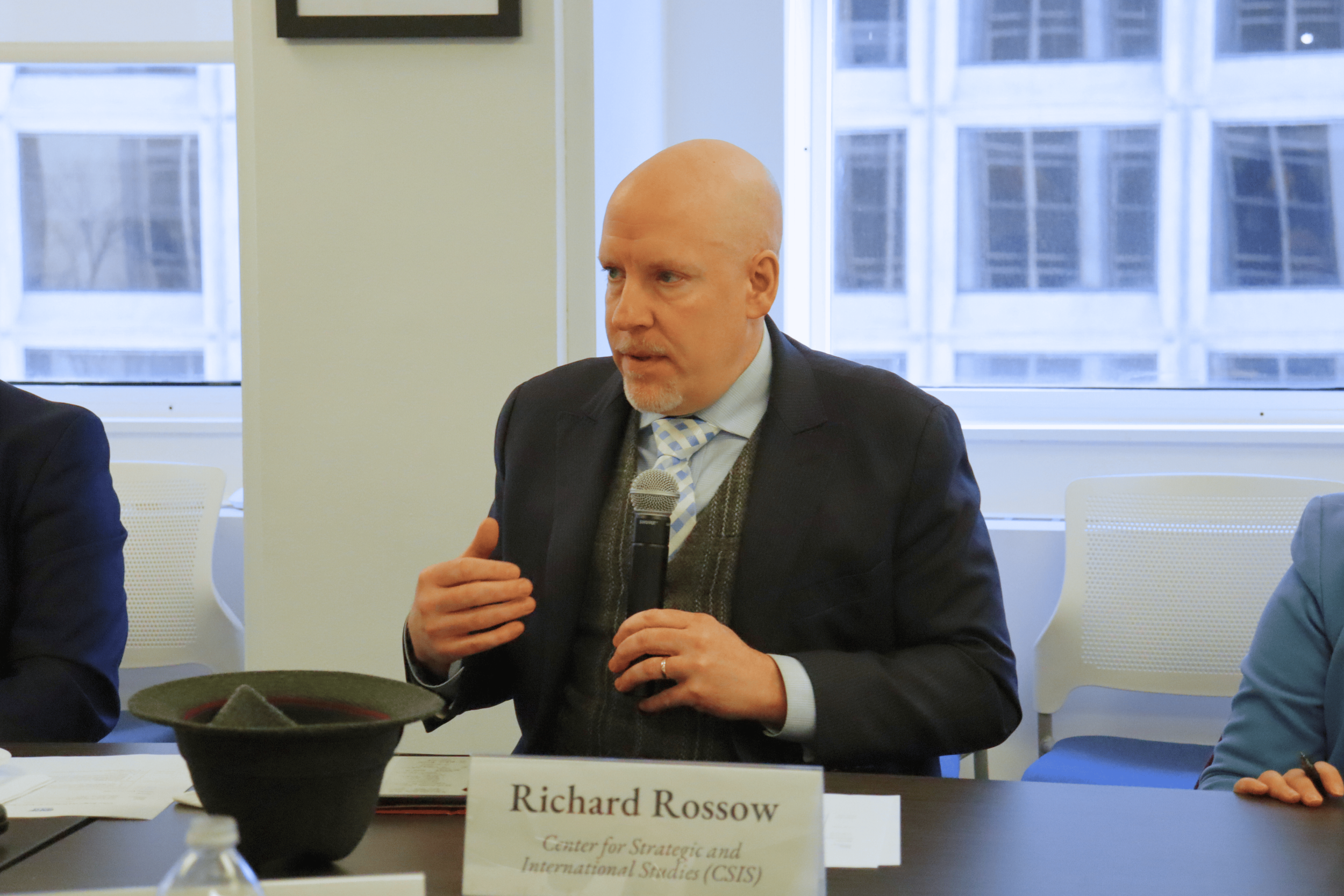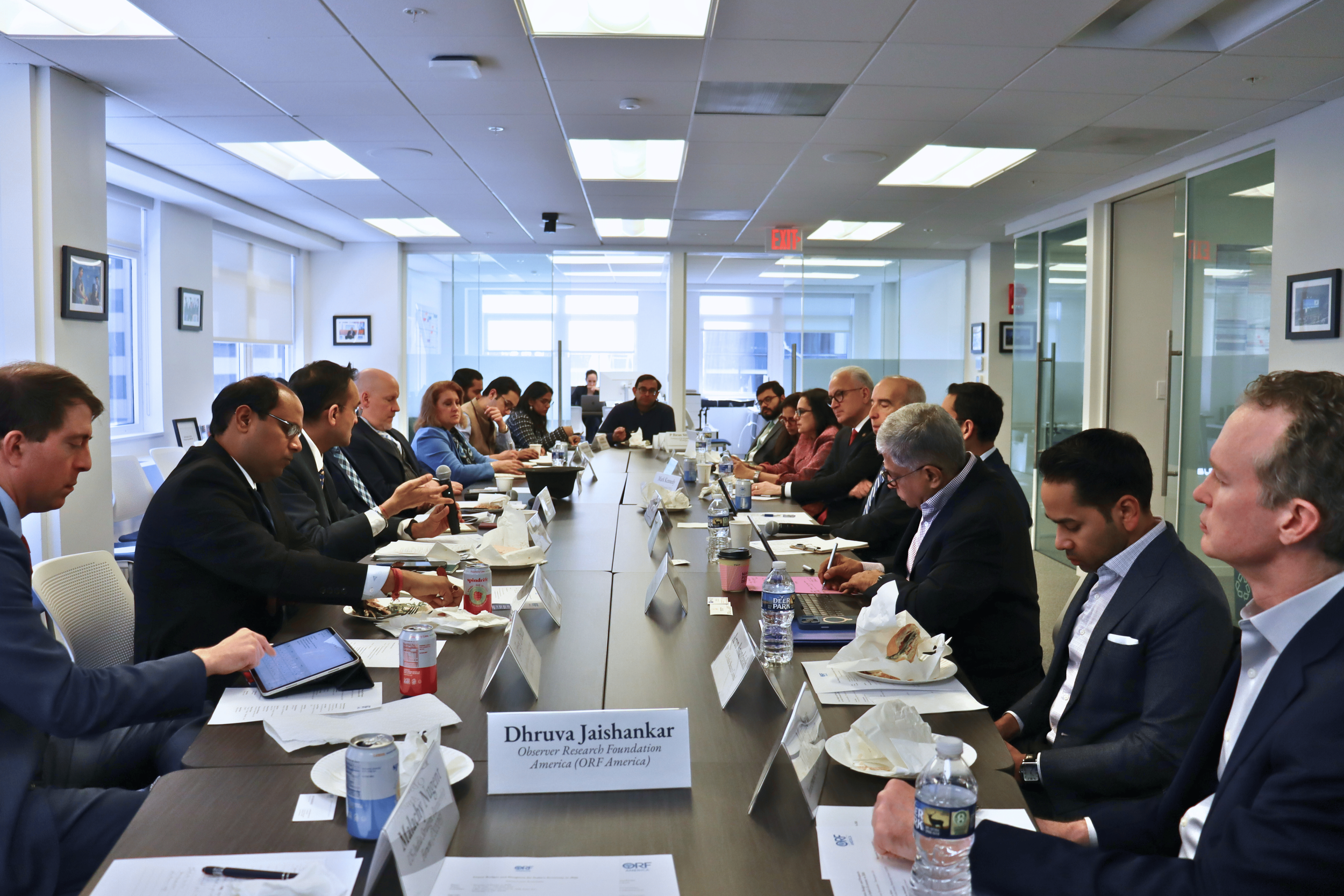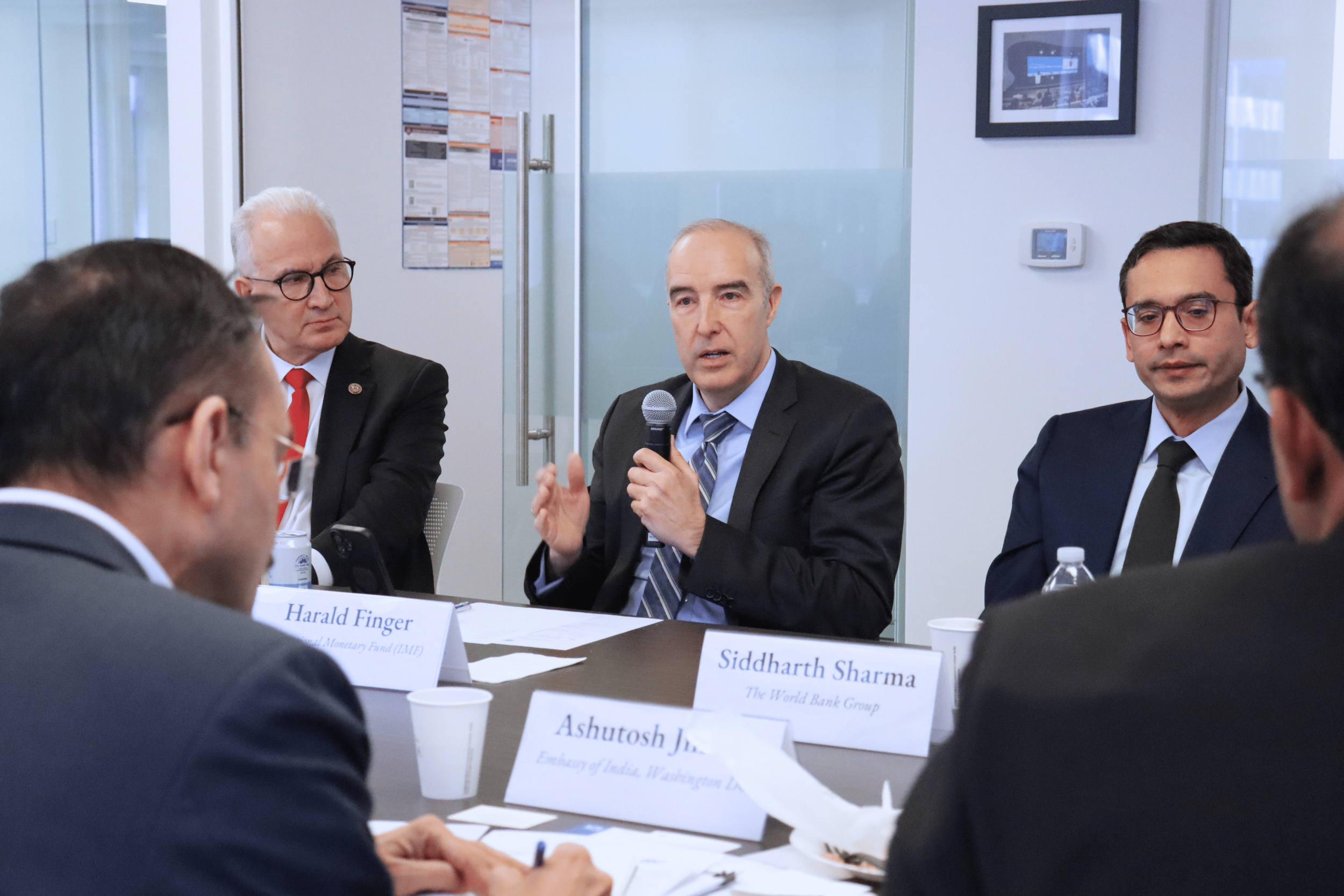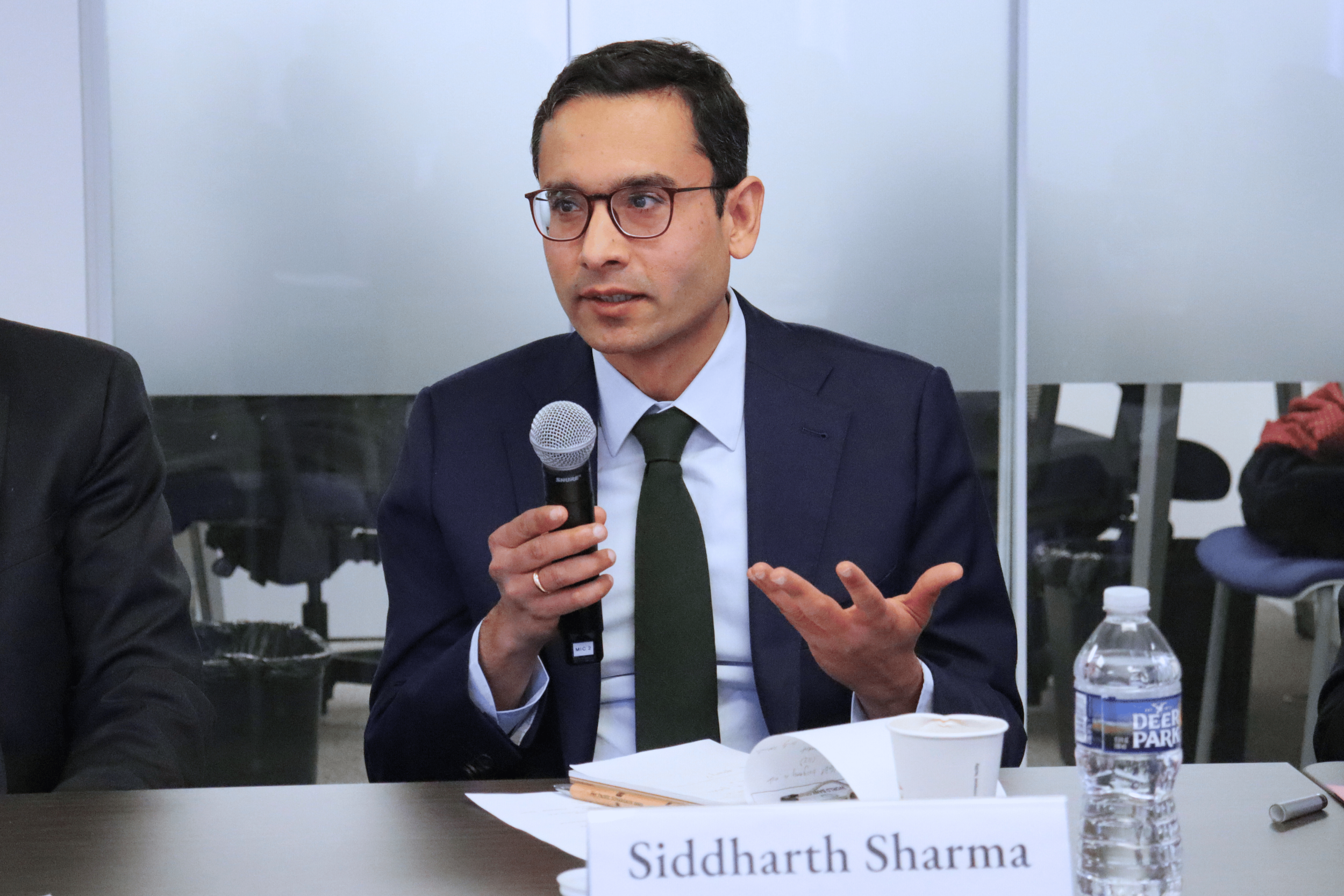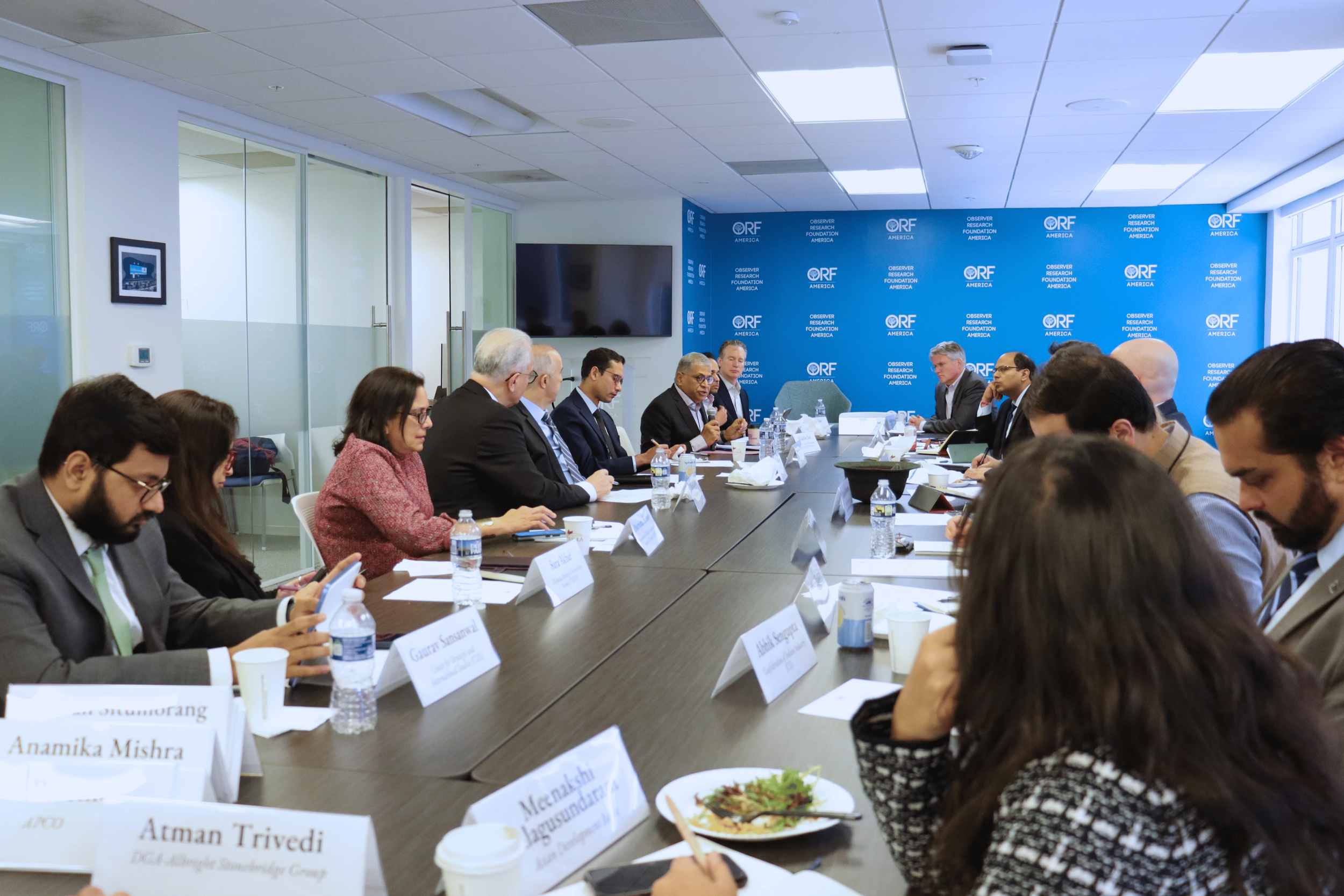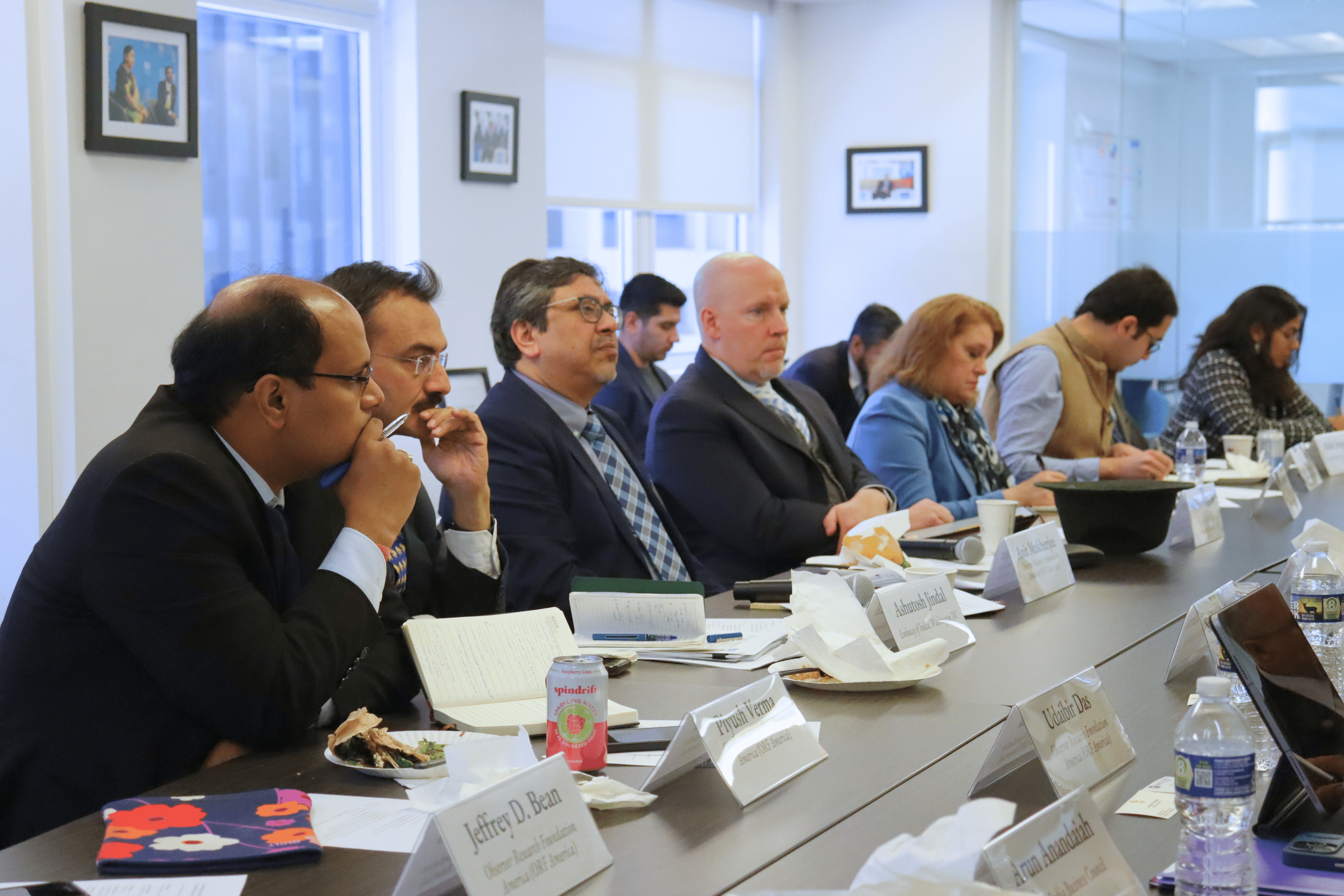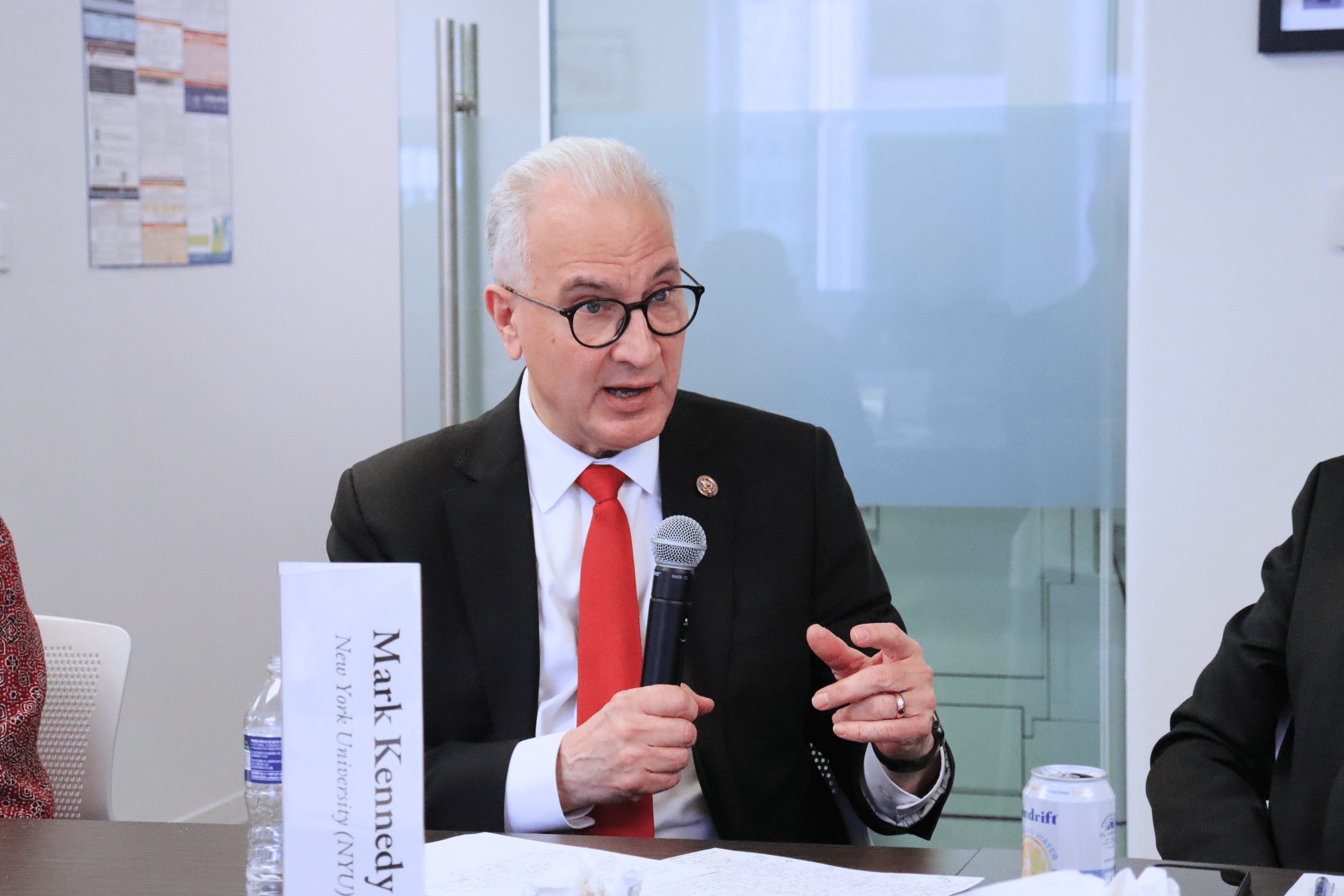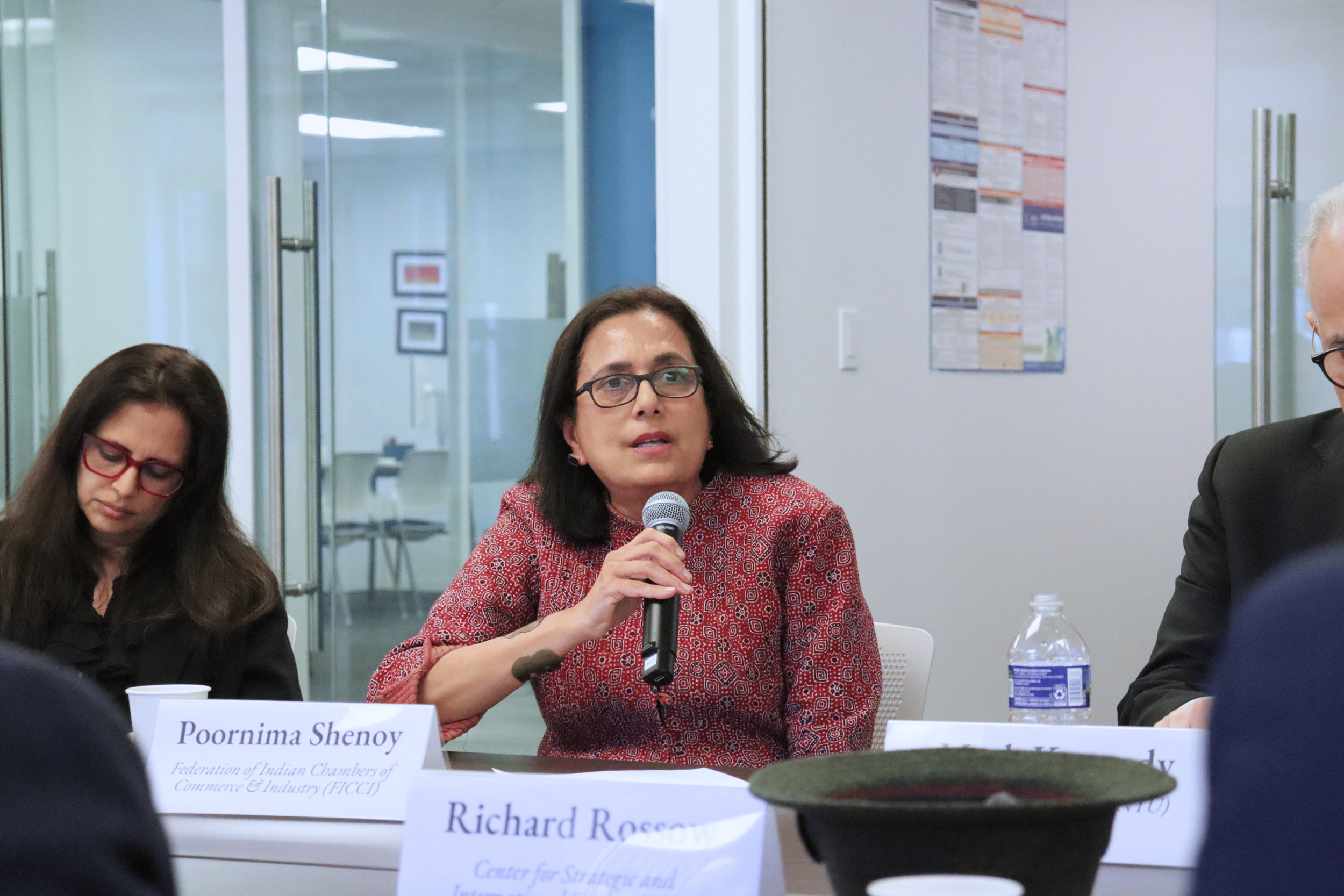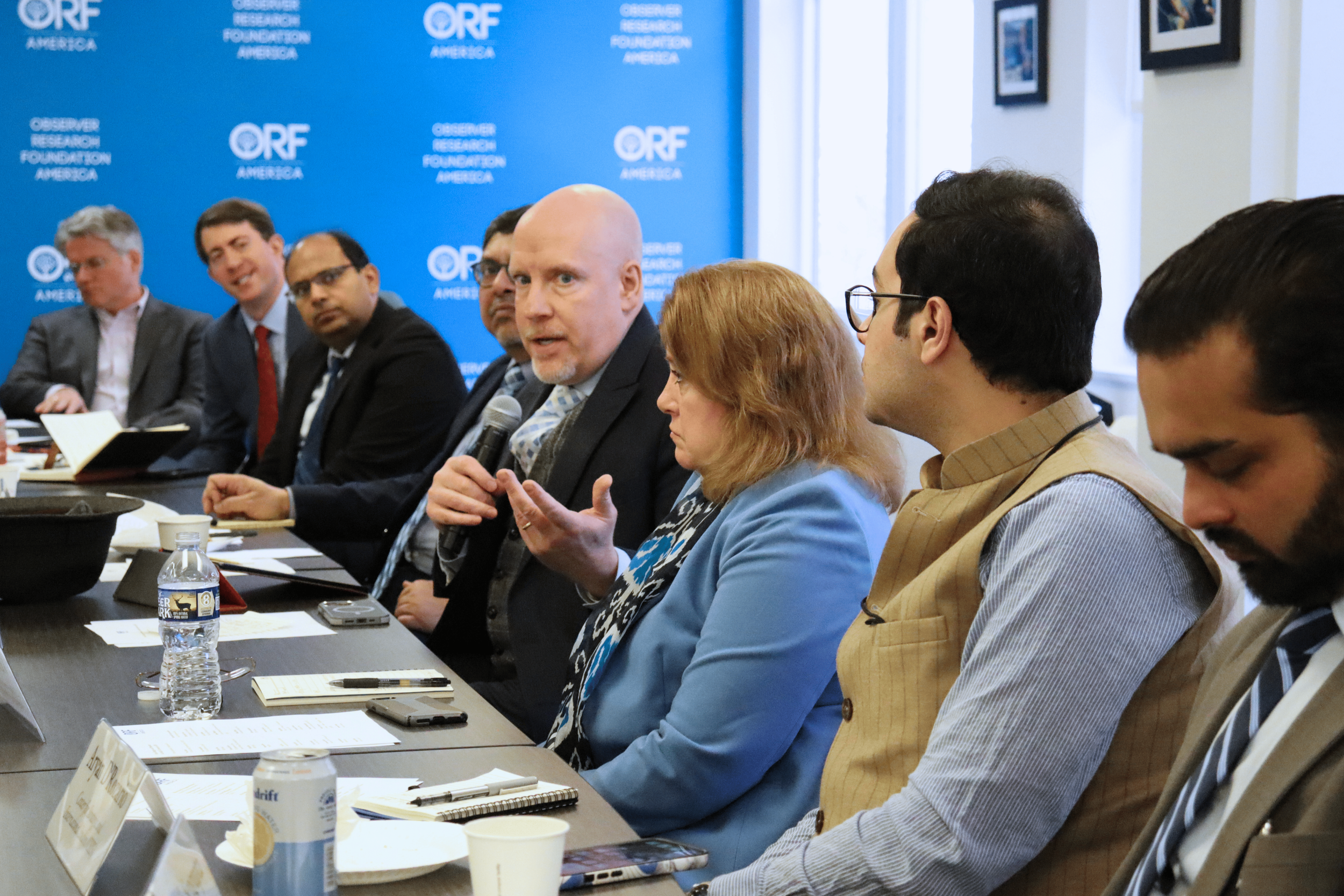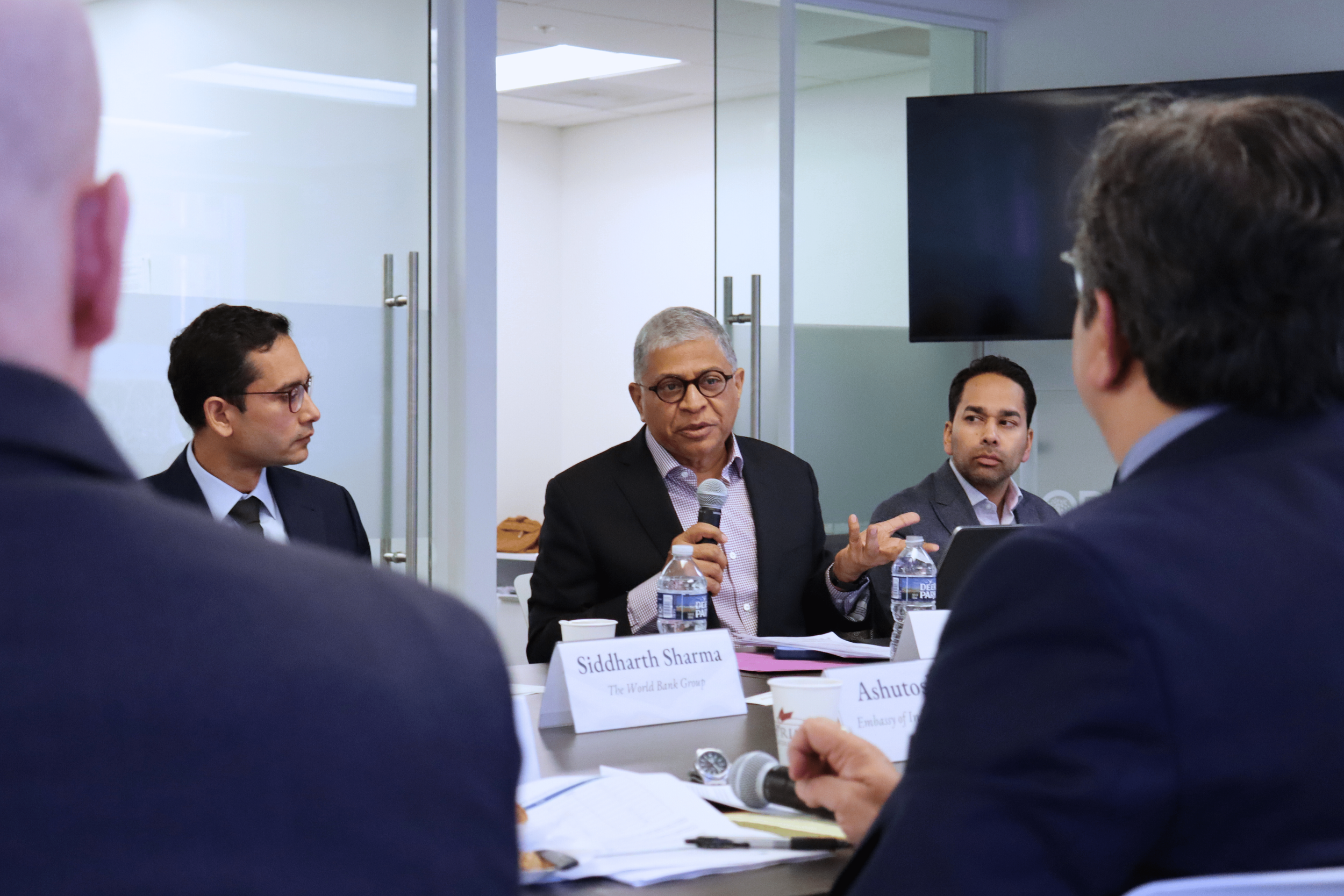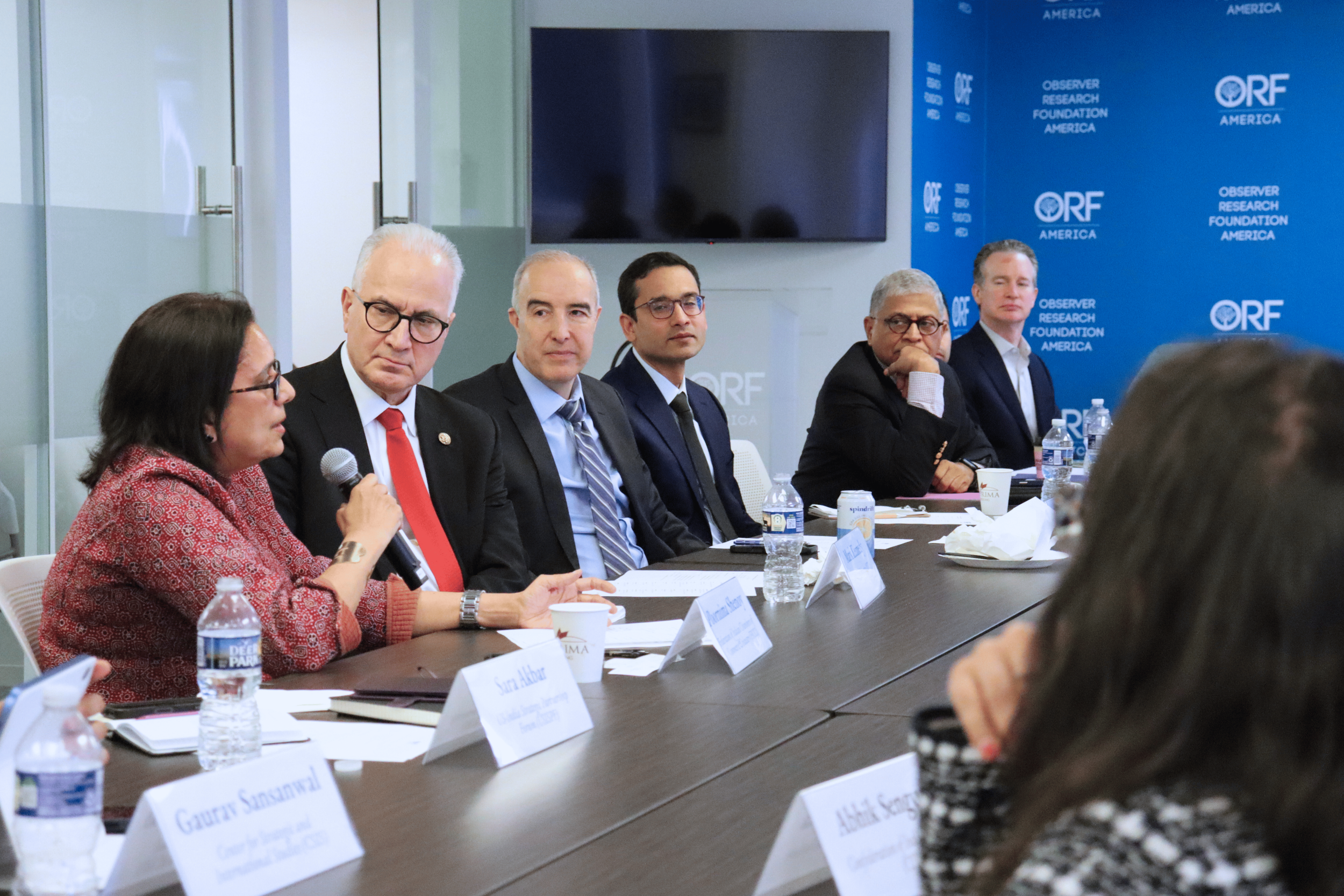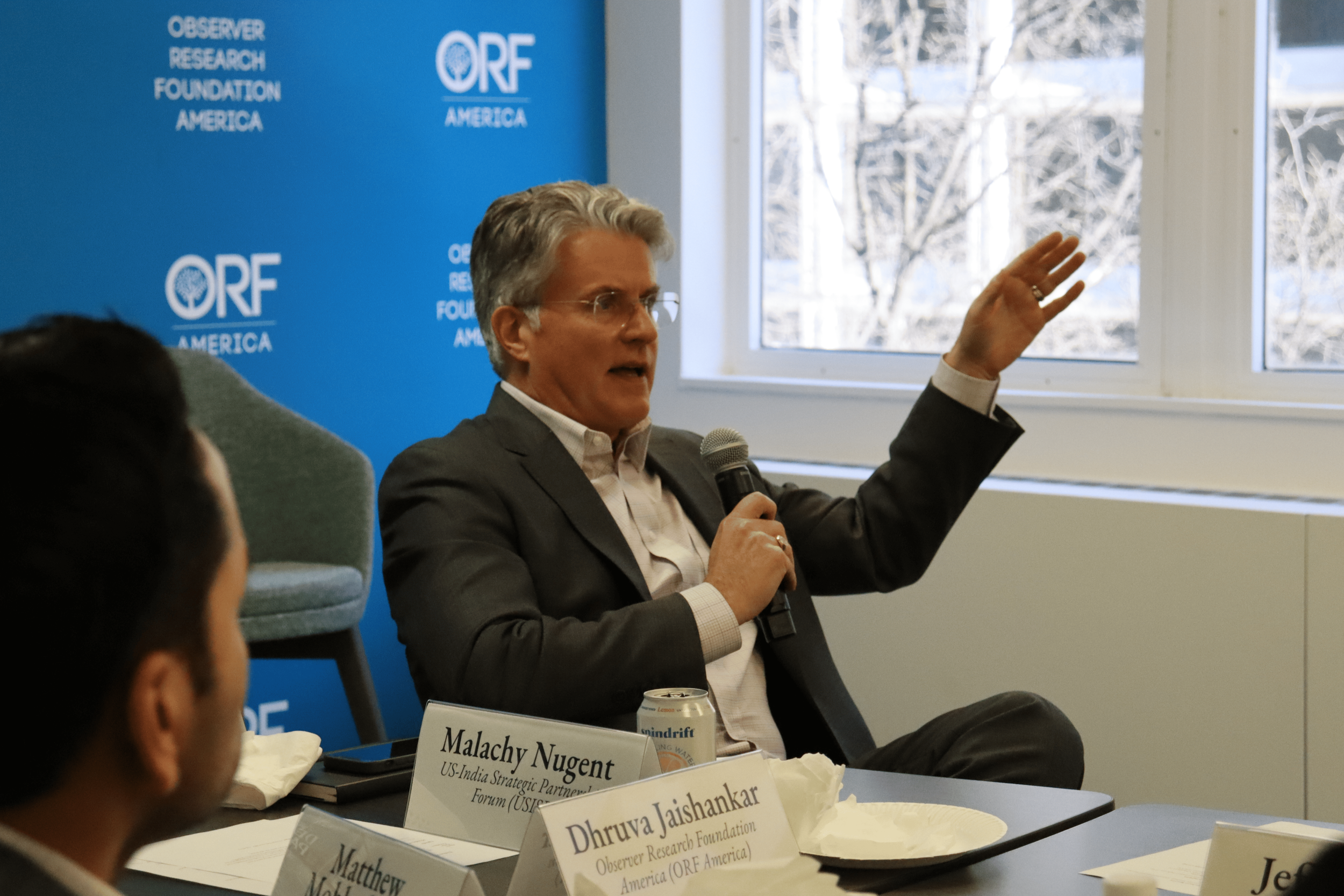
On February 2, ORF America organized a private roundtable on India’s Union Budget for the fiscal year 2026-27. It was attended by high-level policymakers, public policy experts, and senior representatives of multilateral banks and industry associations who discussed the implications of the budget for the Indian economy in 2026 and beyond.
The Union Budget came at a critical juncture for India's economy. Over the past year, India’s economy weathered the tariff shock, undertook significant reforms in Goods and Services Tax (GST), labor laws and foreign direct investment (FDI), and restructured social welfare schemes. Budget 2026 therefore provided a glimpse of India's economic resilience over the past year and prospects for future growth and macro-fiscal stability against a backdrop of a challenging external environment.
The discussions centered around three key themes:
Maintaining growth and fiscal discipline: Despite a challenging global environment and previous tariff shocks, the Indian economy has shown resilience with robust growth, moderate inflation, and a manageable current account deficit. The 2026 Budget maintains a commitment to fiscal consolidation, targeting a reduced fiscal deficit of 4.3% and a debt-to-GDP ratio of 54% while increasing public investment by approximately 9%.
Addressing macro-fiscal challenges: Participants identified several hurdles, including a stagnant tax-to-GDP ratio and sluggish private investment. Furthermore, conservative revenue projections due to GST rationalization and forex risks stemming from rupee depreciation continue to dampen investor sentiment. While the Budget continues the trend of simplifying direct tax compliance and increased allocation for capital expenditure, these would have to translate into higher revenues and increased investment by the private sector to sustain the growth momentum.
Focusing on job creation and workforce development: A primary concern is the urgent need to create 14 million jobs annually for the next decade, especially as artificial intelligence reshapes the labor market. Addressing this requires consistent investment in skills and workforce development, and the private sector to take a leading role to execute budget initiatives in both labor-intensive and advanced technology sectors. Ultimately, the budget was seen as a step in the right direction, balancing fiscal prudence with strategic "big bets" to attract investment in critical sectors. Success will depend on federal and state governments working together to maintain regulatory consistency and a stable macro-fiscal framework.
Speakers
Harald Finger, Assistant Director, International Monetary Fund
Ashutosh Jindal, Minister (Economic), Embassy of India, Washington DC
Richard Rossow, Senior Adviser and Chair on India and Emerging Asia Economics, Center for Strategic and International Studies (CSIS)
Siddharth Sharma, Lead Economist, World Bank
Moderator: Anit Mukherjee, Senior Fellow, ORF America