
The following piece originally appeared in the Asia New Zealand Foundation’s Asia in Focus - Opinion on August 26, 2026.
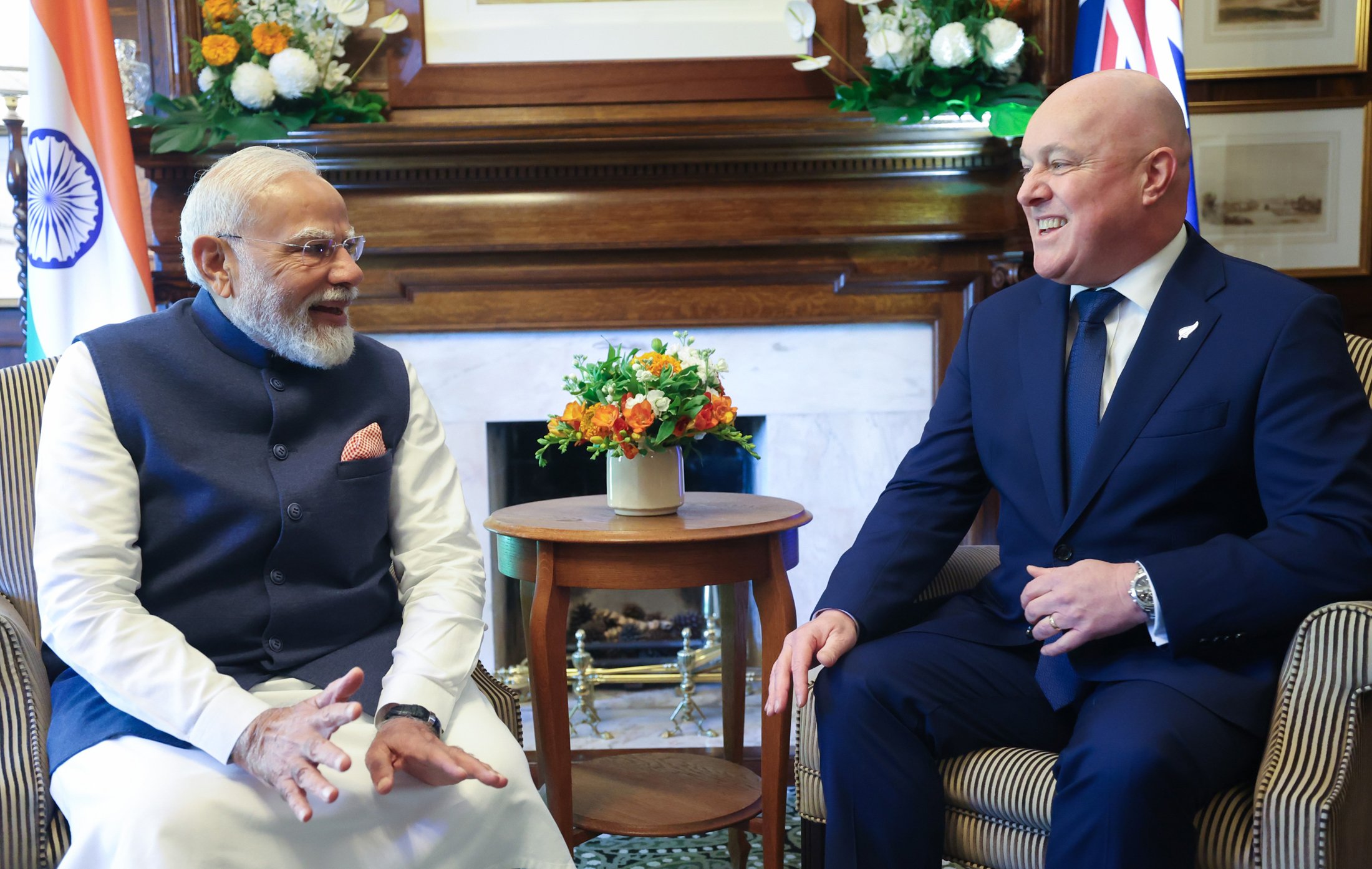
India’s emergence as an important partner for New Zealand was underscored by Prime Minister Narendra Modi’s visit to Auckland in July, the first visit by an Indian leader to New Zealand in four decades.
The two countries elevated ties to a Strategic Partnership and earlier this year concluded a Free Trade Agreement (FTA), now awaiting ratification in parliament. But the relationship is also underpinned by the growth of the Indian community, which at 300,000 constitutes almost six percent of New Zealand’s population. This has made the India partnership important in an election year. But Modi’s visit is also an opportunity to raise ambitions in what has historically been an underperforming relationship.
Despite symbolic bridges such as the mountaineer Sir Edmund Hillary and a robust cricket rivalry, the New Zealand-India relationship was traditionally lacking in much substance.
The migration of people from India to New Zealand represented one important foundation. In addition to the 300,000-strong diaspora, there are currently about 14,000 Indian students studying in New Zealand.
Trade has also traditionally been modest at about $3 billion in bilateral goods and services. India is only the 21st destination for New Zealand goods exports, which consisted primarily of forest products such as timber, as well as apples, wool, and metals.
With India emerging as a recent priority in Prime Minister Christopher Luxon’s government, and an FTA concluded in less than a year, the exchange of primary goods and people are likely to increase organically.
Expanded educational links might include the possibility of New Zealand’s universities following their Australian counterparts in opening campuses in India.
While beef and dairy exports to India are unlikely to increase, the demand for other primary or agricultural products, such as timber, wine, apples, kiwifruit, lamb, and wool are likely to grow significantly in the coming years. Although dairy was excluded from the India-New Zealand FTA, value addition in India for re-export to third markets remains possible.
However, raising the level of ambition in the partnership will also require thinking beyond the exchange of people and primary goods to manufactured goods trade, investment, technology, and security cooperation.
The nature of India’s economic growth has been very different from other Asian economies, driven more by consumption and services than the cycle of investment, manufacturing, and exports that characterized the growth of post-War Japan, China after the 1980s, or even Vietnam more recently.
Nonetheless, New Zealand should start looking to India as a source of diversified imports.
India’s manufacturing sector, while still a relatively low proportion of its economy, has grown following a deliberate industrial policy after the Covid-19 pandemic and the conclusion by India of eight preferential trade agreements.
It has already emerged as a significant exporter of pharmaceuticals, petroleum products, machinery, motor vehicles, and automotive parts. And it is starting to become more integrated into global value chains for electronics, clean energy components, medical devices, semiconductors, and aerospace.
India can also be a lucrative and long-term investment destination for New Zealand’s pension funds and other institutional investors.
The $20 billion investment pledge over 15 years in the New Zealand-India FTA is an opportunity for New Zealand funds to develop stakes in a fast-growing market.
For their part, Canadian pension funds have invested over $110 billion, including in India’s infrastructure, energy, and e-commerce sectors. Similarly, Australian superannuation funds have increased their investment in high-performing Indian infrastructure assets.
Opportunities also exist for India and New Zealand in particular strategic sectors such as defence, space, and emerging technologies.
India’s space sector has become increasingly privatized and competitive, leading to a host of new start-ups engaged in the entire suite of space technologies. New Zealand’s geographic advantages and competitive space launch capabilities offer complementarities.
Sports – beyond cricket – represents another important business prospect. With the two countries celebrating 100 Years of Unity through Sports – commemorating the tour of New Zealand by an Indian Army hockey team in 1926 – the potential for expanded training in multiple sports exist, particularly in the run-up to India’s hosting of the Commonwealth Games.
Creative industries, especially film, represents another area of greater potential, with India’s large film industry potentially taking advantage of New Zealand’s infrastructure and attractive landscapes.
Finally, beyond business and trade, there is also scope to develop the strategic partnership between India and New Zealand.
This had historically been challenging, due to New Zealand’s position on nuclear weapons and differences at multilateral fora. But New Zealand’s gradual pivot to a world defined more by resilience, security, and power, rather than efficiency, economics, and rules, might afford some openings.
As the Pacific Island region becomes more contested, New Zealand will seek more partners to work with on humanitarian assistance, capacity building, and maritime domain awareness. Meanwhile, New Zealand also offers access to Antarctica, where India operates two stations.
The India-New Zealand partnership has benefited in recent years from top-down political attention, a strong people-to-people foundation, and external impulses compelling both New Delhi and Wellington to diversify their partnerships.
The next few years represent an opportunity to build upon the foundations of an FTA and Strategic Partnership and construct a relationship that is more than two-dimensional.