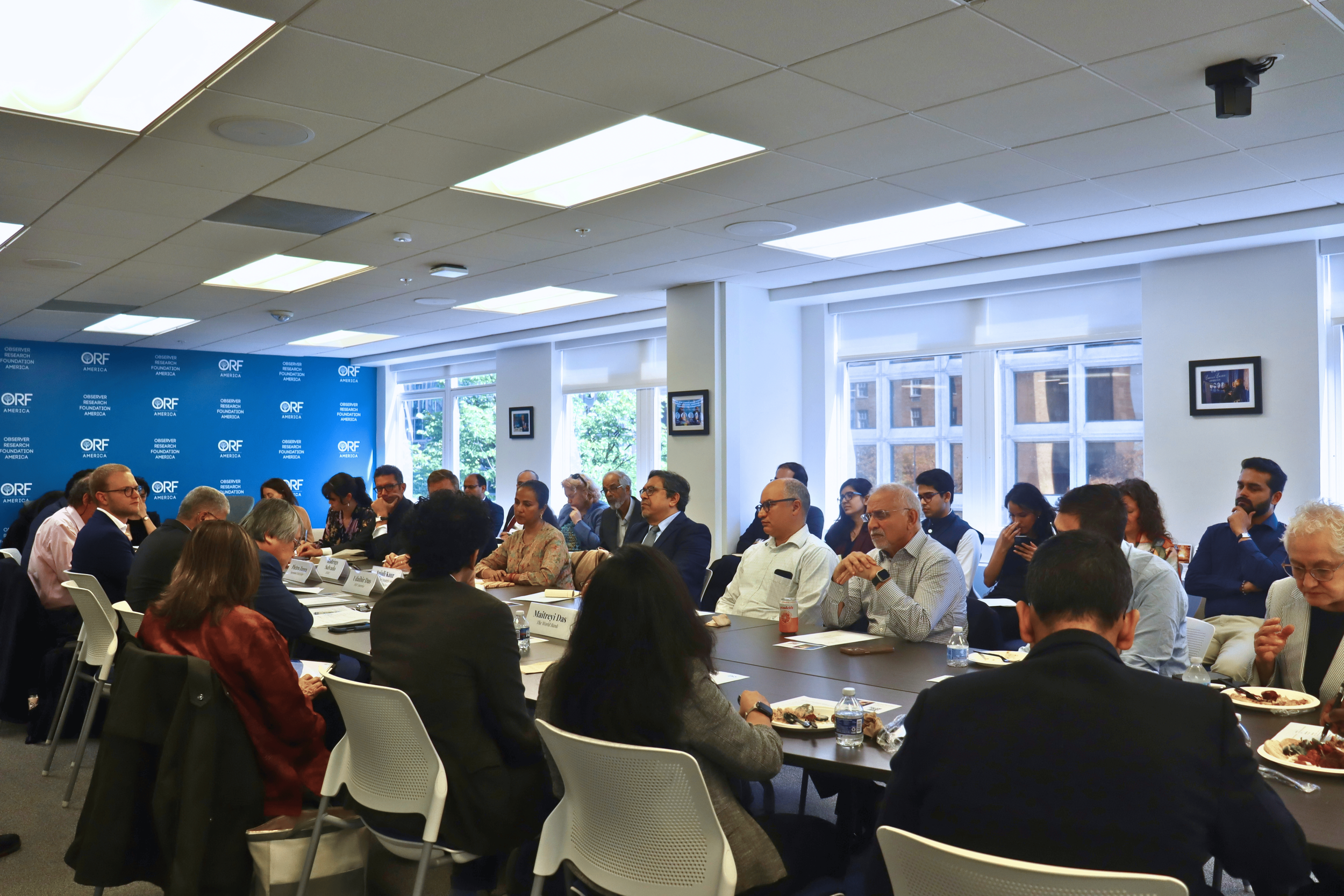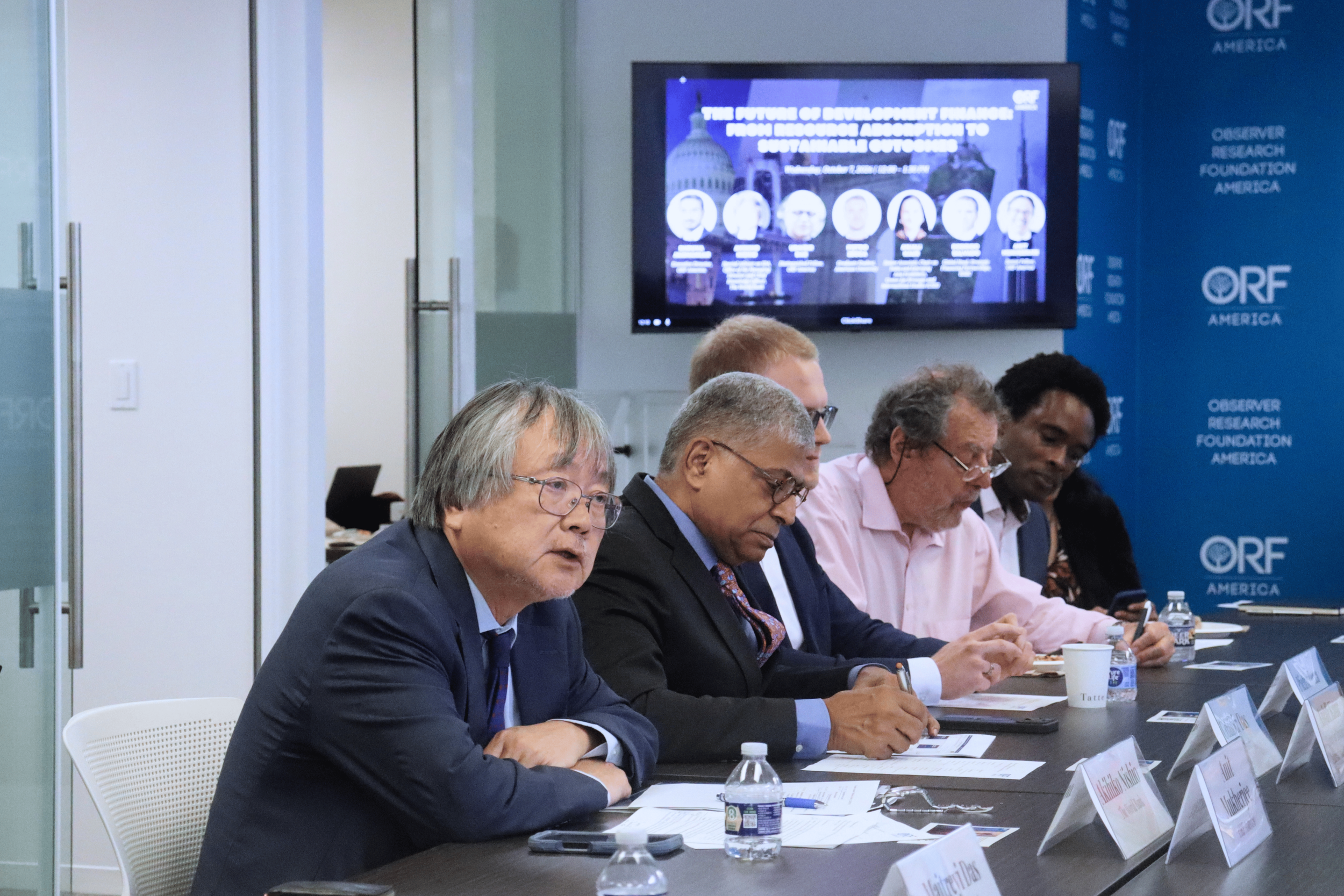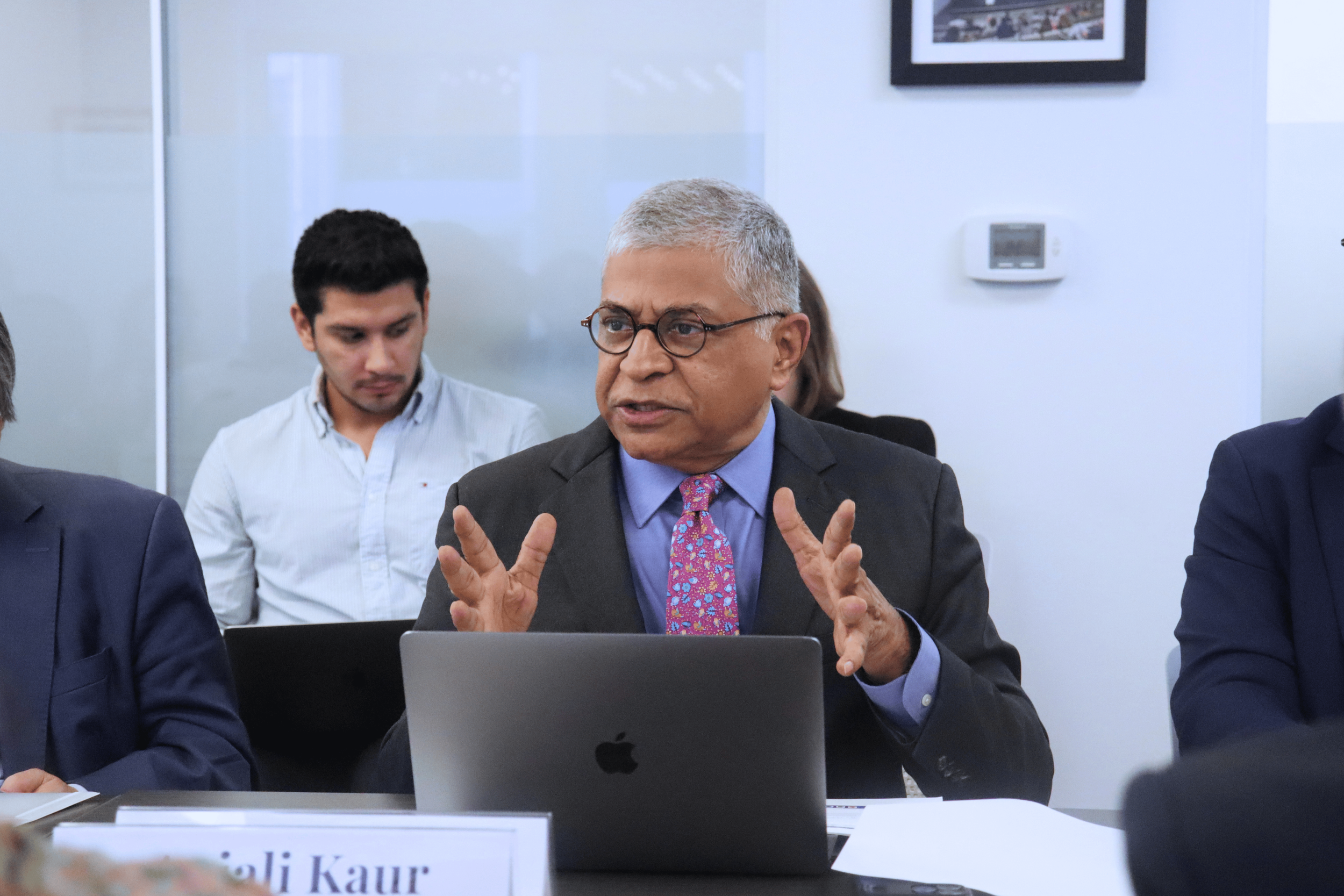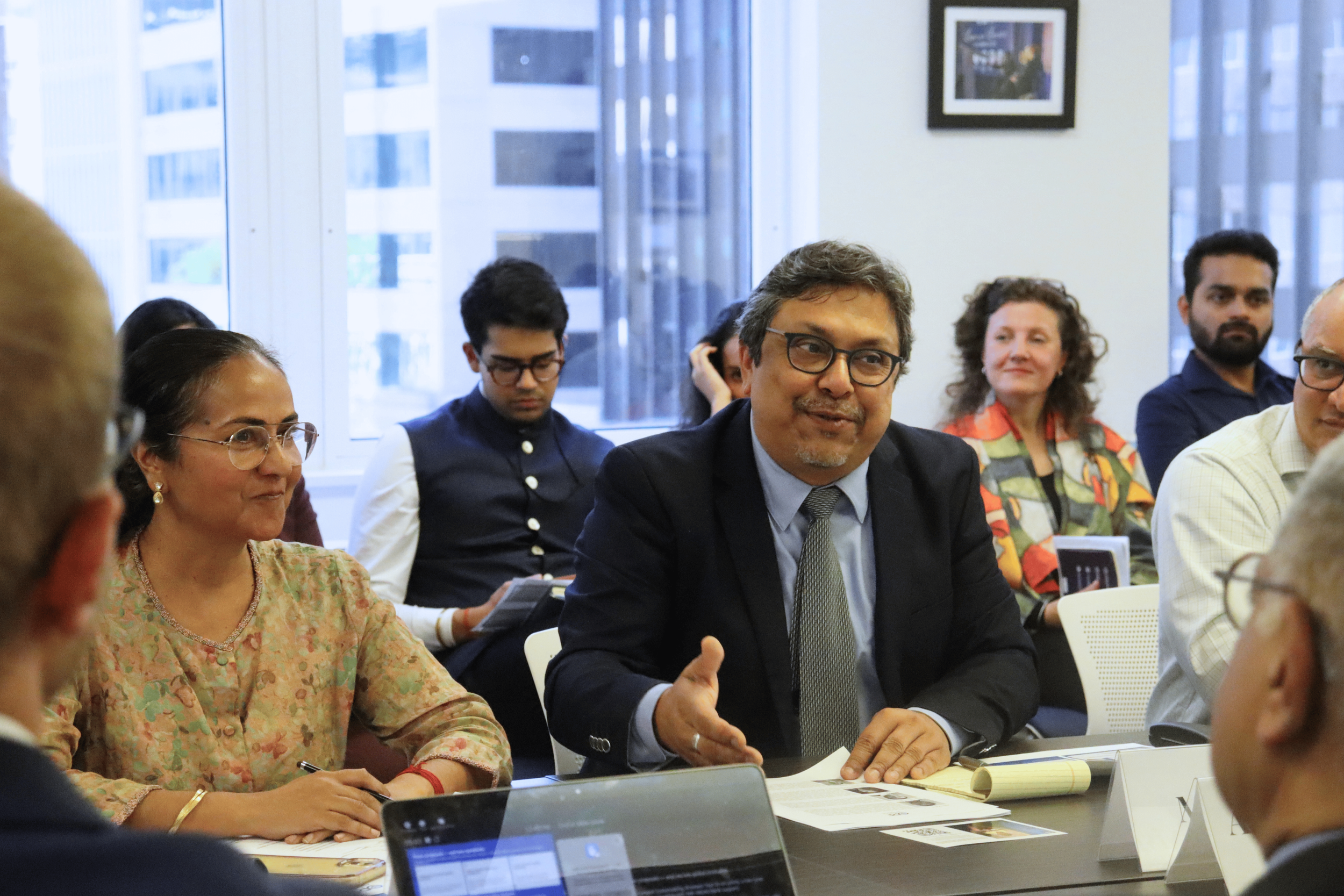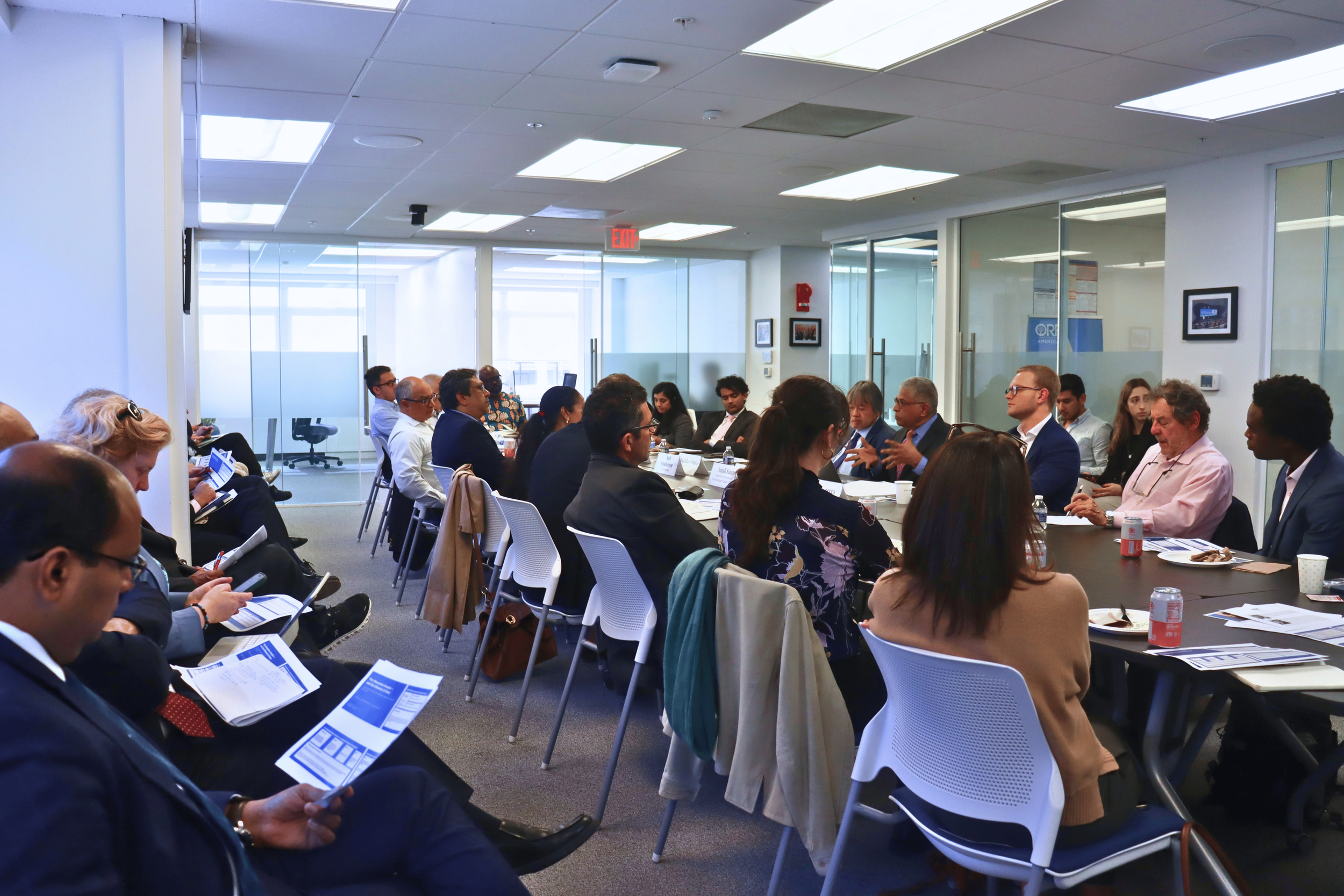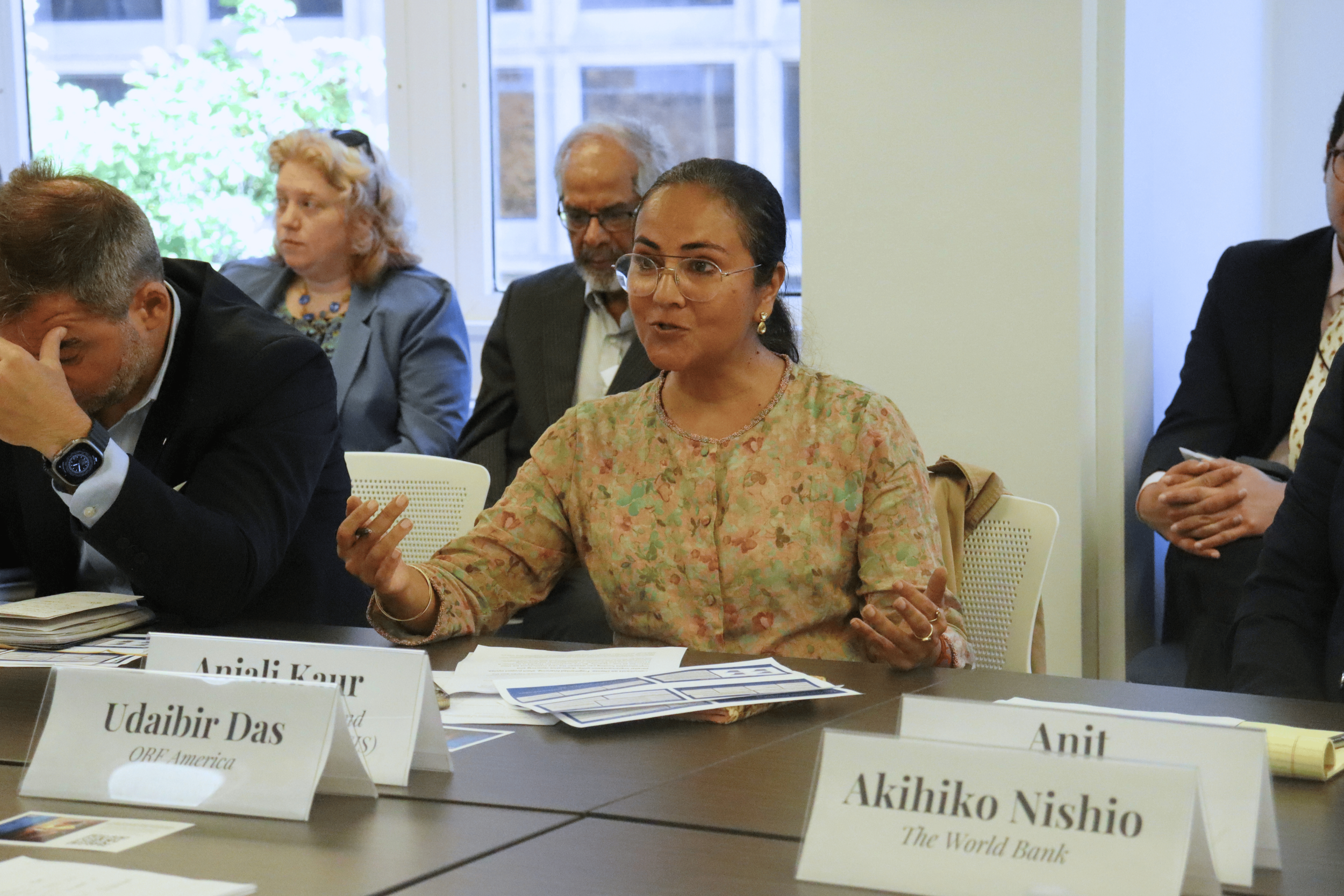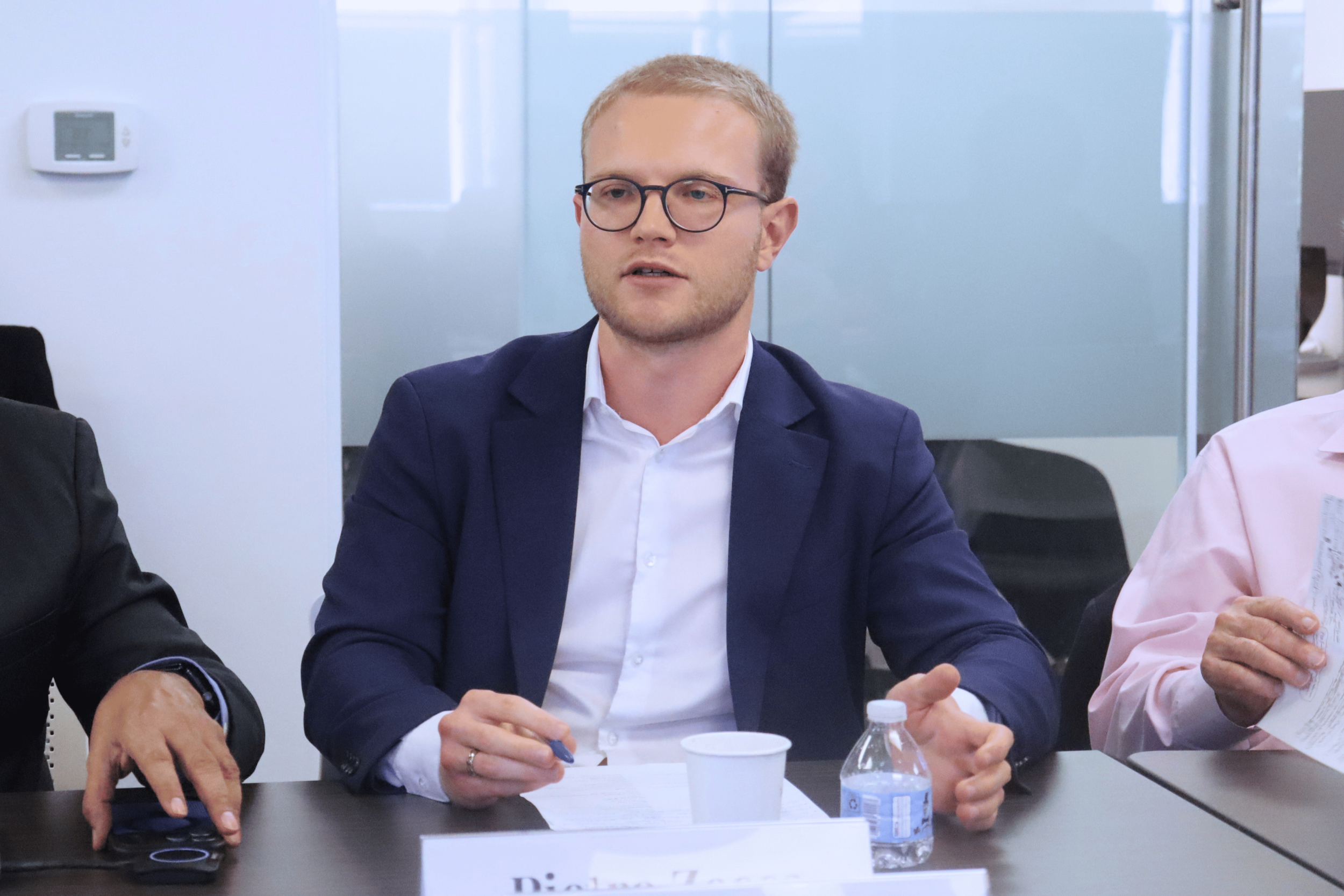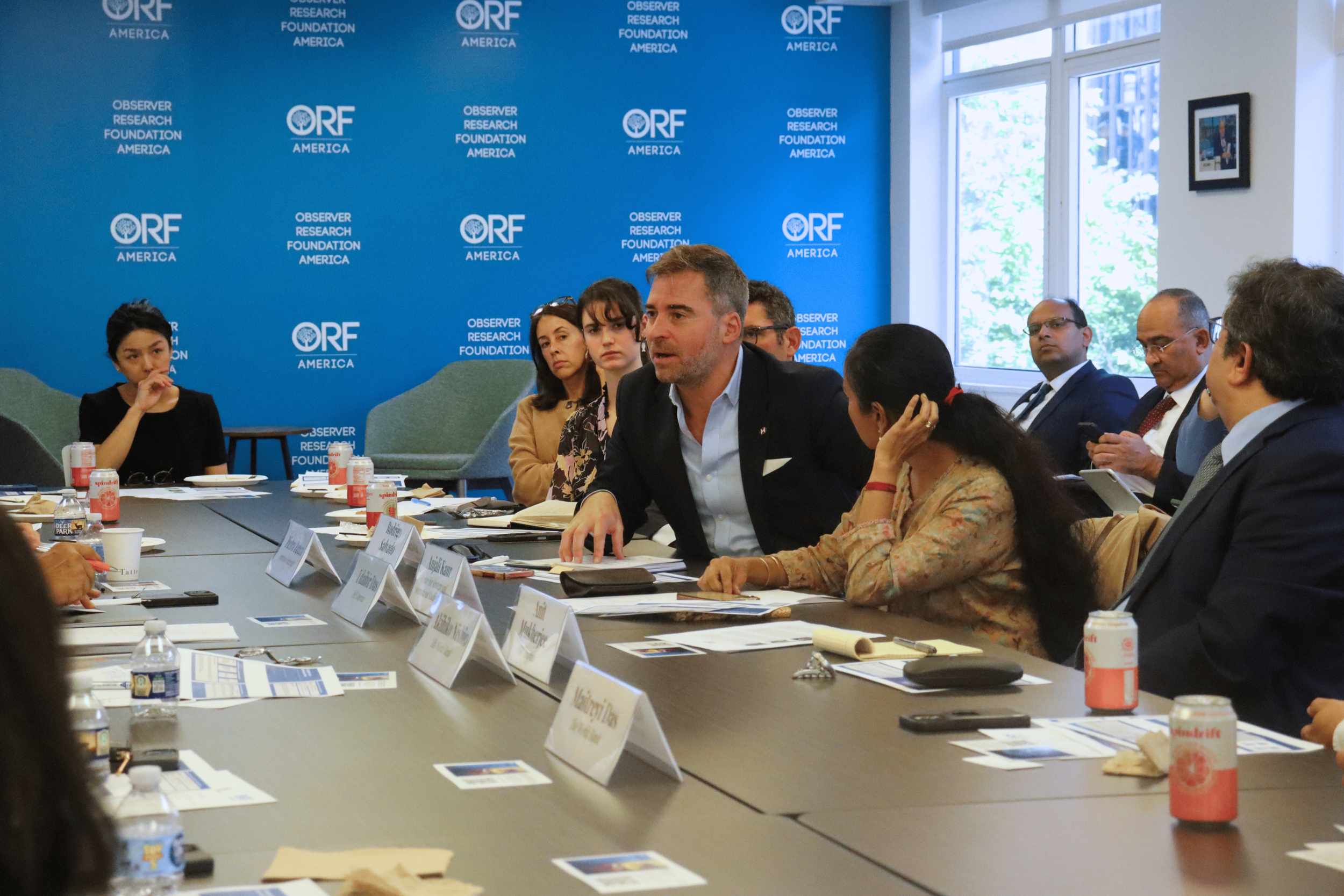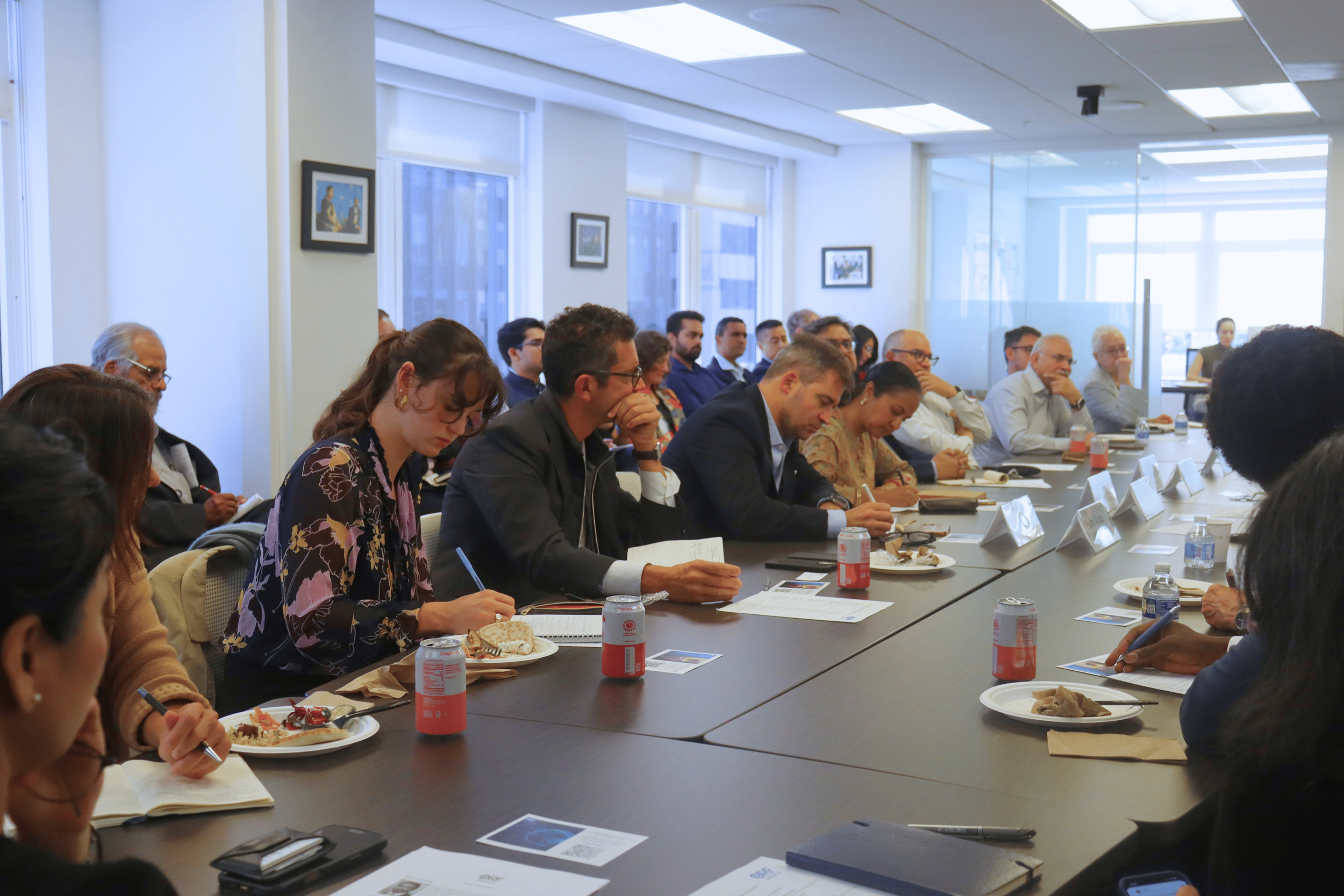
On October 7, ORF America hosted an in-person, closed-door roundtable on "The Future of Development Finance: From Resource Absorption to Sustainable Outcomes" in the lead-up to the IMF–World Bank Annual Meetings in Bangkok. The discussion brought together senior officials from multilateral development banks, think tanks, academia, and the private sector to examine how development finance institutions and policymakers can better connect resource mobilization with effective deployment and absorption of capital as traditional aid contracts.
The event also featured the release of a new ORF America paper, “Overcoming the Absorption Dilemma: The Need for Deployment Sustainability Analysis in an Era of Aid Contraction,” authored by Udaibir Das and Pietro Zecca. The paper argues that global finance debates have focused heavily on mobilizing capital while overlooking whether countries can absorb and deploy those resources into lasting development outcomes. It proposes a new diagnostic framework — the Deployment Sustainability Assessment — to close that gap.
The conversation featured special remarks from Akihiko Nishio of the World Bank on the role of multilateral finance in supporting absorption and deployment in International Development Association (IDA) countries, followed by a presentation of the paper and responses from discussants.
Key takeaways included:
A contraction in ODA amid growing global need: Official Development Assistance (ODA) is going through a historic decline. It fell by 23.1% in real terms in 2025, the largest annual reduction on record, to about $174 billion, with a further decline projected for 2026. At the same time, recipient countries confront escalating crises in climate change, debt, and food insecurity. Long-term global capital is also increasingly absorbed by non-development sectors such as defense, space, and technology.
Structural aid fragmentation and the shift to vertical funds: The global aid architecture is increasingly fragmented. The number of donor agencies has grown from about 215 to 565, and between 2000 and 2021, the average ODA grant contracted from $1.7 million to $0.8 million. Smaller grants are a particular concern for low-income countries as they have weaker administrative capacity, so the higher transaction costs that come with many small grants fall hardest on them. Donor contributions to non-leveraged "vertical funds" have surged by 95%, drawing funding away from horizontal institutions like the World Bank's IDA. IDA can turn $1 of donor contribution into $4 of financing.
Circumvention of recipient government systems: Less than half of ODA flows through recipient government budgets. Much of the rest funds refugee costs in donor countries, donor-country NGOs, or agency administrative costs. This undermines national ownership and limits opportunities to build institutional capacity.
The Absorption Dilemma (mobilization vs. deployment): Global finance discussions have traditionally focused on mobilizing capital while neglecting absorptive capacity, meaning whether a country can turn funds into functional, long-term public goods. Projects are often rated successful once physically complete, yet countries frequently lack the state capacity, staffing, or operating budgets to maintain those assets or achieve systemic development outcomes. In effect, resource mobilization and absorption are complements: grants and concessional resources are often necessary to build absorptive capacity through regulatory systems, project preparation, public-sector capability, health and education systems, and workforce development. So building absorptive capacity may be one of the highest-value uses of the diminishing ODA allocations especially for low-income countries.
Introducing Deployment Sustainability Analysis (DepSA): The background paper proposes DepSA to complement Debt Sustainability Analysis (DSA), which measures whether a country can service its debt. DepSA is envisioned as a country-led diagnostic framework that assesses state capacity and evaluates whether incoming capital will actually create productive assets and advance sustainable development.
Project-embedded capacity building and citizen accountability: Strengthening absorptive capacity requires building institutional capacity and professionalization directly into project preparation and execution. Discussants highlighted that successful deployment depends on sector-specific approaches, transparent public asset disclosures, and local citizen oversight to ensure funds are accountable to the communities they serve.
Speakers:
Welcome Remarks: Dhruva Jaishankar, Executive Director, ORF America
Special Remarks: The role of multilateral finance to support resource absorption and its effective deployment in IDA countries
Akihiko Nishio, Special Advisor on IDA, Office of the Managing Director and Chief Knowledge Officer, The World Bank
Presentation: Overcoming the Absorption Dilemma: The Need for Deployment Sustainability Analysis in an Era of Aid Contraction
Udaibir Das, Distinguished Fellow, ORF America
Pietro Zecca, Graduate Student, American University
Discussants:
Anjali Kaur, Senior Associate, Chair on India and Emerging Asia Economics, Center for Strategic and International Studies (CSIS)
Rodrigo Salvado, Global Head, Strategic Financing Partnerships, HSBC
Closing Remarks: Anit Mukherjee, Senior Fellow, ORF America
Participants:
Mark Akpaninyie, Vice President, Global Government Relations & Policy, Nclusion
Diana Alarcón, Executive Director (EDS 18), The World Bank
Raul Alfaro-Pelico, Non-Resident Fellow, ORF America
Caroline Arkalji, Junior Fellow, ORF America
Vivek Arora, Senior Advisor, International Monetary Fund
Nisha Biswal, Partner, The Asia Group
Kartik Das, Global E-Mobility Lead, The World Bank
Maitreyi Das, Director, Trust Funds and Partner Relations, Development Finance (DFi), The World Bank
Benjamin Dennis, Adjunct Professor, Georgetown University
Aryan D'Rozario, Associate Fellow, CSIS
Alan Gelb, Senior Fellow Emeritus, Center for Global Development
Aditya Goswamy, Program Coordinator and Research Assistant, CSIS
Priyanka Jaisinghani, Director of Youth Challenged, Ashoka
Aaron Jordan, Deputy Chief Counsel, House Foreign Affairs Committee (Minority)
Manasi Karthik, Emma C. Morton Bours and Jonathan Kawaja Postdoctoral Fellow, School of Public and International Affairs, Princeton University
Sakshi Kataria, Program Manager and Research Associate, CSIS
Sagar Kulkarni, Associate Editor, Press Trust of India
Vikram Nehru, Non-Resident Senior Fellow, Johns Hopkins University School of Advanced International Studies
Yuko Okamura, Senior Economist, Social Protection and Jobs Global Practice, The World Bank
Padu Padmanabhan, Author and Former Energy Specialist, World Bank, USAID
Claire Peraldi Decitre, Researcher, E3G
Harsha Rajashekharaiah, Independent
Corina Rebegea, Senior Anti-Corruption Specialist, Accountability Lab
Anuj Sahay, Manager FDI, Fairfax County EDA
Michael Schiffer, Senior Fellow, National Security and International Policy, Center for American Progress
Abhik Sengupta, Program Officer - North America, Confederation of Indian Industry
Salvatore Serravalle, Program Lead, E3G
Lobstang Tsering, Senior Research Associate, Asia Society Policy Institute's Center for China Analysis
Piyush Verma, Senior Fellow, ORF America
Priya Vora, CEO, Digital Impact Alliance
Mariam Wardak, Founder, Her Afghanistan
Rachel Ziemba, Adjunct Senior Fellow, Center for a New American Security