
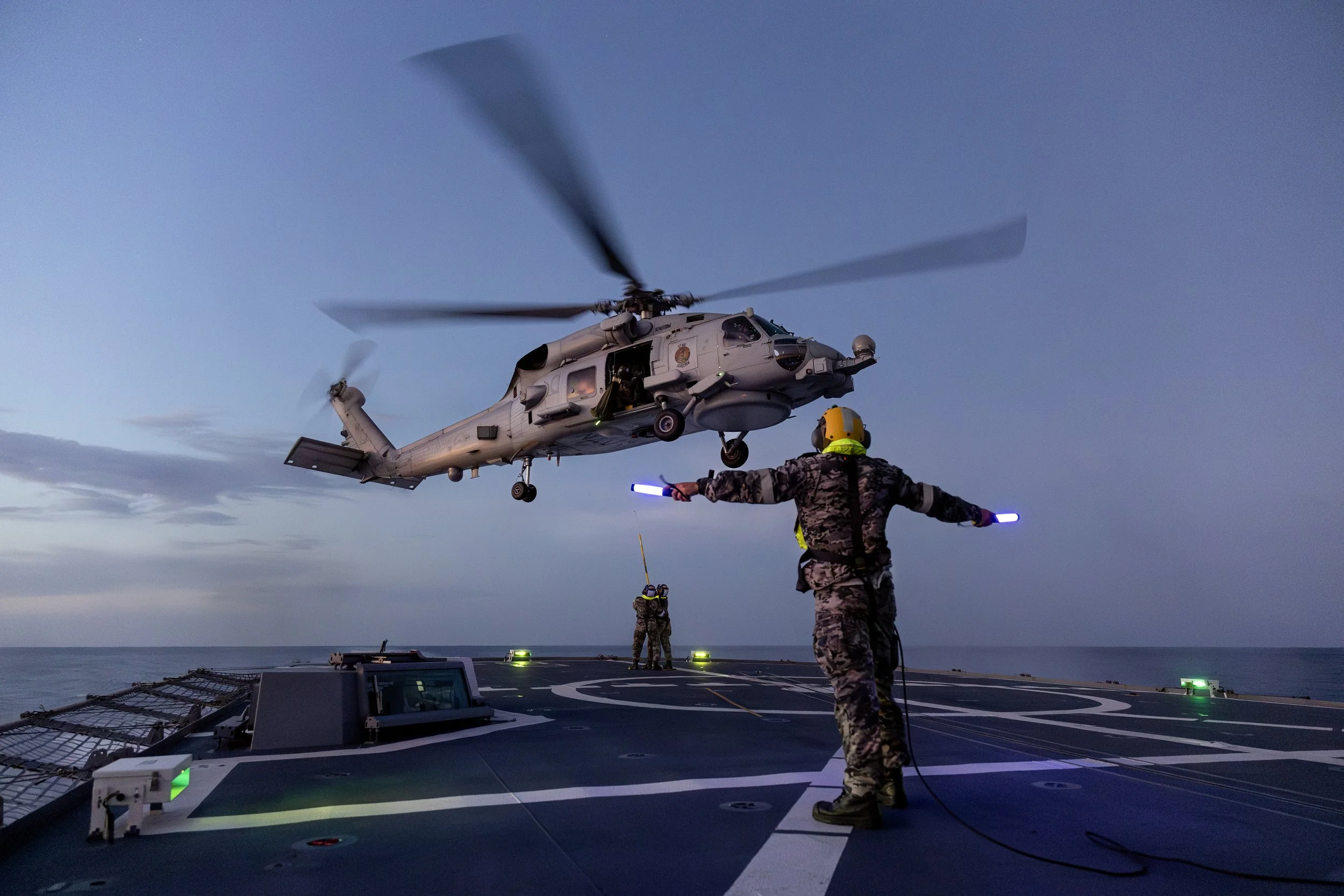
The following excerpt is from the policy brief, India-Australia defence ties: Advancing a vital Indo-Pacific partnership, which was originally published on the Lowy Institute on November 1, 2026.
Key points
The India–Australia defence partnership has advanced considerably since 2020 in response to their threat environments, and now involves high-level political consultations, sophisticated military exercises, and intelligence and technological cooperation.
Challenges remain, including a lack of compatible secure communications systems, export control restrictions, and different defence industrial requirements and capabilities.
The two countries can take steps to overcome these obstacles, increase access and support for maritime patrol aircraft and naval vessels in each other’s territories, and prioritise defence co-production projects that meet both their requirements.
Introduction
During Indian Prime Minister Narendra Modi’s visit to Australia in July 2026 — his third in 12 years as India’s leader — he signed a Joint Declaration on Defence and Security Cooperation with his Australian counterpart Anthony Albanese.1 The two prime ministers also agreed to a classified Joint Maritime Security Collaboration Roadmap; an Australia–India Partnership on Cyber, Critical Technologies and Supply Chains (PACTS) that included a defence pillar; and a Memorandum of Understanding (MoU) between Australia’s Maritime Border Command and the Indian Coast Guard.2 A month earlier, the two countries’ defence ministers also agreed to work towards an MoU on the Provision of Defence Articles and Defence Services.3 These agreements received relatively little attention in Australia, where the prime ministers’ joint event for 25,000 members of the Indian diaspora in Melbourne dominated news coverage.4 But the growing convergence on security and defence between India and Australia represents an important strategic development, one driven by similar concerns about China’s assertiveness in the Indo-Pacific and the prospect of more mercurial US policy towards the region.
The strengthening partnership between India and Australia builds upon two decades of rapidly developing ties.5 In recent years, their relations have been primarily shaped by migration and commerce. There are now one million people of Indian origin in Australia, and bilateral trade has grown to over $50 billion following the Economic Cooperation and Trade Agreement (ECTA) concluded in 2022.6 Increasingly, however, the relationship has acquired a security dimension. Their defence engagement now encompasses structured political-military dialogues; regular ground, air, and naval military exercises; intelligence and technological cooperation; and regular military-to-military exchanges and training programs. Within the Quad — along with the United States and Japan — the two countries are involved in expanding maritime domain awareness (MDA) in the Indo-Pacific, improving shared logistics capabilities, coordinating on economic and technological security, and collaborating on humanitarian assistance and disaster relief efforts.7
While challenges persist — including inadequate communications systems and restrictive export controls — there is today scope for more ambitious security cooperation between Canberra and New Delhi. This could take the form of more frequent and meaningful joint operations, particularly of P-8 maritime surveillance aircraft to each other’s island territories, as well as greater defence industrial co-production. Achieving this intended level of security cooperation requires understanding the two countries’ strategic environments, assessing recent developments in security cooperation, and identifying practical pathways to joint operations and defence industrial co-production. Near-term steps could include: concluding an agreement on the Provision of Defence Articles and Defence Services; resolving obstacles to secure communications and maintenance; identifying and pursuing specific defence co-production projects; and enabling reciprocal access for P-8 aircraft to each other’s island territories.