



By Karan Bhasin
A lesser-known reality of the GST is that it has a total of eight tax slabs, excluding the exemptions. These start at 0.25 and go all the way up to 28 per cent.

Background Paper No. 38
By Jeffrey D. Bean and Dhruva Jaishankar
By Udaibir Das
Drawing on the public sector balance sheet literature, the economics of sovereign self-insurance, and the Knightian distinction between risk and uncertainty, this paper argues that conventional sovereign asset-liability management is necessary but incomplete.
Edited Volume
By Rachel Rizzo, Clemens Chay, Kartik Bommakanti, Vasabjit Banerjee, Aleksei Zakharov, Soumya Bhowmick, Arya Roy Bardhan, Jhanvi Tripathi, and Samriddhi Vij
Editors: Sharon Stirling and Eszter Karacsony
By Udaibir Das
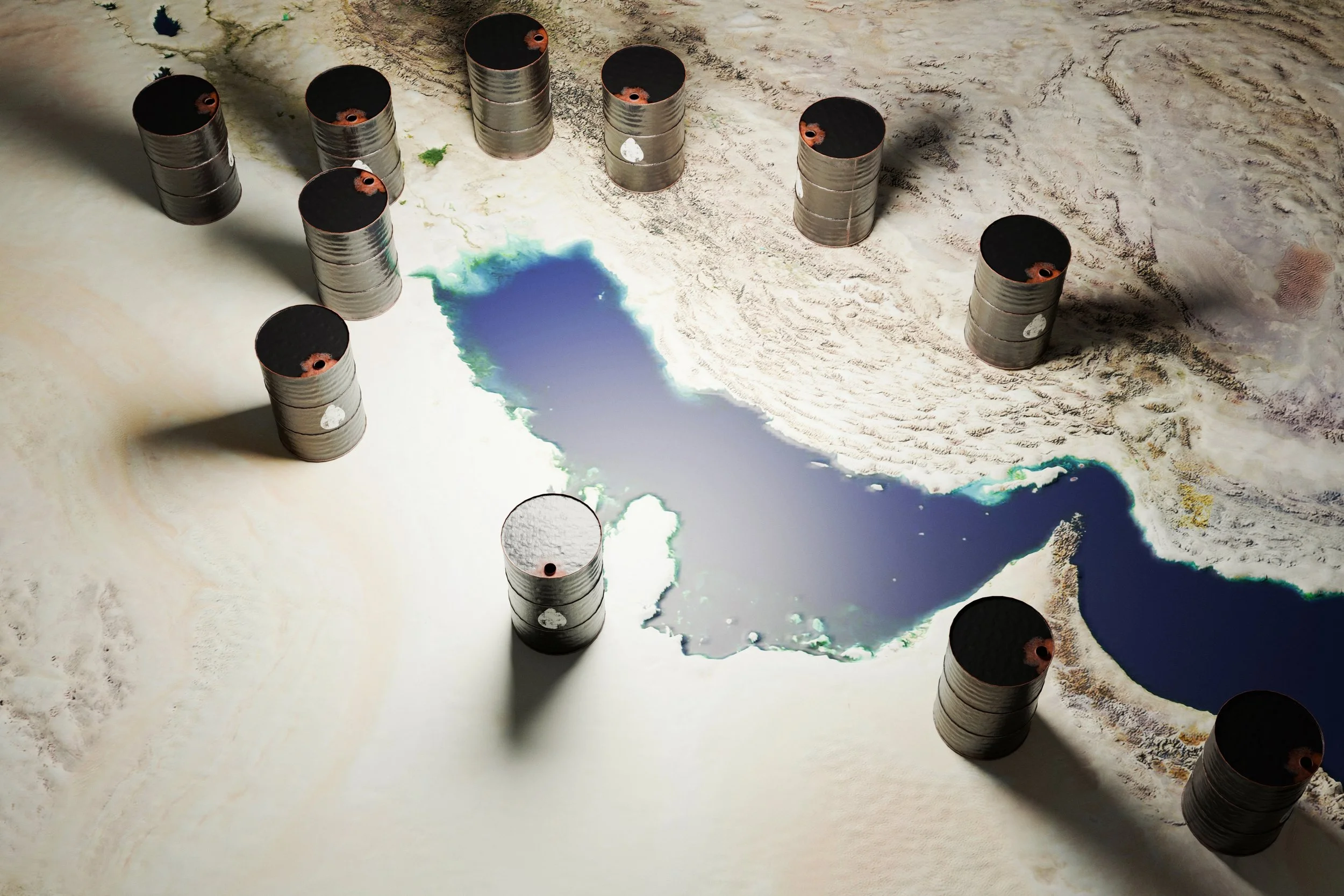
More moves of this kind should be expected, extending beyond energy into critical minerals, technology standards, industrial policy, and cross-border finance. The UAE’s decision is not an outlier. It is a marker — not of fragmentation, but of redefinition.
By Karan Bhasin
A lesser-known reality of the GST is that it has a total of eight tax slabs, excluding the exemptions. These start at 0.25 and go all the way up to 28 per cent.
By Udaibir Das
In dynamic-system terms, the global economy has shifted from a high-integration equilibrium towards a more fragmented state, but the transition path is still in motion. For financial institutions, the challenge is calibrating marginal gain in resilience against the marginal erosion of competitive advantage.
By Anit Mukherjee
The Indo-Pacific’s future will be shaped by secure, interoperable digital systems that advance public service delivery, expand financial inclusion, and foster cross-border collaboration.
By Udaibir Das
While financial institutions promote debt swaps as ‘win-win’ solutions that address both debt distress and development financing, borrowing countries report a systematic failure in achieving both objectives, revealing an inversion of development finance principles.
By Udaibir Das
If climate finance is to support transitions that are durable and inclusive, it must evolve to accommodate precisely these kinds of interventions: institutionally grounded, locally designed and systemically significant.
By Anit Mukherjee
As artificial intelligence (AI) becomes a key enabler of economic and social transformation, the BRICS grouping — comprising both emerging and influential economies — has a unique opportunity to shape the trajectory of AI development through a Global South lens.
By Udaibir Das
As private digital tokens gain ground, existing oversight and payment monitoring frameworks are struggling to keep pace. While regulators debate their response, the market—driven mainly by U.S.-based technology and market actors—is moving ahead.
By Udaibir Das
China must build on its institutional progress and the policy suggestions noted in the 2025 FSSA while adapting to a more fragmented global financial landscape. The shift from insulation, as pointed out by the IMF in 2010, as well as the shift to sensible integration, as outlined by the IMF in 2025, stays unfinished.
By Udaibir Das
As concessional finance declines, vulnerabilities mount and aid priorities shift, vulnerable low-income countries must increasingly rely on domestic sources of funding. Efficient capital markets are not a luxury – they are foundational infrastructure for economic growth.
By Udaibir Das
The key question is not whether the decline in aid and external assistance will push these economies towards more debt – it already does – but rather what kind of debt they will incur and what long-term implications it will bring.
By Udaibir Das
As AI takes on a greater role in economic analysis and policy, an unsettling question arises: will its ability to recognise systemic risks with historical precedents weaken with a lack of immediate algorithmic reference?
By Udaibir Das
The world’s most populous democracy faces a turbulent landscape of geopolitical rivalries, technological shifts and the urgency of climate action. The question remains: will global economic forces propel India toward leadership or will they impede its ascent?
By Udaibir Das
In 2024, Africa’s economic and political importance grew significantly, laying a strong foundation for 2025 to be a transformative year for the continent.
By Anit Mukherjee
With the Indian prime minister’s and external affairs minister’s recent visits to Latin America, the engagements are a sign of India’s deepening commitment to improve and strengthen strategic and economic ties with the region where it is still playing catch up to China.
"Rebalancing Globalization: Perspectives from the Global South" attempts to provide a framework for the next phase of globalization that is rebalanced and sustainable and can address issues that matter to the Global South.
Edited Volume
By Anit Mukherjee, Dhruva Jaishankar, Alan Gelb, Pamla Gopaul, Marta Bengoa, Shayak Sengupta, Aude Darnal, Elizabeth Sidiropoulos, Udaibir Das, Veronica Jijon, and Lorrayne Porciuncula
Editors: Anit Mukherjee and Dhruva Jaishankar
By Surjit S. Bhalla, Karan Bhasin, and Tirthatanmoy Das
Using a structural micro-econometric model, the roles of both the labor market and the household sector in female labor participation are evaluated to analyze the evolution of India’s labor market.
By Udaibir Das
Where do Brics, the International Monetary Fund, and the World Bank overlap in their newly released communiques on the global economic landscape?
Observer Research Foundation America, 1100 17th St. NW, Suite 501, Washington DC 20036 USA