
By: Marta Bengoa
As 2025 draws to a close, the grand experiment in tariffs that began with U.S. President Donald Trump's "Liberation Day" in April has produced results that should trouble anyone who cares about U.S. economic prosperity. Rather than reviving American manufacturing and boosting employment, the data tell a story of job losses in manufacturing, stagnant productivity in that sector, higher inflation across the economy, and economic uncertainty on a scale not seen in decades.
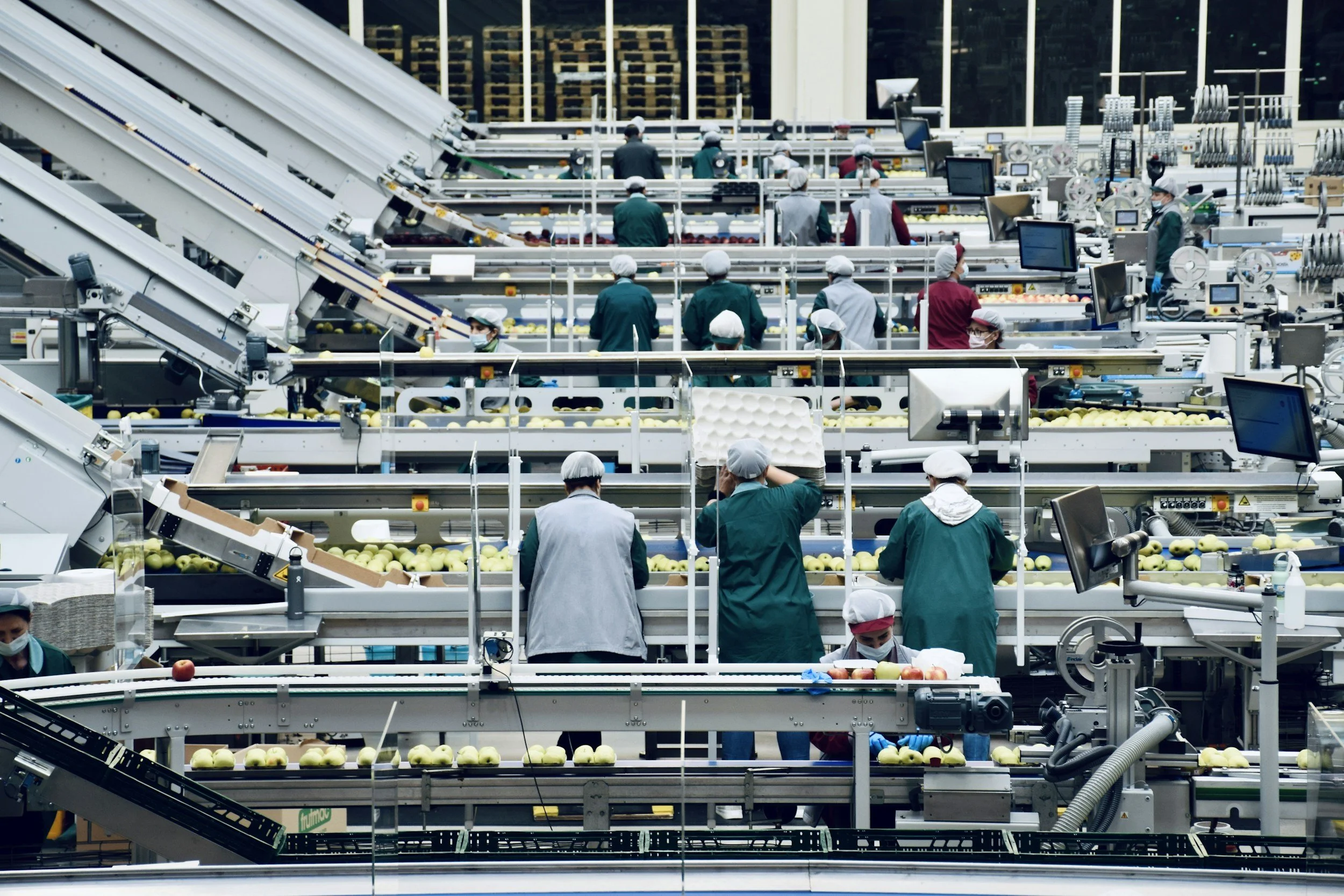
While the United States' gross domestic product (GDP) continues to grow — with growth forecasts raised to 2.0% — the manufacturing sector's struggles stand in sharp contrast. The sector, which was supposed to be the great beneficiary of tariff protection, has instead hemorrhaged jobs throughout 2025. According to Labor Department figures, manufacturing employment has declined by approximately 59,000 jobs since Trump's April tariff announcement, with durable goods manufacturers (those making cars, appliances, and electronics) bearing the brunt of the losses. Job openings in the sector have plummeted by 76,000 over the same period. By September, manufacturing employment stood at just 12.7 million workers, continuing a six-decade decline that tariffs have failed to arrest.
The cruel irony is impossible to miss: tariffs imposed to protect American manufacturing have coincided with the sector's first sustained job losses since the pandemic. Contrary to the administration's narrative, the problem isn't foreign competition but the tariffs themselves. Businesses facing uncertainty about constantly shifting tariff rates have simply stopped hiring, unable to navigate both the high costs of tariffs on intermediate goods and the whiplash of unpredictable trade policy.
The tariff-induced uncertainty extends beyond hiring freezes to the very inputs manufacturers need. With tariffs raising the cost of intermediate goods — the components and materials used in production — U.S. manufacturers find themselves at a competitive disadvantage. They must either absorb higher costs, squeezing already thin margins, or pass them along to consumers, making their products less competitive. Either way, the incentive to expand operations and hire workers evaporates. Trump's tariffs appear poised to repeat this historical error of George W. Bush’s 2002 steel tariffs, which depressed manufacturing in steel-consuming industries, but on a far greater scale.
Manufacturing productivity tells an equally troubling story specific to that sector. While the Trump administration points to isolated quarterly gains, the longer-term picture reveals stagnation in manufacturing. Manufacturing sector productivity growth has averaged just 0.5% annually during the current business cycle, barely a quarter of the 2.1% long-term historical rate since 1987. This productivity malaise in manufacturing predates Trump's tariffs but has certainly not improved under them. Research from the New York Federal Reserve reveals a puzzling phenomenon: research and development intensity in manufacturing has been rising even as productivity growth in the sector has collapsed, suggesting that the effectiveness of innovation in generating productivity gains has declined substantially. Tariff-induced uncertainty and higher input costs only compound this challenge, discouraging the very capital investments that drive productivity improvements in manufacturing.
Meanwhile, American consumers are paying the price — literally. The Federal Reserve Bank of St. Louis researchers found that tariffs accounted for 0.5 percentage points of headline inflation and 0.4 percentage points of core inflation between June and August 2025. The Yale Budget Lab estimates that current tariff policies cost each household $1,800 on average in 2025, with apparel prices rising 17% and food prices climbing 2.8% due to tariffs alone. The inflation impact extends well beyond headline numbers. Categories like furniture, electronics, musical instruments, and car parts have seen some of the steepest price increases. As of September, the Consumer Price Index stood at 3.0% year-over-year, up from 2.9% in August and well above the Federal Reserve's 2% target. Many companies have barely begun adjusting prices given the policy's volatility, suggesting more inflation may be coming as businesses eventually pass through the full cost of tariffs to consumers.
The administration has negotiated several trade deals to mitigate the damage. Trump secured agreements with the European Union (15% tariffs, down from a threatened 30%), Japan (15% tariffs with a $550 billion investment commitment), South Korea (15% tariff rate), and others. In late October, Trump and China’s leader Xi Jinping struck a deal that reduced tariffs from 145% to more manageable levels and included Chinese commitments on fentanyl, rare earth exports, and agricultural purchases of at least 12 million metric tons of U.S. soybeans. U.S. Treasury Secretary Scott Bessent confirmed in early December that China is on track to meet "every part" of the agreement.
Yet these deals haven't stopped the economic bleeding. Even with reduced tariff rates for countries that negotiated agreements, U.S. manufacturers still face input costs far higher than before April's "Liberation Day," and the uncertainty about future policy directions continues to discourage investment and hiring. Moreover, Trump is now threatening to exit the United States-Mexico-Canada Agreement (USMCA), which could subject America's largest trading partners to massive new tariffs and undo years of integrated North American supply chains.
The Supreme Court now holds the administration's tariff regime in its hands. Justices across the ideological spectrum expressed deep skepticism during November oral arguments about Trump's unprecedented use of emergency powers to impose tariffs that the Constitution explicitly reserves for Congress. Companies like Costco are already filing for refunds, betting that the Court will invalidate the tariffs and force the government to return the estimated $750 billion to $1 trillion collected. Even if the administration prevails legally, Bessent's assurance that they can "recreate the exact tariff structure" using other legal authorities only promises more of the same economic pain.
As we close the books on 2025, the tariff experiment stands as a cautionary tale. The promised manufacturing renaissance has caused job losses in that sector. The vow to protect American workers has produced unemployment and uncertainty in manufacturing. The pledge to strengthen the economy has led to higher inflation and reduced productivity in the manufacturing industries that were supposed to benefit most. Perhaps most damaging of all, the administration has succeeded in making American manufacturers less competitive globally while alienating trading partners whose markets American businesses desperately need.
Marta Bengoa is a Non-Resident Fellow at ORF America.