
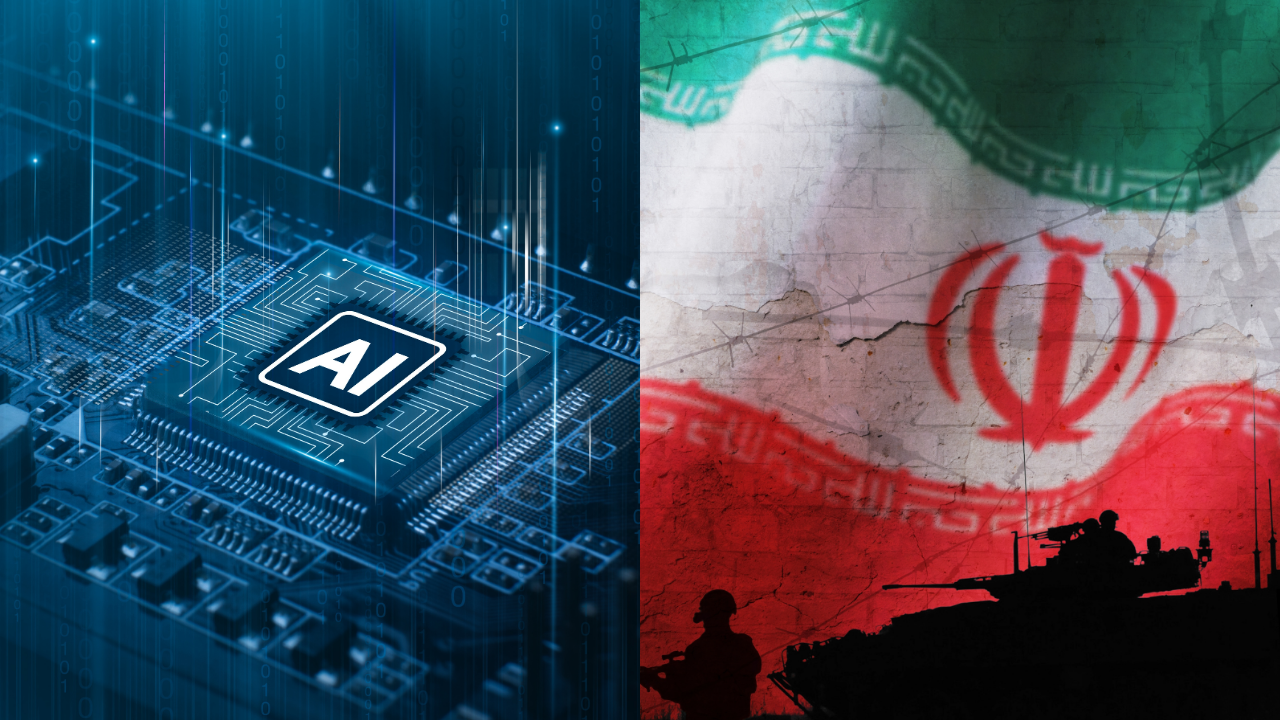
June 12, 2026 — In this week’s episode of Around the World, hosts Dhruva Jaishankar and Rachel Rizzo discuss ongoing developments in the Middle East conflict, focusing on recent military escalations, ceasefire efforts, and the broader economic and political implications of the conflict for the United States, Europe, and the Global South. They also examine the growing geopolitical significance of artificial intelligence, highlighting how frontier AI systems are reshaping national security and economic competitiveness, while raising questions about international cooperation and the challenge of governing rapidly advancing technologies.
Available on Spotify and Apple Podcasts.
Image: dee karen, via Shutterstock
Image: Sunshine Seeds, via Shutterstock
Sneak Peak
Dhruva Jaishankar:
On this week's episode.
Dhruva Jaishankar: Even if you do not care too much for AI, AI increasingly cares you. And so it does matter to all of us in some ways.
Rachel Rizzo: You have Israel halting its attacks on Iran, but Prime Minister Netanyahu short of formally acknowledging a ceasefire. So it's a pretty complicated moment in the region right now. Iran has closed the Strait of Hormuz yet again, the U.S. has launched new strikes on Iran. There's lots of back and forth, but I think there are a couple of things to keep in mind as we're kind of thinking through where this goes from here.
Dhruva Jaishankar: So the White House talks in very stark terms about they want American AI dominance globally, and and they use terms like dominance. On the one hand, the United States says we want to go it alone and we want to be the world's leader, but it requires a level of cooperation and partnerships to ensure the retains a leading edge. There is a bit of a paradox both in rhetoric and the policies that flow from it about whether the United States can or really desires to retain that leadership role and how to accomplish that.
Welcome to Around the World
Dhruva Jaishankar: Hello, I'm Dhruva Jaishankar.
Rachel Rizzo: And I'm Rachel Rizzo. Welcome to the Around the World Podcast, your essential guide to understanding the forces shaping our world today. Here, we cut through the noise to bring you clear, insightful analysis of the most important developments in geopolitics.
Dhruva Jaishankar: Whether it's security challenges in Europe, great power competition in Asia, domestic politics in the United States, or regional developments in Latin America or the Middle East, we'll discuss what's happening and more importantly, why it matters.
Rachel Rizzo: Thanks for tuning in and be sure to like and subscribe to the Around the World Podcast on YouTube, Spotify, and Apple Podcasts.
An End to the Conflict in the Middle East?
Dhruva Jaishankar: Hi Rachel, how are you?
Rachel Rizzo: Good, good, how are you?
Dhruva Jaishankar: Good, good. And you're in India. I'm still in Washington.
Rachel Rizzo: Are you but you're coming to India soon, aren't you?
Dhruva Jaishankar: I'll be there for the US India Forum next week. I think you'll also be there. This is a gathering for that that takes place about once a year and it's a sort of small group of people who include people in the two governments in the think tanks and the private sectors who are involved in U.S.-India relations in some way. So we should have quite a big group of Americans from government and outside of government coming to India for that as well. Yeah. Should be fun. What have you been tracking? I think we have almost hourly updates on the so-called U.S.-Iran ceasefire. Whether it's a ceasefire is something we can discuss and debate, but it seems things seem to have escalated in the few days with a resumption of US attacks on Iranian facilities, and including shipping, and and just in the past day or so we've had the reports of the confirmed killing I think of three Indian sailors on one vessel that was traversing the Strait of Hormuz. So what's going, how do you see things playing out there in the U.S.-Iran space?
Rachel Rizzo: So just kind of going back to the initial, the initial two-week ceasefire that was put in place on April 8th, it was remember mediated by Pakistan. Iran had rejected this 45-day framework and put forward its own 10-point peace plan. We've talked about this on the show. Back on April 21st, Trump extended the ceasefire indefinitely, saying it would remain until discussions are concluded. He said, quote, one way or another. But also imposed a US naval blockade on Iran. So you know, discussions have continued, but this week, on June 7th, you had sort of this escalation where the US and Iran started exchanging strikes again. The U.S. had intercepted Iranian missiles and drones launched the Strait of Hormuz and the Gulf. They struck Iranian coastal surveillance radar strikes in Syrik and Keshem Island. And basically Iran called this a clear violation of the ceasefire. So there's also the Israel aspect to this as well. You have Israel halting its attacks on Iran, but Prime Minister Netanyahu short of formally acknowledging a ceasefire. So it's a pretty complicated moment in the region right now. As of today, we're recording this on the 11th, Iran has closed the Strait of Hormuz yet again, the U.S. has launched new strikes on Iran. There's lots of back and forth, but I think there are a couple of things to keep in mind as we're kind of thinking through where this goes from here. The first thing, and and I'll get to, I want to get your points on this as well, as well, Dhruva. You know, a couple of things that people have sort of brought into the discussion are first of all, this war powers resolution that was you know, passed in Congress, but not in the Senate, passed in the House, not in the Senate, and what this might mean for the negotiations, what it might mean for Iran. I don't think Trump cares about this much. I also don't necessarily think he really cares about the midterms that much either, because he sees the way that he governs as a presidential executive powers anyway. But I do think what he cares about big time is the Fourth of July and the 250th anniversary coming up in a few weeks. So it wouldn't surprise me if we saw some sort of not comprehensive agreement, but some sort of ceasefire or an agreement between now and July. What have you been watching here?
Dhruva Jaishankar: I mean it it's all a little bit confusing because, I mean, you know, things change on the whims a few people.
Rachel Rizzo: Yeah.
Dhruva Jaishankar: I think what is said in public is not what, is always, reveals the entire picture. So I mean, even when the so called ceasefire was announced a little while ago, I think there was a widespread belief that this was quite tenuous. and it wasn't you know, that
Rachel Rizzo: Yeah.
Dhruva Jaishankar: and I think we said that on the show. So so even even the terms of the media you we're we're so far away from figuring out what the the terms of mediation are because again the Iranian position, the US position are still so vastly different that it's it's where you can find some common ground is is really that that that assures all is really, still very very elusive. So I think we're we're in this very weird. I heard somebody someone describe this as kabuki. How this is described how how this appears is not how it actually is. So I think we're we're all still waiting and
Rachel Rizzo: Yeah, absolutely.
Dhruva Jaishankar: One thing, just on the domestic implications of this, I mean, ⁓ it is interesting to see what the inflationary impact is going to be in the U.S.
Rachel Rizzo: Mm-hmm.
Dhruva Jaishankar: The you know the the latest economic figures in the U.S. suggests that growth has been still pretty strong, employment has actually been surprisingly strong, and yet inflation and public sentiment about inflation is actually turning quite negative, right? So it's a the inflation has over double the the rate that the Fed would like it to be. And it had been on track, I think, to meet that prior to the Iran War. So I think that is going to have some domestic political effects. It's also a thing another thing where I I'm I'm certainly watching and I'm sure others are around the world as well, is is the energy impact and the economic impact as a consequence of that in much of the rest of the world, in India, in the developing world, which is going to feel the energy pinch much more strongly in some ways in the U.S.. For the U.S. it's just it it's an inflationary issue. It it's a much more existential issue in parts of the Global South.
Rachel Rizzo: Yeah, absolutely. And I think as I always bring into the conversation, how Europe plays this moment, I think is going to be interesting as well. We have a G7 meeting up next. Actually, Modi and Trump are supposed to bilaterally on the sidelines of
Dhruva Jaishankar: Yes.
Rachel Rizzo: meeting. We have the NATO summit in Ankara coming up in just a few weeks. So a lot of opportunities for Trump to be on the global stage, for Europe to be on the global stage, conversations not just about security, but about energy and the knock-on effects of this war. So I, you know, I I think it's more Trump has this sort of Putin-esque obsession with his his legacy. And I do think that there's something to be said about this like very important anniversary coming up in the United States and how Trump wants to both celebrate that and mark that. So I would expect some some real pressure and pushing over the next few weeks for at least some sort of even a brief resolution where he can, you know, make a Fourth of July speech to the American people and say, you know, this war was indeed just and necessary, according to him, but here and and we have now and we've now wrapped it up, and this is what we've gotten from it. So lots to watch there.
Dhruva Jaishankar: Yeah, and you know, ten minutes walk away from our the ORF offices in in Washington, we have a UFC stadium being built.
Rachel Rizzo: Oh yeah.
Dhruva Jaishankar: Which is gonna kick off the celebrations for July fourth.
Rachel Rizzo: It's like in three days, right?
Dhruva Jaishankar: Yeah. And and after which Trump will fly out to France for the G7 meeting. So I think next next week or the week after when we record the next episode, I'm sure the G7 summit and its outcomes will be something will be discussed.
Rachel Rizzo: Yeah, absolutely.
AI — The New Force Reshaping Geopolitics
Rachel Rizzo: Next here, I think we wanted to go a little bit broader and beyond you know, regional tensions, regional conflicts, and talk about a topic that has been on everyone's mind, whether if it's you know through in the context of the Pentagon, in context of governance issues. And this is the geopolitics of artificial intelligence, the geopolitics of AI. Why, you know, why why did you want to kind of talk about this now? What have you been watching now? What do you think is important for, you know, folks listening to this podcast to sort of watch here?
Dhruva Jaishankar: Yeah, so it's interesting. I think we are at this very, and I use the word interesting because I think it's it'll have some positive and some negative effects. It's not it's a value neutral. But we are at a point I think where AI is having such an enormous impact on countries' economies, on national competitiveness, on social issues, on defense and security, including international relations and defense, that even if you do not care too much for AI, AI increasingly cares about you. And so it does
Rachel Rizzo: Yeah.
Dhruva Jaishankar: matter to all of us in some ways. And it's very hard, I think, to unpack in some ways because it be because it is at the intersection of the private and public sectors, exactly what the impact of AI is going to be. So last week, the AI company Anthropic began wave two of its Project Glasswing, which is an attempt to very gradually roll out its leading cutting-edge Mythos AI large language model. And it's rolling it out to select governments and private entities, initially only in the United States, and then last week in wave two, to fourteen other countries as well as NATO and the European Union. So primarily US allies, Europe, Asia, but also India as well. And the concerns are that Mythos, its new large language model, is so powerful as to expose thousands of cybersecurity vulnerabilities and devices around the world, including s vulnerabilities that that have existed for over a decade and haven't been recognized until now. So Anthropic says that it wants to give the quote good guys, which is other tech companies, friendly governments, financial institutions, the tools first to patch those vulnerabilities before it release this model
Rachel Rizzo: Yeah.
Dhruva Jaishankar: a wider public who may or may not want to use it for more malicious ends. And this is just the latest development that highlights how powerful AI companies, private AI companies have become, and how critical they become to international relations, to national economies, and to security.
Rachel Rizzo: So, I mean, you sort of mentioned this before. you know, folks may not care about AI, but AI increasingly cares about the general public and the way that it is used and utilized by by people and by governments and by by by companies. and in that sense, there's been a number of both AI breakthroughs, but also I think geopolitical hurdles to overcome in in recent years. The latest I think is probably with Anthropic and the Pentagon. But what have you been watching in terms of these breakthroughs?
Dhruva Jaishankar: Yeah, so for people who don't follow this closely, you know, I what what's interesting is I think we're at a at a point right now where these issues not, not trying to understand these issues is kind of akin to not being in the 1940s and early nineteen fifties and not trying to understand nuclear technologies and their implications, because I think again it is so transformative. So we've had a few developments, you know, initially I think it was really on applications, right? So it almost a decade ago we had some major breakthroughs with Google Translate. Tesla was making some you know driverless cars. There were a number of like applications that were showing the power of AI and how it could be used. But then the big development in gener in generative AI was ChatGPT in 2022 by OpenAI that sort of showed what generative AI was capable of. Chinese company DeepSeek's R1 release in 2025 showed that some of those same developments could be done at a lower cost, even if at at the you know sacrifice of quality. So it showed that this was suddenly could be in the hands of a lot more people. And then just in the last year, we've had some very significant developments with Claude this is led by Anthropic, Claude Code, Cowork, and now Mythos. And the significance of the latest breakthroughs are really twofold. One is, as I mentioned, that tools like Mythos have become so powerful that they they could pose a cybersecurity threat, and that is requiring a much more careful rollout. Just in the past 24 hours, they've rolled out Claude Fable 5, which is appears to be based on Mythos, but has guard some appears to have some guardrails built in. And I think the second major development that we're now just now seeing in in the sort of new AI era is what I call agentic functions are now becoming more apparent. That is, AI is moving beyond sort of simple tasks to sequential tasks that are starting to replicate what an employee is capable of doing, you know, and and this will have implications for employment. and so it can now do much more complex and sequential tasks and recognize those in a sort of agentic way. And so I think we're just at the cusp of realizing what what what the implications are and I think that that is leading to concerns about, maybe not unemployment, but certainly reskilling and what that means for econom you know, how economies are structured.
Rachel Rizzo: So you mentioned Deep Seek, you've mentioned Anthropic, you've mentioned Chat GBT. Is this just basically a two horse race between the United States and China at this point?
Dhruva Jaishankar: So yes and no, and you'll see a lot of I mean, I find a lot of rather simplistic commentary kind of focusing on that. Is this a you know US-China competition and others like the EU and India and others are not in the mix? And it's a bit more complicated than that, I think. so on foundational large language models, it does appear to be largely a two horse race, because the United States has in some ways three leading large language model labs, which are Google, OpenAI, Anthropic. Others such as Meta and others are sort of moving into what called open weight models. But the infrastructure required for developing one of these is vast. And it requires some really like you know massive investments which are being made currently. And it's benefiting not just those labs, but also the entire ecosystem around it, right? So companies like Oracle or even old school tech companies like Dell and HP and Intel are sort of getting in on the AI boom. And then China, of course, has sort of government resources that it can deploy and is developing champions, national championships of its own, sometimes quite impressively. There are a few others in the mix. So for example, Mistral is a French company, it's a non-US, non, it's it's not positioning itself as a non-US, non-China option, founded only in 2023, and it already has like a $12 billion valuation, which shows you again the kind of exponential growth that we're seeing. But that leading edge is still very expensive to establish and compete in, and the associated infrastructure investments we're talking about are are just massive, hundreds of billions of dollars in data centers.
Rachel Rizzo: And the general public is not thrilled about data centers either. You have, you know, I mean coming from Utah, for example, we have this drought, water shortage, and it's, there's a potential data center being built somewhere in Utah, and it's become this huge political issue where people are like, why are we using our resources to build these data centers? So it's becoming more and more politicized. But it also seems a little bit paradoxical at a point too, where you have the US government and tech companies seeking dominance, but to do that you have to sort of diversify the system at the same time. Is that right?
Dhruva Jaishankar: Yeah, so you know, it it's kind of interesting. There's a dilemma in how the U.S. government is approaching this issue. right? So the White House talks in very stark terms about they want American AI dominance globally and and they use terms like dominance, right? It's very unilateral. At the same time, I think there is a recognition on the part both of the private sector companies but also like the State Department that they can't actually accomplish this without, without partnerships, without diversification, but you know, whether it’s sourcing critical minerals in Africa, getting semiconductors from Taiwan and South Korea, establishing data centers around the world in places like Malaysia, India, other places. They require undersea cables around the world. They want data from the places like Latin America. They want talent from India, and they want like applications that are customized for a variety of user functions because that's how they become profitable. So so there is that sort of contradiction. You know on the one hand, the United States says we want to go it alone and we want to be the world's leader, but it requires a level of cooperation and partnerships to ensure that the United States retains a leading edge. And so there is a bit of a paradox both in rhetoric and the policies that flow from it about whether the U.S. can really desires to retain that leadership role and how to how to accomplish that.
Rachel Rizzo: And so th th there's a paradox, is there also a bubble at the same time, would you say, in a way?
Dhruva Jaishankar: You know we've had slightly volatile, you know, the financial markets have been little all over the place, largely upward, but there's certainly signs of trepidation on Wall Street as well. And it's for a few reasons. One is that this kind of a very sharply depreciating price of frontier technology is a little bit like a used car, right? As soon as you drive the car out a lot after
Rachel Rizzo: Yeah.
Dhruva Jaishankar: buying it, it depreciates in value. And so you know, being at that leading edge is very valuable, but you know, it is possible today to create what Chat GPT did in 2022 at a fraction, a fraction of that cost, even though it's just a few years behind.
Rachel Rizzo: Mm-hm.
Dhruva Jaishankar: So, you know, I think that that that is one of the issues which is our are you know, what what is the marginal value of these improving AI capabilities. And everyone's gambling on the fact that you're gonna get closer to what's called AGI, you know, artificial general intelligence. That's kind of what the race is on. So it's a very high stakes gamble, but a lot of the investments are being propelled by trying to move that frontier forward. The other problem is just circular investments. So a lot of the valuation, you see this incredible valuation which doesn't seem to align with profitability at this point of time. And a lot of it is really being driven by cross-investments by technology companies and firms in each other. So you have semiconductor companies investing in labs, labs are investing in application companies, and really the long-term profitability will depend on deployment. So in some ways you can think of this as this idea of multiple houses of cards, a few people know this. Everyone's betting that their theirs will be the last house standing and whoever wins that competition to to mix metaphors will actually enjoy potentially enjoy sort of generational market dominance. So I think that's where we're at.
Rachel Rizzo: Interesting. And there's a couple maybe like a podcast and a Foreign Affairs article that I think are good to listen to if you want to get more in depth on this. One is obviously Dario Amade, who's the head of Anthropic, he had a really interesting interview with Ross Dalfitt a month ago, kind of talking about AI and AI governance. But there was also a really interesting article that was in Foreign Affairs. This was back in February, and it's by Sebastian Elbaum, from University of Virginia and Sebastian Malaby from CFR. And the title is The AI Trilemma, kind of talking about how to regulate this technology. And they kind of highlight, you know, protecting the public, national security, you know, economic growth, where you you have sort of these three things, and you can never have all three. You always have to give up one of them in in in is to to to benefit the other two. So I think those are a couple good things to both read and listen to if you want to dive in deeper on on this topic, which I'm sure we'll also doing in the coming in the coming months here. It's not going away anytime soon.
Dhruva Jaishankar: We will, yeah. And actually just on on on that note, I mean Darama Day actually also had a essay I think is published on his website in the last few day or two, which I think sort of lays out some ways why govern AI governance is not catching up with the technology, which I think everyone would agree on. The challenges, you know, I'm not sure they have a vested the developers have a vested interest in how AI is governed. And you know, I think it's incumbent upon a lot of people who are not from the AI community to actually understand what is possible, what the costs and benefits are of different kinds of governance models, understand the technology at least basically so that they can appropriately govern it. But it it also does seem to be a little bit of a, a little bit of a conflict of interest in in how
Rachel Rizzo: Yeah.
Dhruva Jaishankar: in just in some of the ways how t how how the technology leaders are advocating for certain types of governance structures. Sebastian Malaby who you mentioned has actually written a biography, I think it's come out already of Demis Hassabis, who's the head of DeepMind. Which is actually a very interesting company, UK based, he's a Nobel Prize winner. He actually used AI to anticipate protein sequences and won a Nobel Prize
Rachel Rizzo: Mm.
Dhruva Jaishankar: in chemistry using essentially using AI breakthroughs. but it's a rather flattering portrait of him. But at at the same time again there are positives. DeepMind is doing some very interesting and innovative work on vaccine development, on meteorology and and other ways where AI can be used as a a tool for scientific advancement. So again, it's something to watch, but I think it's interesting for people, you know, for those of us who are not technologists like like us, it's something we need to kind of wrap our heads around because it's going to have consequences for all of us.
Rachel Rizzo: Yeah. Absolutely. Lots to lots to cover, lots to follow, and as always, we will be following all these things and more. As we mentioned, G7 meeting coming up, we'll probably discuss that, but we'll make sure to keep you, our listeners, up to date on the latest happenings in geopolitics. be sure to tune in ⁓ every couple weeks on Fridays for our latest episodes.
Dhruva Jaishankar: Thank you as always for joining us and around the world. And be sure to subscribe to us on Spotify, on YouTube, or on Apple Podcasts.
Rachel Rizzo: Thanks.