
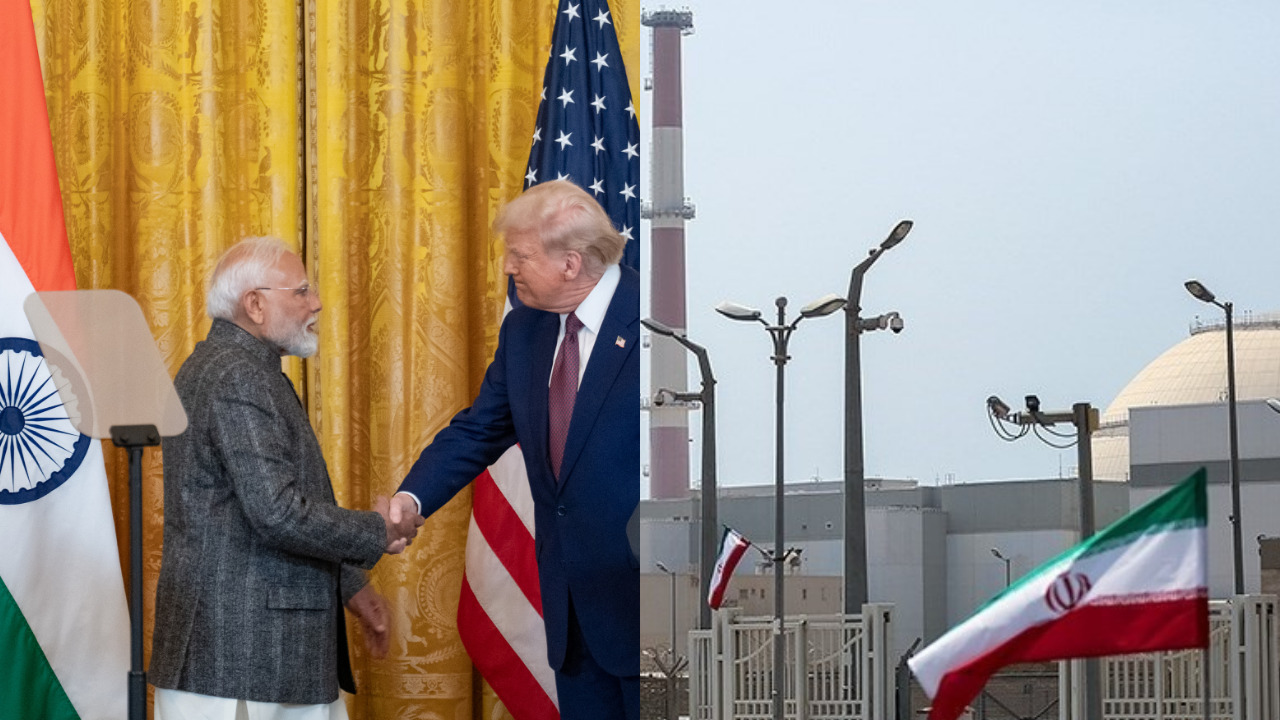
February 6, 2026 — In this week’s episode of Around the World, hosts Dhruva Jaishankar and Rachel Rizzo break down a major shift in U.S.-India relations after U.S. President Donald Trump and Indian Prime Minister Narendra Modi announced a trade deal earlier this week. They explore what’s driving the breakthrough, what remains unclear, and whether this deal will put the bilateral relationship back on steadier ground. The episode then turns to rising tensions with Iran, as the United States increases its military presence in the Gulf even as informal nuclear talks take shape, heightening questions about escalation, diplomacy, and what to watch for next.
Available on Spotify and Apple Podcasts.
Image: The White House, Public domain, via Wikimedia Commons
Image: Tasnim News Agency, CC BY 4.0, via Wikimedia Commons


Sneak peek
Rachel Rizzo: On this week's episode.
Dhruva Jaishankar: Trump and Modi spoke four times between September and December, didn't seem to make much of a difference. And then we finally seem to have on February 2nd a breakthrough. What we know so far is the drop to 18 % tariffs for India. This is part of a longer term strategy by India to consolidate its trade relationships with so-called complementary economies of which the United States is the largest. There’s a palpable sense of relief on both sides that some business can return to normal. I think a lot of normal activity that have been waiting in the wings is going back. And enough people are invested in that relationship on both sides to actually sort of want to keep that going.
Rachel Rizzo: There's a few things on both sides that we should look at pretty closely. The first, think, is watch whether the U.S. sustains or further expands its force posture in the Gulf. And then watch for clarity of scope. So if the discussions expand beyond the nuclear file to include things like regional activity, that's where the talks are most likely to stall. So if they remain tightly nuclear focused, a limited deal becomes, I think, more plausible. finally, what I would say on the Iran side, really watch internal politics closely. Statements from the Supreme Leader's office or open IRGC resistance or public criticism of negotiations, could potentially constrain Iranian diplomats or raise the odds of a deliberate provocation.
Welcome to Around the World
Dhruva Jaishankar: Hi, I'm Dhruva Jaishankar.
Rachel Rizzo: And I'm Rachel Rizzo. Welcome to the Around the World podcast. Your essential guide to understanding the forces shaping our world today. Every week, we cut through the noise to bring you clear, insightful analysis of the most important developments in geopolitics.
Dhruva Jaishankar: Whether it's security challenges across Europe, power dynamics in Asia, domestic updates from the United States, or regional updates in Latin America or the Middle East, we make sure you're up to speed on what's happening and more importantly, why it matters.
Rachel Rizzo: Thanks for tuning in. And also be sure to like and subscribe to the Around the World podcast on Youtube, Spotify and Apple Podcasts. Onto the show.
Rachel Rizzo: Hey, Dhruva.
Dhruva Jaishankar: Hi Rachel, how are you?
Months in the Making: The U.S.-India Trade Deal
Rachel Rizzo: I'm good. Another newsy week on the India US front. So we've got some good news.
Dhruva Jaishankar: Yeah, we had on February 2nd, Monday, which also happens to be Groundhog Day in the United States. President Donald Trump announced a broad framework agreement with India that settles the trade disputes that have been ongoing for about nine months or so. But the most important thing is he announced this decrease in tariffs to 18 % for Indian imports from imports from India to the United States. That's actually been the big news of the last week.
Rachel Rizzo: Yeah, so can you give us a little bit of background? I mean, everyone has been so focused on the FTA that was signed between India and the EU last week. And then obviously the questions that that brought up are what was going to happen between the US and India given that that relationship has really been on the rocks over the last almost a year at this point. So what kind of set the stage for a breakthrough on this? It happened and was announced on social media. We still don't really have any language here, but were you surprised? What have you been watching on this front?
Dhruva Jaishankar: So I think the timing was surprising. Just a little bit of background. India actually entered engagement with the Trump administration quite early, like pretty much immediately after his inauguration last January on trade issues. And in February of last year, Trump and Modi, Prime Minister Modi announced that they would conclude a bilateral trade agreement, a BTA, by the fall. That was the timeline they gave. In the midst of all of this, the United States announced so-called liberation day tariffs against many countries, including India. It was initially given a 26 % quote reciprocal tariff, not quite reciprocal, but that was the terminology used, which when a deadline expired at the end of August, end of July, was like a White House imposed deadline for negotiating a deal and India didn't have one. It was actually then a 25 % tariff was imposed on India. And then in September, another 25 % kicked in due to an executive order that Trump passed that targeted India for its purchases of Russian oil sanctions. So for the last few months, in September, we've had 50 % tariffs on Indian exports amongst the highest the United States has been applying on any country. Trade did not actually fall quite surprisingly. So U.S. exports to, I'm sorry, Indian exports to the United States actually grew in the last quarter of last year of 2025 by about 26 % over the year before. And U.S. exports to India grew about 3%. So it didn't really address the problem that Trump said was a problem, which was the trade imbalance. And India, meanwhile, concluded trade agreements with the UK, New Zealand, and most significantly, the European Union in January. So this is, think, the backdrop to all of this. And then we finally, Trump and Modi spoke four times between September and December, didn't seem to make much of a difference. And then we finally seem to have on February 2nd a breakthrough. I mean, what I would stress is a few things is what we know so far is the drop to 18 % tariffs for India. Secondly, that this is part of a longer term strategy by India to consolidate its trade relationships with so-called complementary economies of which the United States is the largest.
Rachel Rizzo: So in terms of the details, it seems like the details are still a little bit scant. We're not quite sure exactly what this entails besides tariffs dropping down to 18%, which is great news right out of the gate. But what are you waiting for in terms of signals, in terms of what comes next here?
Dhruva Jaishankar: Yeah, it seems like a lot of analysts are getting a little bit ahead of themselves and trying to sort of interpret what's going on. The reason is we've had now an announcement which has now signaled to the bureaucracies on both sides that they need to work out the technical details. And those are still being sorted out. think we will see as soon as this week, we will see executive orders that will start implementing some of this, particularly the first 25 % tariff related to Russian oil purchases and so reversing that. And secondly, I think we will see a joint statement at some point, hopefully by the end of this week, that will offer the technical roadmap for the implementation of this agreement. So I think we will see what that is, but broadly it seems to be along the same lines broadly as India's trade agreements with the European Union and UK and others.
Rachel Rizzo: So do you think that we're sort of in the clear at this point when it comes to the relationship between the US and India? I mean, it seems like nothing is ever certain. Nothing is ever off the table. But once you sort of get to this point in a trade relationship or a trade deal, it's in the interests of both sides to make sure that it's stable. Are you going to be looking for anything specific that could derail it at this point or are you pretty confident that now that we've gotten this far, it's kind of uphill from here?
Dhruva Jaishankar: So I think a few things. One, there's a palpable sense of on both sides that some business can return to normal. We're already seeing this today in Washington. There's actually a ministerial critical minerals meet that's taking place. I think a lot of normal activity that have been waiting in the wings is going back. and normal and enough people are invested in that relationship on both sides to actually sort of want to keep that going. So I think one thing to keep in mind. Second, this is not a trade agreement akin to what India signed with the European Union or the UK, which are sort of ratified binding agreements. They have to be ratified by the legislatures of both countries. These are, you know, those are serious trade agreements, right? This seems to be something a bit more tactical deal based, which is how President Trump operates. He has similar agreements with many other countries. And three, getting to that is what we've seen, you know we're one year into a four year Trump administration, right? It's only been 12 months, really, a little over 12 months. We've seen some swings. I would just give two examples with the United Kingdom recently, where as we spoke about on previous episodes, we had tariffs applied related to Greenland and also with South Korea, which again, there was a trade agreement and then Trump felt that South Korea wasn't doing enough and so 25 % tariff was threatened against them too. And so I think we will see, we're not at the end of the road yet, but obviously I think this is for the bilateral relationship, this is a positive step.
Rachel Rizzo: And then finally last question. mean, does this say anything about how bad the relationship actually fell over the last year? I mean, if it recovers this quickly, maybe the floor isn't as low as people thought it was, or do you think there's something there?
Dhruva Jaishankar: Yeah, I think the last year exposed two things. One is that the ceiling may not have been as high as some anticipated. I think that there have been some bumps in the road in the past year, mostly on trade and tariff issues, but other matters as well. But secondly, I think on the positive side of the ledger, the floor is also higher than people anticipated, right? And I kept pointing out even during the worst of this, which is like August, September, October, you still had military exercises between the two countries, had army exercises in Alaska, you had major AI deals being brokered, including by Amazon, Microsoft, Google, OpenAI were also, you know, something that the United States considers as a crown jewel of its economy. They're investing more in India, not less, despite tariffs. We had some defense sales and defense framework agreements signed in September. We had a major energy deal towards the end of the year. So, you know, lot of the people-to-people relations have dropped a little bit because, you know, you have seen a slowdown in overall migration to the United States because of visa related issues. But again, you still have 5 million people of Indian origin in the US. so, know, the broad, so sinews of the relationship remained intact mostly. Obviously things are not, you know, they will take time to build up trust again. Everyone knows something like this could happen you know. S I the long short of it is while the ceiling may not have been as high as some thought, neither is the floor is perhaps higher than people feared.
Rachel Rizzo: Well, good news all around. Something we'll be watching closely in the next few weeks.
Tension & Talks with Iran
Dhruva Jaishankar: Yeah. Turning to very different issue, but one I think that will stay in the news for some time, Iran. have seen a sort of, well, we had US strikes on Iranian nuclear facilities last year. What is happening now in Iran? We seem to have another drumbeat and real concerns was talking to some journalists there today in the last couple of days in Washington - US journalists and they felt that an attack on Iran might be imminent.
Rachel Rizzo: Yeah, I mean, people have been talking about this for weeks now. It comes amidst a pretty brutal crackdown by the Iranian regime on protests around the country. We've talked about this over the last few weeks. It also comes after, as everyone remembers, a military operation last June when the US bombed some critical nuclear sites in Iran. But basically what's happening right now is Trump has really been pressing Tehran to enter negotiations over its nuclear program. He has repeatedly threatened more military action in response to these crackdowns on anti-government protests. And just last week, the U.S. president ordered the USS Abraham Lincoln to the Gulf region, which heightened concerns about a potential military confrontation. So now the carrier strike group, brings approximately 5700 additional U.S. personnel, joined three destroyers and three littoral combat ships already operating in the region. So there's a pretty serious growing military U.S. presence there. At the same time, there's also been direct military conflict, although not soldier to soldier or air to air combat or anything like that. A U.S. Navy jet an F-35 shot down an Iranian Shahed 139 drone that they say was, quote, aggressively approaching the US aircraft carrier, the USS Abraham Lincoln in international waters in the Arabian Sea. And so I think when you look at an incident like that, it risks further escalating tensions that are already high as the Trump administration continuously warns of possible military action to pressure Tehran into negotiations. So this shoot down came within hours of IRGC forces, that's the Iranian Revolutionary Guard forces harassing a US flagged merchant vessel in the Strait of Hormuz, which then prompted the USS McFaul, which is a destroyer, to intervene and escort this ship to safety with air support. And then Iranian media reported that the drone had transmitted imagery before it was down. So we see a lot of actions happening at the moment while at the same time, potential talks taking place. So it's a lot of fog of war stuff at the moment, I think.
Dhruva Jaishankar: Yeah, but it is a bit reminiscent of Venezuela, right? I there's been this sort slow US military buildup in the Gulf, some sort of testing of each other's military capabilities that is already taking place. Now, you mentioned just right at the end, some talks, what is happening in terms of talks between the United States?
Rachel Rizzo: Yeah, so between the US and Iran, they're really informal at the moment. So these are preliminary U.S.-Iran negotiations focused pretty narrowly on Iran's nuclear program specifically and the terms under which Tehran would potentially return to constraints in its nuclear program in exchange for sanctions relief. This is so this is pretty narrow rather than looking at a broad reset of US-Iran relations right now. So on the U.S. side, the process is being coordinated by a name we are all familiar with, Steve Witkoff. It's operating with the backing of the White House in close consultation with U.S. CENTCOM, U.S. Central Command and regional allies. And the Iran delegation is being led by Foreign Minister Abbas Araghchi and he's acting on instructions from the Iranian president. So these are, like I mentioned, still at a pre-formal stage. There's no fixed venue or agenda publicly agreed. They're being facilitated by regional intermediaries, most notably Turkey and Oman, who have offered to host and broker the talks. So that's kind of where we are right now in terms of the talks specifically.
Dhruva Jaishankar: And finally, what do we watch for next? What should we look out for?
Rachel Rizzo: Yeah, I think there's a few things on both sides that we should look at pretty closely. The first, think, is watch whether the U.S. sustains or further expands its force posture in the Gulf. So this is looking at things like additional carrier aviation sorties, bomber task force deployments, air defense reinforcements. That could suggest that Washington is keeping credible strike options live. On the flip side, any drawdown or quieter operational tempo could indicate a real confidence on behalf of Washington that talks are stabilizing the situation. And at the same time, Iranian behavior at sea is equally important. So another drone incident, more unsafe naval encounters or proxy action could really raise escalation risk. So that's on the military side. I think the clearest indicator of real progress would be whether or not these current talks, these informal talks, harden into a real formal sort of time-bound negotiating framework where you have a confirmed venue, agenda, real senior -level participation. And then watch for clarity of scope. So if the discussions expand beyond the nuclear file to include things like regional activity, that's where the talks are most likely to stall. So if they remain tightly nuclear focused, a limited deal becomes, I think, more plausible. And then finally, what I would say on the Iran side, really watch internal politics closely. Statements from the Supreme Leader's office or open IRGC resistance or public criticism of negotiations, this could potentially constrain Iranian diplomats or raise the odds of a deliberate provocation. While on the other side, disciplined messaging on behalf of the Iranians suggests that there is buy-in at very elite levels or for the talks, but de-escalation at the same time. So a lot to look at, a lot to watch for. Nothing is certain at the moment. So this is definitely a conversation we'll continue to have over the coming weeks.
Dhruva Jaishankar: Great. We'll be keeping an eye on all these developments and make sure we're keeping you, our listeners, up to date in the latest happenings in geopolitics. Our last few episodes have been amongst the most listened to, including the one on the India-EU trade agreement. A few weeks ago, we discussed the FED and issues there. And actually, one of the names we mentioned in that discussion ended up getting named FED chair by Trump.
Rachel Rizzo: Yep. .
Dhruva Jaishankar: So be sure to tune in every Friday for the latest episodes. We're on Spotify, on Apple podcasts and on YouTube. Feel free to leave comments as well for issues that you'd like us to cover and tune in every week.
Rachel Rizzo: Absolutely. And as always, thank you for joining us on the Around the World podcast and we'll see you next week.