
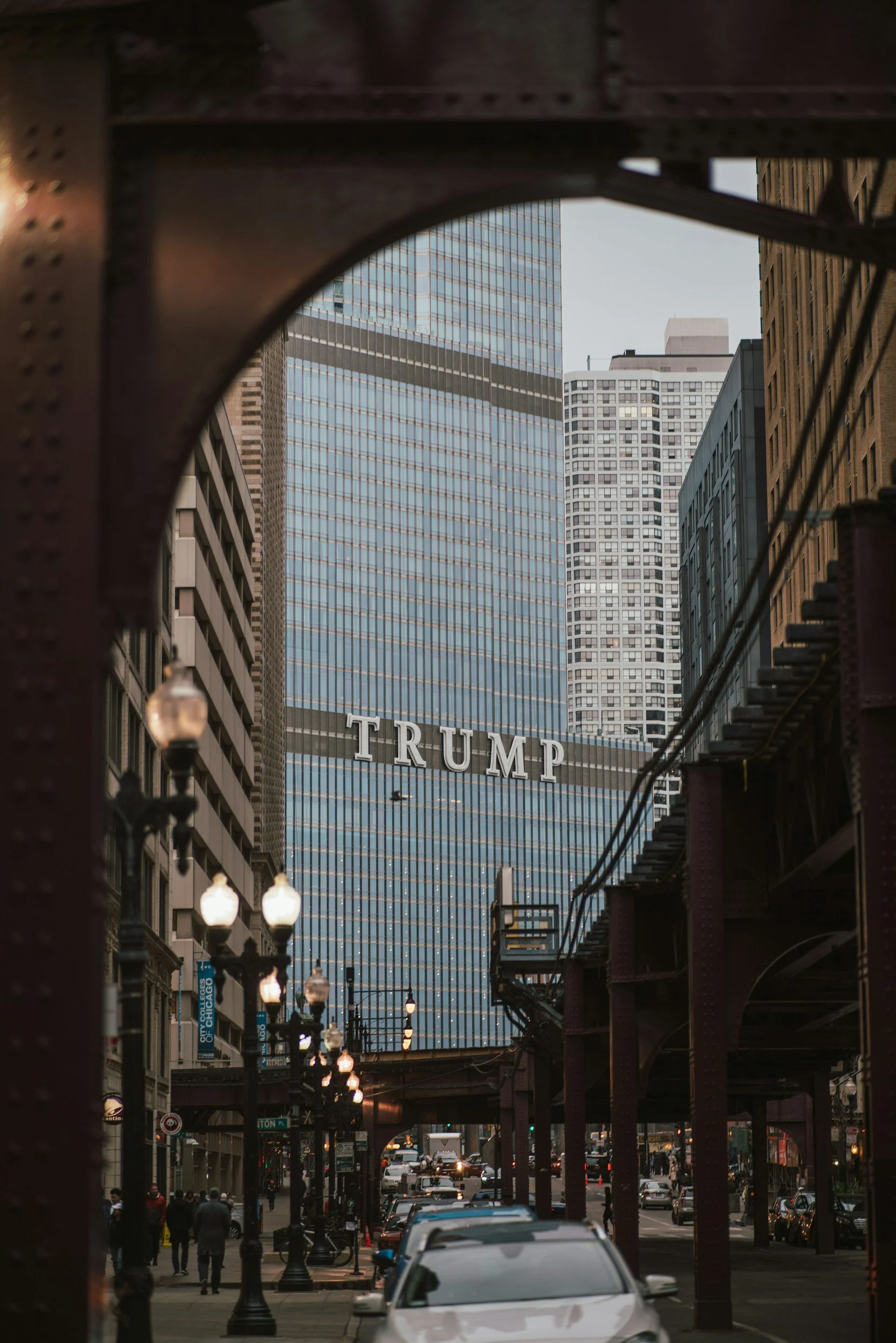
By Vivek Mishra
While Trump's choices reflect his desire for a loyal team, they also signal his intention to challenge traditional governance structures and pursue a different vision for America's future.

Edited Volume
By Caroline Arkalji, Anasua Basu Ray Chaudhury, Dhaval Desai, Arpan Tulsyan, Akram Zaoui, Oommen C. Kurian, Shruti Jain, and Leigh Mante
Editors: Sharon Stirling and Eszter Karacsony
Dhruva Jaishankar spoke to Jersey Lee on the Pacific Polarity podcast on India's re-alignment.
By Udaibir S. Das and David Grigorian
Domestic debt restructuring (DDR) is constrained optimization: success requires not only reducing debt service but preserving the monetary and financial system capable of supporting economic recovery.
By Udaibir Das
Absa and OMFIF have given Africa a decade of disciplined comparison. The next task is to make the consequences of reform equally visible. A country should be able to name an investment that happened because its market improved. Success is not more capital entering markets. It is more productive investment, financed without greater fragility. That is financial sovereignty on the ground.
By Vivek Mishra
While Trump's choices reflect his desire for a loyal team, they also signal his intention to challenge traditional governance structures and pursue a different vision for America's future.
While there is no shortage of analysis and speculation of China’s capabilities and behavior today, it is imperative to keep an eye on longer-term developments and remain open to uncertainties that could shape China’s strategic outlook.
Joint Report
By Shikha Aggarwal, Divyank Chaudhary, Lily McElwee, Aaron Glasserman, Keshav Kelkar, Kento Mashiko, Takuya Matsuda, Helen Mitchell, Philip Rogers, Rena Sasaki, David Saultry, and Neil Thomas
Editors: Dhruva Jaishankar and Greg Brown
By Vivek Mishra
While the Indo-Pacific will continue to receive attention in U.S. policy circles, the approach under Trump may be two-pronged.
By Vivek Mishra
Trump’s recent reelection signals a possible shift in global stability, with a hardline stance on China and strategic alliances in the Indo-Pacific.
By Vivek Mishra
How might Trump’s second administration stay similar to and differ from his first term?
By Udaibir Das
Where do Brics, the International Monetary Fund, and the World Bank overlap in their newly released communiques on the global economic landscape?
By Vivek Mishra
How have the Trump and Harris campaigns done so far in the views of the American public as Election Day nears?
By Vivek Mishra
What might America’s foreign policy with India look like if led by a Trump administration or a Harris administration?
By Vivek Mishra
How does India’s shift towards individualism impact its relationship with Washington as tensions with China grows?
By Vivek Mishra
How does the recent MQ-9B drone deal between India and the United States foster deeper defense and technology cooperation between the two countries?
By Vivek Mishra
As Washington navigates pressures in Latin America, it remains to be seen how the next U.S. administration will deal with Russia and China in America’s backyard.
By Udaibir Das
How do sovereign wealth funds navigate current times while building portfolio resilience?
By Vivek Mishra
External factors are likely to weigh heavily on US commitments in the Indo-Pacific under the next administration, which will in turn influence the evolution of the India-US security partnership.
By Vivek Mishra
Faced with low approval ratings, Justin Trudeau seems to be using foreign policy as a tool to distract from his domestic failures. Not just India, but another unresolved issue of Trudeau's tenure has been his handling of Chinese interference in Canadian elections.
By Vivek Mishra
As Arab-Americans hope for Harris’ distance from Netanyahu, currently, there isn’t much difference between Biden’s and Harris’ Middle-East approach, as she could inherit an increasingly volatile Gulf
By Dhruva Jaishankar
While the direct implications for India might be less than for others, the 2024 U.S. presidential election will undoubtedly have indirect effects on India.
By Udaibir Das
How can countries with small and shallow financial markets adopt financial stability reports that are more suited for their economic conditions?
By Sadiq Amini
Is Japan’s continued engagement with Afghanistan, especially with development projects, furthering the legitimacy of Taliban rule?
Observer Research Foundation America, 1100 17th St. NW, Suite 501, Washington DC 20036 USA