By: Suhani Jaggi
When China’s leader Xi Jinping visited Washington, D.C. in September, the United States and China agreed to a two-month extension of their trade truce. Under the extension, China’s export controls on high-end lithium-ion batteries and the equipment and technology to make them stay suspended until January 10, 2027. A reprieve measured in weeks shows how battery supply chains have become a bargaining chip. China accounts for over 80% of global battery cell production and an even higher shares of key battery materials, giving it leverage to disrupt access through trade restrictions.
Yet, despite China’s first-mover advantage, sodium-ion batteries offer other countries a chance to diversify supply and capture value in an emerging segment of the battery value chain. However, at present, sodium-ion batteries risk the same concentration. Avoiding that will require policy coordination across national governments to take advantage of complementarities and scale.
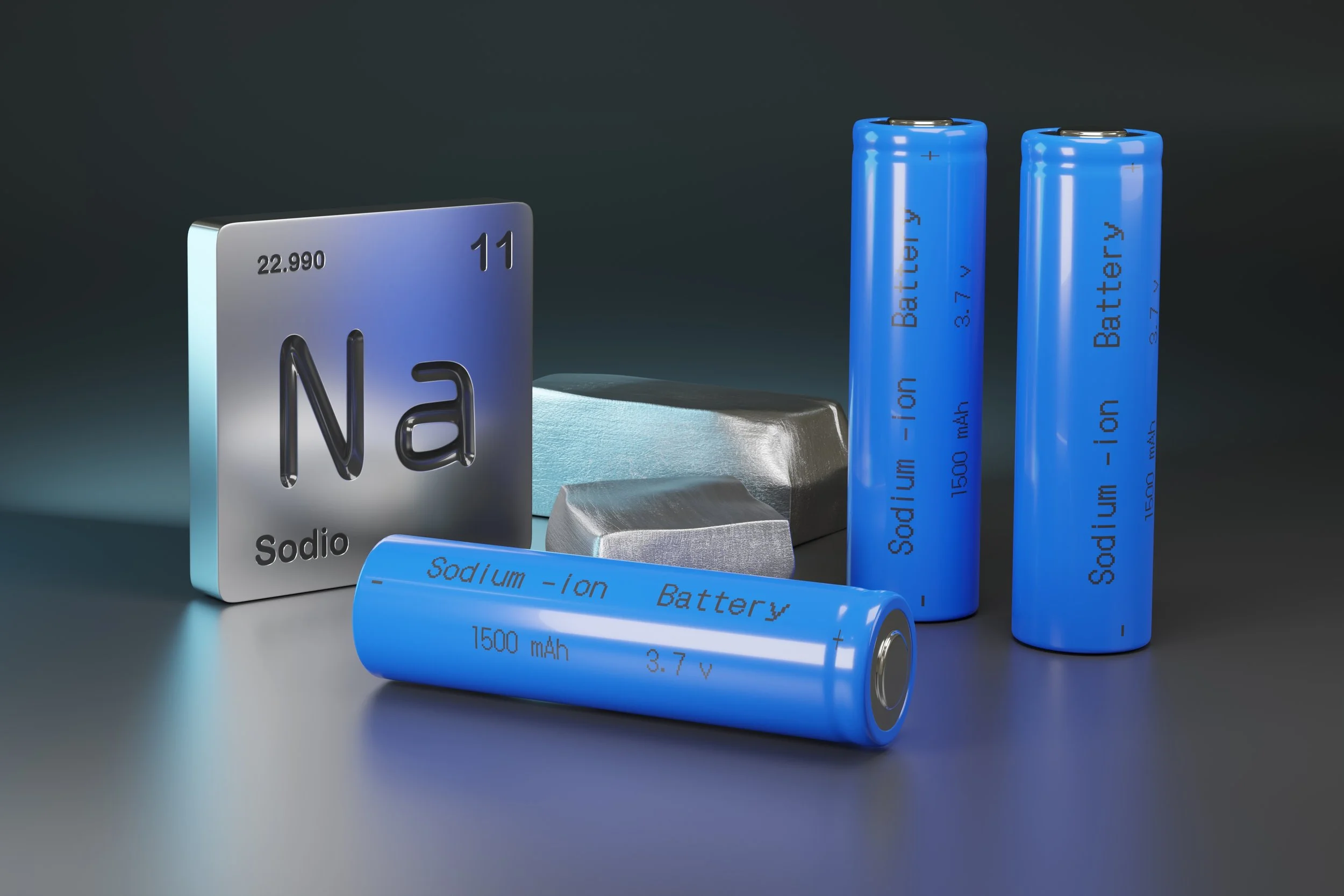
Sodium-ion batteries replace lithium with sodium as the charge carrier. They potentially offer fast-charging, low-temperature performance, and better thermal stability. Their main drawback is their energy density: the best cells reach about 175 Wh/kg, against 205 Wh/kg for lithium iron phosphate (LFP) and 255 Wh/kg for nickel-based chemistries. That makes them less suited to long-range electric vehicles (EVs) but well suited to stationary and grid storage, where weight matters less than cost or lifespan. The larger strategic draw is that sodium is abundant and widely distributed, creating new entry points into the supply chain. But this benefit is partial, because the chemistries closest to market still use nickel and manganese.
China is already showing signs of attempting to concentrate the sodium-ion supply chain. As of 2026, commercial-scale sodium-ion production is entirely in China, which has built at least a dozen gigawatt-hour-scale plants. China is estimated to hold nearly all existing capacity and more than 95% of what is planned for 2030. Chinese incumbents moved quickly because sodium-ion cells can be made on the same equipment lines as lithium-ion cells, after retrofitting and fine-tuning. Firms such as CATL and BYD drew on existing know-how and production lines, and now enjoy early-mover economies of scale.
The absence of a comparable supplier base elsewhere is already shaping investment decisions. South Korea’s LG Energy Solution is building its sodium-ion pilot line at its existing plant in Nanjing, a sign of the pull of China’s sodium-ion ecosystem. In the United States, sodium-ion developer Natron Energy shut down in 2025. If production capabilities do not diversify, sodium-ion risks reproducing the concentration that characterizes lithium-ion.
China’s head start does not guarantee lock-in, and efforts outside China are taking different routes. Some target the materials gap directly. Swedish developer Altris and Czech chemicals group Draslovka are converting an existing line at Draslovka’s Kolín plant to produce up to 350 tonnes a year of Altris’s sodium-ion cathode material. Japan is testing retrofitting more cautiously: under a government-backed NEDO program, GS Yuasa will build prototype cells on its existing lithium-ion prototype lines, targeting commercialization in the mid-2030s.
Countries still building cell manufacturing see an opening as well. For India, sodium-ion plays to domestic strengths. The government’s Technology Development Board is backing a Roorkee firm to commercialize the processing of agricultural waste into hard carbon, the anode material sodium-ion cells use in place of graphite. Reliance Industries now owns Faradion, a UK sodium-ion developer, and India’s ₹18,100 crore performance-linked incentive scheme for advanced chemistry cells is technology-agnostic, leaving room for sodium-ion. With commercialization still early, India has a window to build capability before incumbents consolidate.
Others are competing on design and policy rather than price. U.S.-based Peak Energy, which energized the country’s first grid-scale sodium-ion battery, uses a fully passive cooling design that it says cuts auxiliary power use by up to 97% and slows degradation. For now, though, it sources its cells from manufacturers in China. Its 4 GWh systems factory in Sacramento is due to start production in early 2027, and General Motors is co-developing its next-generation cells. U.S. policy is pushing in the same direction but has yet to translate into outcomes. Under the 2025 One Big Beautiful Bill Act, storage projects and components lose access to key U.S. clean energy tax credits if they receive too much material assistance from prohibited foreign entities, a category that covers firms linked to China. Such rules reward non-Chinese supply, but Peak’s case shows that differentiation at the system level does not by itself remove dependence at the cell level.
China’s first-mover advantage does not make its dominance inevitable. How far diversification goes will depend on where manufacturing ecosystems take root and whether demand allows new entrants to scale. Global efforts can be complementary, involving European cathode materials, Japanese and Korean manufacturing experience, Indian feedstocks and incentive-backed factories, and U.S. demand shaped by sourcing rules. Collective offtake and anchor-buyer agreements would give new producers the demand they lack. Joint investment and technology partnerships would share the cost of scaling, and rules of origin would let partner-made content qualify for incentives. Without that coordination, each country risks building subscale capacity that cannot compete with China on cost. Sodium-ion’s technical and economic benefits are real, but its strategic value depends on supply chains deliberately designed to reduce dependence on any single supplier.
Suhani Jaggi is a Fall 2026 intern for the Energy & Climate program at ORF America.