
By: Dylan Morgan
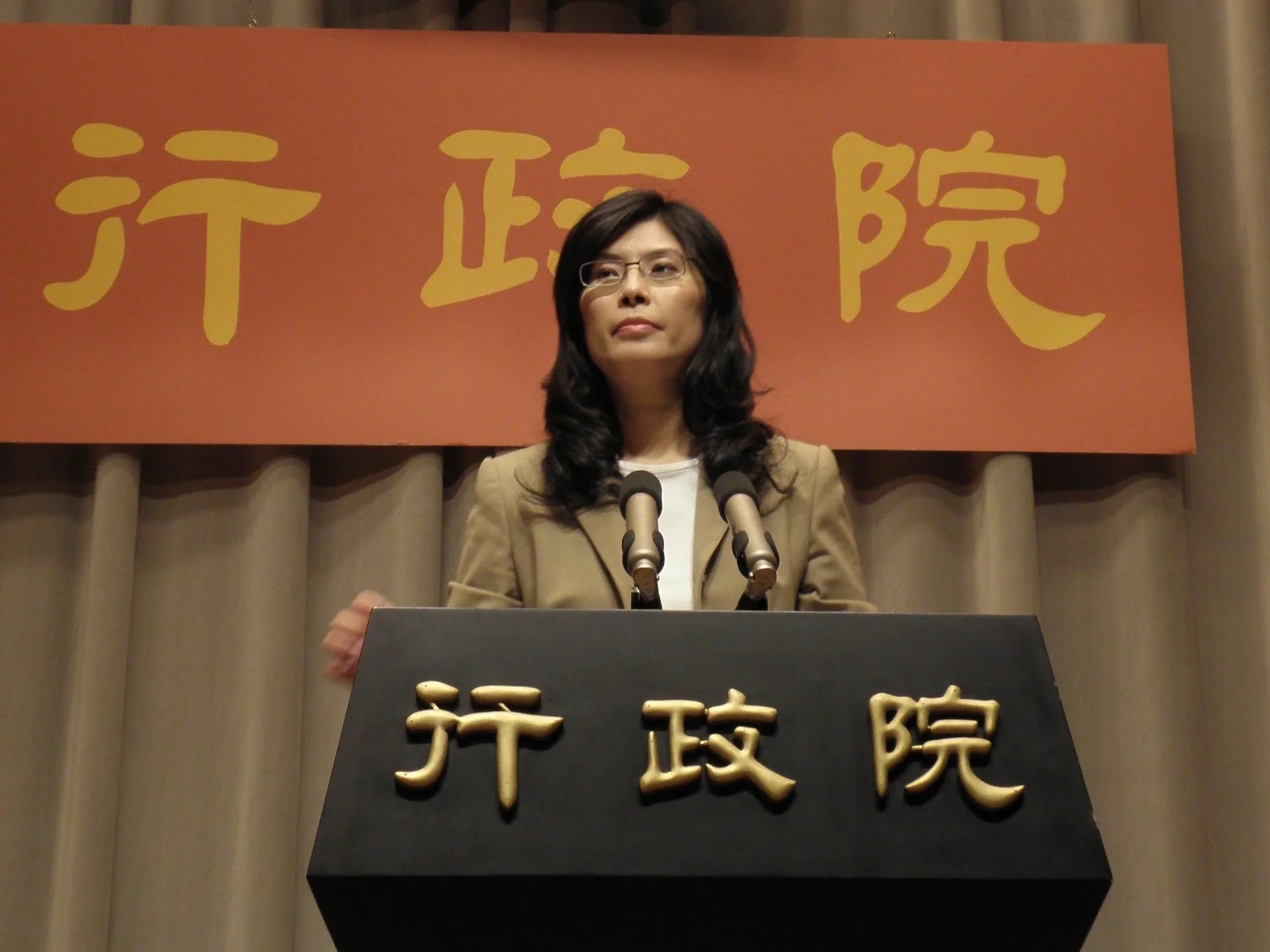
The election of Cheng Li-wun as Chair of the Kuomintang (KMT) in October 2025 initially appeared to offer the People’s Republic of China (PRC) its strongest political partner in Taiwan in years. The Kuomintang — which was the ruling party of mainland China until the Communist Revolution of 1949 — generally favors closer relations with the PRC and the Chinese Communist Party (CCP). Campaigning on revitalizing cross-Strait engagement, Cheng has argued that expanding social and economic ties with Beijing might reduce the likelihood of a violent invasion of Taiwan. Cheng’s attempt to win the 2028 presidential election in Taiwan could have a significant effect on China’s bid for reunification and, by extension, U.S.-China competition and the balance of power in the Indo-Pacific. But Cheng’s public positions have already faced backlash from her own party, from Washington, and from the Taiwanese electorate. This suggests domestic political constraints will determine how far she can move toward accommodating Beijing. Sustaining a broad enough coalition to deliver a presidential election win now depends on moderating the very platform that made her attractive to the KMT base that elected her Chair.
Throughout her rise, Cheng’s platform frequently overlaps with CCP narratives. She effectively abandoned her party’s traditional “One China, different interpretations” stance by dropping “different interpretations.” She has criticized the ruling Democratic Progressive Party (DPP) as invested in conflict and has demonstrated skepticism of Taipei’s reliance on the United States, stating that Taiwan should never be “reduced to a pawn traded away at a negotiating table by great powers.” She has argued that Taiwan should not “pick a side” between the United States and China, calling the latter “family.” She regularly invokes a shared Chinese identity with the mainland, rather than a separate Taiwanese identity and has also echoed CCP sentiment denouncing Japan for its violence during World War Two, although Japan is now a vital Taiwanese security partner. During a landmark June meeting with China’s leader Xi Jinping in Beijing, she endorsed “the great rejuvenation of the Chinese nation on both sides of the Strait.” The official CCP policy is that Taiwanese reunification is an indispensable part of Chinese rejuvenation.
Despite this rhetoric, Cheng has stopped short of explicitly endorsing reunification, preferring initial steps to rebuild cross-strait relations. Her supporters view her as a combative orator with moderate policy objectives pursuing more traditional diplomatic and economic engagement. For instance, her China visit resulted in a 10-point policy plan that includes easing tourist and travel restrictions, youth exchanges, fishery cooperation, and permitting approved Taiwanese media in China. Furthermore, even as party chair, Cheng remains constrained by competing factions within the KMT, which retains power in a coalition in Taiwan’s legislature, the Legislative Yuan. Her choices for vice-chairs, many with more moderate backgrounds, may be evident of this. The KMT’s watering-down of a $40 billion defense spending bill illustrates the current factional divide further. While KMT moderates supported a limited reduction in spending at $25 billion, Cheng pivoted to a $12 billion budget after her meeting with Xi. After months of deliberation, an eventual $15 billion-cut version was passed. Cheng has similarly begun moderating her broader political messaging. Her U.S. tour in June did little to improve relations with Washington, but recent statements have reflected a more cautious tone. She has publicly confirmed that Taiwan “will fight back” against a Chinese invasion, should seek to deepen U.S. engagement, and plans to introduce additional defense legislation. Recently, she has donated NT$1million, or about $31,000, of her personal funds to Japan's Kumamoto Prefecture for earthquake relief efforts.
Ultimately, public sentiment will decide what strategy Cheng is able to pursue. A May poll indicates 69.5% of the population does not want to reunify, while only 17.5% does. Having witnessed a decade of growing military pressure from Beijing, Taiwan’s population remains wary of the CCP, identifies more commonly as Taiwanese rather than Chinese, and are exhausted by extremism from both the KMT and DPP, which Cheng embodies. While the Xi-Cheng meeting initially boosted Cheng’s approval ratings, they have since sunk to 26.7% trust and 56% distrust. Similarly, the defense budget cuts left a majority of the public disapproving and thousands protesting. While Cheng may have energized her base, she has also deepened skepticism among young people and independents. However, Taiwan’s fragmented political landscape means the KMT remains competitive, especially if the opposition KMT and its coalition partner the Taiwan’s People’s Party (TPP) remain unified, and the Democratic Progressive Party maintains its 2024 vote share of 40%.
While the CCP may view Cheng as an opportunity to revive engagement, Taiwan’s political realities continue to place limits on how far she can move towards accommodating Beijing. Her current efforts to moderate her platform and temper pushback may be able to help her make inroads with a broader audience. Taiwan’s political future has important regional and global implications. Should Cheng and a pro-China, accommodationist KMT faction come to power after the 2028 presidential elections, Xi will be relatively less restrained in advancing his increasingly aggressive reunification strategy. Such a shift could also alter the regional deterrence strategy of the United States and its allies, raising the likelihood of a political or military crisis with China.
Dylan Morgan is a Summer 2026 Intern for the Communications team at ORF America.