
By: Pietro Zecca
Industrial decarbonization is often framed as a technology problem. Once green hydrogen, carbon capture, electrified heat, or low-carbon fuels become cheap enough, the assumption is that heavy industry will naturally shift toward cleaner production. But that view misses the harder challenge. The real bottleneck is not the availability of technology or its cost-effectiveness, but whether countries can build the infrastructure, institutions, and markets needed to deploy it at scale. That is why industrial decarbonization clusters matter.
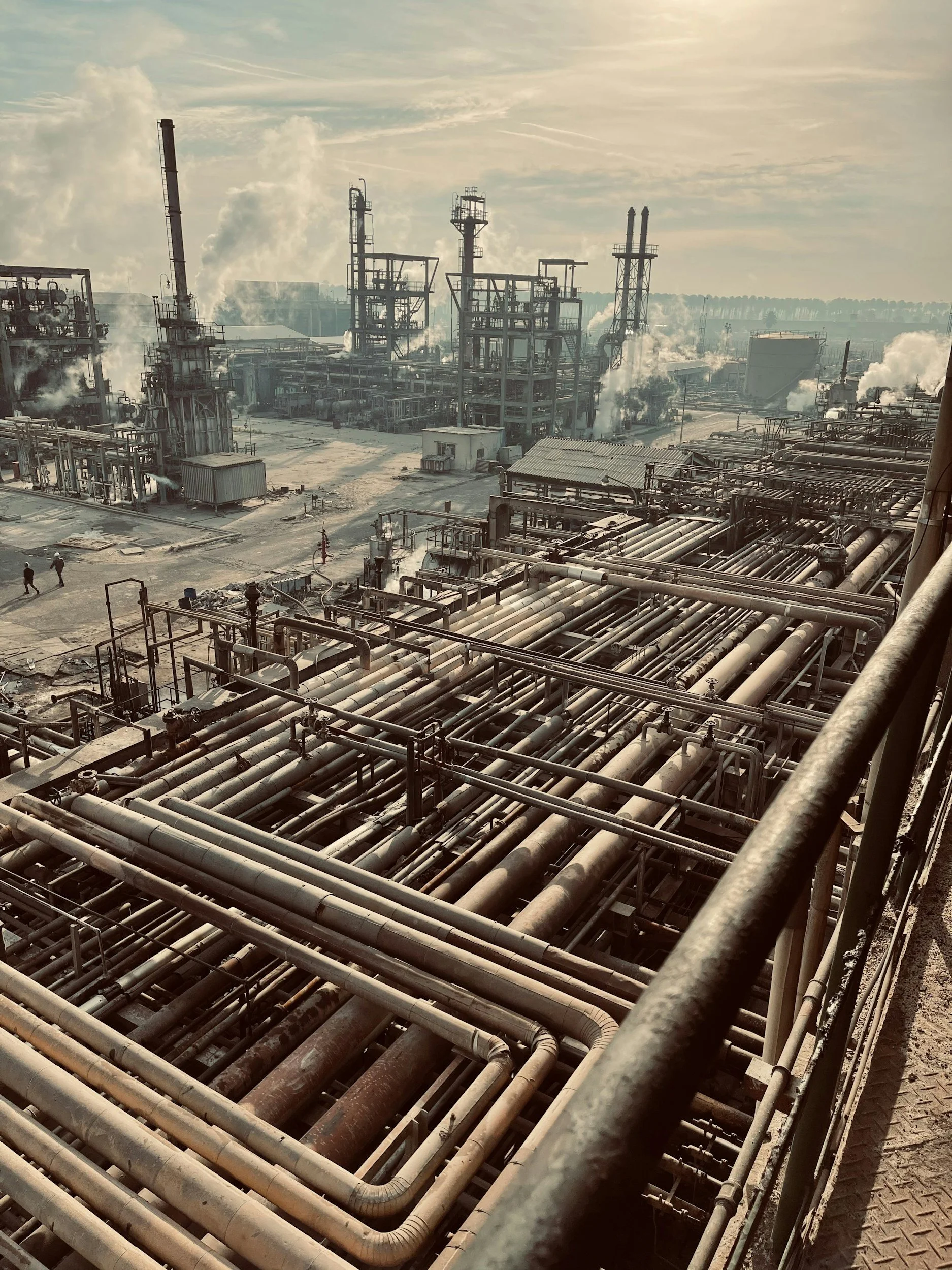
Heavy industries, such as steel, cement, chemicals, refining, and petrochemicals remain central to growth, infrastructure, and trade, even as they contribute a large share of carbon dioxide and greenhouse gas emissions. The question is not whether they must decarbonize, but how to do so without undermining competitiveness, affordability, or expansion. A factory-by-factory approach, where each facility finances its own decarbonization, is unlikely to deliver it. Industrial decarbonization depends on systems that can be shared: clean power connections, hydrogen supply, carbon dioxide transport, storage, logistics, finance, and skilled labor. Even where the technology is available, net-zero industrial hubs can stall on weak enabling conditions. If demand for low-emissions materials is uncertain, producers hesitate to invest. If the shared pipelines and storage that firms need remain unbuilt, first-mover projects become too risky. If no institution coordinates across ministries, utilities, financiers, and firms, plans remain stuck. Poorly designed strategies can even entrench high-emission industries rather than enable transition.
That is the basic logic of clustering. A cluster is not simply a group of factories located near one another. At its strongest, it is a place-based industrial ecosystem in which firms share infrastructure, suppliers, logistics, energy systems, and governance arrangements. Most individual facilities cannot independently finance hydrogen networks, carbon dioxide pipelines, storage infrastructure, or major grid upgrades. Treated as part of a cluster rather than as isolated emitters, firms can spread costs, reduce risk, and make that infrastructure bankable.
The scale of the opportunity explains the policy attention. Recent estimates suggest there are more than 10,000 industrial clusters worldwide, and that transitioning just 100 of these hubs could reduce global industrial emissions by around 15% and total carbon dioxide emissions by roughly 5%. A small number of places could thus account for a disproportionate share of the total. This matters especially in the Global South, where industrial activity is still expanding and where heavy industries remain indispensable to urbanization, construction, and export-led growth. A narrow climate lens misses that development logic; clusters provide a better frame, letting governments approach decarbonization not as deindustrialization but as industrial modernization: logistics efficiency, export readiness, and long-term competitiveness.
That is why the real value of clustering lies in strategic design. Effective clusters rest on three pillars: shared infrastructure (pipelines, clean power links, port upgrades, storage networks); market creation (product standards, public procurement, subsidies, and long-term offtake arrangements); and institutional coordination — a public or hybrid body with the authority to sequence investments, align incentives, and manage political trade-offs across actors who would otherwise move at different speeds.
The United Kingdom’s cluster sequencing strategy shows this in practice. Recognizing that major industrial clusters account for half of UK industrial emissions, the government prioritized a limited set of regions where shared transport-and-storage infrastructure could unlock multiple projects at once. It selected two Track-1 clusters (HyNet and the East Coast Cluster), with approximately $28.5 billion committed over 25 years for hydrogen and CCUS projects and both networks reaching major financing milestones by 2025. The UK model cannot simply be transplanted into lower-income contexts, but it proves that scarce public resources have greater impact when concentrated where shared infrastructure can catalyze investment.
A comparable logic emerged in 2025, when Malaysia adopted the WEF's Transitioning Industrial Clusters framework as a national agenda. Instead of diffuse country-wide support, the government concentrated on Bintulu in Sarawak, an energy-intensive hub that could add roughly $2.9 billion to GDP and reduce carbon emissions by 21.35 million tons by 2040. Still early, it shows geographic concentration gaining traction in emerging markets. For major countries in the Global South, where capital is often scarcer and industrial emissions are still rising, that lesson carries particular weight. What they need is a sequencing strategy that identifies first-wave clusters where three ingredients exist or can be built affordably: concentrated emissions, access to clean energy or storage, and capacity to coordinate across firms and agencies. Coastal refining zones, port-linked hubs, and steel corridors are prime candidates, where clustering generates spillover benefits beyond emissions reduction: supply-chain upgrading and trade resilience.
Risk-sharing tools will also be essential. In many developing economies, carbon prices are politically difficult because priorities center on competitiveness, employment, and poverty reduction rather than climate action alone. Instruments such as Carbon Contracts for Difference can help bridge the cost gap between conventional and low-emissions production, but are most effective when embedded in a cluster framework linking revenue support to real infrastructure and real demand. Clusters, then, are not just financing concepts but platforms through which climate, industrial, and trade policy can be aligned.
Pursued only through scattered pilot projects, industrial decarbonization stays fragmented and slow. Organized as clusters, it becomes more practical and politically durable, connecting climate finance to visible assets and bridging decarbonization with development. Realizing that requires a dedicated coordination authority with cross-ministerial reach, aligned public and private actors, and sustained commitment across electoral cycles. And every cluster strategy should embed workforce provisions from the outset: local hiring targets, reskilling funds, and structured community consultation. For countries preserving industrial competitiveness in a world of greener standards and tighter trade rules, the cluster model is not simply an environmental option. It is increasingly an effective industrial strategy — but only if it is built to last.
Pietro Zecca is a Summer 2026 Intern for the Energy & Climate program at ORF America.