
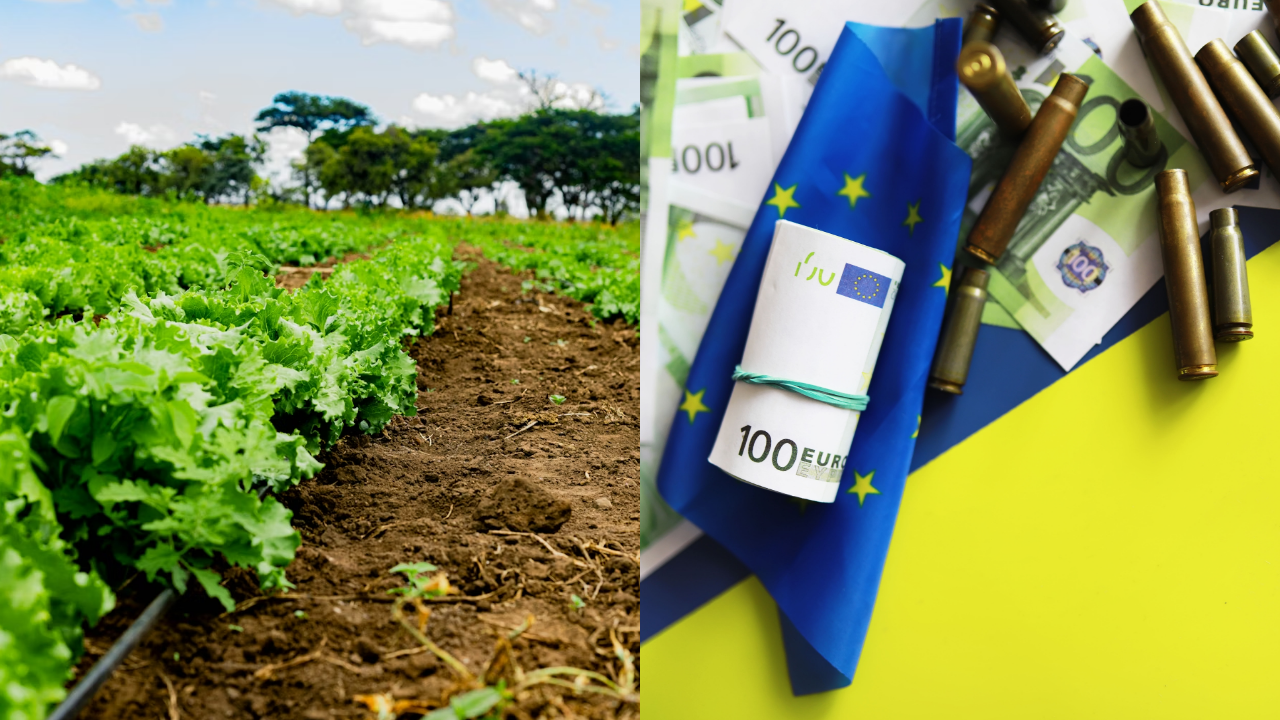
April 24, 2026 — In this week’s episode of Around the World, Mavis Owusu-Gyamfi, President and CEO of the African Center for Economic Transformation (ACET), joins hosts Dhruva Jaishankar and Rachel Rizzo to discuss Africa’s shifting economic landscape, from declining global aid and greater domestic resource mobilization to expanding opportunities with non-traditional partners. They also recap recent developments in Ukraine, including the European Union’s latest aid package and what it signals for the trajectory of the war with Russia.
Available on Spotify and Apple Podcasts.
Image: Divaris Shirichena, via Unsplash
Image: alexkich, via Shutterstock
sneak peak
Dhruva Jaishankar: On this week's episode.
Mavis Owusu-Gyamfi: The impact of the U.S.-Iran war on the global economy is huge. In Africa in particular, we are beginning to see this in the increasing of fuel and fertilizer prices. East, West and Central Africa are literally entering their planting seasons and high fertilizer costs. That means that we should prepare for food insecurity risks ahead of us, especially in the Sahel and the Horn of Africa.
Rachel Rizzo: Today, The European Council adopted the final piece of legislation needed to unlock a 90 billion euro loan to Ukraine.
Dhruva Jaishankar: Africa as a continent is not often enough in the news, yet the world's approach to this vast and growing continent is changing. The African Union joined the G20 in 2023. Kenya has been pioneering digital payments. The United States and the European Union have invested massively in a railway in Angola as part of the Lobito corridor and attempted extracting critical minerals from the Democratic Republic of Congo and from Zambia. Last year, South Africa signed the first clean trade investment partnership with the European Union. And earlier this year, the massive Dangote refinery reached capacity in Nigeria, turning that country into a net exporter of petroleum, diesel and aviation fuel.
welcome to around the world
Dhruva Jaishankar: Hi, I'm Dhruva Jaishankar.
Rachel Rizzo: And I'm Rachel Rizzo. Welcome to the Around the World podcast. Your essential guide to understanding the forces shaping our world today. Here at Around the World, we cut through the noise to bring you clear, insightful analysis of the most important developments in geopolitics.
Dhruva Jaishankar: Whether it's security challenges in Europe, great power competition in Asia, domestic politics in the United States, or regional developments in Latin America or the Middle East, we’ll discuss what's happening and more importantly, why it matters.
Rachel Rizzo: Thanks as always for tuning in. And be sure to like and subscribe to the Around the World podcast on Youtube, Spotify and Apple Podcasts.
Funding Ukraine
Rachel Rizzo: Hey Dhruva.
Dhruva Jaishankar: Hi Rachel, how are you?
Rachel Rizzo: Good. Okay, I'm not even going to ask where you are because I can hear a European siren in the background. So I know you're not in the US.
Dhruva Jaishankar: No, I'm in Brussels. I'm here this week for meetings and it's been a very instructive week. We've been discussing clean energy financing and trade with the Global South and EU, investments in that area, but also meetings with the European Commission on a variety of issues in the Indo-Pacific and beyond. So it's been a really interesting week here. We'll have opportunities to talk about this, I think, in the future. A lot going on there. But speaking of Europe, what have you been tracking? A topic that's been out of the news a little bit in the last few months, which is Ukraine, the war that continues there. What have you been tracking on Ukraine?
Rachel Rizzo: Yeah, this is something we wanted to talk about today. You we've been so focused on Iran and what's happening in the Middle East. Obviously, that has not gone away. There will still be much to talk about, certainly. But I didn't want to let the moment pass without discussing a major development that happened just today. The European Council adopted the final piece of legislation needed to unlock a 90 billion euro loan to Ukraine. This was originally agreed upon by the European Council back in December of 2025. discussed it. I think we discussed it on this podcast back a few months ago.
Dhruva Jaishankar: Mm-hmm.
Rachel Rizzo: Hungary, as we all know, had held up the loan with a veto since February, but they lifted it this week, which ended a two-month impasse. And the breakthrough came just a couple of days after Ukrainian President Zelensky announced that the Druzhba pipeline, which carries Russian oil to both Hungary and Slovakia, and had been the main source of Orban, or so he says, his veto on this loan, that this pipeline had repaired and it could resume operations. And again, the disruption of that oil flow was what Orban had basically said was his reason and what guided his decision to veto the loan thus far.
Dhruva Jaishankar: And it probably was no coincidence that Orban lost an election as well in the meantime.
Rachel Rizzo: Yeah, there's probably has something to do with it. He lost a major election, a huge upset for him, but a major moment obviously for Hungary.
Dhruva Jaishankar: So what is the financing that will now go from the European Union to Ukraine?
Rachel Rizzo: So the deal is that in 2026, Brussels will transfer 45 billion euros with 16.7 billion allocated for financial and budget support and 28.3 billion euros for military support. Now, this comes not a minute too soon. Ukraine continues to be hammered daily by Russian military attacks just because this war has not been on the front page of the news anymore because everyone has been focused on Iran does not mean that it has relented. It is continuing and Russia, or Ukraine for that matter, desperately needs this money. The remaining 45 billion euros is earmarked for 2027. And what that's intended to cover is basically two thirds of Ukraine's funding needs. And then Western allies are expected to cover the remaining third.
Dhruva Jaishankar: So this is a sizable amount of money, and yet it's coming at a time when Russia seems to be hitting a lot of critical infrastructure in Ukraine, but also making very incremental gains on the ground. It's still a relative deadlock. Now, wasn't there some debate? We discussed this on a previous episode several months ago, I think, about there was a debate around using Russian frozen assets. What's going on there?
Rachel Rizzo: Yeah, so this is basically a continuation of that debate. Back in December, the EU debated and then ultimately rejected this frozen assets route back in December of 2025. They thought it was too risky. They thought that it might scare other investors away from the European continent. What they agreed upon instead was to borrow from capital markets. And then they basically spent the following months getting all of this legislation in place. Hungary's veto held things up from until just this week today. And so basically this adoption was the last piece of paperwork needed to really start sending the money. So what's interesting about this was that when the EU was debating potentially using Russian frozen assets, the idea was that if they gave Ukraine a loan, they could be liable for repayment of that principle once it receives war reparations from Russia. And obviously, those war reparations are never going to come. That was sort of the debate around using those frozen assets that they would eventually be repaid. But instead, they went down this other route, and they have that same framework in place of repayment. But the idea of Russia paying war reparations is obviously extremely, extremely unlikely. So the way I look at this is kind of as a grant to Ukraine. I don't think that it's going to end up repaid. But again, very kind of tricky financial math here, but really shows the resolve still in Europe for support for Ukraine, which I think is you know obviously good for Zelensky.
Dhruva Jaishankar: And there's another source of financing that we can probably discuss in a future episode, which is Zelensky did this trip to the Middle East, which is you know likely, he visited Syria, visited Saudi Arabia. And one thing we're likely to see much more of is Ukraine using its pretty sizable now defense industrial base to export arms to places like the Middle East and that need it, particularly given the Iran conflict. And that will become a major source of revenue for Ukraine as the war continues with Russia. So something to watch out for, yeah.
Rachel Rizzo: Absolutely. And what you say is right. If you look at the way that Ukraine has responded to this war over the last four years, besides just fighting it, is that they have had an immense growth in their defense industrial base.
Dhruva Jaishankar: Mm-hmm.
Rachel Rizzo: I mean, they are one of the strongest armies, militaries in Europe now. They are on the front lines of the latest military technologies, especially drones. And people are looking at the Ukrainians to talk about the future of warfare,
Dhruva Jaishankar: Mm-hmm.
Rachel Rizzo: future of war fighting. And so again, when it comes to rebuilding Ukraine and integrating Ukraine, hopefully with its future in Europe, its defense industrial base is gonna be a huge part of that conversation.
Dhruva Jaishankar: And two other aspects of that that I think are worth pointing out. One is it's quite it's becoming more and more integrated with lot of other Central European defense suppliers as well. Poland, Czech Republic. In fact, the Czech Republic is also importing a lot of drones from Taiwan, many of which are presumably making their way to the front in Ukraine, the Baltics as well. So there's now a kind of a pretty vibrant and interconnected Central Eastern European defense supply chain ecosystem that is emerging. But, and again, something to watch out for. But the other thing is, this has also become a subject of negotiations with Russia, right? But part of Putin's terms in the negotiations is that his commitments for Ukraine to disarm. And so even if the status quo plus or minus remains in terms of territorial possession, that remains an abiding concern for Russia, that it doesn't want extremely heavily armed, well-trained, battle-hardened military in Ukraine to remain. So the disarmament clauses will be something that will keep on popping up in future negotiations. again, something to watch out for.
Shifting Realities: Africa's Economic Future & Development
Rachel Rizzo: Yeah, absolutely. But moving beyond Ukraine, we are going to go south today and talk about a continent that we often don't talk about on this show. And we have a wonderful guest here with us today to discuss it. So, Dhruva, I'll hand it over to you to do that intro.
Dhruva Jaishankar: Africa as a continent is not often enough in the news, yet the world's approach to this vast and growing continent is changing. The African Union joined the G20 in 2023. Kenya has been pioneering digital payments. The United States and the European Union have invested massively in a railway in Angola as part of the Lobito corridor and attempted extracting critical minerals from the Democratic Republic of Congo and from Zambia. Last year, South Africa signed the first clean trade investment partnership with the European Union. And earlier this year, the massive Dangote refinery reached capacity in Nigeria, turning that country into a net exporter of petroleum, diesel and aviation fuel.
Rachel Rizzo: At the same time, however, the IMF just actually downgraded Sub-Saharan Africa's 2026 growth, growth forecast. The region entered 2026 with its strongest economic momentum in a decade. And then came the war in Iran. So the IMF and the World Bank, which just had their spring meetings in Washington, DC, really delivered this sobering reality of a potential 23% collapse in global development aid with Western donors cutting funding for the second consecutive year.
Dhruva Jaishankar: So to discuss Africa's present predicaments and future opportunities, we're really pleased to welcome Mavis Owusu-Gyamfi, President and CEO of the African Center for Economic Transformation, a Pan-African think tank focused on economic policy. And she's joining us from Accra in Ghana. Mavis, thanks for joining us on Around the World.
Mavis Owusu-Gyamfi: Thank you very much, Druva. It's a real honor to join you on Around the World today.
Dhruva Jaishankar: So just to you know get started, I saw you not that long ago in Washington DC for the spring IMF World Bank spring meetings. What were some of the outcomes of the spring meetings that mattered for Africa? I know there's been some talk about borrowers joining, creating a coalition of some kind. What managed to materialize on that front? And the IMF's own briefing said that this is different, particularly focusing on aid cuts. What are some of your takeaways from the spring meetings?
Mavis Owusu-Gyamfi: There were three things I took away from the spring meetings. The first one was the title, Building Prosperity Through Policy. Now this title was very important for Africa. The way in which we translate our policies into actions in a way that improves livelihoods for all Africans was key to us. And a lot of the meetings during the week focused on strengthening partnerships and accelerating development in a very uncertain times. So as we heard earlier on, the impact of the U.S.-Iran war on the global economy is huge. In Africa in particular, we are beginning to see this in the increasing of fuel and fertilizer prices. We heard Dangote during the spring meetings talk about how intraday springs of $10 per barrel could cripple Africa's aviation industry. East, West and Central Africa are literally entering their planting seasons and high fertilizer costs. That means that we should prepare for food insecurity risks ahead of us, especially in the Sahel and the Horn of Africa, where we traditionally have food insecurity challenges. Alongside that, entrepreneurs are being affected. We heard about countries like Kenya having to store tea that was due for GCC countries. We have a number of East African countries with migrants in GCC countries who are going to be affected as inflows of remittances fall. So we can't underestimate the impact of the war on Africa. And then the third thing was the fact that the financing landscape is changing so drastically. The OECD announced just before the spring meetings that ODA from DAC members, are the traditional development donors, fell by a 23.1 % drop in 2025. Now that's a record number. Most of the traditional aid donors, U.S., UK, Germany, Japan are all cutting their aid to the world. At the same time, Africa is having to navigate the high cost of borrowing. UNDP announced earlier in the week that they estimated that by removing subjectivity in credit ratings, African nations could save as much as 74.5 billion dollars. To make matters worse those who are servicing their debts are spending an average of 17 percent of their revenues on debt. So as you can see Dhruva
Dhruva Jaishankar: And I think that's almost as much as health and their spending on health and education, right? In some cases more than their spending on health and education.
Mavis Owusu-Gyamfi: You're right, in a number of cases, more than they're spending on their social services. So I think coordination amongst borrowing countries has become not necessarily important, but critical. And so that's why we were really excited to see coordination with the launch of the borrower's platform. But in Africa in particular, we like the fact that the African regional institutions are coming together ,African governments are talking about how do we collaborate as borrowers so that when we go to the broader borrower's platform, we can ensure that we have a much stronger voice. I mean, we can't keep going round and round in cycles. And then I think for me, I would say the final thing that was really striking, Dhruva, was there was a lot of conversations around domestic resource mobilization and better utilization of domestic capital markets in Africa. Now, as Africans, we all agree we need stronger tax systems, we need to better use our domestic capital, we need to improve public financial management. It is critical, but we must be careful that this isn't suddenly seen as a substitute for sustained global responsibility and in the financial space.
Rachel Rizzo: You know, this is really interesting because I wanted to follow up on, I was going to ask specifically about growth opportunities, which I think you've pointed to in your statement. I wanted to know about kind of looking back at the spring meetings you were speaking in Washington. What is this like a story about this economic transformation that the audience in Washington is almost certainly getting wrong? And like, what do you think partners and investors should be looking at in this specific place?
Mavis Owusu-Gyamfi: Okay. Thank you. And I think the first thing that the audience in Washington is getting wrong is the focus on GDP growth figures. You know, everybody talked about IMF downgrading their growth forecast for Africa and everybody was downcast by it. But there isn't enough focus on the quality of that growth. Okay, is that growth generating decent jobs? Is it building productive capacity? Is it driving structural change? And I don't hear enough about that. Okay, we don't hear enough about intracontinental trade. This is something that is really going to drive the quality of growth, but that is not going to happen unless attention is paid to infrastructure, logistic and cross-border regulatory reforms. We kind of skim around green industrialization. Dhruva, you and I had an opportunity to share a platform on green industrialization and we talk a lot about Africa's critical minerals and the fact that Africa is sitting on 60% of the world's solar resources. It's all nice to hear, but when there is an investment going into it, okay, Africa sits on 30% of the world's critical minerals, but it only contributes 2 % of global manufacturing value added. It sits on 60% of the world resources, but 600 million Africans still lack reliable electricity because they don't have access to technology to transform these resources to power. We have huge natural resources, cotton, gold, cocoa, you name it, but we are not manufacturing and processing it. We continue to export our raw commodities. So we're not seeing value chains develop either within or across borders. And most worryingly, the role of African businesses and private sector is overlooked. Look, everybody talks about Dangote, okay? But Dangote is not just the only African business on the continent. It might be the richest, but there are a thousand and one Dangotes who can be invested in and supported to become future alternative names to Dangote. So unless we start to talk about how do we invest in the domestic private capital market. How do we invest in regional institution, development, financial institutions on the continent? Who know how to invest in these companies? America and the world is missing a great opportunity. And I believe it was Dangote that said last week, well, don't worry, the return on investment is so great. If you don't come, those of us who are here will just continue collecting more.
Dhruva Jaishankar: Which actually I want to follow up a little bit on that, which is you work at the African Center for Economic Transformation. It's a very progressive looking at Africa, not just as an aid recipient as it's often looked at in the West, but as a sort of equal partner and one capable of developing markets and developing industrial growth. If not, I think we can all agree that traditional aid is going to be coming down, even if it comes up a little bit in the near future. What are sort of market-based solutions that you think are viable from, here it seems to me that it's almost like a negative feedback loop. People say, well, these projects are not bankable, not financially viable, so people don't invest. But unless you actually stimulate the investment, nothing's going to happen. And then if you could just touch upon a little bit new partners who are playing a role now in Africa, China, the Gulf, India. Do you see them as having a different approach and is that in some ways a true alternative to investment from traditional sources in developed world?
Mavis Owusu-Gyamfi: Okay, Dhruva that's a very packed question. I'm going to try my best. So let me begin you know, the growth, you know, the growth opportunities on the continent. The asset, we have something called the African Transformation Index, and we look at, you know, countries that are transforming their economies. And one of the indices we look at is the extent to which you are diversifying your economy and as a result, creating investment opportunities. And we see pockets of it all across the continent. So in North Africa, I'd like to encourage people to look at Morocco and Tunisia. They have a fantastic automotive and aerospace manufacturing assembly house that they are working on for Renault and Peugeot that can be expanded. They are building phosphate-based industrial value chains. Morocco is celebrated for its industrial zones. You go across to Tunisia, textiles and clothing, electronics and mechanical components. You go to East Africa, you see FinTech, tourism, digitalization, AI innovation in Kenya. Mauritius is driving innovation on textiles and light manufacturing alongside great financial centers of excellence, including offshore banking, et cetera. You go to South Africa, we see the emergence of industrial base. We've seen it in Uganda, Eswatini. Nobody ever thinks of us at Eswatini, but it's one the largest hubs of textiles and sugar industry. So when we think about Africa, we don't see a poor continent. We see a continent not just of potential, but a continent that's showing results. And with additional investment, could just bloom and thrive. That's what we see on the continent. It has challenges, but those challenges will only be overcome like every other continent with strong investment, both domestic and global. Now you asked me about the non-traditional partners that are coming on board. There's a reason countries go to them. Look, for a very long time, Africa said it needed in infrastructure and the traditional donors did not invest in infrastructure. They didn't think it was a priority for Africa. Guess what? China did. It changed the landscape for Africa as we know it today. Okay. We are beginning to see infrastructure that is connecting Africa. When Africa's manufacturing base grows, it can service its own middle class and stop being a net importer of clothes and food, et cetera. By connecting through infrastructure, that Chinese investment is helping to make a big difference. Other non-traditional donors, Turkey, India, et cetera, that you've, the GCC that you've mentioned are all actually engaging with Africa as investment partners. Now the onus is on African countries to ensure that they are negotiating robustly, that they have the skills, the capability, the know-how to negotiate properly. And, you know, this is one of the things that I think the borrower's club is going to really help with. Because what it's going to do over time is that African countries are not just going to be negotiating on investments and loans, et cetera, but they can learn from each other when they are negotiating with these new donors. And also, they might even get to that point where they borrow together to facilitate interconnectivity because the future of Africa is going to be realized through regional partnerships.
Rachel Rizzo: So I wanted to follow up on, you mentioned countries like Morocco, Tunisia, you mentioned South Africa, Uganda, and then sectors like fintech, tourism, AI innovation, financial centers of excellence. Do you see Western partners like the United States and Europe changing their their visions when it comes to real partnerships, private-public partnerships, private-private partnerships in Africa. That's kind of the first part. But then, going back to Dhruva's question about non-traditional partners and growing partnerships between different African countries in, China or India, is there. I don't know how to phrase this. Is there a worry or is there an idea amongst industry leaders, policymakers, that they don't want to get caught in this broader geopolitical competition between the United States and China? They don't want to have to look east or west. They want to be seen as partners for both sides. And that's the correct approach. I'd just be curious as to how this is playing out in the way that you're seeing it. So two vastly different questions but hopefully like bottom to top.
Mavis Owusu-Gyamfi: Okay, so you know something Rachel, I think that the traditional donors are changing their approach. You know, if you look at how they are engaging in Africa, a lot of people don't like it when I say the word transactional, but it is becoming more transactional. It's about what can we get from you and what can you get from us? So if you look at the UK government, the UK government has shifted from a traditionally large aid donor to really pushing British investment international. It's kind of like their new flagship. So you see BII everywhere. And I believe I saw the CEO of BII, Leslie recently on an interview saying, you know, UK development investment can help development and at the same time make profits with the UK. You know, everybody's doing it. The U.S. has become very transactional. The German government recently launched its new develop assistance and it's very business to business focused. So everybody is shifting into that transactional phase. They like to call it mutual interest. I call it transactional. It's a new way of doing business. And so that's why we're saying that the onus comes on us to make sure that we have the skills and the capabilities, especially with negotiation.
Dhruva Jaishankar: Mm-hmm, yeah.
Rachel Rizzo: Okay.
Mavis Owusu-Gyamfi: So that we are getting the best out of these deals. You know, like last week, a report was launched, which it was launched by Brook, no, it wasn't Brookings, Boston University. And they said that China's investment in Africa, which see a direct trend to growth, they couldn't show any of that for the World Bank investment in Africa over the last 20 years. That's a telling statement. Of course, it will be challenged.
Rachel Rizzo: Yeah.
Dhruva Jaishankar: Interesting.
Mavis Owusu-Gyamfi: And there are different ways you can look at the building blocks of growth, but it's a very strong statement to make. So I think everybody is becoming transactional. It's the nature of the world we are operating in at the moment. And in terms of your second question on where does Africa stand, I'd like to go to a very famous independent leader called Kwame Nkrumah who said,
Dhruva Jaishankar: Mm-hmm.
Mavis Owusu-Gyamfi: We don't face East, we don't face West, we just look forward. And I believe African countries in their silence are sending that very message to the world. We work with everyone, so long as it's in our interest. We are just looking forward. And for us, what we are saying to all our leaders is when you're looking forward, look forward to economic transformation, growth with depth, diversification export competitiveness, productivity, effective use of technology, all for the betterment of the well-being of human beings on this continent. That's it.
Dhruva Jaishankar: Well, thank you Mavis for joining us and for taking all of our questions. There's so much more to talk about. Hopefully we'll have you and other colleagues of yours from Africa on this in the future. But thank you again Mavis for joining us from Accra. I'm signing off from Brussels. Rachel is in New Delhi. But thanks to our listeners for joining us on this week's episode of Around the World.
Mavis Owusu-Gyamfi: Thank you, Dhruva and Rachel. And thank you for taking Africa's message to the world.
Rachel Rizzo: Absolutely. Thanks.