
US India Partnership

Season 2 Episode 16 : Iran-U.S. MoU, Starmer Resigns, India-U.S. Ties

June 26, 2026 — In this week’s episode of Around the World, hosts Dhruva Jaishankar and Rachel Rizzo unpack the recent Memorandum of Understanding between the Trump administration and Iran, examining what it signals for U.S.-Iran negotiations, regional dynamics, and the future of the U.S.-Israel relationship. They also discuss the political upheaval in the United Kingdom following PM Keir Starmer’s resignation, exploring the economic, political, and structural forces behind Britain’s latest leadership crisis. Finally, drawing on their participation in last week’s India-U.S. Forum in New Delhi, they reflect on the state of the U.S.-India partnership and its areas of growing cooperation as well as the challenges that continue to shape the bilateral relationship.

Available on Spotify and Apple Podcasts.

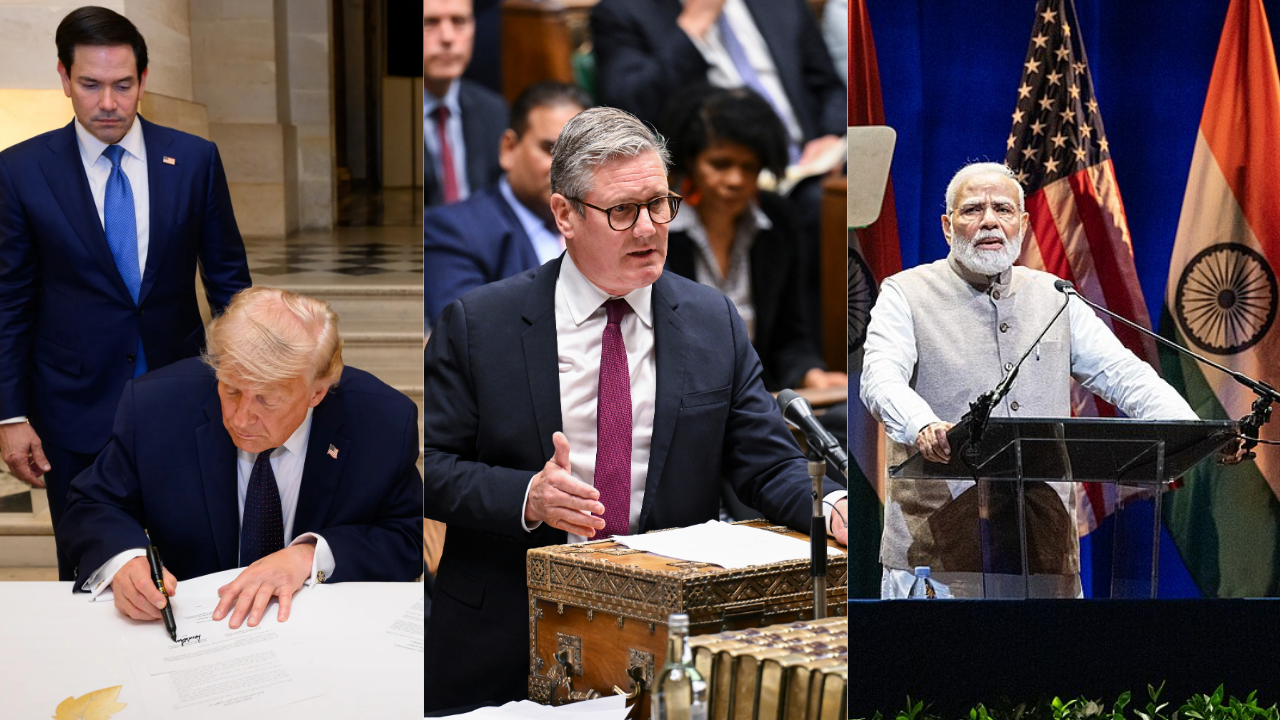
Image: The White House, Public Domain, via WhiteHouse.gov

Image: Sir Keir Starmer MP (Holborn & St Pancras), © House of Commons, via Flickr

Image: U.S. Department of State, Public domain, via Wikimedia Commons

sneak peak

Rachel Rizzo: On this week's episode

Rachel Rizzo: What I think is actually really interesting is just the absolute breakdown we've seen in the U.S.-Israel relationship, largely because they will not stop bombing Hezbollah and Lebanon. Now obviously, Hezbollah is an Iranian proxy and when they launch missiles into northern Israel, this is at Iran's behest. If Iran said not to do that, they probably wouldn't. So you have Iran sort of testing the limits of the Israel relationship as well to sort of pull Netanyahu into a position where, he responds and then it the whole thing breaks down.

Dhruva Jaishankar: Prime Minister Modi and President Trump met in person for the first time in 16 months they met in France and that meeting seems to have gone quite cordially. After a year or so of somewhat turbulent relations. And it seems like both sides signaled to each other, that they want better relations with each other. And that was understood. Now, whether you get there or not is a is a is a different matter.

Rachel Rizzo: The consequences of the UK leaving the EU were always going to be felt. It was just a question of what party was going to be in office when it finally happened. Starmer won after, years of conservative rule. It was a wide margin. But I think that the actual depth of public enthusiasm behind that election was pretty shallow. I think it really digs into why these landslide victories in the UK system, which is this first past the post system, sometimes they don't translate into political capital.

welcome to around the world

Dhruva Jaishankar: Hello, I'm Dhruva Jaishankar.

Rachel Rizzo: And I'm Rachel Rizzo. Welcome to the Around the World Podcast, your essential guide to understanding the forces shaping our world today. Here, we cut through the noise to bring you clear, insightful analysis on the most important developments in geopolitics.

Dhruva Jaishankar: Whether it's security challenges in Europe, great power competition in Asia, domestic politics in the United States, or regional developments in Latin America or the Middle East, we'll discuss what's happening and more importantly, why it matters.

Rachel Rizzo: Thanks as always for tuning in. Be sure to like and subscribe to the Around the World Podcast on YouTube, Spotify, and Apple Podcasts.

Will the MoU Hold?

Rachel Rizzo: Hey Dhruva.

Dhruva Jaishankar: Hi Rachel. you know one of the fun things about recording this podcast around the world is we've also recorded it in different places around the world

Rachel Rizzo: We are around the world.

Dhruva Jaishankar: In India yeah, India, U.S. I've been I've done some episodes from Brussels, from Australia, but you are where in the world?

Rachel Rizzo: I am in Dubrovnik right now. I just got in. I'm here for the Dubrovnik Forum, hosted in, as the name would suggest, Dubrovnik, by the Croatian MFA. So, another couple of days of interesting conversations on geopolitics and yeah, it is the fun part about doing this because we get to do we get to host it from everywhere. And you're you're you're in DC but we were we were together in Delhi a couple of weeks ago. Yeah. my gosh, it was. I don't know where the time goes. Yeah, yeah, yeah. It was last week.

Dhruva Jaishankar: I'm in Washington, yeah. In Delhi, just a couple of days ago. Yeah yeah it was it was a few days ago, yeah, yeah, yeah.

Rachel Rizzo: Yeah. my gosh, it was. I don't know where the time goes. Yeah, yeah, yeah. It was last week

Dhruva Jaishankar: but you were but you're in Croatia and Dub Dubrovnik is, I've not been, but it's one of I from what I've heard one of the most beautiful cities in Europe,

Rachel Rizzo: It's crazy beautiful.

Dhruva Jaishankar: and now I think everyone knows it from Game of Thrones, right? Because I think that's the cap it it's it it it stands in for the capital city and and Game of Thrones.

Rachel Rizzo: Yeah. Yeah, absolutely.

Dhruva Jaishankar: Anyway, great. Yeah. But again saw a lot going on the last couple of weeks since we recorded our last episode.

Rachel Rizzo: Yep.

Dhruva Jaishankar: A big one is the United States and Iran seem to have announced an MOU. A little bit of irony here because I remember the first Trump administration, Trump railed against the term MOU and how they're nonbinding

Rachel Rizzo: Yes.

Dhruva Jaishankar: in Southern real estate contracts and but in any case the U.S. and Iran have an MOU and now we have talks taking place between the United States and Iran, brokered by Pakistan and Qatar in Switzerland, right? So, maybe start what do you think, you know, w what what went down with the actual MOU and where are we at the moment?

Rachel Rizzo: I mean, it's really interesting because if you look at where the relationship is with Iran and the position from which the United States is negotiating, you know, you've still got the Iranian regime in in place. You have its ballistic missile forces that are still intact, even though they've been obviously diminished. And same with the nuclear program. I mean, this is very much part of the discussion and so You know, it's interesting to kind of think through what the ultimate goals were of the United States when this whole thing kicked off and whether or not we're negotiating from a position of strength, which I don't think we are, and and sort of what happens from here. But I'd be interested to see kind of what how you're thinking about it and and what you're watching.

Dhruva Jaishankar: I mean it it it appears as if the still you know the terms of the MOU were laid out, and were quite vague on some points, several points. It seemed to give a lot more latitude than many Americans, including Iran Hawks in the United States expected on the nuclear side and in terms of proxies, that's Iranian proxies in Yemen and Lebanon. ⁓

Rachel Rizzo: Yeah. Mm-hmm. Yeah.

Dhruva Jaishankar: It did not include Israel in the discussions, which you know, given that Israel along with the United States had essentially initiated this round of the conflict

Rachel Rizzo: Yeah.

Dhruva Jaishankar: this has come as something of a setback to to Israeli Prime Minister Netanyahu in the run up to elections there. There's some feeling that some of the Gulf Arab states barring Saudi Arabia and Qatar are a little cut out of this process as well. So I think more again, like if this sounds like a broken record. We've had several discussions like this over the past few months, but it seems like there's still more questions than answers, that the negotiating positions for the United States and Iran still seem very far apart. But there has been a certain amount of criticism within the United States about giving up too much. and and I I think you know, given that Trump and many Republicans have been very critical of the JCPOA, this was the Iran nuclear deal that the Obama administration had negotiated a while ago, the current terms seem much more favorable speaking for Iran on

Rachel Rizzo: Yeah. Absolutely.

Dhruva Jaishankar: At least on the nuclear program. So how how how are you looking at how does it playing out, particularly with regard to Israel and the U.S. Israel relationship?

Rachel Rizzo: So, this is what I think is actually really interesting is just the absolute breakdown we've seen in the U.S.-Israel relationship, you know, largely because they will not stop bombing Hezbollah and Lebanon. Now obviously Hezbollah is an Iranian proxy and when they launch you know missiles into northern Israel, this is at Iran's behest. If Iran said not to do that, they probably wouldn't. So you have Iran sort of testing the limits of the Israel relationship as well to sort of pull Netanyahu into a position where, you know, he responds and then it the whole thing breaks down. But what I think is interesting as well is that, you know, you've had Vice President JD Vance recently speak out against Israel and say, you know, they can't bomb their way. Said something on I think on Ross Daltitz podcast, you know, they can't bomb their way to peace, or they can't, you know, bomb everyone as you know their main foreign policy strategy, something along those lines. But and then you had high-level cabinet officials in Israel like Ben-Gvir and Smotrich come out and basically, you know, call J.D. Vance an anti-Semite, call Jared Kushner, Steve Whitkop anti-Semites. I mean it's real breakdown. And so I think that, you know, obviously you have Netanyahu with the elections in October, and I think it is really going to be interesting to watch how much he responds to Trump here. Because if he if he is seen as sort of a puppet of Trump, then that doesn't play well with the domestic audience, obviously, especially his supporters. So I think the interesting questions here are, you know, can Iran keep Hezbollah in check? Can the U.S. restrain Israel? And those are questions that I don't know we have answers to quite yet.

Dhruva Jaishankar: You know, th this entire situation, I mean, unless something changes, which it could and we've had some pretty radical changes in every direction in the past few months. But at at this point of time it looks like we're in this very unsettled twilight zone, which is somewhat reminiscent to the United States and Iraq between 1991, the end of the first Gulf War, and 2003, the invasion of Iraq, right? Where you had this sort of you had like a no-fly zone imposed, you didn't have active conflict, but every once in a while you had, you know, missile strikes and air and aircraft shot down. You know, like there there was this sort of awkward sort of between outcry because it's no one's interest at this point in time to have that full-fledged conflict, and yet we're so far away from any kind of resolution that this this sort of awkward whatever you might want to call it, remains for the time being. But again it is interesting. I mean the the the U.S.-Israel tensions. I mean so Ben-Gvir and Smotrich are are are both allies of Prohibition Netanyahu. They're from different parties, far right, what I considered far right of Israeli parties. They're part of his coalition and and again it'll be interesting to see again whether these developments also play in their favor in the in the elections, right? Because when when the the margins are so small it's most likely gonna be a coalition government of some kind after the elections this fall in Israel. But it you could have this very strange thing, strange situation where even if Netanyahu personally suffers and his party suffers, you could actually it could all of this could actually strengthen the far in Israel as well.

Rachel Rizzo: Yeah, absolutely. So I mean this isn't going anywhere and speaking of yeah, no, what were you gonna say?

Dhruva Jaishankar: Yeah. And no and no and and and just like you know, irony is if you said even a few months ago that, you know, the the Trump administration would be in these sort of very vocal public disagreements with Netanyahu and something we're not gonna get into today too much, but Maloney, Premier Maloney in Italy.

Rachel Rizzo: Oh yeah.

Dhruva Jaishankar: Those I mean who would have thought a few months ago that the you know that those personal relationships would be so frayed at this point of time but it tells you again the the era we're living in

From Landslide to Exit: Starmer Steps Down

Rachel Rizzo: Yeah. yeah. It, we are living in an era of, and and speaking you know, parliamentary politics, we've had quite a landslide, upset, earthquake, however you wanna call it, in the UK this past week with Keir Starmer announcing his resignation. So that's another big one we kinda we wanna we wanna talk about today. You know, we don't discuss countries here that are stable. We only talk we only talk about when things are super messy. And I think super messy is a way that you could describe UK politics at the moment.

Dhruva Jaishankar: Right. I mean so what's I think unusual about this is I think it's less than a little less than two years ago, Kier Starmer and his Labour Party just won a sweeping majority, over four hundred seats of six fifty in the House of Commons.

Rachel Rizzo: Mm-hmm.

And, you know, you had this big pump mandate. He initially was quite popular. What happened? How is he how is he resigning without an electoral defeat in less than two years? What what what went wrong for him?

Rachel Rizzo: It's wild, but first I want to I wanna someone I think that we both know, Matthias Mattis, who is a professor at Johns Hopkins, also at ECFR. He wrote a fantastic article in Foreign Affairs about this very thing. I think it came out yesterday and he kind of talks about like it's really good and and I like it because it talks about how this like Brexit hangover is finally coming home to roost. And it was. He basically says, you know, the the consequences of the UK leaving the EU were always going to be felt. It was just a question of what party was going to be in office when it finally happened. But this is really interesting. I mean, you you said that Starmer won after, you know, years of conservative rule. It was a wide margin. But I think that the actual depth of public enthusiasm behind that election was pretty shallow. You know, it I think it really digs into why these landslide victories in the UK system, which is this first past the post system, they don't really translate or sometimes they don't translate into political capital. And there's this gap sometimes between seats won and and the Labor Party won a commanding number of seats in the House of Commons, four hundred and eleven out of six hundred and fifty. But I I think that you have to look at a broader picture about why this didn't translate into political success and why he ended up falling so hard so quickly.

Dhruva Jaishankar: So I mean i the one thing you do have this sort of tradition, recent tradition, at least in the United Kingdom, of intra party coups in some ways, right? You know, you've had you've had in even in the Conservatives you had a pretty quick revolving door of prime ministers and you know people within the cabinet event essentially sort of shunting them aside and taking taking over. And you see this in Australia, you see this in Italy and you know, I think famously associated with Italian politics. You don't see it as much in places like India or Israel, other parliamentary or Japan, other parliamentary systems as much. But all being said, what what actually brought down Keir Starmer, what what was the dissatisfaction within the Labour Party with him?

Rachel Rizzo: Well, there's a few that I think combine together to create a perfect storm. There was obviously, there's a scandal involved, as there always is. He appointed Peter Mandelson as ambassador to the U.S. in late 2024. And then surprise it emerged that Peter Mandelson had a personal friendship with the late Jeffrey Epstein, Epstein. And Starmer fired him, obviously, once these private messages between the two surfaced, but then he had to publicly deny lying to Parliament about how exactly Mandelson was even vetted in the first place, and I think this was really difficult because one of the issues that Starmer built his entire 2024 campaign on was around, quote, cleaning up politics. And this was not clean, this was very, very messy.

Dhruva Jaishankar: And yeah, so just a a little aside, but you know, for those of us who maybe remember the nineteen nineties, Peter Mandelson at that time was seen as like a future prime minister. He was a cabinet minister, he was very close to Tony Blair and that that wave of labor in the late 1990s, and then he was the EU trade commissioner, so a very powerful position in the European Union as well. And so to see his kind of fall in is is is really quite quite something,

Rachel Rizzo: .It really I mean, yeah, it was it a stunning political fall, I think, is is how you could describe it.

Dhruva Jaishankar: Mm-hmm. Yeah. And then, other factors?

Rachel Rizzo: And yeah, so and then you have the economic side here. And I sort of mentioned this in the opening a little bit, and again I would tell people to go read Matias' article on this 'cause it's just really good. Starmer inherited an economy that was still absorbing the lingering drag of Brexit. Then on top of that, it got hit by this fresh oil price shock when Israel and the United States launched their war on Iran in late February, which we've you know discussed a lot on this podcast. This drove up borrowing costs, it drove up mortgage rates on top of this already very painful cost of living squeeze. And so he was sort of boxed in by his own promises between not raising taxes or spooking bond markets with more borrowing. He just had no more room to or or no room to maneuver really. And so what that meant was that these flagship policies that he ran on, one of them was this major net zero investment push, another one was this digital ID rollout, these ended up being watered down or scrapped entirely. And what happens then is just confidence begins to erode even amongst his allies about not just his strategic vision but also his own judgment. So you sort of had this perfect storm start to brew, and then of course what you have is, on the side of this, Nigel Farage's Reform UK party waiting in the wings and posting historic gains in May during local and regional elections.

Dhruva Jaishankar: But then, I mean finally the the coup de grâce came from within his own party, right? So there were you had some resignations, what what went on there and and maybe talk a little bit about who is now looks likely to succeed him as Prime Minister. You have Andy Burnham who until a week ago wasn't even a member of parliament.

Rachel Rizzo: Nope.

Dhruva Jaishankar: Very popular yeah, he just he won a by election, now he's in parliament and now he may very well become prime minister. So talk a little bit about like how what finally ended up within the party, what changed and and what you know, what what do things look like from here on out and for British politics?

Rachel Rizzo: Yeah, so these local and regional election where the Reform UK party posted historic gains, this basically started the clock. and then you had this domino effect where you had Health Secretary West Streeting resigning and really publicly torching Starmer's record of indecision. He also floated even his own leadership ambitions. Then you had Defense Secretary John Healy quit over military funding disputes, followed very quickly by an armed forces minister, but then I think the final nail in the coffin was when Starmer's chief rival, as you mentioned, Andy Burnham, his outgoing Greater Manchester mayor, won a special election back into Parliament. Hours later, Streeting, the former health secretary, then through his support behind Burnham instead of running himself, which cleared a path for Burnham to take the leadership without contestation. So now what happens is, you know, Starmer stays on as caretaker PM. You have leadership nominations that will open in early July and close before Parliament's July 16th summer recess. And the contest is expected to be resolved before September. So the question now is, you know, this is gonna be is it the seventh Prime Minister in six years?

Dhruva Jaishankar: Yeah, something like that, yeah. Seventh, yeah. Mm-hmm.

Rachel Rizzo: or sixth prime minister? it's crazy. So when Andy Burnham effectively takes, inherits this mess from Keir Starmer, does he have any better shot at breaking Britain's cycle of toppled prime ministers? I don't know. I don't think anyone knows yet, but it's gonna be interesting to watch.

Dhruva Jaishankar: Yeah, great. Interesting to see where this goes.

Rachel Rizzo: Absolutely. Yeah. I mean, for those of us who have been following UK politics, which I think most people who listen to this podcast probably do a little bit, you will always remember Liz Truss's her prime ministership lasting shorter than a head of lettuce. Remember that? That was all that was the whole the whole internet thing.

Dhruva Jaishankar: Yes. Yes, yes, yes. Right, yes, so so Al although a weird bit of trivia, she's the only Prime Minister after Churchill to whose prime ministership lasted two monarchs in the UK. So it was during that sh during that short period you had two yes, yeah. So so, uh-huh.

Rachel Rizzo: Oh, yes. That is Yes, you're right. That's, that's a really good like pub quiz question. Another pub quiz question that someone should ask, maybe not now but in the future, like it would be who was Prime Minister of the UK when Queen Elizabeth passed away? And the answer would be Liz Truss because and no one would get it right 'cause no one will remember that.

Dhruva Jaishankar: Yeah, yes, yes, yes. Anyway, moving on, we you know

Rachel Rizzo: Yeah.

U.S.-India Gets Back on Track

Dhruva Jaishankar: We both happened to be in Delhi and in India last week. we were both at something called the India-U.S. Forum. It is sort of a smallish conference organized by the Anantas Center in India. It's i it's it's off the record. But essentially we had senior U.S. and Indian officials, this time a lot more Indian officials than U.S. officials, but a few of those, corporate leader business leaders from both countries. Think tank heads and experts, and you know, other people, but but largely people who are knowledgeable and invested in the U.S.-India relationship, something we've discussed on this podcast before. But I just want to, you know, thought we'd it'd be interesting to get your sense of like what were your some of your impressions. I had I have my thoughts, but maybe start with you. What what were some of your impressions from the two days of discussion we had there? And just to you know reinforce it was all under Chatham House rule, which means like we can talk about what was discussed but not who said what. .

Rachel Rizzo: Yeah. Yeah, I mean I got a sense that the U.S. is really committed to the U.S.-India relationship. I got a sense that it plays a central role in how the current administration sees its relationships not just in the Indo-Pacific, but globally as well. I think India plays a really important role for the Trump administration and whether or not that has has resulted in policies that benefit the U.S.-India relationship, I think is another is another conversation and I think you'll you'll probably get into that. But it also seems like there are a lot of areas, a lot of topics that the two sides are focused on building together. I mean defense tech was was a big one, you know another one I think is obviously going to be getting this interim trade deal across the finish line which everyone seems very bullish on. And so I thought that was really good news. So I'd be interested in your thoughts on this as well.

Dhruva Jaishankar: Yeah, so I'll get into some of the problems and challenges a little later, but one, overall the tone was much more positive than I think I had certainly had expected,

Rachel Rizzo: Yeah.

Dhruva Jaishankar: and maybe, significantly at odds with some of the public discourse of the US India relationship, you know, which tends to be much more critical and cynical. So generally much more constructive and positive than I certainly I had expected, you saw a pretty wide range of areas where the U.S. and India are cooperating. I mean sometimes not even the U.S. government, but U.S. entities, you know, from education, civil nuclear cooperation, and traditional energy sources, AI and tech, emerging technologies, defense production. I mean you you sort of name like the big issue and there is some kind of U.S.-India collaboration underway. And I think a lot of people who were there who like work on one aspect of it were quite surprised by the breadth and range of it. Three, I think the the our our meeting came just a few days after Prime Minister Modi and President Trump met in person for the first time in 16 months they met in France and that meeting seems to have gone quite cordially after a year or so of somewhat turbulent relations. And it seems like both sides signaled to each other, as you mentioned, that they want better relations with each other. And that was understood. Now, whether you get there or not is a is a is a different matter. On the trade side, just after we met, so just in the last three days, in fact, you had U.S. trade representative Jameson Greer out in India. It I we I didn't get a sense beforehand that he was there to finalize the deal, but I think iron out some of the the the the lingering issues. I think the big uncertainty right now is less in the U.S-India space, it is more U.S. tariff policy at this point of time. And that's being, you know, you have at least three different categories of tariffs that the Trump administration is exploring against multiple trade partners, not just India, all of which are in different layers of legal uncertainty. And until that is resolved to some degree, it's hard to see India agreeing to to fixed tariff rates because it doesn't want to lock itself in understandably to a disadvantageous position vis-a-vis other trade partners of the United States. And so I think and and the status quo, at least now unless other things come on come online, which is possible, the status quo doesn't really isn't too disadvantageous to India, barring a few sectors like the auto industry and stuff like that. So a 10% base tariff is something a lot of Indian exporters can live with. So so again there isn't that urgency on the Indian side. I think the the the lack of resolution, legal resolution on the U.S. side is the biggest hindrance to the trade deal. Briefly just on the challenges I felt, I think three quick things. One, there is still a lack of trust related to a sort of more hostile political opinion in India of the United States. And it's a cumulative effect of different U.S. policies and statements that President Trump has made in public and things like that, the killing of Indian sailors in in strikes recently, all of that has added up to and to to to lingering to a lower public opinion of the United States in India. This ORF poll of young Indians ORF survey, I think last year it was 82% had a positive view of the United States, and this year it's like 55% percent or something like that.

Rachel Rizzo: Sounds like Europe also. Yeah. Yeah. Yeah.

Dhruva Jaishankar: So yeah, yeah, but it's still probably higher than Europe, but but but but the the trend line isn't isn't positive. And that's constraining the Indian government's ability to do stuff. So one. Two, there in some ways discussions on differences around Pakistan were a little sidelined. I think there needs to be a you know, sometimes Americans are like, you know, what exactly is India's issue? Why should why is it wrong for us to engage with Pakistan? In, for India views it very differently and India sees it as supporting sort of, supporting the conditions for for terrorism against India. And it's it's it's a it's a much more much more deeply felt. The third issue which I think did didn't get a lot of attention but but and should probably is there are increasingly differences between the United States and India on the immediate region around India's neighborhood, at the very least a lack of alignment. In Sri Lanka, the Maldives, Nepal, Bangladesh where in some cases, you know, even a few years ago the two sides were talking a lot about developments in the region and that seems to have broken down a little bit and could lead to frictions down the line. So I would say those are the negative sides as I felt. But overall the tone was much more positive and constructive than I had expected.

Rachel Rizzo: Yeah, absolutely. I felt like you know, I compare this to Europe a lot on this podcast, but I do think that there gets to a point where, it's not beneficial to talk about how trust has has broken down, how bad the relationship is. You get to a point where people want to be forward looking and they want to work layers down where you have private companies and corporations that are still working on those close personal ties and moving the relationship forward, even if at a high government level things might be stalled. And I think this is another good example of seeing that happen where you can complain about it and you can be frustrated and you can talk about all the hindrances to the deepening of the relationship, but at the end of the day, people want it to move forward. And so I agree with you. I feel like we saw a lot of a lot of that as well. Which is I think good news.

Dhruva Jaishankar: Great. Well, again a lot a lot to talk about. Again, things keep on moving. I mean in again the U.S.-Italy spat was something I think nobody could have anticipated a little while ago. but again you've been now in l just in the last week in India, in Africa, in Europe. There's we have a World Cup going on here in the United States, which is also a lot of fun and very interesting and the geopolitics of that may be something to discuss in a future episode. But a lot to talk about and thanks again for joining us for this discussion, Rachel.

Rachel Rizzo: Yep. Yeah. Mm-hmm. Yeah. And as always, be sure to follow and like the Around the World podcast on YouTube, Spotify, and Apple Podcasts. And we'll see everyone next time.

Season 2 Episode 14 : Ebola Outbreak, Rubio at Quad and NATO, India-Africa Ties

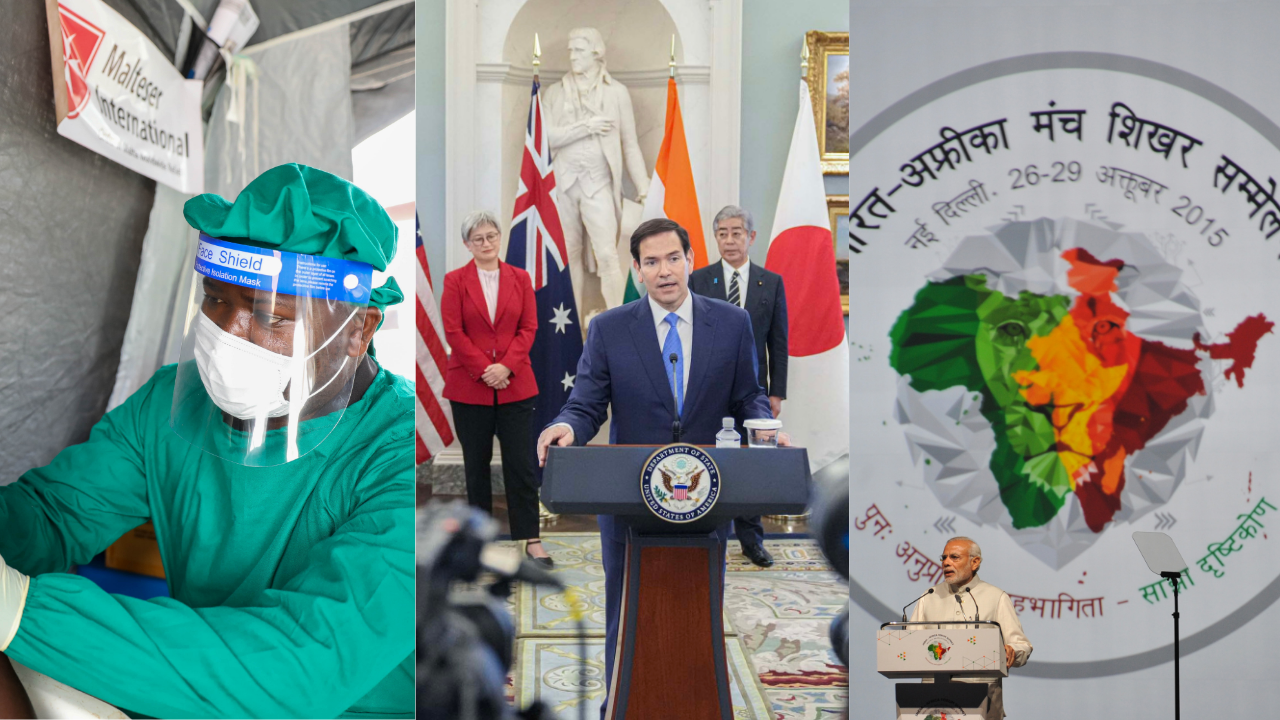
May 29, 2026 — In this week’s episode of Around the World, Veda Vaidyanathan, Fellow in Foreign Policy and Security Studies at the Centre for Social and Economic Progress, joins hosts Dhruva Jaishankar and Rachel Rizzo to break down the latest Ebola outbreak in the Democratic Republic of the Congo and Uganda — highlighting its implications for health governance and evolving India-Africa ties, as well as the recent cancellation of the fourth India-Africa Forum Summit. The hosts also recap U.S. Secretary of State Marco Rubio’s trips to Europe and India, assessing the outcomes of the NATO Foreign Ministers meeting and key developments in U.S.-India relations.

Available on Spotify and Apple Podcasts.

Image: © European Union, 2026, CC BY 4.0, via Wikimedia Commons

Image: Prime Minister addressing the Inaugural Session of India Africa Forum Summit 2015 in New Delhi (Oct 29, 2015) via MEAphotogallery on Flickr

Image: U.S. Embassy Australia via Instagram (@usembassyau)

Sneak peak

Rachel Rizzo: On this week's episode.

Veda Vaidyanathan: This outbreak is important because this is not the first time Congo is battling this. It's also happening at a time when, you know, Western funding cuts have happened in the region. The U.S. has pulled out of the WHO, USAID has shut down, clinics have shut down, healthcare workers have disappeared. There's also a conflict happening. There's also effects of climate change. So it's a multitude of factors which makes this, it's not just a pandemic. It's actually a scenario which India has to not just look at the health outcomes, but also the geopolitics around it.

Dhruva Jaishankar: The workman-like aspects of the U.S.-India relationship and the Quad relationship have continued, what has otherwise been a politically turbulent year despite tariffs, despite the adverse politics. But I think what is missing and what is going to take some time to repair, if it happens at all, is the sort political trust and the optics of the relationship.

Rachel Rizzo: When Rubio went to this NATO foreign ministers meeting, it wasn't a really easy room. It never is with NATO these days. He's already faced the difficult task of reassuring allies who are still anxious about the U.S. presidents' unpredictability. As we've talked about it before, I think that they have gotten used to these kinds of conversations, gotten used to the unpredictability of the U.S. It doesn't make it any easier, but it does make Europe a little bit less reactive.

welcome to around the world

Dhruva Jaishankar: Hello, I'm Dhruva Jaishankar.

Rachel Rizzo: And I'm Rachel Rizzo. Welcome to the Around the World podcast, your essential guide to understanding the forces shaping our world today. Here, we cut through the noise to bring you clear, insightful analysis of the most important developments in geopolitics.

Dhruva Jaishankar: Whether it's security challenges in Europe, great power competition in Asia, domestic politics in the United States, or regional developments in Latin America or the Middle East, we'll discuss what's happening and more importantly, why it matters.

Rachel Rizzo: Thanks for tuning in and be sure to like and subscribe to the Around the World podcast on YouTube, Spotify and Apple podcasts.

Navigating Tensions and Reigniting Ties

Dhruva Jaishankar: Hi, Rachel. How are you?

Rachel Rizzo: Hey, Dhruva, how's it going?

Dhruva Jaishankar: Good, good. We have a lot to talk about. The last couple of weeks, things are happening in Iran. We've had all sorts of developments. We'll be talking a little bit later about the Ebola outbreak in Africa and some of the implications of that with a guest. But we just had, you’re in Delhi, and we just had U.S. Secretary State Marco Rubio make his first visit as Secretary of State to India. How was it?

Rachel Rizzo: So this was part of a larger trip for the U.S. Secretary of State where he stopped by Sweden for a NATO foreign ministers meeting and then came here to India where he went to Kolkata, went to New Delhi obviously for high level meetings, Agra and Jaipur as well. He was also welcomed by a major event here in New Delhi, a 250th U.S. anniversary event that included a surprise performance by A.R. Raman. It included a performance from the village people and it included a phone call by President Trump to the U.S. ambassador here in Delhi, Sergio Gore, talking about the strength of the U.S.-India relationship. So Marco Rubio has certainly had a busy couple of weeks behind him and just flew back to the United States after the Quad meeting on Tuesday.

Dhruva Jaishankar: So let's start quickly with the NATO summit. We've spoken in previous episode about the Ankara summit that's coming up in July and its implications. But what was that all about, the meeting in Sweden?

Rachel Rizzo: So, NATO has these foreign ministers meetings occasionally just to kind of level set and make sure everyone's on the same page to talk about developments affecting the alliance. This specific foreign ministers meeting focused on issues related to defense spending as always, talked about defense industrial production and really tried to lay the groundwork for the upcoming NATO summit in Ankara in July. Now, you know, these NATO summits that take place, they come out with declarations, with communiques, and all of those are very carefully orchestrated ahead of time. So meetings like this make sure that allies are on the same page so that we don't get any major surprises at the leader level summits when they do happen. When Rubio went to this NATO foreign ministers meeting, it wasn't a really easy room. It never is with NATO these days. He's already faced the difficult task of reassuring allies who are still anxious about the U.S. presidents' unpredictability. And then just hours before the meeting, Donald Trump announced that he would be sending an additional 5,000 troops to Poland. This is after he announced that Poland would not be getting an expected deployment that it had been planning on as part of a rotational deployment. And it also followed an announcement that they would be removing 5,000 troops from Germany as well. So it was sort of a yo-yo of a trip for Rubio, but I think he left with NATO allies feeling okay. As we've talked about it before, I think that they have gotten used to these kinds of conversations, gotten used to the unpredictability of the U.S. It doesn't make it any easier, but it does make Europe a little bit less reactive.

Dhruva Jaishankar: And the reassurance tour seemed to have continued on to India, so maybe talk a little bit about the bilateral exchanges and just like the other stuff that happened you think from Rubio’s visit.

Rachel Rizzo: Yeah, so I mean, this was a really important meeting for Marco Rubio. I mean, the U.S.-India partnership has really long been hailed as one of the world's defining geopolitical alignments. Even Marco Rubio himself has referred to it as a defining relationship with the 21st century. And looking at the U.S. and India, these are two massive economies with a shared unease about China's rise. They're both democratic economies, major growing economies. And I think on paper, I think that should mean that all of the ingredients are really in place for a flourishing relationship. And indeed, New Delhi really welcomed Trump's second term with gusto. But as we have seen over the last year, almost immediately after Trump was reelected, that relationship started going south for various reasons we can talk about. And so I think Marco Rubio's trip to India was really meant to reassure the Indian leadership about the importance and the centrality of India to U.S. foreign policy and to try to right the ship a little bit after a very tough year.

Dhruva Jaishankar: But, you know, we can get into bit more of the substance of what was discussed, including the Quad that is India also hosted along with Secretary Rubio. The Foreign Ministers of Australia and Japan as well for a four-country meeting for the first time since July of last year. But what's your read on just like the mood? Tt seemed to be just going off of social media and even the traditional media, cable news and stuff in India, that the reception Ruby received wasn't, probably warmer than maybe some other U.S. leaders would have received, but certainly not as enthusiastic as it might have otherwise been. Is that your sense that he helped change the conversation a little bit on the U.S.-India relationship?

Rachel Rizzo: I think there's a lot of skepticism here about how much it actually did. When we talk about the sort of down, not the downfall of the U.S.-India relationship, but certainly the souring of it after Trump's reelection last year, we often point to the tariff fiasco which started in April of last year. There was a Trump visit to New Delhi that was floated, promised, and then ultimately never delivered, which then left India scrambling to save its Quad leader summit by downgrading it to a foreign ministers meeting, you can talk about that. And then, add on top of that, U.S immigration crackdowns that have disproportionately hurt Indian workers and American overtures toward both Pakistan and China that have created a sense that the U.S. Secretary was always gonna arrive in India facing a skeptical audience. And I think that's what happened. I don't think there's any, you know, no one is living in a universe where they look at the U.S.-India relationship right now as the strongest it's ever been. Indeed, that is not where it is. But I do think putting all of that aside, it was an important visit. The developments that came out of it were important, but I think it depends on what happens here and into the future that will really set the stage on where this relationship goes for the last two and a half years of Trump's presidency.

And then, I wanted to ask you about this because you've been sort of watching the developments of the Quad meeting that, as I just mentioned, this is now the third Quad meeting at the foreign minister's level rather than leader level. There's a lot of discussions right now about wither the Quad, where is the Quad in Trump's foreign policy priorities. Where would you say this relationship is? Where does the Quad fall? What are some good news and bad news that you've been watching here?

Dhruva Jaishankar: Yeah, so just to dial things back a little bit, in the first Trump administration, the Quad was not just resurrected in 2017, but also elevated towards the end of that term to the foreign ministers level meeting. And at that time, Secretary of State Pompeo at the time kind of used it not just to talk to his counterparts from those countries, but kind of a little bit to also grandstand, it was kind of a signal to China. Right. And he was a little bit more bombastic about using in that term. The Biden administration kind of immediately elevated it to a leaders level summit and tried to sort of put some substance behind it, which is actually create working groups to advance particular objects. The Biden administration, obviously, just given their own dispensation worldview, focused much more on public goods and that sort of reassurance that this will be a way to reassure smaller countries in the Indo-Pacific that these are four countries that can work together on health security. This was in the wake of the pandemic on critical and emerging technologies, on maritime governance and things like that. When they came back, the second Trump administration started off with prioritizing the Quad. They had all the four foreign there for the inauguration of Trump. It was Rubio's first official engagement with the Quad meeting. And so it was meant to be a priority. have been, again, totally three foreign ministers meetings now under the second Trump administration, but no leadership level summit. And it's quite likely that this will end up becoming something where the four leaders do meet, but it's on the sidelines where they already are at the G20 at the UN Security Council, at the UN General Assembly meetings in September in New York, in other summits as well where they all happened to attend.

Now at this meeting, when you look over the joint statement, say three pieces of good news, one piece of not so good news. There was a pretty strong emphasis on economic security and pretty substantive developments there. The four countries agreed to cooperate more on energy markets, on increasing resilience and energy supply chains. And this is all in the wake of the Iran conflict. Also some work on critical minerals. On port infrastructure, they announced a project in Fiji where all four countries have some comparative advantages and some ongoing cooperation on undersea cables. So some pretty substantive cooperation on economic security issues, which actually seems to be driving, still animating the group. I think second, something that doesn't get a lot of attention is the strategic consultations that take place. And again, we saw, just reflected in their statement, talks that encompass the South China Sea, and agreement on these issues, concerns about North Korea's nuclear activities, the conflict in Myanmar, freedom of navigation in the South China Sea and the Strait of Hormuz, counter-terrorism, something that both India and Australia in their own ways are seeking to prioritize, and transnational crime. So quite, again, a pretty substantive set of consultations on region-wide developments. And I'd say the third other sort of area of progress was maritime security, where India has operationalized some of its maritime domain awareness capabilities in conjunction with the Quad countries and the Indian Ocean. They've agreed to sort of do more real times, maritime surveillance cooperation. They are continuing to cooperate on logistics and humanitarian assistance. So again, some substantive progress there. Where there wasn't a lot of substantive progress was on critical and emerging technologies. I think it's for a few reasons. One, the U.S. is being more unilateral about AI and emerging technologies. It's a very heated competition with China on AI particularly. And then some things have been subsumed under a grouping called Pax Silica, U.S. led grouping at the state US State Department, at which all four Quad countries are signatories and members. So it includes other countries, the UAE, Israel, Sweden, a few others as well. And that's the US sees it as really a way of cooperating on the full stack diplomatically

Rachel Rizzo: Yeah.

Dhruva Jaishankar: with these trusted partners and allies. So in some ways, the quad critical, it seemed again, reading the statement that the quad critical mineral cooperation, ⁓ critical emerging technology cooperation has kind of been subsumed under PAX silica.

Rachel Rizzo: So on top of all this, mean, some of the other outcomes that Marco Rubio got on the bilateral front, you know, India announced that it would commit to purchasing $500 billion of US goods over the next five years, focusing on energy, tech and agriculture. There was a bilateral critical minerals framework signed with the external affairs minister. This is meant to secure, you know, supply, mining and processing of critical minerals and rare earths elements. So when you take these together, would you say that overall, when you combine the bilateral meeting with the quad meeting, this was a successful trip for him?

Dhruva Jaishankar: I mean, think there was substantive progress. I think the challenge has been, and it's something I think we'll talk about in future episodes as well, like the workman-like aspects of the U.S.-India relationship and the Quad relationship have continued, in what has otherwise been a politically turbulent year despite tariffs, despite the adverse politics. But I think what is missing and what is going to take some time to repair, if it happens at all, is the sort political trust and the optics

Rachel Rizzo: Yeah.

Dhruva Jaishankar: of the relationship. I think, again, you have a sort of twin track approach, and maybe parallels of this in the transatlantic space

Rachel Rizzo: Exactly.

Dhruva Jaishankar: as well, where some engagements sometimes even in certain areas, and yet there is that deep distrust that has now been imbued in the United States' external engagements.

Well, a more to talk about. Yeah, a lot more to happen.

Rachel Rizzo: Absolutely. Lots to follow, as always. There's never a slow week.

Ebola Returns: How India-Africa Ties will Evolve with Veda Vaidyanathan

Rachel Rizzo: So lots going on in the world and we also are kind of switching continents again today and we have a special guest with us to talk about the planned India-Africa summit that was postponed because of the Ebola outbreak. So we'll go ahead and move into that conversation now.

Dhruva Jaishankar: Today we're very pleased to have Veda Vaidyanathan joining us on the Around the World podcast. She is a fellow at the Center for Social and Economic Progress, CSEP, a think tank based in New Delhi. And she examines Indian and Asian engagement in Africa, including in financial services, mining, agriculture, and infrastructure. She's done field work in Zimbabwe, Zambia, Tanzania, Kenya, Ethiopia, Ghana, across Africa. So Veda, thank you for joining us. We had planned to talk about something that was going to take place this weekend, which is this India-Africa summit, which is held periodically. I recall one was held in 2015 and one more since. But it's been canceled because of an Ebola outbreak in the DRC, the Democratic Republic of Congo and Uganda. So maybe talk to us first a little bit about this India Africa summit that's not been held, what it was meant to achieve. And maybe also talk a little bit about what this means about the seriousness of the Ebola outbreak.

Veda Vaidyanathan: Sure, first of all, thank you for having me. Dhruva and Rachel, it's really great to be here. And yeah, it's kind of unfortunate that the summit didn't happen this year because it was supposed to happen after a gap of 11 years. And a few days ago, I was actually reading through the 2015 declaration that came out from the last forum summit. And you couldn't help but notice that the world was very different. It was a pre-pandemic, pre-AI world. So I think there's a lot of catching up to do with this summit. And because I think the strengths that India brings to the table now are different, African priorities have changed so much, the world has changed so much. So I think this summit, the idea was there were going to be 11 or 12 pillars from health and digital infrastructure and critical minerals. And I think there was quite a lot of confidence that there are going to be very specific outcomes that came out of each of these pillars. And it was supposed to sort of set the tone for what this new era of engagement was supposed to look like. And I think fundamentally for the African continent, this means, you know, as they are moving towards an engagement, which is beyond aid, as African countries sort of assert their agency a lot more, we were going to see new forms of engagement, new instruments of engagement. And so hopefully it will happen soon once the pandemic sort of settles down.

Dhruva Jaishankar: A quick thing, how many leaders from Africa were expected to attend? Because I recall in 2015 about 40 of the 50 something, 52 African leaders, something like that, did attend the summit in India. How many were to come?

Veda Vaidyanathan: I mean, I've heard versions of this, anywhere from 26 to 35 was numbers that heard. But if not head of state, at the top ministerial levels, I think there was supposed to be over 50 ministers, actually. So it was a big summit.

Dhruva Jaishankar: Okay, and so we didn't know, and now there's no current plans for rescheduling it. It's indefinitely postponed.

Veda Vaidyanathan: Not that I know of, because we had an India Africa summit, like in an event on the sidelines of the summit a few days before this announcement came out. And the secretary was there giving his opening remarks and there was no sign of any kind of postponement. So it was kind of last minute. And a lot of other think tanks in Delhi have also had events around this. ICWA, for instance, had huge track two planned the day after this was announced. So I think this kind of wasn't planned, the postponement. I think the extent of the Ebola crisis probably made that last minute decision.

Rachel Rizzo: Are you, I mean, when it comes to the Ebola crisis and the way that this has changed, for example, this summit that was supposed to happen and it was canceled, has it sort of changed or will it change Delhi's approach to this region in Africa both now and in the future? Like how does India sort of calibrate a moment like this and decide how it gets involved and helps, et cetera, et cetera.

Veda Vaidyanathan: I think actually health has been one of the pillars where India has substantially sort of built engagement down in Africa. A few years ago, actually no, many years ago in 2019, I traveled around Ethiopia and Kenya to interview Indian pharmaceutical manufacturers and the amount of small scale, medium scale, large scale Indian manufacturers that were present in those regions were huge. So India's had a role to play when it's come to the health governance in the continent. But in this case specifically, I think Congo is this outbreak is important because this is not the first time Congo is battling this. I think this is the 17th or the 18th outbreak of Ebola that Congo has seen and is usually a different strain of the virus. This is the Bundibugyo strain of the virus, which is much rarer. There's no vaccine for this. It's also happening at a time when, you know, Western funding cuts have happened in the region. The U.S. has pulled out of the WHO. USAID has shut down. This is impacted vaccine preparedness, pandemic preparedness. Clinics have shut down. Health workers have disappeared. There's also a conflict happening. There's also effects of climate change. So it's a multitude of factors which makes this, it's not just a pandemic. It's actually a scenario which India has to not just look at the health outcomes, but also the geopolitics around it. And what it really does, I think, is really sort of push New Delhi to think a little harder on how the health cooperation should evolve moving forward. And this could come up with certain opportunities as well. For instance, you know, like the roles that we can play in even simple things like delivering better diagnostic skills, better surveillance. There's been a lot of writing coming out of the Congo on how biosafety level four labs haven't been built the way they should be. So there's an infrastructure gap, a financing gap, perhaps there are more substantive ways in which India could also expand its health cooperation with the continent.

Dhruva Jaishankar: I want to come back to India in a bit, but just you mentioned the geopolitical implications of the Ebola outbreak. What do you see as some of the possible geopolitical implications of it?

Veda Vaidyanathan: I think there's two fronts. One is we had a conference in Feb in Addis Ababa and we had some folks like for instance from Amref Health talking about the geopolitical consequences of the changing landscape in Africa. And one of the things that came out which is very interesting is they said, you know, we knew these funding cuts were going to happen. This didn't come out of nowhere, right? We knew that Western aid donors are going to pull out in the way they did. But I think it's the shock of how exactly and how quickly it happened that probably took people by surprise. So I think one aspect of it is, I think in the short term what it has done is there's not been time to recalibrate and build bridges with the gaps that have come. And in the long term, I think it's a larger questions of who's going to fill the financing gap. Because a lot of the health governance and a lot of the CDC, for instance, funding still comes from the West. So I think those questions remain largely unanswered.

Dhruva Jaishankar: Going back, zooming out a little bit to India, you mentioned health as one area. Maybe just describe and sketch it out because we have lot of listeners who are not as familiar with India and certainly not with India-Africa engagement. What are the main characteristics of India's engagement with Africa?

Veda Vaidyanathan: I think the first thing is, it's the relationship, I mean, the historic foundations of the relationship were built by economic agents, right? Even back pre-colonial era, you had traders go from the Western coast of India to the Eastern coast of Africa, and that kind of largely remains. And I think a very, maybe not a very scientific, but one metric of that is we've had three India-Africa Forum summits, political summits, but for instance, the TII, which is a Confederation of Indian Industry, has had like 18 conclaves or 17 conclaves in the last 18 years. So almost every year there's been a business conclave. And these are huge events, right? There are over 40 African countries that present this ministerial level representation. Thousands of delegates from Africa and India meet. And then this is the national level conclave. And then there are regional conclaves as well. So I think one is this continent is seen as one of a lot of economic opportunities for several Indian companies. So of course there's the Tata's and the Mahindra's and the Airtel Bharti, know, the Airtel Telecommunication Company, which is present in over 14 African countries. But there are also medium and small scale industries, medium scale industries, once they are successful in India and they want to go global, usually one of the regions that they choose to go to is some country in East Africa. Largely because these markets are smaller. So it's not just, you're not just talking about Ethiopia or Kenya, you're talking about the larger East African regional economic markets. But also because then Africa becomes a launch pad to export to Europe and the US and so on. So the big part of the equation has been economic. But then, of course, there's also a political angle to it, right? As India sort of becomes and sort of gains this Global South's leadership voice, countries in Africa become very important in that endeavor. Then there's also this huge thing of energy and critical minerals. Like we get over 10%, 11 % of our oil from the region. And now critical minerals, right? Because it's a huge conversation. And what we're seeing is with access to minerals becoming not just an economic security issue, it's becoming an industrial, you know, economic issue. It's also becoming a developmental sort of a conversation. And a lot of mineral producing countries in Africa are coming out with their own laws and their own regulations when it comes to exporting of minerals in their raw form. So you see a new sort of conversation around energy. And then of course, there's the security dimension to it. It's a huge market for Indian arms. DADA recently started its first manufacturing overseas project in Morocco, a defense manufacturing

Dhruva Jaishankar: Mm-hmm. Yes.

Veda Vaidyanathan: thing. And then there's also the developmental aspects of it. A lot of Indian capacity building initiatives, a lot of the health initiatives, a lot of educational things, like for instance, IIT Zanzibar has a campus now, IIT Madras has a campus in Zanzibar. So I think.

Dhruva Jaishankar: A campus in Zanzibar, yeah.

Veda Vaidyanathan: Yeah, so like development and defense and trade and economics and also the fact that there's three million strong in the diaspora in Africa as well. So those are the traditional sort of areas where India sort of had a presence.

Rachel Rizzo: Can you talk a little bit, I mean, in the U.S, when we talk about American engagement in Africa, investment in Africa, cooperation with different countries, with different corporations, China is obviously looming large over that conversation. Whether you agree with that approach or not, that's just the reality of the conversation in Washington sometimes. How does China fit into this conversation with India? How does India's approach differ or compare to that of China's, or do you see sort of an inter India-China competition playing out in Africa the way you do with the US and China?

Veda Vaidyanathan: Before I joined CSEP, I was at the Institute of Chinese Studies before Princeton, and I spent a few years going to Chinese assets in Tanzania and Kenya and trying to study them a little bit in depth. And the big question was, how are they able to do what they're able to do at the scale and the price points that they are?

Rachel Rizzo: Yeah.

Veda Vaidyanathan: And I think one of the things that really struck me was the conversations and a lot of African capitals was so different from DC. China the big alternative, right? And I say this anecdote sometimes, we were in this place five hours out of Addis, Bolkite, and we were going up this mountain and the bus stopped at the edge of the hill, right at the bottom of the hill, and people got off the bus, walked up the hill. The road was Chinese. It was paid by a Chinese company. The bus was a Chinese-made bus. And people were telling me, you know, this bus can't take everyone in one go to the top because its engines are not as strong and this road might not be here after the rainy season. And I was like, doesn't that make you mad? And then this gentleman said, at least there's a bus and there's a road, right? So I think the big sentiment at least 10 years ago, which is very China positive in the continent. Now the conversation shift that I see is China is still not the villain in a lot of these conversations. It is still the provider of alternatives, but there's a strong interest to diversify partnerships. And that's where countries like, you know, states in the Gulf and India and Turkey and ASEAN countries and Singapore and Malaysia, who've been actually slowly incrementally increasing their economic presence on the continent sort of really align, because India compared to a lot of these other partners have been in the continent, have been present on the continent for centuries, for decades. For instance, we have the Japanese recently telling us that a lot of Japanese companies are very risk averse about going into a lot of these African markets, but are looking to find Indian companies to work with in a lot of these spaces only because there is a perception that Indian companies and Indian entities are more familiar with a lot of these informal setups. So I think we should completely remove this idea of competition with China. We're talking about a different scale. We're talking about very different comparative advantages. India, for instance, should not be and is not looking to build, let's say for instance, an India corridor that links East of Africa to West of Africa, right. But there's a whole, there's like a $130 billion infrastructure deficit in the continent. So everything from energy transmission lines to smaller places where we can actually build substantive sort of entry points exist. So the question should be really that even with the larger ecosystems, if you take infrastructure or critical minerals, where are the gaps and what are India's comparative advantages? And where can we actually go in and execute and implement in a very time-bound manner? And I think what this means then is the confluence of India's strategic objectives and its economic. Because you already have Larsen and Toubros and Shapoorji Pallonjis operating on the ground. It’s the question of sort of bringing them together, breaking the silos and finding ways to sort of work together? If that answers your question.

Dhruva Jaishankar: One final. Yeah, it’s a great answer. One final question from me. We've been having lot of discussions about Africa actually here in Washington as well over the past few years, including in the World Bank IMF meetings a few weeks ago. And one of the things that it keeps coming back to is individual African countries have increased agency, are doing a lot more, some are showing some tremendous economic progress, yet they don't have a natural political leader and they are also very regionally divided and then don't offer the scale. So maybe talk a little bit, do you see a sort of growth below Africa, when we talk about Africa as a single unit, but do you see sort of regional clusters emerging in Africa that are more promising for some of the areas you've talked about, could that have political implications as well?

Veda Vaidyanathan: Absolutely, absolutely. And I think this fragmentation you see, like for instance, the AFTA, I mean, ideally in an ideal after should have been up and running.

Dhruva Jaishankar: AFTA being the Africa Free Trade Agreement, correct? It's continent-wide.

Veda Vaidyanathan: Yes, the continental free trade agreement. The implementation has been much slower than anticipated. And I think that largely comes from, you know, there are these big economies which are usually, you know, have a huge sway over the agenda and then there are smaller companies that bring in much, that bring in different strengths, let's say. So I think one big, even in terms of imagining these partnerships, one big model of doing this is taking a country cluster approach as opposed to an individual country approach. There is some sense in that. For instance, even setting up like manufacturing basis. It makes sense to think of DRC-Zambia. You know, it makes sense to think of a few countries and a few regional blocks and say, okay, how do we try and work together? But of course that comes with its own challenges, right? You're then negotiating with multiple countries. There's questions of what each brings to the table, what are they getting from this and so on. And I think so it doesn't have to be mutually exclusive. I think in some areas that we are trying to build cooperation, it really makes sense, like you mentioned, to think of a regional approach. But in some cases, it has to just be bilateral because it's just so much better and so much easier to work through. And there's been successes on a bilateral level. And at this point, at this moment in time, the big question is not just the ideas, right? Those fantastic, wonderful ideas, but it's about really executing them on the ground very quickly.

Dhruva Jaishankar: Thank you so much, Vida, for joining us on the Around the World podcast. And hopefully we'll have a lot more on India and Africa and much more related to your research in the weeks, months, and years ahead. Thanks again for joining us.

Veda Vaidyanathan: Thank you so much for having me.

Rachel Rizzo: Thank you.

Season 2 Episode 5 : India-U.S. Trade Deal, U.S.-Iran Tensions

February 6, 2026 — In this week’s episode of Around the World, hosts Dhruva Jaishankar and Rachel Rizzo break down a major shift in U.S.-India relations after U.S. President Donald Trump and Indian Prime Minister Narendra Modi announced a trade deal earlier this week. They explore what’s driving the breakthrough, what remains unclear, and whether this deal will put the bilateral relationship back on steadier ground. The episode then turns to rising tensions with Iran, as the United States increases its military presence in the Gulf even as informal nuclear talks take shape, heightening questions about escalation, diplomacy, and what to watch for next.

Available on Spotify and Apple Podcasts.

Image: The White House, Public domain, via Wikimedia Commons
Image: Tasnim News Agency, CC BY 4.0, via Wikimedia Commons

Sneak peek

Rachel Rizzo: On this week's episode.

Dhruva Jaishankar: Trump and Modi spoke four times between September and December, didn't seem to make much of a difference. And then we finally seem to have on February 2nd a breakthrough. What we know so far is the drop to 18 % tariffs for India. This is part of a longer term strategy by India to consolidate its trade relationships with so-called complementary economies of which the United States is the largest. There’s a palpable sense of relief on both sides that some business can return to normal. I think a lot of normal activity that have been waiting in the wings is going back. And enough people are invested in that relationship on both sides to actually sort of want to keep that going.

Rachel Rizzo: There's a few things on both sides that we should look at pretty closely. The first, think, is watch whether the U.S. sustains or further expands its force posture in the Gulf. And then watch for clarity of scope. So if the discussions expand beyond the nuclear file to include things like regional activity, that's where the talks are most likely to stall. So if they remain tightly nuclear focused, a limited deal becomes, I think, more plausible. finally, what I would say on the Iran side, really watch internal politics closely. Statements from the Supreme Leader's office or open IRGC resistance or public criticism of negotiations, could potentially constrain Iranian diplomats or raise the odds of a deliberate provocation.

Welcome to Around the World

Dhruva Jaishankar: Hi, I'm Dhruva Jaishankar.

Rachel Rizzo: And I'm Rachel Rizzo. Welcome to the Around the World podcast. Your essential guide to understanding the forces shaping our world today. Every week, we cut through the noise to bring you clear, insightful analysis of the most important developments in geopolitics.

Dhruva Jaishankar: Whether it's security challenges across Europe, power dynamics in Asia, domestic updates from the United States, or regional updates in Latin America or the Middle East, we make sure you're up to speed on what's happening and more importantly, why it matters.

Rachel Rizzo: Thanks for tuning in. And also be sure to like and subscribe to the Around the World podcast on Youtube, Spotify and Apple Podcasts. Onto the show.

Rachel Rizzo: Hey, Dhruva.

Dhruva Jaishankar: Hi Rachel, how are you?

Months in the Making: The U.S.-India Trade Deal

Rachel Rizzo: I'm good. Another newsy week on the India US front. So we've got some good news.

Dhruva Jaishankar: Yeah, we had on February 2nd, Monday, which also happens to be Groundhog Day in the United States. President Donald Trump announced a broad framework agreement with India that settles the trade disputes that have been ongoing for about nine months or so. But the most important thing is he announced this decrease in tariffs to 18 % for Indian imports from imports from India to the United States. That's actually been the big news of the last week.

Rachel Rizzo: Yeah, so can you give us a little bit of background? I mean, everyone has been so focused on the FTA that was signed between India and the EU last week. And then obviously the questions that that brought up are what was going to happen between the US and India given that that relationship has really been on the rocks over the last almost a year at this point. So what kind of set the stage for a breakthrough on this? It happened and was announced on social media. We still don't really have any language here, but were you surprised? What have you been watching on this front?

Dhruva Jaishankar: So I think the timing was surprising. Just a little bit of background. India actually entered engagement with the Trump administration quite early, like pretty much immediately after his inauguration last January on trade issues. And in February of last year, Trump and Modi, Prime Minister Modi announced that they would conclude a bilateral trade agreement, a BTA, by the fall. That was the timeline they gave. In the midst of all of this, the United States announced so-called liberation day tariffs against many countries, including India. It was initially given a 26 % quote reciprocal tariff, not quite reciprocal, but that was the terminology used, which when a deadline expired at the end of August, end of July, was like a White House imposed deadline for negotiating a deal and India didn't have one. It was actually then a 25 % tariff was imposed on India. And then in September, another 25 % kicked in due to an executive order that Trump passed that targeted India for its purchases of Russian oil sanctions. So for the last few months, in September, we've had 50 % tariffs on Indian exports amongst the highest the United States has been applying on any country. Trade did not actually fall quite surprisingly. So U.S. exports to, I'm sorry, Indian exports to the United States actually grew in the last quarter of last year of 2025 by about 26 % over the year before. And U.S. exports to India grew about 3%. So it didn't really address the problem that Trump said was a problem, which was the trade imbalance. And India, meanwhile, concluded trade agreements with the UK, New Zealand, and most significantly, the European Union in January. So this is, think, the backdrop to all of this. And then we finally, Trump and Modi spoke four times between September and December, didn't seem to make much of a difference. And then we finally seem to have on February 2nd a breakthrough. I mean, what I would stress is a few things is what we know so far is the drop to 18 % tariffs for India. Secondly, that this is part of a longer term strategy by India to consolidate its trade relationships with so-called complementary economies of which the United States is the largest.

Rachel Rizzo: So in terms of the details, it seems like the details are still a little bit scant. We're not quite sure exactly what this entails besides tariffs dropping down to 18%, which is great news right out of the gate. But what are you waiting for in terms of signals, in terms of what comes next here?

Dhruva Jaishankar: Yeah, it seems like a lot of analysts are getting a little bit ahead of themselves and trying to sort of interpret what's going on. The reason is we've had now an announcement which has now signaled to the bureaucracies on both sides that they need to work out the technical details. And those are still being sorted out. think we will see as soon as this week, we will see executive orders that will start implementing some of this, particularly the first 25 % tariff related to Russian oil purchases and so reversing that. And secondly, I think we will see a joint statement at some point, hopefully by the end of this week, that will offer the technical roadmap for the implementation of this agreement. So I think we will see what that is, but broadly it seems to be along the same lines broadly as India's trade agreements with the European Union and UK and others.

Rachel Rizzo: So do you think that we're sort of in the clear at this point when it comes to the relationship between the US and India? I mean, it seems like nothing is ever certain. Nothing is ever off the table. But once you sort of get to this point in a trade relationship or a trade deal, it's in the interests of both sides to make sure that it's stable. Are you going to be looking for anything specific that could derail it at this point or are you pretty confident that now that we've gotten this far, it's kind of uphill from here?

Dhruva Jaishankar: So I think a few things. One, there's a palpable sense of on both sides that some business can return to normal. We're already seeing this today in Washington. There's actually a ministerial critical minerals meet that's taking place. I think a lot of normal activity that have been waiting in the wings is going back. and normal and enough people are invested in that relationship on both sides to actually sort of want to keep that going. So I think one thing to keep in mind. Second, this is not a trade agreement akin to what India signed with the European Union or the UK, which are sort of ratified binding agreements. They have to be ratified by the legislatures of both countries. These are, you know, those are serious trade agreements, right? This seems to be something a bit more tactical deal based, which is how President Trump operates. He has similar agreements with many other countries. And three, getting to that is what we've seen, you know we're one year into a four year Trump administration, right? It's only been 12 months, really, a little over 12 months. We've seen some swings. I would just give two examples with the United Kingdom recently, where as we spoke about on previous episodes, we had tariffs applied related to Greenland and also with South Korea, which again, there was a trade agreement and then Trump felt that South Korea wasn't doing enough and so 25 % tariff was threatened against them too. And so I think we will see, we're not at the end of the road yet, but obviously I think this is for the bilateral relationship, this is a positive step.

Rachel Rizzo: And then finally last question. mean, does this say anything about how bad the relationship actually fell over the last year? I mean, if it recovers this quickly, maybe the floor isn't as low as people thought it was, or do you think there's something there?

Dhruva Jaishankar: Yeah, I think the last year exposed two things. One is that the ceiling may not have been as high as some anticipated. I think that there have been some bumps in the road in the past year, mostly on trade and tariff issues, but other matters as well. But secondly, I think on the positive side of the ledger, the floor is also higher than people anticipated, right? And I kept pointing out even during the worst of this, which is like August, September, October, you still had military exercises between the two countries, had army exercises in Alaska, you had major AI deals being brokered, including by Amazon, Microsoft, Google, OpenAI were also, you know, something that the United States considers as a crown jewel of its economy. They're investing more in India, not less, despite tariffs. We had some defense sales and defense framework agreements signed in September. We had a major energy deal towards the end of the year. So, you know, lot of the people-to-people relations have dropped a little bit because, you know, you have seen a slowdown in overall migration to the United States because of visa related issues. But again, you still have 5 million people of Indian origin in the US. so, know, the broad, so sinews of the relationship remained intact mostly. Obviously things are not, you know, they will take time to build up trust again. Everyone knows something like this could happen you know. S I the long short of it is while the ceiling may not have been as high as some thought, neither is the floor is perhaps higher than people feared.

Rachel Rizzo: Well, good news all around. Something we'll be watching closely in the next few weeks.

Tension & Talks with Iran

Dhruva Jaishankar: Yeah. Turning to very different issue, but one I think that will stay in the news for some time, Iran. have seen a sort of, well, we had US strikes on Iranian nuclear facilities last year. What is happening now in Iran? We seem to have another drumbeat and real concerns was talking to some journalists there today in the last couple of days in Washington - US journalists and they felt that an attack on Iran might be imminent.

Rachel Rizzo: Yeah, I mean, people have been talking about this for weeks now. It comes amidst a pretty brutal crackdown by the Iranian regime on protests around the country. We've talked about this over the last few weeks. It also comes after, as everyone remembers, a military operation last June when the US bombed some critical nuclear sites in Iran. But basically what's happening right now is Trump has really been pressing Tehran to enter negotiations over its nuclear program. He has repeatedly threatened more military action in response to these crackdowns on anti-government protests. And just last week, the U.S. president ordered the USS Abraham Lincoln to the Gulf region, which heightened concerns about a potential military confrontation. So now the carrier strike group, brings approximately 5700 additional U.S. personnel, joined three destroyers and three littoral combat ships already operating in the region. So there's a pretty serious growing military U.S. presence there. At the same time, there's also been direct military conflict, although not soldier to soldier or air to air combat or anything like that. A U.S. Navy jet an F-35 shot down an Iranian Shahed 139 drone that they say was, quote, aggressively approaching the US aircraft carrier, the USS Abraham Lincoln in international waters in the Arabian Sea. And so I think when you look at an incident like that, it risks further escalating tensions that are already high as the Trump administration continuously warns of possible military action to pressure Tehran into negotiations. So this shoot down came within hours of IRGC forces, that's the Iranian Revolutionary Guard forces harassing a US flagged merchant vessel in the Strait of Hormuz, which then prompted the USS McFaul, which is a destroyer, to intervene and escort this ship to safety with air support. And then Iranian media reported that the drone had transmitted imagery before it was down. So we see a lot of actions happening at the moment while at the same time, potential talks taking place. So it's a lot of fog of war stuff at the moment, I think.

Dhruva Jaishankar: Yeah, but it is a bit reminiscent of Venezuela, right? I there's been this sort slow US military buildup in the Gulf, some sort of testing of each other's military capabilities that is already taking place. Now, you mentioned just right at the end, some talks, what is happening in terms of talks between the United States?

Rachel Rizzo: Yeah, so between the US and Iran, they're really informal at the moment. So these are preliminary U.S.-Iran negotiations focused pretty narrowly on Iran's nuclear program specifically and the terms under which Tehran would potentially return to constraints in its nuclear program in exchange for sanctions relief. This is so this is pretty narrow rather than looking at a broad reset of US-Iran relations right now. So on the U.S. side, the process is being coordinated by a name we are all familiar with, Steve Witkoff. It's operating with the backing of the White House in close consultation with U.S. CENTCOM, U.S. Central Command and regional allies. And the Iran delegation is being led by Foreign Minister Abbas Araghchi and he's acting on instructions from the Iranian president. So these are, like I mentioned, still at a pre-formal stage. There's no fixed venue or agenda publicly agreed. They're being facilitated by regional intermediaries, most notably Turkey and Oman, who have offered to host and broker the talks. So that's kind of where we are right now in terms of the talks specifically.

Dhruva Jaishankar: And finally, what do we watch for next? What should we look out for?

Rachel Rizzo: Yeah, I think there's a few things on both sides that we should look at pretty closely. The first, think, is watch whether the U.S. sustains or further expands its force posture in the Gulf. So this is looking at things like additional carrier aviation sorties, bomber task force deployments, air defense reinforcements. That could suggest that Washington is keeping credible strike options live. On the flip side, any drawdown or quieter operational tempo could indicate a real confidence on behalf of Washington that talks are stabilizing the situation. And at the same time, Iranian behavior at sea is equally important. So another drone incident, more unsafe naval encounters or proxy action could really raise escalation risk. So that's on the military side. I think the clearest indicator of real progress would be whether or not these current talks, these informal talks, harden into a real formal sort of time-bound negotiating framework where you have a confirmed venue, agenda, real senior -level participation. And then watch for clarity of scope. So if the discussions expand beyond the nuclear file to include things like regional activity, that's where the talks are most likely to stall. So if they remain tightly nuclear focused, a limited deal becomes, I think, more plausible. And then finally, what I would say on the Iran side, really watch internal politics closely. Statements from the Supreme Leader's office or open IRGC resistance or public criticism of negotiations, this could potentially constrain Iranian diplomats or raise the odds of a deliberate provocation. While on the other side, disciplined messaging on behalf of the Iranians suggests that there is buy-in at very elite levels or for the talks, but de-escalation at the same time. So a lot to look at, a lot to watch for. Nothing is certain at the moment. So this is definitely a conversation we'll continue to have over the coming weeks.

Dhruva Jaishankar: Great. We'll be keeping an eye on all these developments and make sure we're keeping you, our listeners, up to date in the latest happenings in geopolitics. Our last few episodes have been amongst the most listened to, including the one on the India-EU trade agreement. A few weeks ago, we discussed the FED and issues there. And actually, one of the names we mentioned in that discussion ended up getting named FED chair by Trump.

Rachel Rizzo: Yep. .

Dhruva Jaishankar: So be sure to tune in every Friday for the latest episodes. We're on Spotify, on Apple podcasts and on YouTube. Feel free to leave comments as well for issues that you'd like us to cover and tune in every week.

Rachel Rizzo: Absolutely. And as always, thank you for joining us on the Around the World podcast and we'll see you next week.