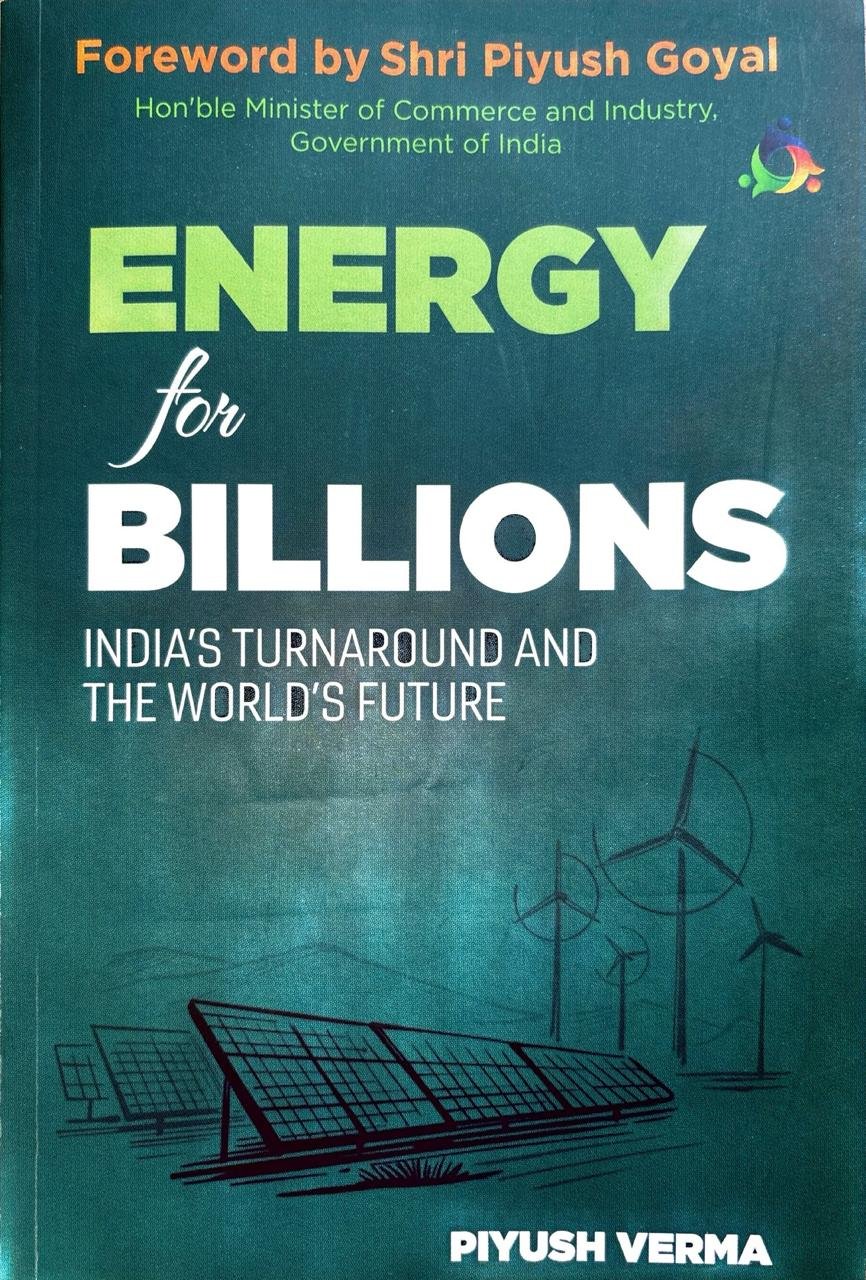
He traces how bold reforms, innovative governance, and inclusive development turned the world’s most populous democracy into a beacon for sustainable growth.
Moving seamlessly between lived experience and global perspective, Energy for Billions captures the courage and conviction behind India’s clean energy milestones — from rural electrification and renewable expansion to its bold 2047 energy independence and 2070 net-zero ambitions. It examines how people, policies, and partnerships together shaped one of the greatest developmental turnarounds during the last decade.
This book is not just about energy systems — it is about courage, leadership, and the will to transform. India’s journey shows that when a billion people are empowered by vision and conviction, they don’t simply light their homes — they illuminate the world.
The book explores:
A personal and national journey — tracing Dr. Verma’s path from growing up without electricity in rural India to shaping global energy policy, mirroring India’s own rise from scarcity to sustainability.
A decade of transformation — capturing India’s breakthroughs in renewable energy, electrification, and governance reform that turned the country into one of the world’s clean energy leaders.
A vision for the future — looking ahead to India’s 2047 energy independence and 2070 net-zero goals, and the lessons its journey offers for the Global South and the world.
Written in simple, engaging language, the book is designed for anyone — not just energy professionals — to understand where energy truly sits in our society, how it shapes our economy, and why it defines our collective future. It connects the human experience with systemic change, making complex transitions both relatable and real.