

By Dhruva Jaishankar
The EU and India both have apprehensions about China’s economic and manufacturing supremacy threatening employment and businesses at home.

Dhruva Jaishankar spoke to Jersey Lee on the Pacific Polarity podcast on India's re-alignment.
By Udaibir S. Das and David Grigorian
Domestic debt restructuring (DDR) is constrained optimization: success requires not only reducing debt service but preserving the monetary and financial system capable of supporting economic recovery.
By Udaibir Das
Absa and OMFIF have given Africa a decade of disciplined comparison. The next task is to make the consequences of reform equally visible. A country should be able to name an investment that happened because its market improved. Success is not more capital entering markets. It is more productive investment, financed without greater fragility. That is financial sovereignty on the ground.
By Piyush Verma
Energy for Billions: India’s Turnaround and the World’s Future explores the energy choices that can help realize the ambition of Viksit Bharat — a developed India — and the lessons other economies might draw from India’s achievements and unfinished work.
By Piyush Verma
The grid is more than a machine for moving electrons. It is a shared system of costs, responsibilities and reliability. As AI campuses bring their own power, the question is not whether they are on or off the grid, but what they owe it when they still depend on it.
By Dhruva Jaishankar
The EU and India both have apprehensions about China’s economic and manufacturing supremacy threatening employment and businesses at home.
By Dhruva Jaishankar
Trump and Modi announced a wide-ranging agenda to take the bilateral relationship forward. It included efforts that built upon the progress made during the Biden administration, particularly in terms of technology, defense, and regional cooperation.
By Dhruva Jaishankar
Understandably, Germany will be preoccupied in the short term with Europe’s eastern and southern flanks, the transatlantic relationship, and the Middle East, but Berlin has important economic and security interests in the Indo-Pacific.
By Udaibir Das
As AI takes on a greater role in economic analysis and policy, an unsettling question arises: will its ability to recognise systemic risks with historical precedents weaken with a lack of immediate algorithmic reference?
By Udaibir Das
The world’s most populous democracy faces a turbulent landscape of geopolitical rivalries, technological shifts and the urgency of climate action. The question remains: will global economic forces propel India toward leadership or will they impede its ascent?
By Udaibir Das
In 2024, Africa’s economic and political importance grew significantly, laying a strong foundation for 2025 to be a transformative year for the continent.
By Vivek Mishra
Indian leadership must remain cautious as "America First" will loom heavy on Trump's foreign policy. As transfer of technology is of high priority for India in defense collaborations, elements of this sector will likely be at odds with Trump’s agenda.
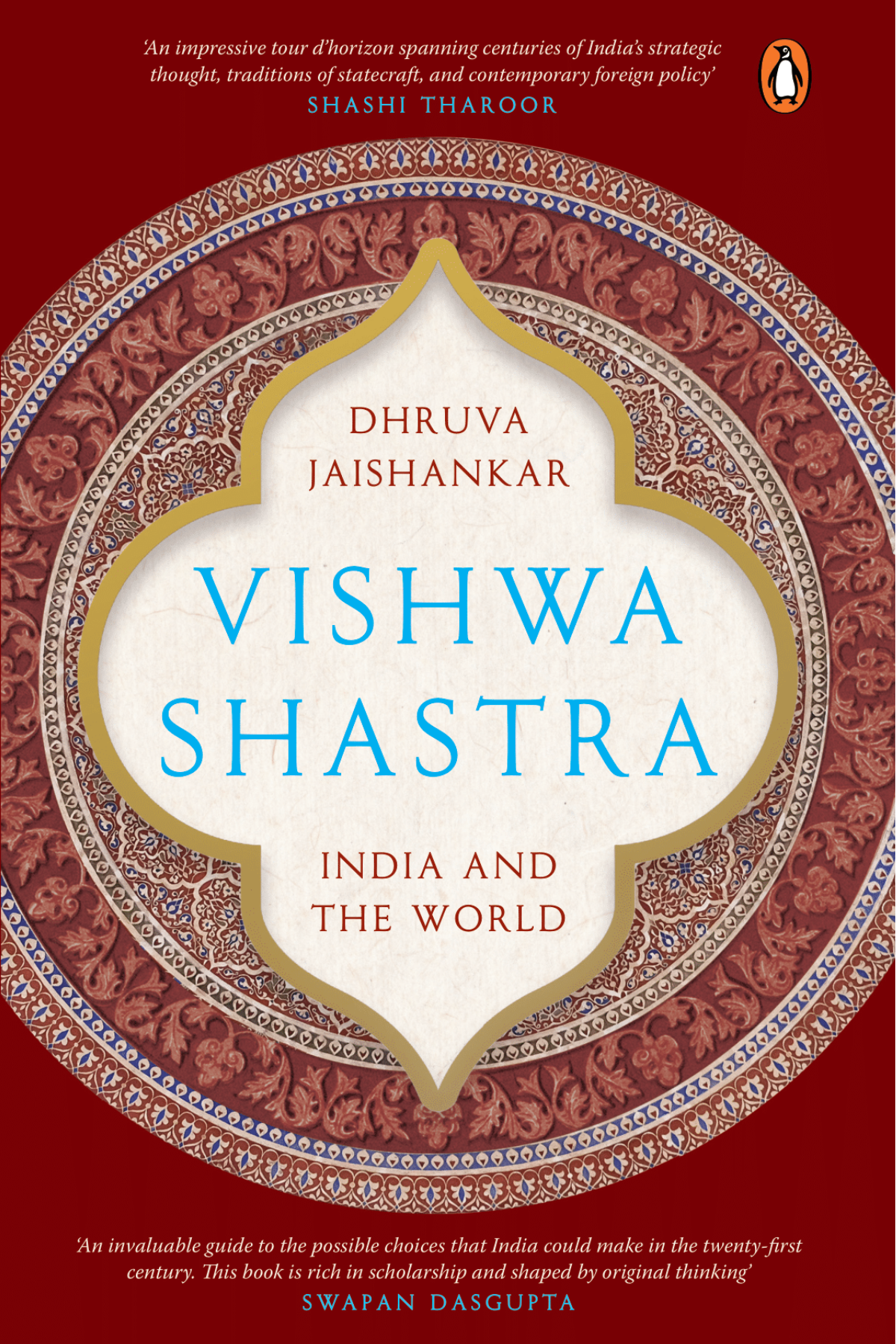
In Vishwa Shastra, Dhruva Jaishankar provides a comprehensive overview of India’s interactions with the world — from ancient times to the present day. He describes a long tradition of Indian statecraft and strategic thinking on international affairs, charts early India’s relations with a vast geography from the Mediterranean and Africa to Southeast and Northeast Asia, and captures the costs and consequences of European colonialism. Jaishankar also describes India’s territorial, economic and governance challenges upon Independence and the origins of India’s rivalries with Pakistan and China.
Speaking to a wide audience that includes policymakers, scholars and especially students, Vishwa Shastra offers both rich historical context and forward-looking strategies for India. Highlighting India’s transition from Cold War non-alignment to post-Cold War realignment, Jaishankar outlines India’s strategic objectives: bolstering national power, securing the neighbourhood, maintaining a balance of power in the Indo-Pacific, and leading at international institutions.
Balanced, comprehensive and rigorous, Vishwa Shastra goes beyond shedding light on how India can maneuver in a challenging geopolitical landscape and advance its interests in an interconnected world: it gives us a clear-eyed perspective on how India might actually define the emerging world order.
Read media coverage here and book reviews here.
Watch the launch here.
By Vivek Mishra
As India and CARICOM prepare for the next summit, this partnership promises to be a cornerstone of India’s expanded global engagement in the years to come.
This volume of short working papers is a product of ORF America’s U.S.-India Emerging Climate Leaders as they attempt to develop ideas around climate collaboration and communication for the United States and India.
Special Report
By Abigail Doerr, Amol Kapoor, Bhagyashri Kulkarni, Dhruva Jaishankar, Jonika Rathi, Karan Sinha, Lindsay Maizland, Medha Prasanna, Meenakshi Venkatraman, Miaoru Guan, Mridu Jhangiani, Pankaj Mahalle, Patrick Soltis, Paul Gordon, Perrin Krisko, Sabareesh Suresh, Tanya Kak, Vandita Sariya, Vanshica Kant, and Vedant Patil
Editors: Caroline Arkalji, Jeffrey D. Bean, and Medha Prasanna
By Vivek Mishra
How does the Indian Ocean fits into the United States’ broader assertion as a regional power, especially with the United States shifting to a more collaborative strategy that emphasizes shared leadership?
By Vivek Mishra
As the US judiciary continues to grapple with its internal divisions, the fallout from such cases similar to Gautam Adani’s situation will likely influence not only US-India relations but also the broader dynamics of international investment and diplomacy.
By Vivek Mishra
Trump’s victory potentially marks a shift on multiple fronts as his second administration will be intent on changing the focus of the US both internally and externally.
By Anit Mukherjee
With the Indian prime minister’s and external affairs minister’s recent visits to Latin America, the engagements are a sign of India’s deepening commitment to improve and strengthen strategic and economic ties with the region where it is still playing catch up to China.
"Rebalancing Globalization: Perspectives from the Global South" attempts to provide a framework for the next phase of globalization that is rebalanced and sustainable and can address issues that matter to the Global South.
Edited Volume
By Anit Mukherjee, Dhruva Jaishankar, Alan Gelb, Pamla Gopaul, Marta Bengoa, Shayak Sengupta, Aude Darnal, Elizabeth Sidiropoulos, Udaibir Das, Veronica Jijon, and Lorrayne Porciuncula
Editors: Anit Mukherjee and Dhruva Jaishankar
By Surjit S. Bhalla, Karan Bhasin, and Tirthatanmoy Das
Using a structural micro-econometric model, the roles of both the labor market and the household sector in female labor participation are evaluated to analyze the evolution of India’s labor market.
By Vivek Mishra
While Trump's choices reflect his desire for a loyal team, they also signal his intention to challenge traditional governance structures and pursue a different vision for America's future.
While there is no shortage of analysis and speculation of China’s capabilities and behavior today, it is imperative to keep an eye on longer-term developments and remain open to uncertainties that could shape China’s strategic outlook.
Joint Report
By Shikha Aggarwal, Divyank Chaudhary, Lily McElwee, Aaron Glasserman, Keshav Kelkar, Kento Mashiko, Takuya Matsuda, Helen Mitchell, Philip Rogers, Rena Sasaki, David Saultry, and Neil Thomas
Editors: Dhruva Jaishankar and Greg Brown
Observer Research Foundation America, 1100 17th St. NW, Suite 501, Washington DC 20036 USA