
By: Rachel Rizzo
The following excerpt is from Chapter 1 — New Arenas of Great-Power Competition of ORF Global Quarterly: Disruption and Recalibration.
In 2026, the scope and intensity of strategic competition show no signs of slowing and indeed, the stakes are intensifying and the rivalries becoming more pronounced. The Arctic region, once a geopolitical afterthought for many policymakers, has now moved decisively to the centre of global decision-making, emerging as a primary theatre of great-power competition. Domain-specific competition on the ocean floor and beyond the Earth’s atmosphere is also moving to the forefront of conversations. Undersea cables carry most global internet traffic and financial data, and space technology has become a cornerstone of both military and commercial policymaking. How major powers navigate this moment, and whether multilateral institutions created in a different era can adapt to the new one, will be the defining questions in the years ahead.
The Arctic Grows in Importance
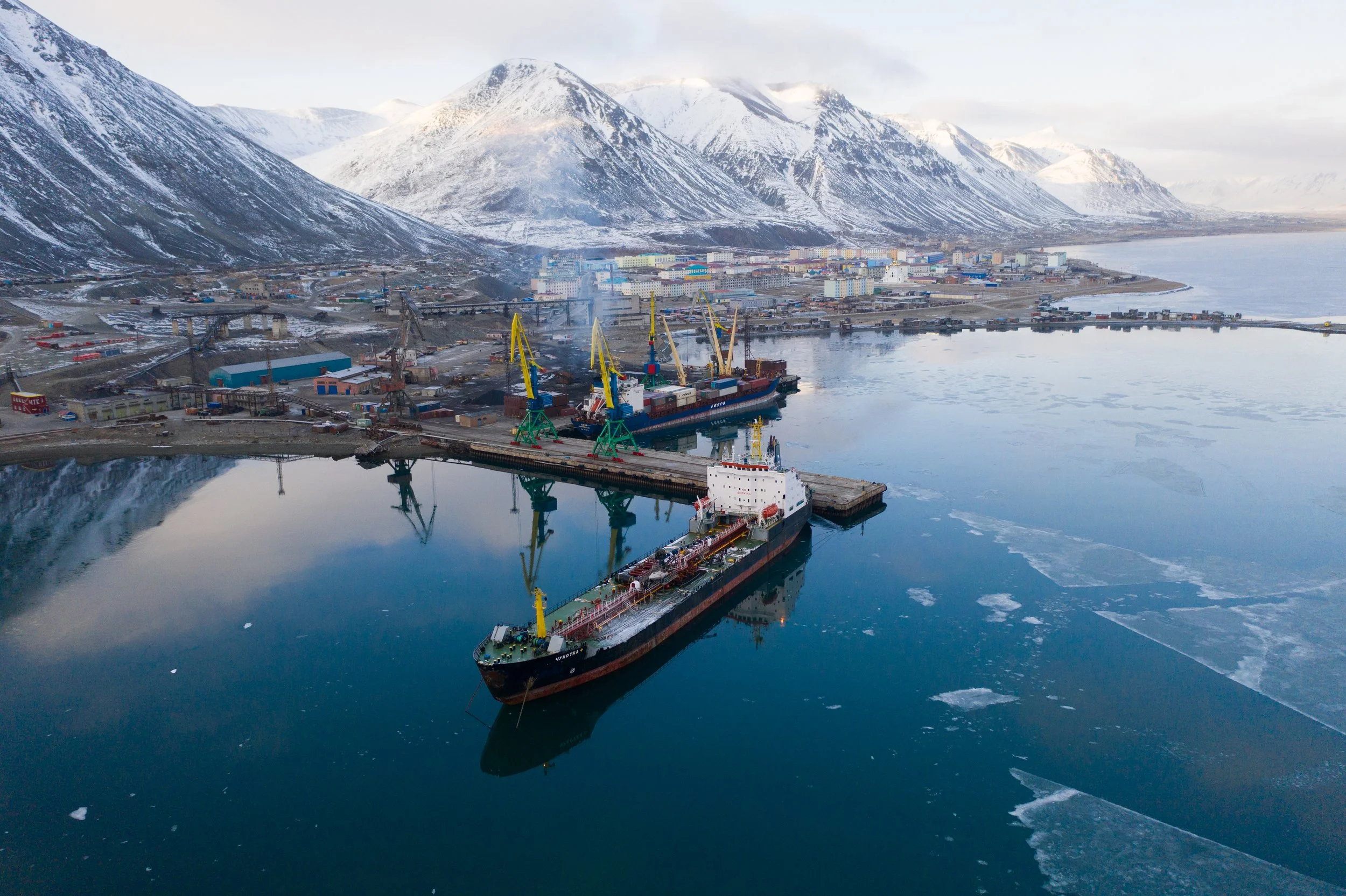
Since the beginning of his second administration, United States (US) President Donald Trump had expressed interest in acquiring Greenland, a sovereign territory of Denmark, and an island that the US “needs” for national security reasons. Whatever one might make of that ambition, the desire itself signifies more than intra-NATO pressure; it reflects an understanding that as climate change accelerates, the race for critical minerals intensifies, and melting ice caps potentially open new sea lanes while extending the usability of existing ones. The Arctic therefore is rapidly becoming a central arena of great-power competition.
The drivers of intensifying Arctic competition are diverse and interconnected. According to a study by the US Geological Survey—the most comprehensive one to date—the region is estimated to hold up to 13 percent of the world’s undiscovered oil and 30 percent of its undiscovered natural gas. Greenland alone contains approximately 25 of the more than 30 raw materials classified by the European Union (EU) as “critical”, all of which are essential to defence electronics, the green transition, and advanced manufacturing. Although these minerals are extremely difficult and expensive to extract, given their location beneath deep sheets of ice, it is unsurprising that the US has shown interest in exploration: today, China controls roughly 60 percent of global rare-earth production and 90 percent of global rare-earth processing capacity. This concentration of supply chain leverage remains a source of strategic concern for Washington.
The next phase of great-power competition is unfolding in regions long treated as peripheral. Learn more about what these new domains means for India and the wider Global South in ORF Global Quarterly: Disruption and Recalibration.