
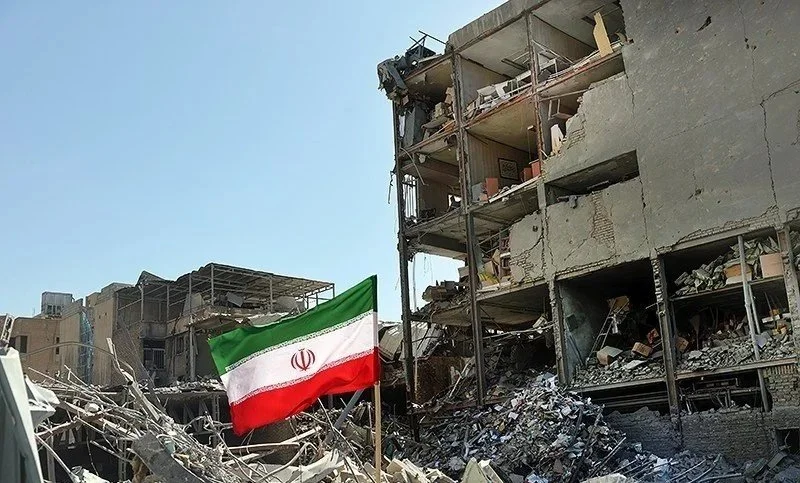
On February 28, Israel launched military operations against Iran in coordination with the United States, resulting in the death of Supreme Leader Ayatollah Ali Khamenei along with several other Iranian leaders. Iran has struck back, employing missiles, drones, and air strikes against Israel, U.S. bases in the Middle East, and civilian targets such as ports, refineries, shipping, and urban centers across the region. These actions have sparked the most consequential conflict in the Middle East since at least the U.S. invasion of Iraq in 2003, if not the first Gulf War of 1990-1991. Just a few days into this conflict, the strategic intentions of Israel, the United States, Iran, and the Gulf Arab states are worth examining, for they will shape the intensity and scope of the war — as well as the long-term repercussions regardless of the outcome.
Israel’s calculus is informed by its threat environment following the October 7, 2023, attacks by Hamas and the rumbling, costly war in Gaza that ensued. The Hamas attacks fundamentally changed Israel’s threat perceptions in an already volatile region undergoing churn since the Arab Spring in 2011. Despite operational struggles in Gaza, Israel undertook preemptive offensive operations against Hezbollah in Lebanon in late 2024 (resulting in the death of its leader Hassan Nasrallah) and against Iranian proxies and air defense systems in Syria and Iraq the same year. These actions, in turn, gave Israel a decisive air superiority advantage over Iran which it exploited in what can be considered a second round of the conflict: the 12 Day War in June 2025. That conflict included targeted strikes that killed several leaders of Iran’s Islamic Revolutionary Guard Corps (IRGC) and the U.S. bombing of Iran’s nuclear facilities, an important but not fatal setback to Iran’s nuclear ambitions. (Not to be discounted, legislative elections are due later this year, with implications for Israel’s leadership.) The latest strikes are, from Israel’s standpoint, a third — and possibly final — bid at exploiting its military advantages against Iran in three years, one aimed at delivering a knockout blow to the Islamic Republic.
In contrast to Israel’s singular focus, the United States is motivated by competing priorities. While President Trump has authorized overwhelming military cover for Israel, the Trump administration has been more ambivalent about the end game with Iran, reflecting not just Trump’s personal views but the competing worldviews of his inner circle. In recent weeks, the United States engaged in diplomatic negotiations with Iran, brokered by Oman, which were focused on assurances regarding Iran’s nuclear program. Iranian assurances may have fallen short of U.S. expectations, been too limited in scope, or simply not persuasive enough. Alternatively, U.S. negotiators may have already made up their minds. Regardless, Trump was persuaded to join Israel and launch Operation Epic Fury. While Trump would obviously prefer a swift and decisive end to the conflict, resulting in regime change in Tehran, he may be more amenable to negotiations and compromise than Israel’s Prime Minister Benjamin Netanyahu, particularly if the human and economic costs of the conflict increase.
These factors are, in turn, informing Iran’s response to Israel’s initial decapitation strikes. Understanding that this is an existential war of survival against Israel, the Islamic Republic of Iran’s retaliation has been focused on raising the economic and political costs of the conflict for the United States. Unlike last year’s 12 Day War, the Iranian military response was swift, with hundreds of missiles and drones launched within hours of Israel’s surprise attack. The targets are also astonishingly wide and not relegated to Israel and U.S. bases in the region. Instead, Iran has targeted every member of the Gulf Cooperation Council (Saudi Arabia, the United Arab Emirates, Qatar, Oman, Kuwait, and Bahrain), military installations in Iraq and Jordan, ships such as oil tankers at sea, and even a British base in Cyprus. A particular focus has been on the Gulf Arab states’ oil and gas infrastructure, which naturally have implications for the global economy.
The UAE has borne the brunt of Iranian missile and drone attacks, successfully interdicting most, but at the high cost of depleting their air defense stockpiles. This appears to be Iran’s intent, for it has so far held back on deploying some of its most sophisticated and effective missiles, which is compelling Israel to target its hardened ballistic missile apparatus. Tehran’s calculus appears to be to compel Saudi Arabia, the UAE, Qatar, and others to persuade the United States to cease its role in offensive military operations against Iran. The more scattershot approach has resulted in higher civilian casualties and a surge in global oil and gas prices, including the effective closure of the Strait of Hormuz (informed in part by the growing insurance risk to shipping) through which almost 20% of the global oil trade flows.
While not hopeless from Tehran’s point of view, the Iranian gambit is risky, borne of desperation, and it may backfire. The Gulf Arab states have temporarily set aside their internal differences under a common cause. As their air defense capabilities become depleted under relentless missile and drone strikes, they will contemplate retaliation against Iran, further widening the war. European powers, too, are becoming embroiled in the conflict following Iranian attacks on French, Italian, and British military assets in the region. Tehran’s decision to strike civilian targets in the Gulf has also harmed or threatened Indian citizens and interests, compelling India’s decision to demonstrate public solidarity with the Gulf states. (There are almost as many Indian citizens in the Gulf as the entire population of Israel and India is heavily reliant on Middle Eastern energy imports.) In a seemingly existential conflict, the Islamic Republic has opted for a high-risk approach that will either ensure its ability to survive and live to fight another day, or consolidate an overwhelming coalition arrayed against it.
Multiple factors will now shape the conflict’s outcome. Operationally, the Gulf’s air defense systems and offensive capabilities, Iran’s munition stockpiles and decision to use longer-range and heavier missiles, and U.S. political appetite for absorbing casualties will all play a role. The United States will likely be more sensitive than Israel to the medium-term effects on the global economy, including energy prices. Finally, the domestic fallout in Iran will be crucial. U.S. and Israeli leaders were hopeful of instigating a popular uprising in Iran, which in turn makes this a test of Tehran’s interim leadership. Following Khamenei’s death, along with more than 40 other major political and military figures, Iran’s President Masoud Pezeshkian and Secretary of the Supreme National Security Council Ali Larijani have remained key actors, with others likely to emerge from the clerical and military establishments. The overt war characterized by long-range missiles, drone swarms, and stand-off air strikes will also be accompanied by an unconventional one involving Iranian proxies across the Middle East, from Lebanon to Yemen and beyond.
While this war may be longer or shorter in duration than the twelve days of conflict last year, it has already widened beyond most expectations. Its outcome will likely shape the region for a generation.
Dhruva Jaishankar is Executive Director at ORF America.
Image: Tasnim News Agency/ Hossein Zohrevand, CC BY 4.0, via Wikimedia Commons. Cropped from original.
