
By: Jeffrey D. Bean
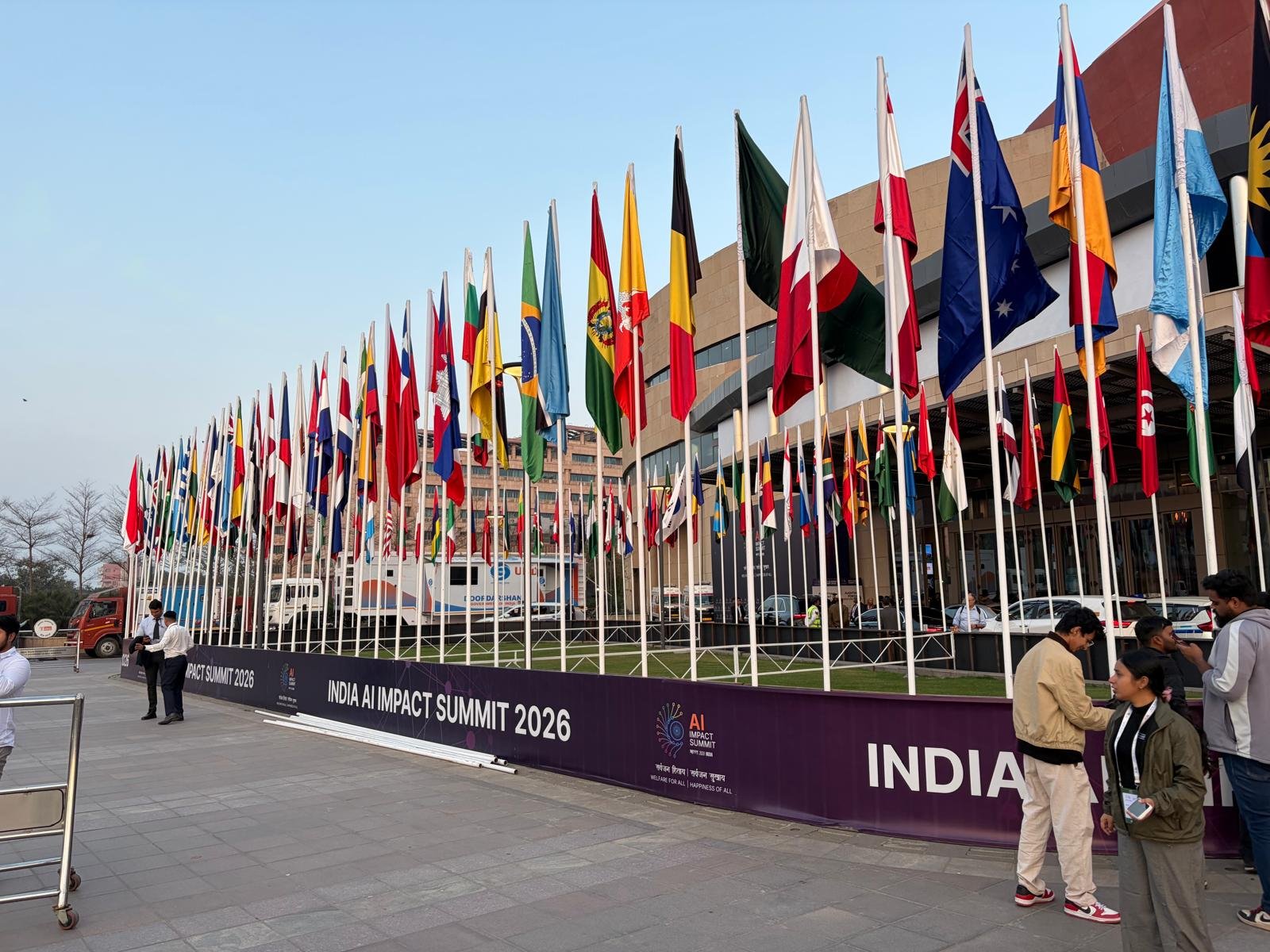
Last month’s AI Impact Summit in India focused intensely on the theme of impact, translating emerging high technology benefits into outcomes, and the adoption of applications that support ordinary people, including in the developing world. Driven in part by New Delhi’s desire to avoid the digital divide extending to become an AI divide, Indian Prime Minister Narendra Modi declared at the Summit Plenary on February 19 that humanity is entering an era where humans and intelligent AI systems will “co-create, co-work, and co-evolve.” Yet, the themes of compute equity and frugal innovation did not put off world tech leaders, who attended the summit to market new tech developments, showcase products and services, and announce fresh partnerships. Coupled with thousands of startups and demos and ubiquitous youthful tech entrepreneurs, the energy to leverage AI for all helped the substance of the summit, despite the logistical chaos.
In that vein, Modi and world leaders were on hand as India’s Minister for Electronics and Information Technology Ashwini Vaishnaw announced a pair of New Delhi Frontier AI Impact Commitments. The first aims to establish a platform for anonymized data and aggregated insights to allow participating organizations to publish findings based on the data to support real-world AI adoption. As described, the program intends to support greater understanding for elected leaders and governance experts to understand AI’s impact on employment trends and new skill requirements while preserving privacy. The second commitment outlined an intensive focus on multilingual and multicultural capabilities reflecting local contexts and use-case evaluations to iterate more rapidly on AI performance. The plethora of widely spoken languages in India means the need for this capability and the market opportunity from data collection and functionality perspective is obvious.
As an example, Modi himself demonstrated Sarvam AI’s new Made-in-India “Kaze” smart glasses that provide AI-powered real time voice translation in 12 Indian languages running entirely on the device. Details are still being confirmed, but it’s likely the Sarvam Edge language model runs locally on the device and does not require constant cloud connection, making it India’s innovative answer to the Meta Ray-Ban.
On the education front, another key practical, deployed use-case at the summit was the announcement of the Anytime Testing Machine developed by Anthropic and Pratham Education Foundation, which has the power to transform testing in primary schools across India. With the ability to generate test questions and then digitize and analyze handwritten responses through Claude, pilots have reached 600 students in at least 20 different schools with plans to reach 100 schools by the end of 2026 and up to 15,000 learners.
Vaishnaw also outlined India’s five-layer AI stack, which now includes over $200 billion in announced infrastructure investments, $17 billion in venture capital for applications, and 50% power on the grid provided by renewable energy sources. On the latter issue, the Adani group announced an additional $100 billion investment in renewable energy powered data centers through 2035. Interestingly, Vaishnaw highlighted India’s existing common compute platform with 38,000 GPUs available at low rates as a public good and stated that the government plans to add an additional 20,000 GPUs to the platform. The United States could play a helpful role here in recertifying midlife GPUs for export to India to support this public good.
Beyond the soaring language, the summit underscored India’s commitment to be seen as a leader for technology deployment to the Global South. In this way, India is attempting to serve as a bridge between the leading technology manufacturing countries and the societies where applied technology may have the biggest impact on quality of life, in areas like healthcare, education, and agriculture. Overall, success in that effort remains uncertain, as significant infrastructure, connectivity, technological and regulatory barriers shape private sector projected return on investment and thus investment decision making. Can enough compute be accessed at the edge to offset disadvantages in infrastructure and undersea cables in the Global South? Goodwill alone rarely creates the right policy and investment environment. Meanwhile China and Chinese companies remain key players in efforts to export its technology stack in Latin America, Africa, and South and Southeast Asia, as its low cost enables partners to overlook security and privacy concerns.
The key pillars or ‘sutras’ of the AI Impact Summit — People, Planet, and Progress — were echoed by leadership throughout the week, but achieving them will require collaboration and co-investment. India’s case, though, based on everything from Stanford’s AI rankings to the number of new small language models (SLMs) in development, demonstrates it is riding high in its attempt to shape AI for all. For the United States, collaborating with India in these areas should remain a priority, and support for key bilateral initiatives should represent an essential priority for the leaders of both countries.
Jeffrey D. Bean is a Program Manager for the Technology Policy program and Editor at ORF America.