
What’s the latest in U.S.-India relations? Have bilateral ties been repaired since last year?
I just returned from India, where I participated in the India-U.S. Forum. Discussions involved senior Indian government officials from seven ministries, U.S. diplomats and government officials dealing with India, business leaders from both countries, and academic experts and analysts. The conversations covered defense and security, trade and investment, artificial intelligence (AI) infrastructure and technology security, connectivity and supply chains, civil nuclear and fossil fuel energy cooperation, and bilateral and global developments. The tenor was, under the circumstances, surprisingly upbeat and reflected both the considerable depth and breadth of U.S.-India cooperation, despite lingering distrust in certain key areas.
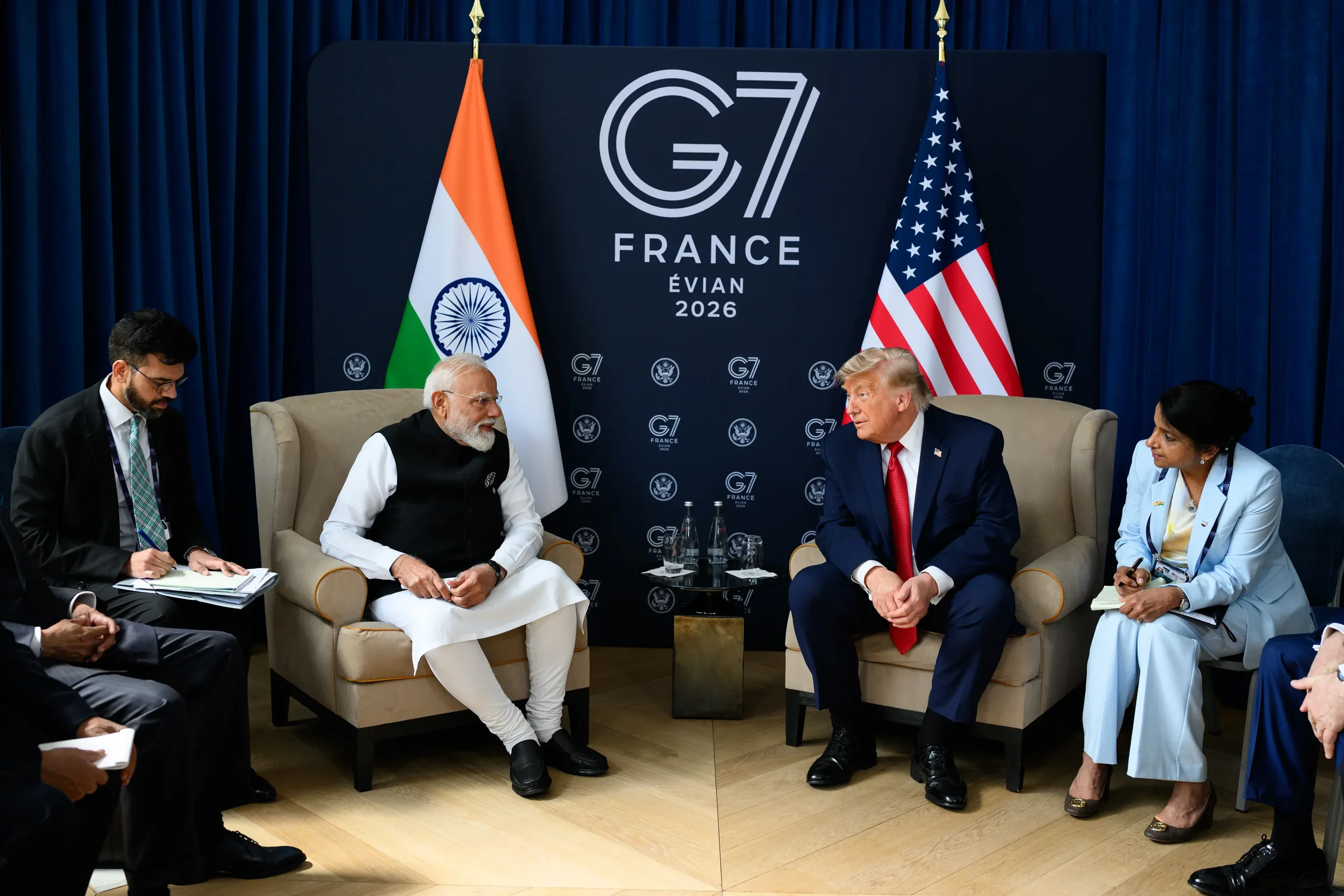
For context, starting in May and June of last year, differences between New Delhi and Washington erupted over U.S. engagement with Pakistan following India’s Operation Sindoor, U.S. tariffs on Indian imports, and, subsequently, additional tariffs related to India’s purchases of Russian oil. The past nine months have witnessed some repair, following at least seven phone calls between Indian Prime Minister Narendra Modi and U.S. President Donald Trump since last September, the announcement of an interim trade deal in February, and U.S. Secretary of State Marco Rubio’s first visit to India for bilateral and Quad discussions. Bilateral cooperation has also deepened in a wide variety of areas stretching from defense and AI to energy, investment, and critical minerals. Modi’s first in-person meeting with Trump in 16 months in France on June 16 proved cordial and constructive. Essentially, the two leaders indicated a willingness to try to get their relationship back on track. At the same time, obstacles to warmer relations remain, which include more critical public sentiment in India of the United States and the Trump administration’s continued handling of major strategic questions, including China, Pakistan, Iran, and India’s neighborhood.
What’s the status on a U.S.-India trade deal?
The visit this week to India by U.S. Trade Representative Jamieson Greer was intended to resolve most of the remaining obstacles to an interim trade agreement along the lines of what the two countries agreed to in February 2026. However, finalizing an interim trade agreement may continue to take several weeks to months, until there is greater clarity on U.S. tariff rates on its major trading partners. This is subject to both U.S. law and negotiations with other partners. Whatever the outcome, the agreed-upon rates in an interim U.S.-India deal would serve as a ceiling meant to withstand future unilateral tariffs. Although the United States is India’s largest export destination, Indian imports account for only a small fraction of the U.S. total, suggesting considerable headroom for growth. Meanwhile, two-way investment continues. India continues to attract global value chains, including in electronics, automotive parts, and defense, capitalizing on de-risking efforts, relatively low wages, infrastructure investments, and government subsidies. At the same time, its manufacturing and supply chain integration potential continues to be dependent on competitive prices, regulation, and taxation.
What about cooperation on AI and emerging technologies?
The sizeable investments by U.S. companies in AI infrastructure in India continue, but are confronting Indian concerns about sovereignty, imports, resources, and safety. For the Indian government, its AI policy priorities include diffusion, use cases, access, and governance. The two countries — and leading AI companies — will therefore continue to negotiate a balance between sovereign requirements and access to accelerate diffusion. AI and other emerging technologies are, in turn, also having transformative effects on defense and security, including the deployment of autonomous systems, quantum encryption, and intelligence, surveillance, targeting, and reconnaissance (ISR). The ongoing conflicts in Ukraine and Iran underscore the importance of prolonged campaigns, autonomous weapons systems, and long-range and precision strike capabilities. Drones have conferred cheap offensive capabilities that are difficult and expensive to counter. The Iran War and last year’s Operation Sindoor have therefore contributed to heavy investment in counter-unmanned aerial systems (CUAS).
What’s going on in defense industrial cooperation?
When thinking through its defense partnerships — with any country — the Indian government retains concerns about license revocation, backdoors, and the weaponization of data, making technological self-reliance non-negotiable from its standpoints. There are also concerns about the speed of sourcing critical defense components from the United States. In practice, however, India cannot indigenize defense production overnight, although its priority will remain Indian-designed defense systems. When that’s not possible, a second priority will be to leverage its markets for co-production with trusted partners. Developing maintenance, repair, and overhaul (MRO) capabilities will be an important aspect of this journey. The associated technology transfers will, in turn, require new bilateral institutions and amendments to U.S. and Indian laws to reduce export licenses. In general, off-the-shelf defense purchases will be exceptions. Overall, areas of U.S.-India defense cooperation are likely to include space, air, and under-sea surveillance, special forces training, electromagnetic spectrum dominance, and logistics. The potential for defense cooperation is also increasingly two-way, with Indian firms starting to become involved in U.S. defense procurement.
Are the United States and India cooperating on maritime security?
Maritime security remains a major priority for both countries, even as the Iran War and other developments have showcased differences. India’s primary security concerns include China’s continued military buildup, especially in the Indian Ocean, with the active presence of heavily armed Chinese military vessels, scientific research ships, and armed fishing fleets. Continuing China-Pakistan military coordination and state-backed terrorism in Pakistan are also top of mind for Indian security planners. Maritime surveillance cooperation with the United States and among the Quad is increasing, with the objective of more real-time and actionable information sharing on vessels in the Indo-Pacific. The renaming of U.S. Indo-Pacific Command to Pacific Command changes little from India’s standpoint as areas or responsibility, Indian operations, and planning remain unaffected. India continues to be engaged in the Combined Maritime Forces with the United States and other partners.
How does India view the U.S.-led war in Iran?
India’s concerns about the Iran War extended to its continued energy and economic fallout. For this reason, the conclusion of open hostilities is welcome, but a great deal of skepticism remains about the medium-term prospects for regional stability. For India, maintaining relations with the Gulf Arab States, Israel, the United States, and Iran (in that order of importance in the region) remains an abiding priority. The next few months are likely to see India simultaneously consolidating its comprehensive relations with the UAE, in particular, (and the other smaller Gulf Cooperation Council countries), defense relations with Israel, and energy imports from both the United States and Iran. The end of conflict — for now — provides considerable relief for the Indian economy. Obviously, uncertainties remain with regard to Iran’s nuclear program, proxies in the region, and management of the Strait of Hormuz. Despite the considerable regional uncertainty, India continues to invest in the India-Middle East-Europe Corridor (IMEC), although not as a single well-defined route. Containers are already being transported through a variety of routes from India to the Mediterranean.
What about energy cooperation?
As a consequence of long-term geopolitical, economic, and technological trends, energy has emerged as another important area of cooperation between the United States and India. The United States has grown in India’s mix of hydrocarbon import sources, and will continue to coexist with the Gulf, Russia, Venezuela, and parts of Africa. At the same time, India’s transition to renewables creates the risk of new dependencies in the form of China for solar and battery components. Critical mineral cooperation has been agreed to between the U.S. and Indian governments, but needs to translate into cooperation between businesses and ultimately viable projects. There are considerable ambitions for civil nuclear cooperation, building on both India’s SHANTI Act and the U.S. ADVANCE Act and four major Executive Orders signed by President Trump in May 2025 as part of plans for a fourfold increase in nuclear energy generation. In India, concerns for its domestic nuclear industry remain the lack of an independent nuclear regulatory commission, grid capacity, water and land availability, and price competitiveness. There is also nascent interest in nuclear fusion cooperation which would, in addition, help with nuclear waste management in India.
You’ve discussed a wide set of areas of cooperation between the United States and India. What are the major areas of divergence at this point of time?
Last year’s differences over tariffs and Russian oil imports have been overtaken by current events. The U.S. Supreme Court’s ruling on Trump’s tariff authority have temporarily dropped effective tariffs to 10%, a figure Indian exporters can live with while global energy shocks mean that India’s oil purchases from available Russian sources is encouraged. But the truth is that there is a rising tide of negative public sentiment in India against the United States, driven by a combination of the U.S. rehabilitation of Pakistan’s military leadership, tariffs and immigration restrictions, and the Iran War. Two recent developments — the killing of Indian mariners in U.S. strikes and restrictions on access by foreigners to frontier American AI models — have contributed to negative public opinion of the United States. Furthermore, U.S. support for Pakistan’s military and a consequent softening of its approach to terrorism directed at India is naturally a major concern. There is also growing disquiet in official Indian circles about lack of U.S.-India cooperation in India’s neighborhood, with U.S. policy often working at cross-purposes. The neighborhood remains a high priority for India, but today there is less coordination and consultation than a few years ago. There is also less cooperation in places like Africa. The lack of trust, as a result of unpredictable U.S. policy, affects India just as it does many other U.S. partners and allies. Overall, the United States continues to subordinate strategic priorities to economic security. The Trump administration continues to believe its unpredictability is a strength, but its repercussions and second-order effects are being felt by many — including India.
Dhruva Jaishankar is Executive Director at ORF America.