
By: Arpan Tulsyan
The following excerpt is from Chapter 3 — Building the AI Bridge from Classrooms to the Labour Market of ORF Global Quarterly: Societies in Transformation.
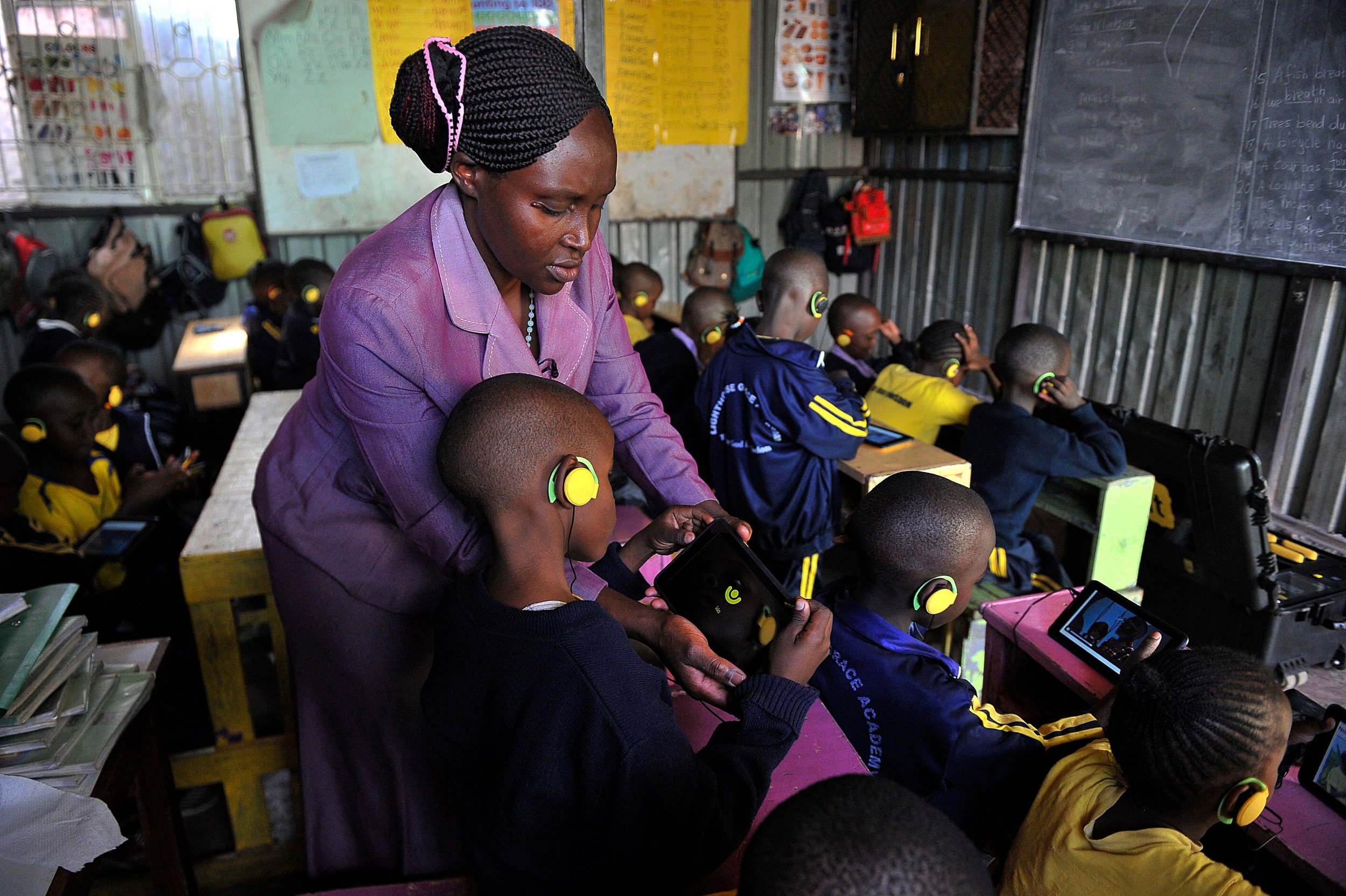
Education systems are facing two massive pressures at once: the scaling pressure, or the need to reach far more learners while ensuring baseline literacy and numeracy; and the Industry 4.0 pressure—i.e., the integration of advanced digital technologies into industrial production. This creates a need for agility, quality, and relevance in the context of rapidly changing workplace competencies. The first challenge is critical: 273 million children and adolescents are out of school, of which about three-fourths are in Sub-Saharan Africa and Central and Southern Asia. Moreover, in Sub-Saharan Africa, 89 percent of children do not reach minimum proficiency in mathematics, and 70 percent in reading, by the end of the primary level. Teacher shortages compound these challenges, and an estimated 44 million additional primary and secondary teachers will be required globally by 2030, 15 million of them in Sub-Saharan Africa alone.
The second challenge is gathering pace: employers surveyed by the World Economic Forum in 2024 expect 39 percent of workers’ current skills to change or become outdated by 2030, bringing to the forefront a massive need for reskilling and upskilling. Digital technology and AI are at the intersection of both these pressures. Generative AI (GenAI) can make explanation, feedback, translation, and personalised tutoring available at a scale that conventional education systems have struggled to provide. Yet the same technologies, alongside robotics, automation, advanced manufacturing, and increasingly data-intensive production, are changing the capabilities required to participate productively in the economy. The International Labour Organization (ILO) estimates that globally, one in four workers is already employed in an occupation with some exposure to GenAI, although the transformation of jobs is considerably more likely than large-scale replacement of this section of the workforce. The rest of this article discusses what this possibility means for the Global South.
Digital technologies can address some longstanding resource constraints on education systems, such as shortages and uneven deployment of qualified teachers, limited access to specialised instruction, and the difficulty of serving rural, remote, and linguistically diverse populations. At the same time, they create a risk: widening the gap between those able to acquire advanced capabilities and those left with little more than nominal digital access. This article examines trends on the two sides of this transition: first, how digital technology and AI are changing access to education; and second, how Industry 4.0 is changing what students and workers need to learn. It identifies policy priorities for Global South countries to translate expanded educational access into meaningful learning, develop adaptable skills, and strengthen their capacity to respond to rapid technological change.
AI is changing how education can be delivered, while Industry 4.0 is creating new learning and skills requirements in the labour market. Learn more about how education systems can build adaptable skills that lead to productive employment in ORF Global Quarterly: Societies in Transformation.