
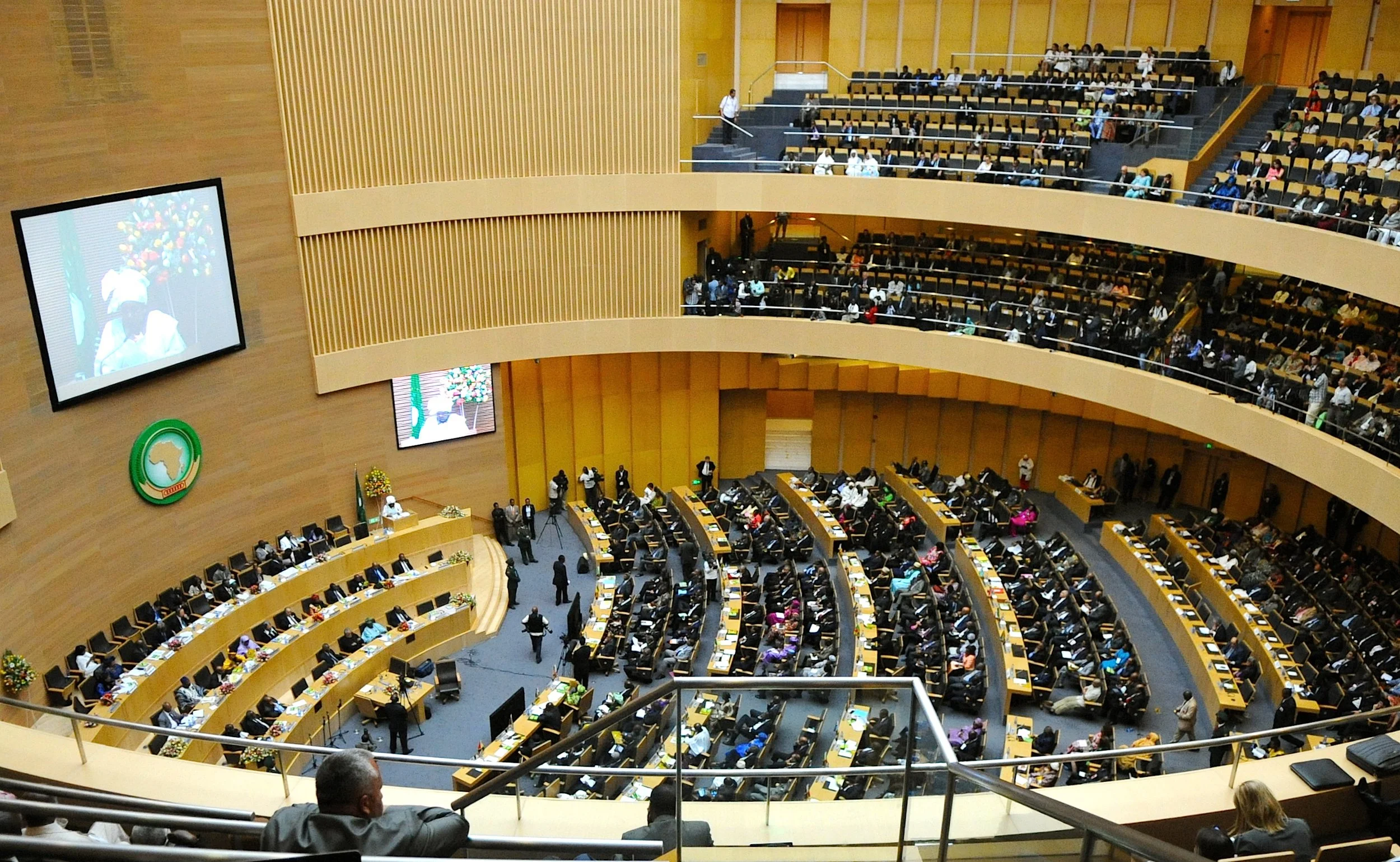
When the African Union (AU) took its permanent member seat at the G20 in 2023, it was read across the continent as a long-overdue correction. Three years on, the question is narrower and harder. What does the seat actually buy? The opening months of the 2026 United States G20 Presidency have made it unavoidable. South Africa, which chaired the group in 2025, was excluded by the United States from G20 meetings this year. The run of four consecutive Global South presidencies, from Indonesia in 2022 to South Africa in 2025, has ended. And the agenda has been rewritten.
The U.S. agenda returns the G20 to macroeconomic fundamentals: growth through deregulation, energy abundance, technological innovation, and a workable trade consensus, running toward a Leaders’ Summit in Miami in December. Multilateral consensus is giving way to unilateral industrial subsidies, carbon border adjustments, and rising trade restrictions, while official development assistance (ODA) has fallen sharply. Energy diplomacy, meanwhile, has moved past fossil fuel flows into an era organized around critical minerals, artificial intelligence infrastructure, and clean technology value chains. Africa sits at the supply end of all three, which makes this presidency year consequential well beyond its twelve months.
At the Retreat of the African Union on G20 Engagements in Malabo in April 2026, the diagnosis was not an absence of continental vision but an institutional and analytical readiness gap spread unevenly across 55 member states. Positions exist, but the technical capacity to defend them line by line in working groups that run in parallel is missing. Even so, engagement has been sustained. During the first half of the U.S. G20 Presidency, the African Union Commission (AUC) — led by the Department of Economic Development, Trade, Tourism, Industry and Minerals (ETTIM) — has mounted an intensive, multi-departmental engagement across both the Sherpa and Finance Tracks.
Energy shows the approach most clearly. Where the U.S. Presidency treats energy abundance as a product of deregulation and market optimization, the AU has re-centered it on access. The continent carries structural generation deficits, entrenched energy poverty, and a cost of capital high enough to stall viable infrastructure. Before the Energy Abundance Working Group, the AU’s formulation was blunt: energy abundance for Africa begins with universal energy access. The corollary is a technology-neutral transition, not a uniform decarbonization mandate, with room for renewables alongside clean cooking, green hydrogen, and natural gas. The African Single Electricity Market, the Continental Power System Master Plan, and the Programme for Infrastructure Development in Africa each aggregate demand at a scale capable of de-risking private capital.
In the Trade Working Group, the United States has prioritized industrial overcapacity, forced labor, food security, and Most-Favored-Nation principles. The AU’s response, anchored in the 2026 Maputo WTO Declaration and the African Continental Free Trade Area, begins from a different set of numbers. Africa accounts for roughly 3.2% of global GDP of global GDP and 2% of global manufacturing value added. A continent at that share is not the source of global overcapacity; it is trying to stop being an exporter of unrefined raw material. That is why value addition at source is the AU's test for any critical minerals discussion, and the same test applies to frameworks such as Clean Trade and Investment Partnerships. These should remain voluntary and open to all partners, pushing capital toward local refining, green steel, and regional value chains rather than raising the compliance bar for African firms.
The Innovation Working Group has drawn a similar intervention. 2.2 billion people remain offline, and Sub-Saharan Africa spends about 0.38% of GDP on research and development. Across the group’s six pillars, the AU has pressed to move the debate from technology acceleration toward absorption capacity. Whether artificial intelligence delivers anything in African health systems, agriculture, or public administration depends on grid stability, affordable connectivity, local datasets, and multilingual benchmarks before it depends on frontier model performance. The practical asks are flexible intellectual property regimes, regulatory sandboxes, and standards smaller firms can realistically meet, the worry being that premature standardization locks developing economies out of digital supply chains before they enter them.
In the Finance Track, the framing has been Africa Financing Africa: maximizing domestic resource mobilization, expanding the role of African development finance institutions, and pushing back against bias in sovereign credit ratings. It also means debt. The G20 Common Framework has not delivered restructuring quick, predictable, or binding enough to release fiscal space, and the AU has treated reform of that architecture as a macroeconomic question rather than a development one.
Converting these positions into outcomes at Miami, and into commitments the United Kingdom inherits in 2027, requires work that is largely institutional rather than rhetorical. The first task is to make the AU G20 Coordination Unit permanent, settling staffing, backstopping, and secondments from Member States’ finance ministries, because until analytical capacity sits inside ETTIM year-round, every presidency will open with the same scramble. The second, recommended at Malabo, is to use the diplomatic capitals: positions agreed in Addis Ababa have limited effect unless the African Diplomatic Corps carries them to the sherpa’s staff in Washington. The third is to co-create clean trade frameworks rather than react to them, since the dialogues under way with the European Union and other Global South economies will be worth little unless procurement commitments, blended finance, and sequenced de-risking enter early enough lower default risk. The fourth is coalition maintenance. Four successive Global South presidencies gave the continent an unusual run of continuity. Without deliberate coalition-building, that cohesion will dissipate fastest on development finance, adaptation, and industrial policy.
The permanent seat settled a question of representation. What remains is a question of capacity, and it will be answered in working group rooms rather than at leaders’ level. If the African Union arrives in Miami with positions that are technically defensible, coalitions that hold, and staff who have followed through since January, the seat will have done its work. Without that, the seat may be occupied but the rules will continue to be written elsewhere.
Raul Alfaro-Pelico is a Non-Resident Fellow at ORF America.