
By: Kartik Bommakanti
The following excerpt is from Chapter 3 — The Return of Nuclear Competition of ORF Global Quarterly: Disruption and Recalibration.
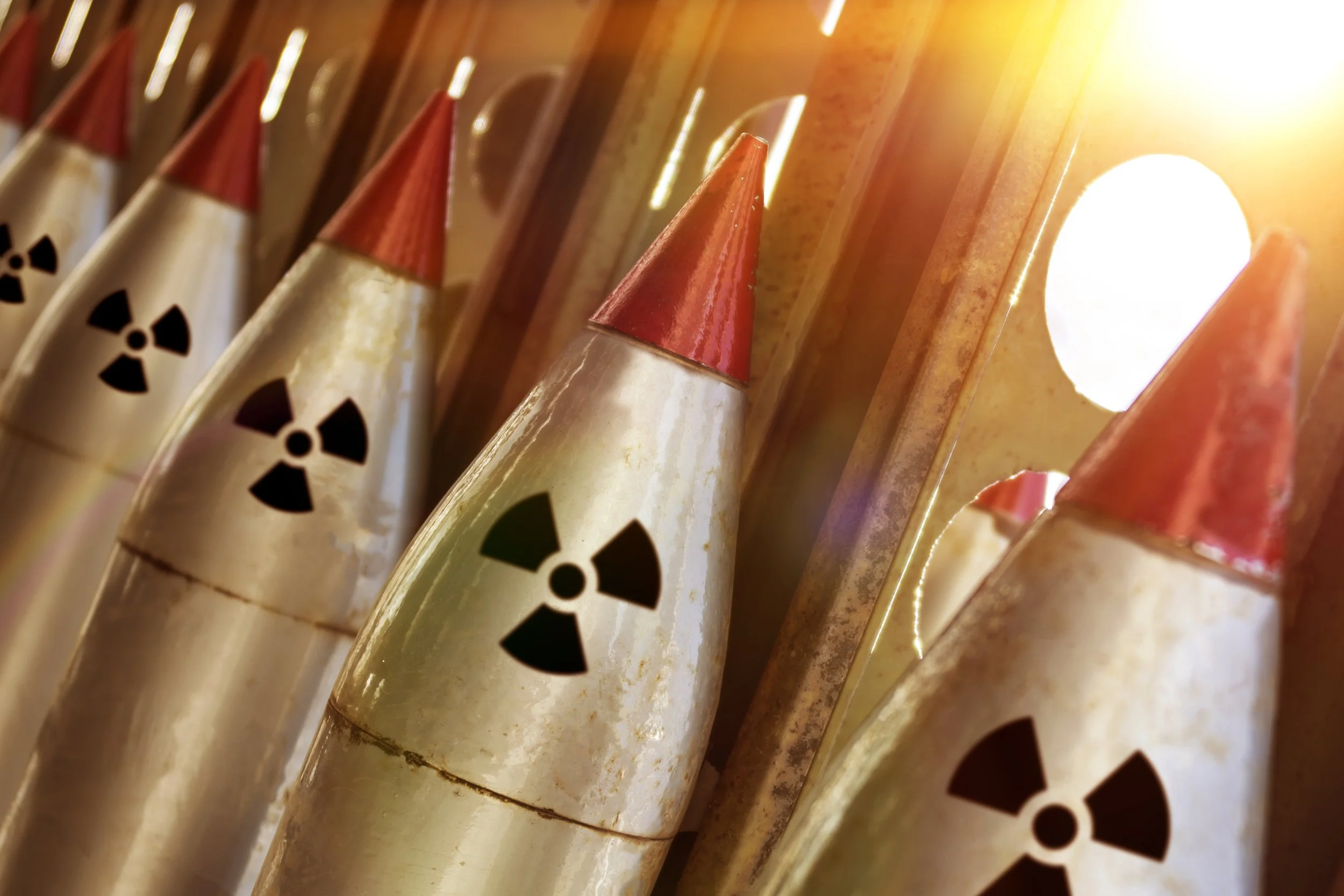
In early February 2026, the Trump Administration announced that it would not extend the Strategic Arms Reduction Treaty (New START), allowing it to lapse. This decision is best understood in the context of intensifying strategic competition between the United States (US) and China over trade, critical minerals, and supply chains, as well as their reciprocal efforts to expand and modernise nuclear arsenals. The emerging nuclear competition is increasingly being shaped by a key structural driver: the expansion of Chinese military power.
Given this backdrop, two issues warrant closer examination. The first is the potential resumption of nuclear testing by certain Nuclear-Weapon States (NWS). The second concerns regional proliferation, the erosion of extended deterrence guarantees, the weakening of monitoring and surveillance mechanisms, and the broader decline of nuclear arms control—developments that risk intensifying nuclear competition.
Testing New Nuclear Designs
China, according to the United States, conducted a nuclear test in June 2020. While Beijing has vehemently denied the claim, two seismic events in close proximity to each other was detected by an International Monitoring Station (IMS) of the Comprehensive Test Ban Treaty Organization (CTBTO) in Kazakhstan. The tremor was recorded at 2.75 on the seismic scale. Although clear evidence of China’s conduct of a supercritical nuclear test is unavailable from Open Source Intelligence (OSINT), if such a test did occur as American officials allege, China may have carried out a secretive decoupling test designed to conceal seismic and optical activity. The latter is likely to have been detected by American intelligence, which possesses advanced seismic monitoring capabilities. If China did conduct a test, it was likely associated with a newly designed warhead. At the United Nations Conference on Disarmament (UNCD) in early February 2026, an American official presented data supporting Washington’s claim. China, for its part, declared the American allegation “completely groundless.”
The architecture of nuclear arms control that defined the post-Cold War decades is fraying. Learn more about what is driving this shift, and how a renewed era of nuclear competition is likely to unfold in ORF Global Quarterly: Disruption and Recalibration.