
By Udaibir Das
To effectively manage debt and all liabilities, a top-down, country-wide reform is necessary to move towards a comprehensive liability management function.

By Udaibir Das
Africa’s debt story is not about waiting for easier global money. It is about whether domestic financial systems can absorb sovereign risk without amplifying internal fragility – and whether policy space purchased at 10% to 13% builds assets that justify the cost.
By Piyush Verma
Energy need not be a constraint on India's AI ambitions. It can be a competitive advantage. Encouraging data-centre locations that reflect grid readiness and renewable availability can reduce system stress while improving reliability. Expanding frameworks for round-the-clock clean power supported by storage and flexible resources can ensure AI growth strengthens climate goals rather than complicates them.
Special Report No. 9
By Medha Prasanna, Caroline Arkalji, and Piyush Verma
By Dhruva Jaishankar
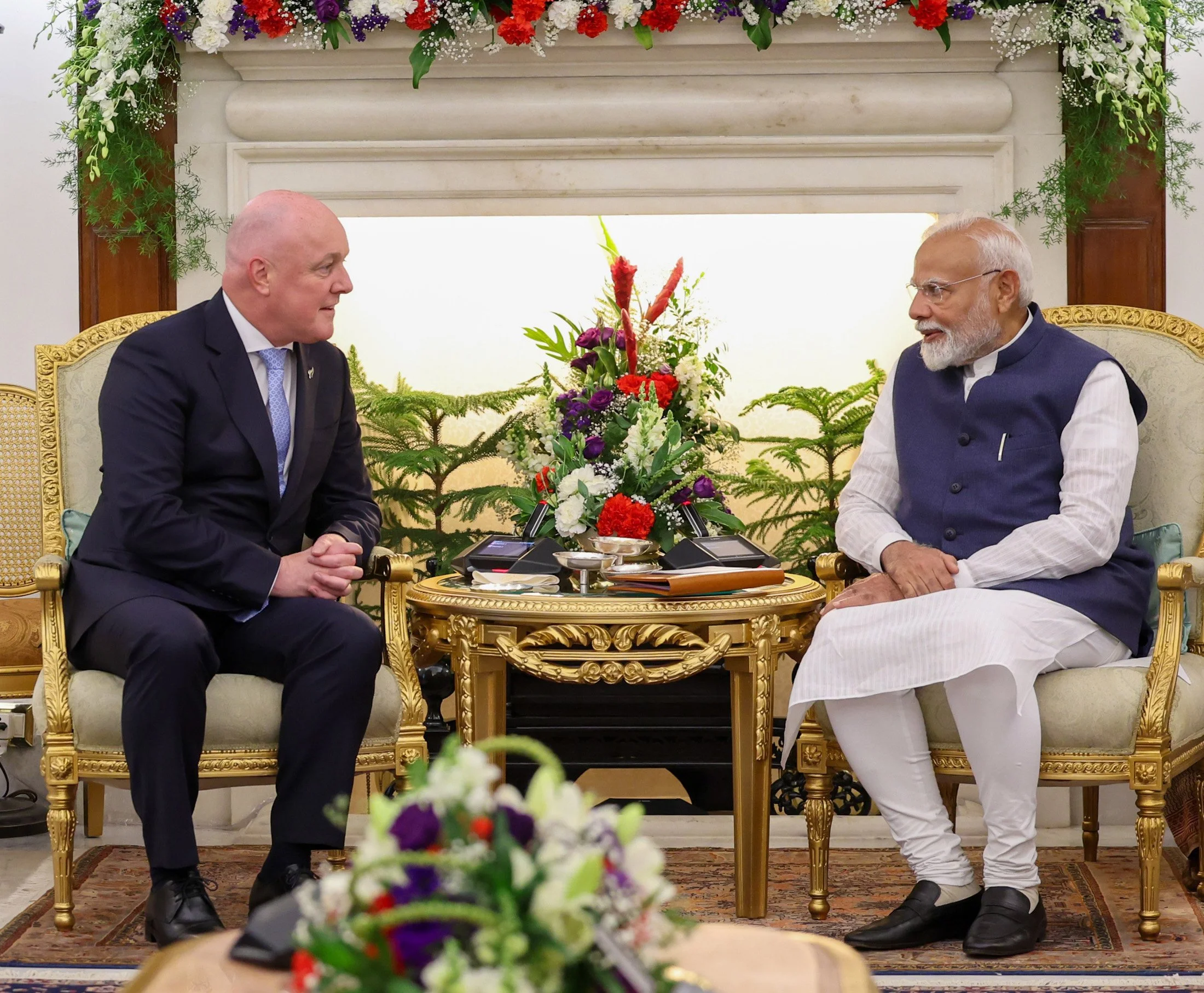
For both India and New Zealand, their trade agreement represents, more than anything else, a risk mitigation strategy. Concerned about over-dependence on China and the United States as both producers and consumers — and the failure of multilateral trade negotiations at the World Trade Organization — New Delhi and Wellington have opted to bet on each other and bring a modicum of certainty to an uncertain world.
By Udaibir Das
To effectively manage debt and all liabilities, a top-down, country-wide reform is necessary to move towards a comprehensive liability management function.
By Udaibir Das and Wayne Byres
After 50 years, the Basel Committee’s standards are crucial for maintaining global financial stability.
By Udaibir Das
The current global economic and capital market conditions necessitate reassessing conventional portfolio construction and risk management practices.
By Udaibir Das
Multilateral reform remains complex and demands patience to ensure that the process is transparent and inclusive.
By Udaibir Das
Africa stands on the precipice of a financial renaissance, poised to redefine its influence in the global investment sphere.
By Udaibir Das
As a unified bloc, Africa can negotiate better terms in international trade agreements, investment deals and financial arrangements.
By Udaibir Das
Today’s financial sector is complex and plagued by structural flaws and unfinished reforms.
By Udaibir Das
Balance sheet risks have become more challenging and critical for resource-rich, low-income countries, especially in Africa.
By Udaibir Das
While the digitalisation of finance advances and the potential introduction of central bank digital currency might aid finance in Africa, it is not enough.
By Anit Mukherjee, Ubah Thomas Ubah, Brian Webster, Wendy Cunningham, and Georgina Marin
Using data from three countries, this paper finds that digital government-to-person (G2P) payments were effective in reaching urban informal sector beneficiaries quickly and safely during the COVID-19 crisis.
By Udaibir Das
The past 50 years have seen shifts in the global financial system’s behaviour. Major market crises, such as the 1997 Asian crisis and the 2008 financial crisis, have resulted in more robust financial policies focused on licensed entities.
By Anit Mukherjee, Yuko Okamura, Ugo Gentilini, Defne Gencer, Mohamed Almenfi, Adea Kryeziu, Miriam Montenegro, and Nithin Umapathi
Over the past several decades, as part of the evolving understanding of energy subsidy reforms, there has been growing recognition of the potential of targeted cash transfers to support the poor and vulnerable to help governments achieve desired policy outcomes at lower fiscal cost and in a sustainable manner.
By Anit Mukherjee & José Barrera
The Raisina Dialogue held in New Delhi in March 2023 provided a forum where officials, academics, and leaders from around the world, including Latin America, met to discuss global governance issues.
By Anit Mukherjee, Laura Bermeo, Yuko Okamura, Jimmy Vulembera, and Paul Bance
This study looks in depth at Democratic Republic of the Congo’s (DRC) approach to delivering emergency cash transfers: the Solidarity through Economic Transfers Against the Poverty in Kinshasa (STEP-KIN) program.
By Udaibir Das
While the world is preoccupied with the stability of the western banking system, China has been busy overhauling its financial regulatory architecture.
Observer Research Foundation America, 1100 17th St. NW, Suite 501, Washington DC 20036 USA