

The focus of this issue of the U.S.-India Energy Monitor is hydrogen in the United States and India.
Special Report
By Shayak Sengupta, Medha Prasanna, and Peter Jarka-Sellers

By Udaibir Das
Fiscal space, financial space and institutional credibility are no longer separable policy domains. They are jointly binding constraints. The IMF flagships document their components but not the mechanism.
By Sujai Shivakumar, Hideki Tomoshige, and Jeffrey D. Bean
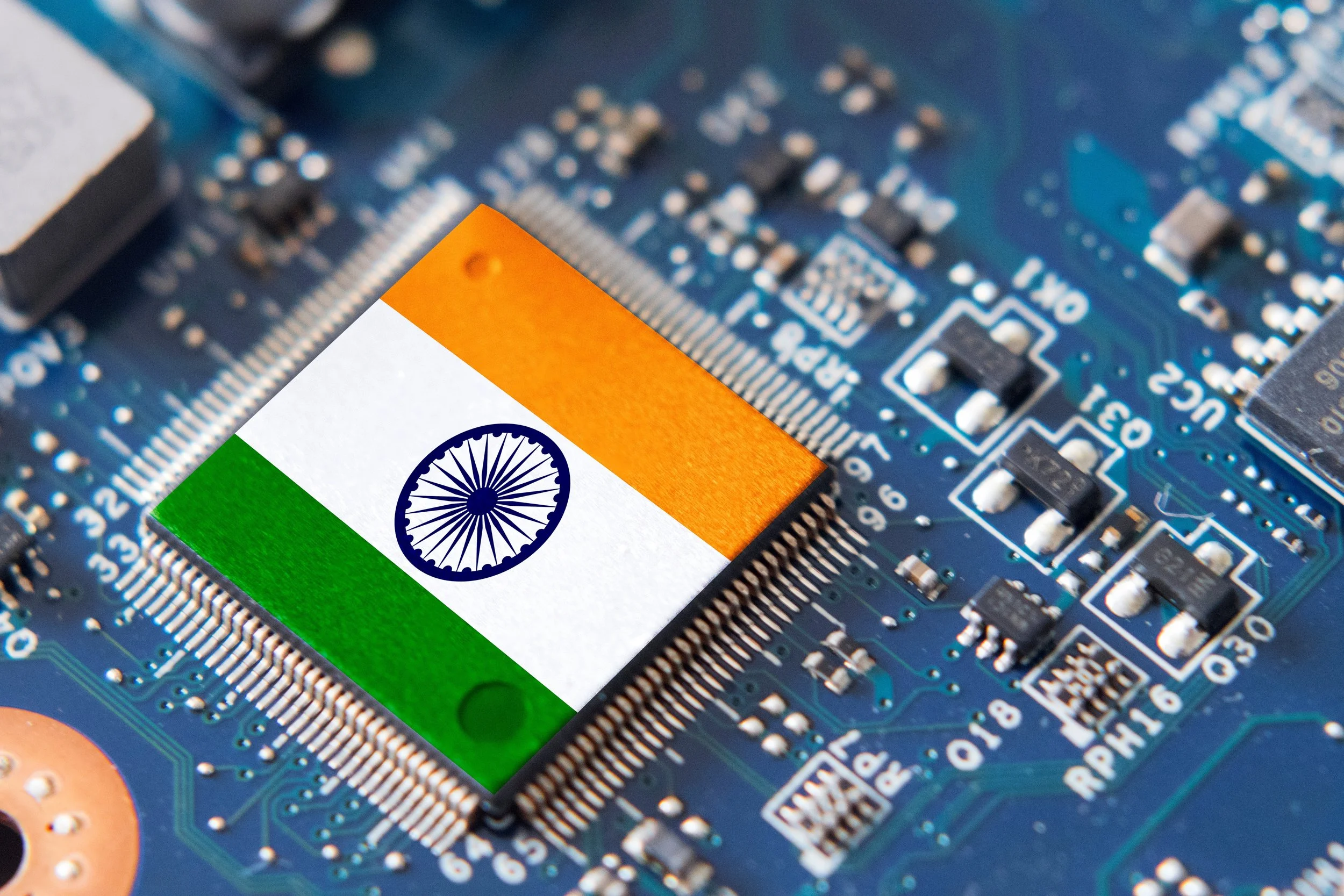
India is positioning itself as an increasingly important node in the global semiconductor ecosystem, building on its established strengths in chip design and deep pool of STEM talent. These efforts come at a time when global semiconductor supply chains remain highly concentrated, creating opportunities for India to contribute to diversification and resilience.
By Udaibir Das
Under conditions of armed conflict and state rupture, banking shifts away from decentralized intermediation towards directed, survival-orientated finance. Yet the policy conversation has concentrated on sanctions, commodities and trade — the institutional reorganization of banking under conflict remains less well examined.
By Udaibir Das
Adopted by the National People’s Congress in March 2026, China’s 15th Five-Year Plan does not treat finance as a supporting function for economic growth. It treats finance as a strategic instrument of technological capability.
By Dhruva Jaishankar
For countries around the world — whether allies, partners, or competitors of the United States — there are important and immediate questions of how much and to what degree they will accommodate, or hedge against, the United States’ new approach to the world.
The focus of this issue of the U.S.-India Energy Monitor is hydrogen in the United States and India.
Special Report
By Shayak Sengupta, Medha Prasanna, and Peter Jarka-Sellers
By Anit Mukherjee, Alan Gelb, and Brian Webster
This study considers the experience of the mothers with the shift to mobile money, and to the change in payments service provider that took place in 2019, through a survey of recipients and a control group.
By Sadiq Amini
If China’s Afghanistan policy is anything to go by, it is clear that it is not yet ready to wear the title of regional power, much less global power.
By Anit Mukherjee
Data is a challenge, but with imaginative incentives, metrics, and solutions such as an AgriStack, we can look forward to a new agricultural revolution over the coming decade.
By Anit Mukherjee, Alan Gelb, and Brian Webster
This study surveys the payment system from the perspective of recipients, including their views on convenience and the benefits from competition.
By Shayak Sengupta, Sumil K Thakrar, Kirat Singh, Rahul Tongia, Jason D. Hill, Ines M. L. Azevedo, and Peter J. Adams
Air pollution and greenhouse gases from India's coal-dominant electricity system causes widespread, premature deaths in the country.
The focus of this issue of the U.S.-India Energy Monitor is natural gas in the United States and India.
Special Report
By Shayak Sengupta
By Dhruva Jaishankar
A divided Congress, a divided Republican Party, and a divided America may still be able to get some things done in the next two years.
By Shayak Sengupta, Peter Adams, Thomas Deetjen, Puneet Kamboj, Swati D'Souza, Rahul Tongia, and Inês Azevedo
Electricity consumption and emissions of states in India are similar to differences between those of entire countries.
By Dhruva Jaishankar
India is the second largest producer of STEM graduates after China, churning out about five times as many as the US each year.
By Sadiq Amini
Pakistan is clearly worried, and rightly so. Hence, unlike the 1990s, Islamabad has not recognized the Taliban as the legitimate government of Afghanistan.
Increased malicious cyber activities by criminals and state actors undermine the technical security of digital systems and threaten the industrial, social, and economic systems that rely on them.
Special Report
By Abagail Lawson
By Dhruva Jaishankar
Japan’s relations with India are currently healthy but, in some respects, the proverbial glass appears only half full.
Recent developments – most notably the rise and assertiveness of the People’s Republic of China – have led to a rethink about the role of democracy in Indian foreign policy.
Special Report
By Dhruva Jaishankar & Ammar Nainar
By Andreas Kuehn
Supply chain breakdowns and disruptions through cyber or other means can have
significant regional and global effects.
By Andreas Kuehn
The industry has for long been criticized for not paying sufficient attention to the cybersecurity of its products.
India Climate Update is produced by Observer Research Foundation America (ORF America), Observer Research Foundation (ORF) and facilitated and distributed by ClimateWorks Foundation.
The focus of this issue of the U.S.-India Energy Monitor is the wind sector in the United States and India.
Special Report
By Shayak Sengupta & Jahanvi Singh
Observer Research Foundation America, 1100 17th St. NW, Suite 501, Washington DC 20036 USA