


Background Paper No. 25
By Ammar Nainar
Background Paper No. 39
By Anit Mukherjee and Caroline Arkalji
By Andreas Kuehn
The contest for AI supremacy is no longer about who has the best models, but about who can fund, power, and scale the infrastructure behind them.
By Udaibir Das
Can capital take on purpose without money losing the fungibility on which markets depend? The question must be asked while the machinery is still being chosen.
By Dhruva Jaishankar
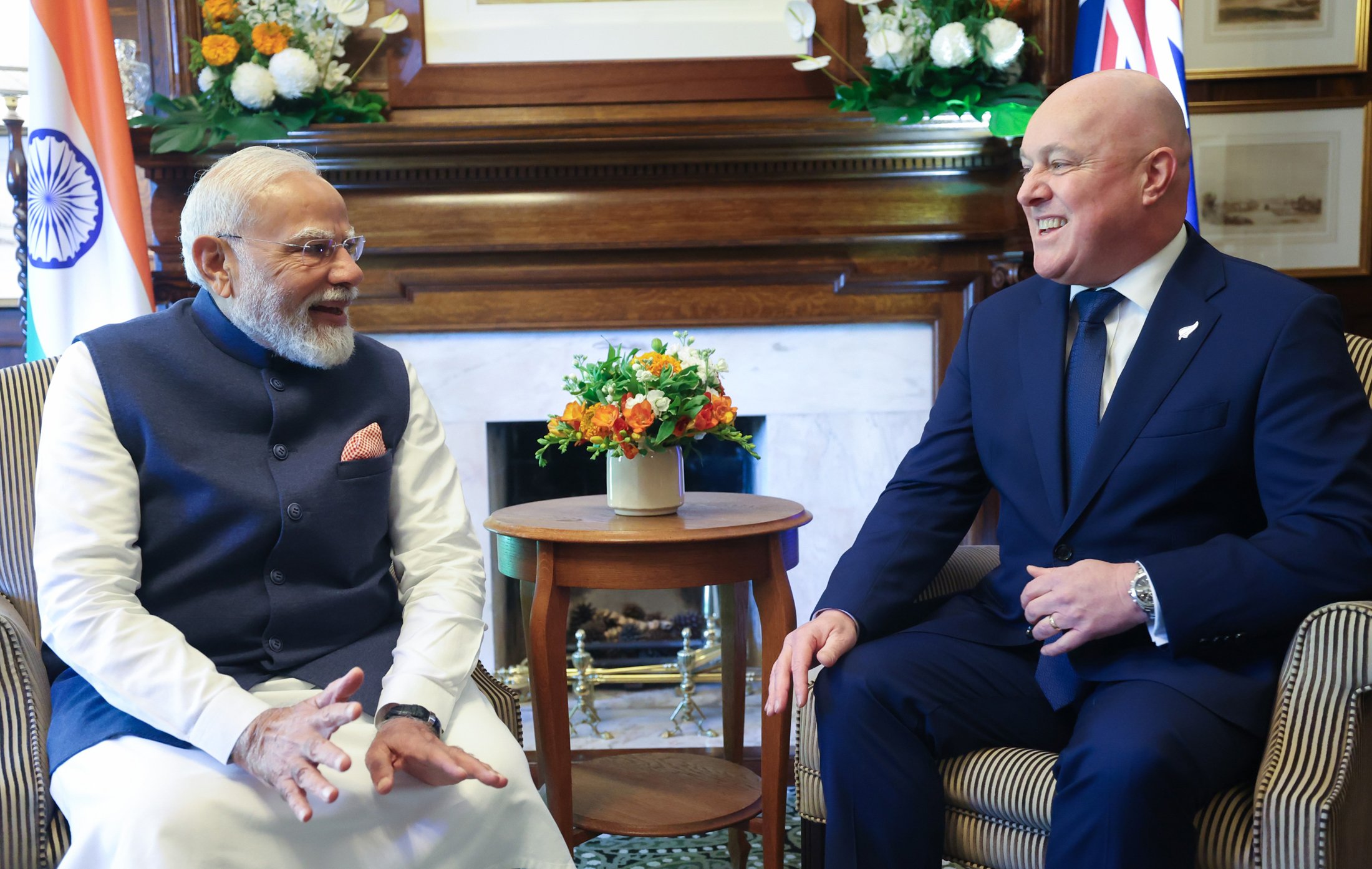
The India-New Zealand partnership has benefited in recent years from top-down political attention, a strong people-to-people foundation, and external impulses compelling both New Delhi and Wellington to diversify their partnerships. The next few years represent an opportunity to build upon the foundations of an FTA and Strategic Partnership and construct a relationship that is more than two-dimensional.
By Udaibir Das
To effectively manage debt and all liabilities, a top-down, country-wide reform is necessary to move towards a comprehensive liability management function.
By Kirat Singh, Tapas Peshin, Shayak Sengupta, Sumil K Thakrar, Christopher W Tessum, Jason D Hill, Inês M L Azevedo and Stephen P Luby
Absolute annual mortality ranges from less than 1 to over 650 deaths/year across units, and the mortality intensity of generation varies from under 0.002 to 0.43 deaths/GWh.
By Tapas Peshin, Shayak Sengupta, Sumil K Thakrar, Kirat Singh, Jason Hill, Joshua S Apte, Christopher W Tessum, Julian D Marshall and Inês M L Azevedo
Higher increases in pollution exposure are seen in scheduled castes/tribes, poor, and rural populations particularly in high coal production states.
By Dhruva Jaishankar
But the biggest obstacle remains China. China alone among the P-5 has not voiced support for the expansion of permanent UNSC seats but often hides behind others in negotiations.
Contribution from the Cyberspace Cooperation Initiative at the Observer Research Foundation America in the context of the seventh substantive session of the Open-ended Working Group on security of and in the use of information and communications technologies 2021-2025 (March 2024).
By Udaibir Das and Wayne Byres
After 50 years, the Basel Committee’s standards are crucial for maintaining global financial stability.
By Udaibir Das
The current global economic and capital market conditions necessitate reassessing conventional portfolio construction and risk management practices.
By Udaibir Das
Multilateral reform remains complex and demands patience to ensure that the process is transparent and inclusive.
By Dhruva Jaishankar
At a basic level, India’s large diaspora in the US and a shared sense of democracy continue to contribute to deepening India-US relations.
By Jeffrey D. Bean and Stephen Ezell
The United States has taken several key steps that we advocated. Foremost was passing the CHIPS and Science Act with bipartisan Congressional support in August 2022, which included appropriations of $52.7 billion for the CHIPS Act.
By Udaibir Das
Africa stands on the precipice of a financial renaissance, poised to redefine its influence in the global investment sphere.
By Sadiq Amini
A choice hasn’t been made, but non-Taliban stakeholders are eager for a policy change.
By Udaibir Das
As a unified bloc, Africa can negotiate better terms in international trade agreements, investment deals and financial arrangements.
By Dhruva Jaishankar
There are important differences between Biden and Trump on alliances, climate policy, immigration, tariffs, and democracy.
Observer Research Foundation America, 1100 17th St. NW, Suite 501, Washington DC 20036 USA