


By Andreas Kuehn and Jeffrey D. Bean
What costs and risks need to be taken into account when geopolitics are causing shifts in global supply chains for semiconductors?

By Anit Mukherjee
Just as the Pittsburgh G20 Summit in 2009 shaped the global economy after the global financial crisis, next year’s Summit in Miami could reset the G20 to issues that matter: financial stability, economic security, and technological innovation.
By Caroline Arkalji
For utilities and developers, a robust U.S. battery-storage industry would reduce dependence on overseas suppliers, cut logistical and tariff-related costs, and accelerate project deployment. If the United States seizes this moment, it can position itself as a global leader in grid-scale battery manufacturing and deliver a more reliable, competitive, and secure energy system for the decades ahead.
By Jeffrey D. Bean
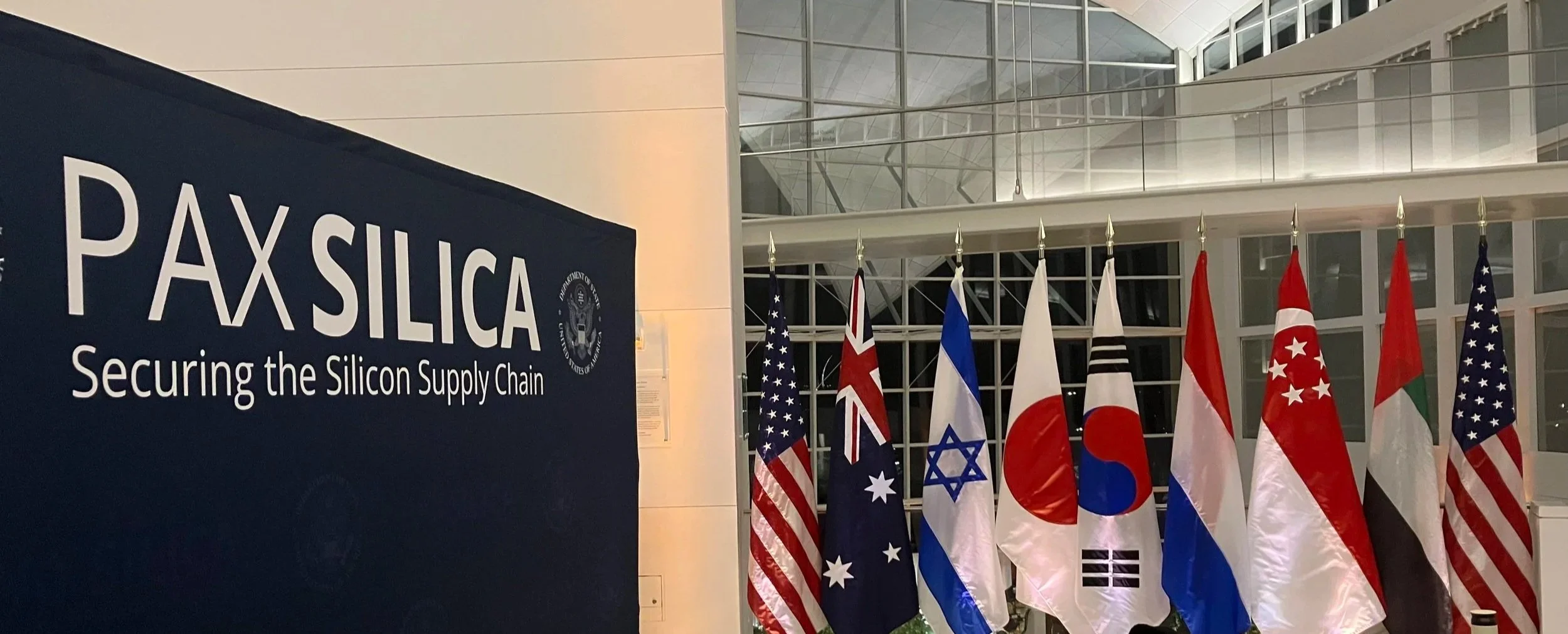
The success of Pax Silica as a tangible platform for the United States and U.S. allies and partners to secure supply chains and retain or regain advantages in technology will be a massive diplomatic and commercial undertaking. Sustained political will seems uncertain.
By Marta Bengoa
Rather than reviving American manufacturing and boosting employment, the data from Trump’s “Liberation Day” tariffs tell a story of job losses in manufacturing, stagnant productivity in that sector, higher inflation across the economy, and economic uncertainty on a scale not seen in decades.
By Ashwini Thakre and Piyush Verma
China’s diplomatic control over sector may become the very trigger that unwinds its dominance. By weaponizing concentration, Beijing accelerated diversification efforts that many democracies had treated as optional. The shock exposed the liabilities of a system built on single-country dependence and encouraged a coordinated wave of investment across the United States, Europe, Japan, South Korea, and Australia.
By Anit Mukherjee
The lack of jobs and job creation has not only sparked the recent student protests in Bangladesh but also has raised concern among voters in the United States as the 2024 presidential election nears. How can both the United States and Bangladesh tackle the shortcomings of their national job markets for incoming youth?
By Anneleen Roggeman
Earlier this month, member states of the UN Ad Hoc Committee on Cybercrime agreed to adopt the first global convention against cybercrime after three years of negotiations. The convention will be presented to the UN General Assembly in September, ratifying its legitimacy in 40 countries.
By Dhruva Jaishankar
Both the Republican and Democratic National Conventions commenced their programs this month, indicating the few months left for the 2024 U.S. presidential election. But little has been said about the candidates' approach to American foreign policy, especially regarding the future of the United States' relationship with China.
Observer Research Foundation America, 1100 17th St. NW, Suite 501, Washington DC 20036 USA