




Technology Policy

Technology: Brave New World

Technology: Brave New World

By Anirban Sarma with Sauradeep Bag, Anulekha Nandi, Prateek Tripathi, and Siddharth Yadav

The year 2025 saw several disruptive and emerging technologies advance from rhetoric, and experimentation, into ongoing expansion, to an accelerated phase of growth. At the same time, there emerged a rising sense of urgency about the need for digital sovereignty. Taken together, AI, quantum computing, digital currencies, and nanotechnology represent a frontier where technology, power, and the political economy increasingly converge.

Cybersecurity as Economic Security: The Case for U.S.-India Coordination

Cybersecurity as Economic Security: The Case for U.S.-India Coordination

By Krishnaveni Palanivelu

Cybersecurity must be treated as a shared economic security challenge. By aligning standards, strengthening cooperation, and embedding cyber resilience into trade, infrastructure, and foreign policy, democracies like the United States and India can better protect their digital foundations and sustain long-term economic stability. 

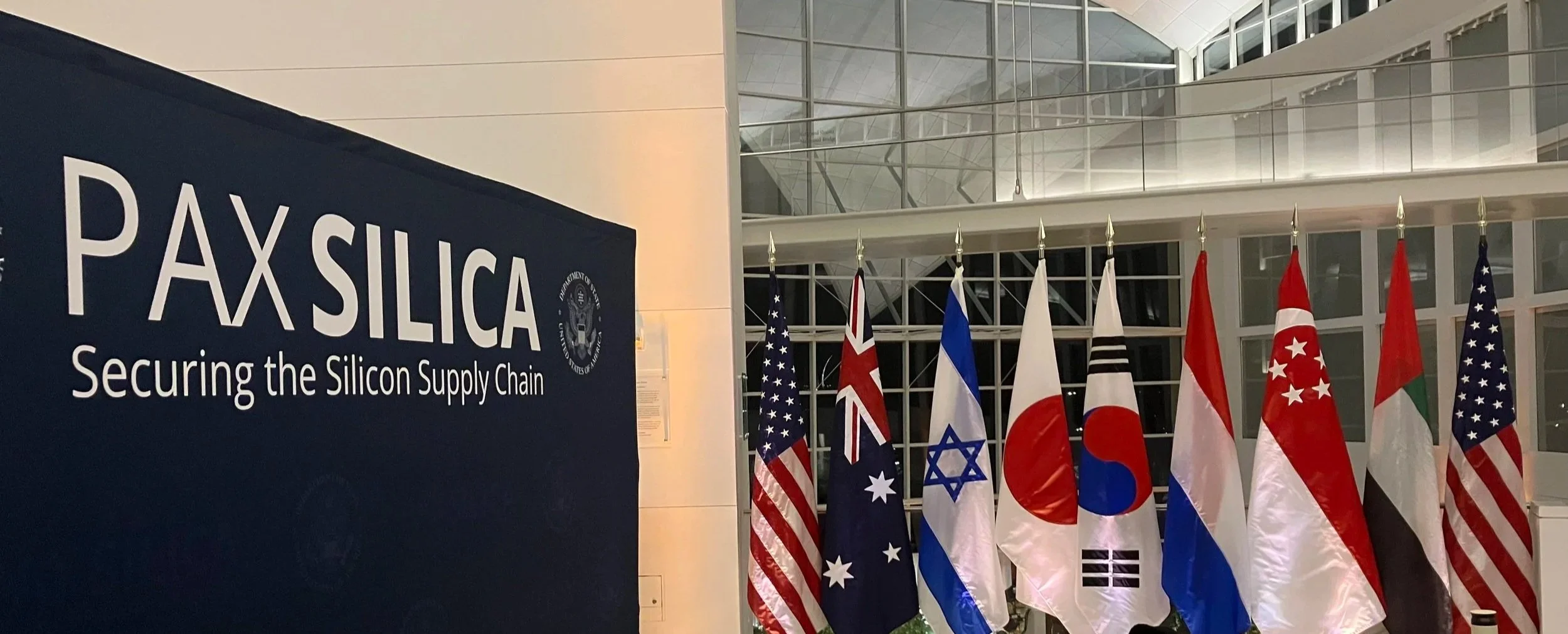
Pax Silica Will Under-Deliver without Further Steps

Pax Silica Will Under-Deliver without Further Steps

By Jeffrey D. Bean

The success of Pax Silica as a tangible platform for the United States and U.S. allies and partners to secure supply chains and retain or regain advantages in technology will be a massive diplomatic and commercial undertaking. Sustained political will seems uncertain.

A Deeper Dive: Trump Pursues American Dominance in AI

A Deeper Dive: Trump Pursues American Dominance in AI

By Sarah Box

The AI Action Plan is a clear signpost towards American dominance in AI and its impact will be felt globally. The hope is that it will indeed lead to the industrial and information revolution and cultural renaissance anticipated by the administration, and that this is not a winner-take-all race but one that allies and partners can share in.

A New Code for Cyber Intrusion Capabilities: Pall Mall

A New Code for Cyber Intrusion Capabilities: Pall Mall

By Elsa Debargue and Jeffrey D. Bean

The Pall Mall Process is a work in progress, and only time will tell if it proves durable and successful. However, it does hint at a potential turning point in current cyber governance efforts by adapting to the realities of a decentralized, privatized, and often invisible marketplace of digital intrusion.

Trump’s Reversal on AI Diffusion Controls Raises New Questions

Trump’s Reversal on AI Diffusion Controls Raises New Questions

By Jeffrey D. Bean

All in all, the United States’ oscillating policy on AI diffusion reflects an ongoing struggle in how best to simultaneously retain U.S. leadership in semiconductors and advance compute for AI at both a market level and in national defense applications, while blocking adversaries’ access to advanced AI chips and the capability to manufacture them.

The U.S. Defense Industry Still Faces a Chip Challenge

The U.S. Defense Industry Still Faces a Chip Challenge

By Jeffrey D. Bean and Andreas Kuehn

Looking ahead, as the Department of Defense strives to incorporate and utilize more AI chips, it will need to secure access to leading nodes for edge chips and the confidence in pathways to use greater allocations of secure cloud services for advanced computing.