


By Anit Mukherjee
Data is a challenge, but with imaginative incentives, metrics, and solutions such as an AgriStack, we can look forward to a new agricultural revolution over the coming decade.

Background Paper No. 39
By Anit Mukherjee and Caroline Arkalji
By Andreas Kuehn
The contest for AI supremacy is no longer about who has the best models, but about who can fund, power, and scale the infrastructure behind them.
By Udaibir Das
Can capital take on purpose without money losing the fungibility on which markets depend? The question must be asked while the machinery is still being chosen.
By Dhruva Jaishankar
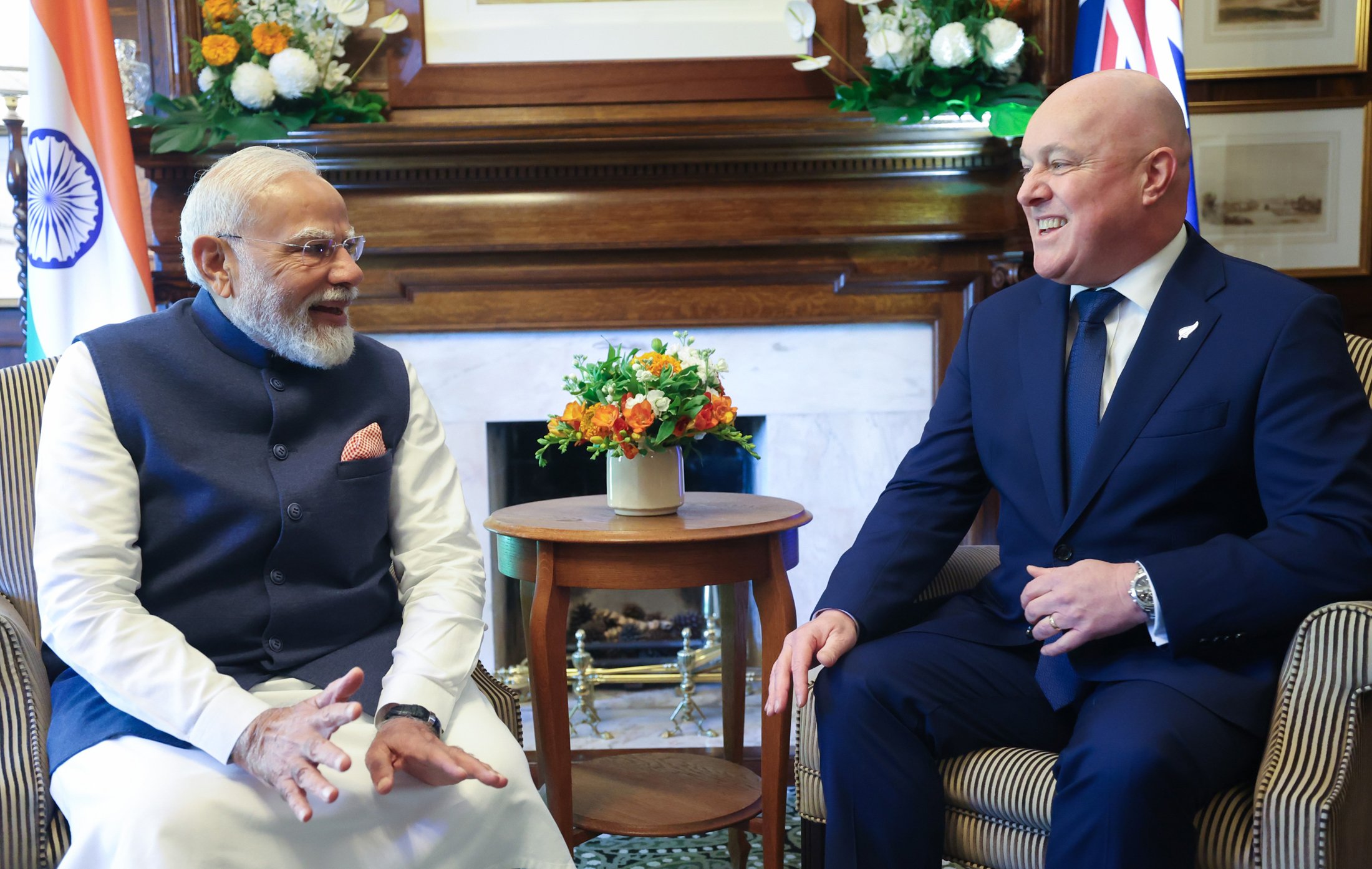
The India-New Zealand partnership has benefited in recent years from top-down political attention, a strong people-to-people foundation, and external impulses compelling both New Delhi and Wellington to diversify their partnerships. The next few years represent an opportunity to build upon the foundations of an FTA and Strategic Partnership and construct a relationship that is more than two-dimensional.
By Anit Mukherjee
Data is a challenge, but with imaginative incentives, metrics, and solutions such as an AgriStack, we can look forward to a new agricultural revolution over the coming decade.
By Anit Mukherjee, Alan Gelb, and Brian Webster
This study surveys the payment system from the perspective of recipients, including their views on convenience and the benefits from competition.
By Shayak Sengupta, Sumil K Thakrar, Kirat Singh, Rahul Tongia, Jason D. Hill, Ines M. L. Azevedo, and Peter J. Adams
Air pollution and greenhouse gases from India's coal-dominant electricity system causes widespread, premature deaths in the country.
The focus of this issue of the U.S.-India Energy Monitor is natural gas in the United States and India.
Special Report
By Shayak Sengupta
By Dhruva Jaishankar
A divided Congress, a divided Republican Party, and a divided America may still be able to get some things done in the next two years.
By Shayak Sengupta, Peter Adams, Thomas Deetjen, Puneet Kamboj, Swati D'Souza, Rahul Tongia, and Inês Azevedo
Electricity consumption and emissions of states in India are similar to differences between those of entire countries.
By Dhruva Jaishankar
India is the second largest producer of STEM graduates after China, churning out about five times as many as the US each year.
By Sadiq Amini
Pakistan is clearly worried, and rightly so. Hence, unlike the 1990s, Islamabad has not recognized the Taliban as the legitimate government of Afghanistan.
Increased malicious cyber activities by criminals and state actors undermine the technical security of digital systems and threaten the industrial, social, and economic systems that rely on them.
Special Report
By Abagail Lawson
By Dhruva Jaishankar
Japan’s relations with India are currently healthy but, in some respects, the proverbial glass appears only half full.
Recent developments – most notably the rise and assertiveness of the People’s Republic of China – have led to a rethink about the role of democracy in Indian foreign policy.
Special Report
By Dhruva Jaishankar & Ammar Nainar
By Andreas Kuehn
Supply chain breakdowns and disruptions through cyber or other means can have
significant regional and global effects.
By Andreas Kuehn
The industry has for long been criticized for not paying sufficient attention to the cybersecurity of its products.
India Climate Update is produced by Observer Research Foundation America (ORF America), Observer Research Foundation (ORF) and facilitated and distributed by ClimateWorks Foundation.
The focus of this issue of the U.S.-India Energy Monitor is the wind sector in the United States and India.
Special Report
By Shayak Sengupta & Jahanvi Singh
By Mchael Depp
The digitalization of national intelligence systems has made it possible for NATO to more effectively support Ukraine’s efforts with intelligence sharing.
By Terri B. Chapman, Jhanvi Tripathi & Rakesh Kumar Sinha
This report examines how India can better integrate into GVCs while building resilience.
By Dhruva Jaishankar
There is a strategic logic in the coming together of India, Israel, the US, and the UAE. But trenchant disagreements on great power politics linger. Developing the partnership from the ground up will be key.
A focus of this issue is the coal sector in the United States in India.
Special Report
By Shayak Sengupta & Jahanvi Singh
Observer Research Foundation America, 1100 17th St. NW, Suite 501, Washington DC 20036 USA