


Background Paper No. 34
By Anit Mukherjee and Caroline Arkalji

By Dhruva Jaishankar
For countries around the world — whether allies, partners, or competitors of the United States — there are important and immediate questions of how much and to what degree they will accommodate, or hedge against, the United States’ new approach to the world.
By Andreas Kuehn
Technology alliances are emerging as the decisive arena of AI competition, where leadership depends less on model breakthroughs than on the global diffusion of trusted infrastructure, standards, and ecosystems.
By Udaibir Das
Africa’s debt story is usually told as a liability problem: too much debt, the wrong currency, the wrong creditor, the wrong maturity. Those issues matter. But long-run sustainability is a balance-sheet question: is borrowing being converted into assets that raise the repayment base?
By Benjamin Tkach and Vasabjit Banerjee
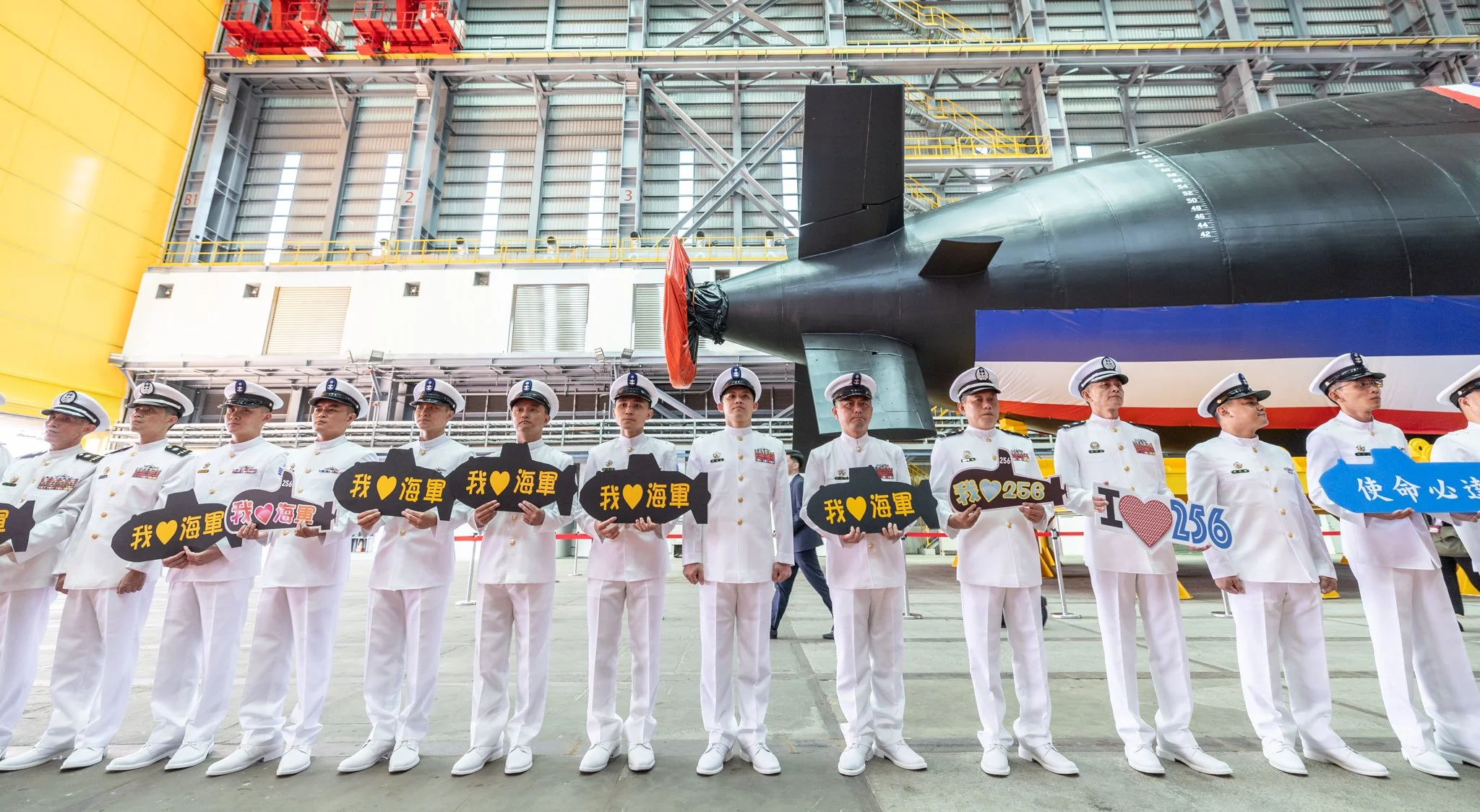
While India-Taiwan collaboration on submarine technology would represent a step change from pre-existing economic cooperation, improving domestic production capacity necessitates pursuing mutual gains wherever possible.
By Udaibir Das
Africa’s debt story is not about waiting for easier global money. It is about whether domestic financial systems can absorb sovereign risk without amplifying internal fragility – and whether policy space purchased at 10% to 13% builds assets that justify the cost.
By Anit Mukherjee
The Indo-Pacific’s future will be shaped by secure, interoperable digital systems that advance public service delivery, expand financial inclusion, and foster cross-border collaboration.
By Dhruva Jaishankar
In its diplomacy, India has reprioritized its near neighborhood, extending financial, developmental, and trading benefits to other South Asian countries and revitalizing more productive regional institutions.
By Hsiao-Chen Lin
The evolving scenario between India and Pakistan also serves as a timely analytical lens through which Taiwan can assess its own strategic vulnerabilities and prepare more robustly for future contingencies in the Indo-Pacific theatre.
By Udaibir Das
While financial institutions promote debt swaps as ‘win-win’ solutions that address both debt distress and development financing, borrowing countries report a systematic failure in achieving both objectives, revealing an inversion of development finance principles.
By Dhruva Jaishankar
For India, navigating U.S. export controls remains a challenge 20 years since the civilian nuclear agreement was signed.
By Udaibir Das
If climate finance is to support transitions that are durable and inclusive, it must evolve to accommodate precisely these kinds of interventions: institutionally grounded, locally designed and systemically significant.
By Anit Mukherjee
As artificial intelligence (AI) becomes a key enabler of economic and social transformation, the BRICS grouping — comprising both emerging and influential economies — has a unique opportunity to shape the trajectory of AI development through a Global South lens.
By Udaibir Das
As private digital tokens gain ground, existing oversight and payment monitoring frameworks are struggling to keep pace. While regulators debate their response, the market—driven mainly by U.S.-based technology and market actors—is moving ahead.
By Udaibir Das
China must build on its institutional progress and the policy suggestions noted in the 2025 FSSA while adapting to a more fragmented global financial landscape. The shift from insulation, as pointed out by the IMF in 2010, as well as the shift to sensible integration, as outlined by the IMF in 2025, stays unfinished.
This special report explores the opportunities of a U.S.-India Strategic Energy and Industrial Partnership.
Special Report
By Aditya Ramji
By Udaibir Das
As concessional finance declines, vulnerabilities mount and aid priorities shift, vulnerable low-income countries must increasingly rely on domestic sources of funding. Efficient capital markets are not a luxury – they are foundational infrastructure for economic growth.
By Linda Nhon and Andreas Kuehn
Trump 2.0’s overall policy directions in critical and emerging technologies will likely hew to common expectations. The details, however, of what technologies the new administration will prioritise and how actions, such as tariffs and export controls for example, will affect the United States’ (US) innovation and technology leadership remains underexplored.
By Dhruva Jaishankar
Learnings from Delhi’s past should help in shaping the future as India bets big on new critical technologies.
By Udaibir Das
The key question is not whether the decline in aid and external assistance will push these economies towards more debt – it already does – but rather what kind of debt they will incur and what long-term implications it will bring.
By Dhruva Jaishankar
The EU and India both have apprehensions about China’s economic and manufacturing supremacy threatening employment and businesses at home.
Observer Research Foundation America, 1100 17th St. NW, Suite 501, Washington DC 20036 USA