
By Naina Sharma
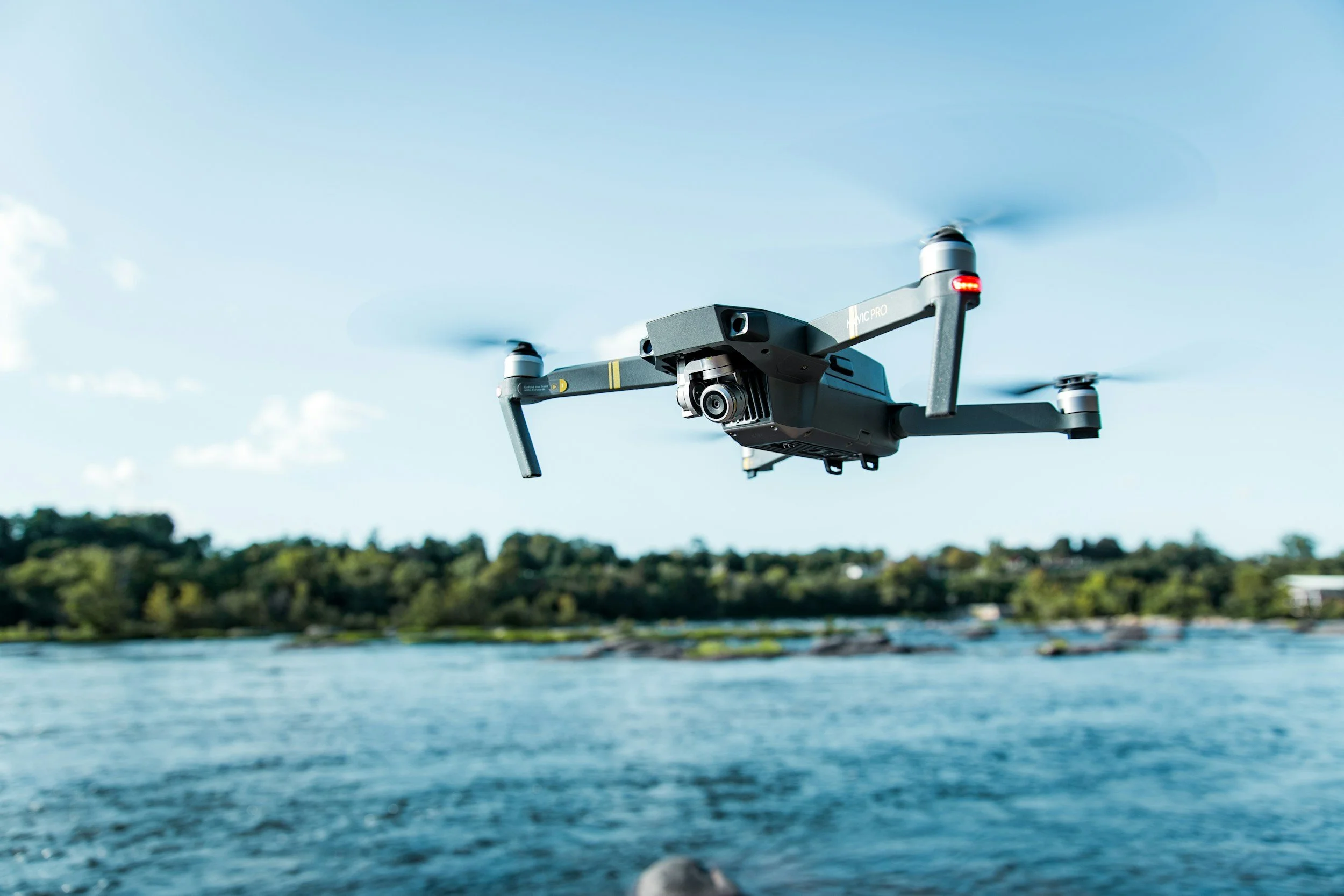
As China rapidly advances its drone capabilities, cooperation between India and the United States will be vital for both international standard setting and for both countries’ national security.

By Andre Nicola and Caroline Arkalji
As political campaigns increasingly depend on digital platforms to reach voters, private technology companies have gained considerable influence over how political information is distributed. At the same time, electoral authorities often lack the tools to investigate their decisions.
By Ninad Kashyap
The U.S. and Indian approaches to Central Asia are more complementary than competitive: the United States can supply capital, technology, and security, while India supplies development, proximity, and a non-Western alternative.
By Pradeep Nair
While the Indian state is now deliberately making room for private firms, the boom in India’s space sector also shows how closely the state and private sector are tied together. The Indian government is at the same time a regulator, source of technology, customer, and investor.
By Kabir Taneja and Siddharth Yadav
Relying on AI models to identify and refuse to act on dangerous prompts — a measure that largely worked in the Houthis’ case — is not sufficient protection. AI labs now have to work against elaborate campaigns by resourceful and persistent groups that are actively bypassing safeguards.
By Dhruva Jaishankar and Ammar Nainar
Despite a political thaw with China, India will double-down on efforts to indigenize its own industrial capabilities in certain sectors, while seeking new markets for exports, new defense and technology partners, and new and diverse sources for raw materials, investment, and intermediary goods.
By Ashita Jain
The India-UK FTA reflects a significant shift in India’s digital trade approach. The commitments it makes, particularly on customs duties on electronic transmissions, data flows, and source code protection, will serve as benchmarks in India’s ongoing negotiations with the EU and the United States.
By Lindsey Ford
There is much that feels reassuringly familiar about the joint statement that came out of the July 1 Quad meeting in DC, which maintains significant continuity in its overall tone and content. However, a close review also points to notable shifts that could erode the group’s regional influence over time.
By Ammar Nainar
Despite trade and tariff wars and continuing security tensions in Europe, the Middle East, and Indian subcontinent, Quad cooperation continues. But the trends this year also reflect a new and more focused agenda for Quad cooperation in the second Trump administration, including maritime, economic, and technology security, as well as humanitarian assistance and disaster relief.
By Dhruva Jaishankar
Trump’s April 2 announcement has already roiled financial markets, and the global economy will continue to be adversely affected both by the implementation of tariffs and by uncertainty as negotiations proceed. But while there will be no immediate winners, some parties appear relatively better off.
By Ammar Nainar
In a signal of the United States’ burden-sharing efforts, the Indian Ocean region was featured eight times in the latest U.S.-India joint statement between Indian prime minister Narendra Modi and U.S. president Donald Trump. To India and the United States, the Indian Ocean remains vital for trade and energy flows, for security competition given China’s growing naval activity, and for connectivity between Asia, Africa, and Europe.
Observer Research Foundation America, 1100 17th St. NW, Suite 501, Washington DC 20036 USA