


India–Africa Economic Diplomacy: From Money Flows to Sustainable Balance-Sheet Resilience

India–Africa Economic Diplomacy: From Money Flows to Sustainable Balance-Sheet Resilience

By Udaibir Das

The current metrics of India–Africa economic diplomacy focused on mobilization volume, systematically fail along the diplomatic-financial chain. An integrated balance-sheet framework could realign these incentives through institutional capacity thresholds, end-use governance, and countercyclical safeguards, transforming diplomatic finance from a source of vulnerability into genuine development capital.


What the Budget really builds

What the Budget really builds

By Udaibir Das

For the first time in years, the Budget addresses not just who issues debt but also whether it actually trades afterwards. A new market-making framework for corporate bonds, accompanied by instruments that let investors take positions on bond performance without holding the bonds, marks a departure from India's longstanding focus on issuance while ignoring liquidity.

Outlook 2026: Emerging markets will need a new playbook

Outlook 2026: Emerging markets will need a new playbook

By Udaibir Das

Global financial institutions continue to frame the 2026 outlook for emerging markets through a familiar cyclical lens. The consensus assumes U.S. monetary easing, a softer dollar and a modest global slowdown will favor local-currency assets, credible disinflation paths and balance-sheet repair. This narrative is historically grounded and internally coherent. It is also increasingly insufficient.

Digital Payments and Women’s Empowerment: Insights from PESP in the Chittagong Hill Tracts

Digital Payments and Women’s Empowerment: Insights from PESP in the Chittagong Hill Tracts

By Brian Webster, Alan Gelb, and Anit Mukherjee

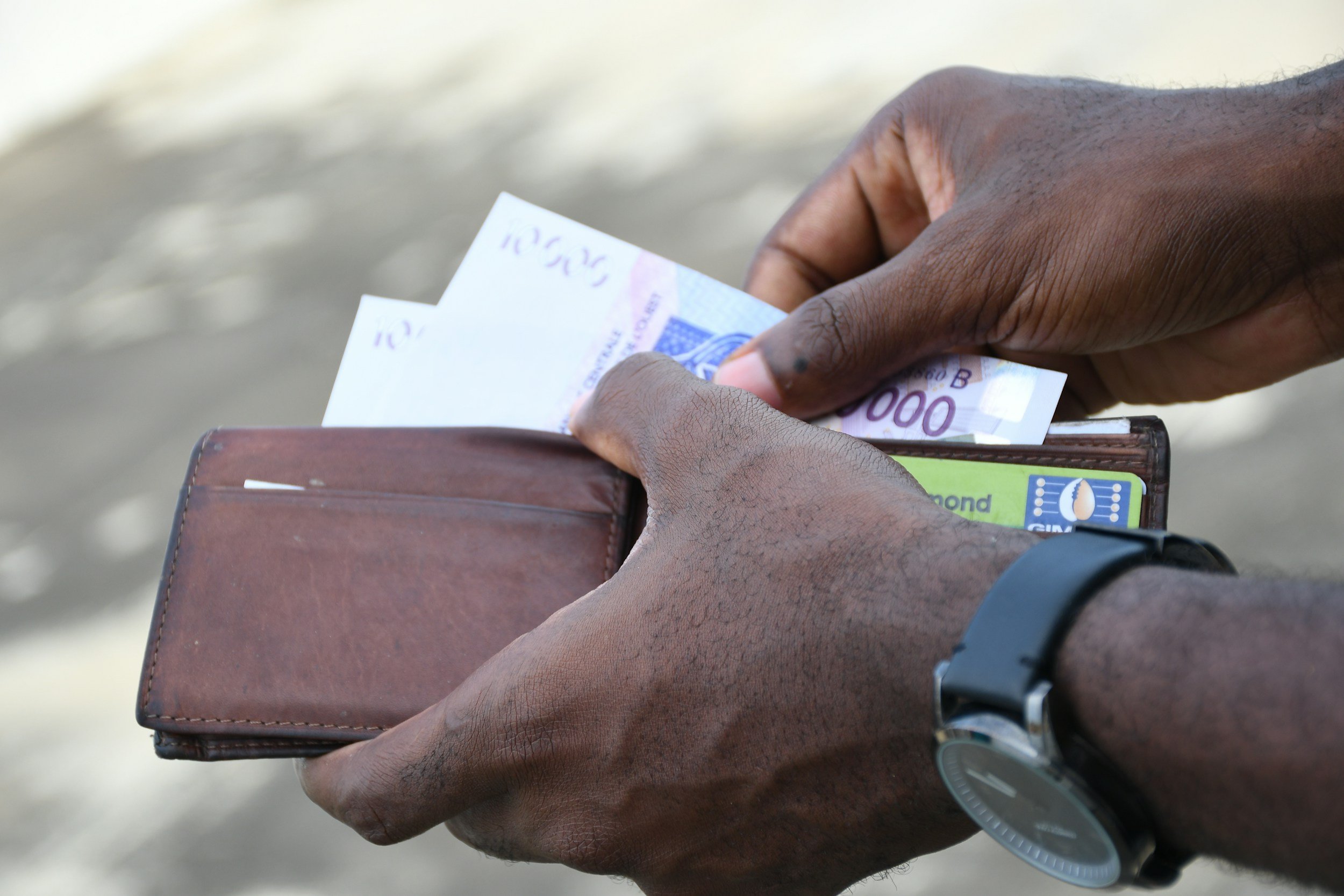
Shifting the payment of social transfers from cash to direct deposit via bank or mobile money accounts can directly improve efficiency for governments and convenience for beneficiaries. It may also produce positive spillovers such as boosting financial inclusion and empowering women. But do these spillovers materialize, and under what circumstances?

Trevor Manuel report: Africa’s post-G20 Bretton Woods moment?

Trevor Manuel report: Africa’s post-G20 Bretton Woods moment?

By Udaibir Das

The Trevor Manuel G20 Africa Expert Panel Report reframes Africa’s constraints as a single system of mispricing, debt compression and governance asymmetry. Its proposals for refinancing, collective bargaining and International Monetary Fund quota reform mark the first coordinated attempt to shift power within the international financial architecture.

Africa’s Ubuntu economics takes the G20 stage

Africa’s Ubuntu economics takes the G20 stage

By Udaibir Das

Ubuntu economics does not invoke moral claims. It advances a structural argument: Africa’s demographic momentum, mineral endowments and ecological assets are central to global prosperity, and instability in the region imposes system-wide costs. The reform frameworks are now primarily in place. The question is whether the political and institutional conditions of 2026 permit their implementation.

India and Mongolia Forge a New Energy Axis

India and Mongolia Forge a New Energy Axis

By Piyush Verma and Telmen Altanshagai

Mongolia is not just a customer or supplier—but a co-partner in building new regional supply-chains, new corridors and new resource-alliances. It speaks to a future where India is not simply plugged into global energy markets, but co-creating them.

How ‘resilience’ became global finance’s mirage of strength

How ‘resilience’ became global finance’s mirage of strength

By Udaibir Das

While stability prevails in institutional titles, resilience prevails in policy content. This shift influences the oversight and allocation of approximately $470tn in global financial assets. This has structural implications and affects public accountability.

New Frontiers for India’s Defence Diplomacy

New Frontiers for India’s Defence Diplomacy

By Dhruva Jaishankar and Ammar Nainar

Once a quiet backstage function of the armed forces, defence diplomacy has emerged as one of India's sharpest tools of statecraft. From joint exercises and training missions to disaster relief and maritime surveillance, India's military now operates far beyond the battlefield: building trust, shaping partnerships, and projecting the country's strategic interests on a rapidly shifting global stage.

The New Eurasian Order: America Must Link Its Atlantic and Pacific Strategies

The New Eurasian Order: America Must Link Its Atlantic and Pacific Strategies

By Julianne Smith and Lindsey Ford

American allies are rapidly transforming their relationships whether Washington likes it or not; these networks can either serve or undermine U.S. interests depending on how Washington engages with them. If the United States fails to reset ties with Asian and European partners, it risks being left on the sidelines of a rapidly changing world order.

Why nations now pay more – and give up more – to secure financing

Why nations now pay more – and give up more – to secure financing

By Udaibir Das

What began as a spread on a bond has become a spread across the sovereign balance sheet. The 2025 annual meetings have made clear that incremental adjustments will not suffice. Until new institutions and norms emerge, sovereigns will continue to pay in basis points and in ownership and discover that what the premium buys is not sovereignty, but postponement.

The sovereignty premium countries pay for financial autonomy

The sovereignty premium countries pay for financial autonomy

By Udaibir Das

In a climate emergency, redundancy might be precisely what resilience requires. The sovereignty premium is that insurance price. Whether it’s worth paying depends on how much autonomy matters versus efficiency – and whether choice exists at all.

Why India’s bid for COP 33 is particularly poignant for the Global South

Why India’s bid for COP 33 is particularly poignant for the Global South

By Piyush Verma and Abhinav Jindal

India’s bid to host COP 33 is a clear signal of geopolitical intent. It positions the world’s largest democracy, the most populous nation and the fourth-largest economy as a bridge between developed and developing worlds.

Shaping U.S.-India AI Cooperation: Insights from the Inaugural U.S.-India AI Fellowship Program

Shaping U.S.-India AI Cooperation: Insights from the Inaugural U.S.-India AI Fellowship Program

Edited Volume

By Elie Alhajjar, Raj Shekhar, Divyansh Kaushik, Honson Tran, Megha Shrivastava, Zeena Nisar, Ingrid Erickson, Urmi Tat, Resham Sethi, Priyanshu Gupta, Katelyn Radack, Mandeep Rai, Neeraj Jain, Vaibhav Garg, Jatin Patni, and Wm. Matthew Kennedy

Editors: Andreas Kuehn and Anulekha Nandi